


Neither beef nor fish is the right choice for every dog. In this beef vs fish dog food comparison, your dog’s previous diet, tolerance and overall nutritional needs matter more than the protein name alone. Fish is generally easy to digest and provides omega-3 fats, while beef supplies iron and vitamin B12; beef can also be a trigger for food sensitivities in some dogs.
It’s understandable to focus on which flavour your dog prefers, but appetite is only part of the decision. A food’s complete nutritional profile and your dog’s response to it matter just as much.
This beef vs fish dog food comparison looks at nutrition, palatability and potential health risks. You’ll also learn how your dog’s food history can guide your choice, what to watch for when changing diets, and when suspected sensitivity calls for veterinary guidance.
Key Takeaways
- Use your dog’s previous diet and any reactions to it as a starting point when choosing a protein.
- Look beyond the headline protein and assess whether the food provides complete nutrition for your dog’s needs.
- Consider flavour appeal alongside energy needs and the nutrients each protein contributes.
- Recognise potential risks linked to beef, and learn which signs may mean a change in diet needs careful thought.
Choosing a protein based on a dog’s previous diet
Your dog’s food history can help guide your choice: consider familiar ingredients, digestion and any past reactions. Beef and fish differ in nutrients and fat profile, but the complete food’s overall formulation matters too.
Beef as a protein source
Beef supplies protein and essential amino acids that support muscle and tissue repair. It also provides iron and vitamin B12, which contribute to red blood cell formation and energy metabolism. Compared with cooked fish, beef can be more calorie-dense, depending on the recipe’s fat content. Check the ingredients and nutritional analysis rather than judging a food by its protein percentage alone.
Fish as a novel protein
Fish is a novel protein in many commercial dog foods, so it may suit dogs that have previously eaten beef and show signs of sensitivity. Cooked fish is relatively low in saturated fats and easily digestible. Oily fish, including salmon, sardines and mackerel, contains omega-3 fatty acids that support skin and coat health. A fish recipe’s suitability still depends on its full ingredients and your dog’s food history.
Is beef or fish dog food better nutritionally? Neither is automatically better. Both can provide protein, but their other nutrients and fat levels differ. Choose a complete food suited to your dog’s needs and life stage, including growth for puppies, rather than comparing protein figures alone.
How do their prices compare in Ireland? Compare the cost per daily serving, as pack size, recipe and feeding amount all affect the total. A higher protein percentage alone doesn’t tell you which food offers better value.
What do omega-3 fatty acids do? In fish dog food, omega-3s support skin and coat health. Oily fish generally contains more omega-3 than lean white fish such as cod.
Which Irish brands offer beef or fish recipes, and what do they cost? Compare recipes available in Ireland by their named protein, ingredients and cost per daily serving. The serving cost depends on the pack price and the amount your dog needs each day.
Can dogs eat beef or fish in homemade meals? Serve meat fully cooked and plain, without salt, oil or sauces. Avoid cooked bones, which can cause choking, and don’t rely on meat alone as a complete diet.
| Option | Digestibility | Fat and nutrients | Previous diet |
|---|---|---|---|
| Beef | Depends on the recipe | Iron, vitamin B12; fat varies | Consider past reactions |
| Fish | Cooked fish is easily digestible | Omega-3, especially in oily fish | May be novel after beef |
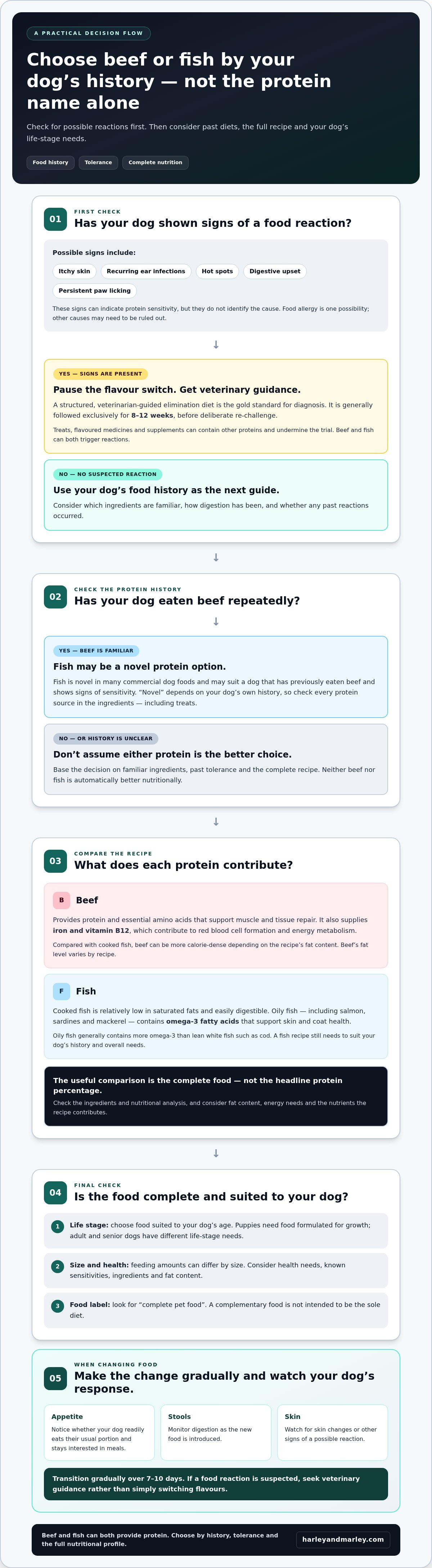
When changing foods, transition gradually over seven to ten days and monitor appetite, stools and skin. If beef is a concern, pork is another protein to consider.
What Should I Look for in Beef Dry Dog Food?
Choose a recipe based on your dog’s age, size, health needs and food history, not just its headline protein. Puppies need food formulated for growth, while adult and senior dogs have different life-stage needs. Small, medium and large dogs may also need different feeding amounts. If your dog has a health condition, consider the recipe’s fat content and ingredients.
How should age, size and health guide the choice? Start with a complete food suited to your dog’s life stage and size, then consider known sensitivities and health needs. A puppy, small-breed adult and senior dog shouldn’t automatically have the same feeding plan.
Beef and fish can both trigger food reactions. Beef is a common canine food allergen, and chicken is also a leading allergen. Itchy skin, recurring ear infections, hot spots, digestive upset and persistent paw licking can signal protein sensitivity, but they don’t identify the cause. Food allergy is one possibility; a veterinary assessment can help rule out other causes.
Suspected allergy calls for a structured approach, not simply switching flavours. A veterinarian-guided elimination diet is the gold standard for diagnosis and is generally followed exclusively for eight to twelve weeks before deliberate re-challenge. Treats, flavoured medicines and supplements may contain other proteins and undermine the trial. Introduce a new food gradually over five to seven days to help reduce digestive upset.
Fish may be a useful alternative if your dog has eaten beef repeatedly, since fish is a novel protein in many commercial foods. But “novel” depends on your dog’s own history. Check every protein source in the ingredients, including those in treats, and don’t choose a recipe solely because its main protein sounds different.
Are beef and fish foods complete and balanced under EU pet food rules? Either protein can be used in a complete food, but beef or fish alone doesn’t make a recipe nutritionally complete. Look for “complete pet food” on the pack; complementary food isn’t intended to serve as the sole diet. For a fish-based option matched to life stage and size, explore complete dog food options.
Beef’s palatability, calories and nutrients
Beef may appeal to dogs that enjoy its rich, savoury flavour, but appetite is individual. Notice whether your dog readily eats their usual portion and stays interested in meals. Enjoying beef doesn’t show whether a food is nutritionally balanced or suits your dog’s energy needs. A beef vs fish dog food comparison is most useful when it considers the complete recipe, not flavour alone.
Lean cooked beef contains around 30 g of protein per 100 g. That figure describes cooked meat, not dry dog food, where processing and moisture affect the comparison. Beef protein provides amino acids used for muscle development and maintenance, energy and tissue repair. Beef also supplies iron, zinc and B vitamins, including B12 and niacin, which support blood health, skin repair and metabolism.
Chicken offers a useful contrast. Beef and chicken have different nutrient profiles, including differences in fat and minerals. Chicken is generally leaner and can suit dogs needing weight control, while calorie-dense beef recipes may better match the energy demands of highly active dogs. The recipe matters: fat content and serving size influence calories, so compare the feeding guide and nutritional analysis rather than choosing by protein name alone.
- Protein: supports muscle and tissue maintenance.
- Iron and B vitamins: contribute to blood formation and energy metabolism.
- Fat and calories: help determine whether a recipe suits your dog’s activity and weight needs.
For a practical comparison, check the declared nutrients per serving and the recommended daily amount. A dry food’s protein percentage doesn’t reveal how much beef it contains or how many calories your dog receives. Ingredient order can help identify prominent ingredients, while the feeding guide offers a starting point for portioning.
A beef vs fish dog food comparison shouldn’t treat either protein as automatically superior. Match a complete recipe to your dog’s activity, body condition and appetite. If sensitivities are a concern, their food history may matter more than flavour.
Potential health risks of beef dog food
Beef can be nutritious, but it isn’t suitable for every dog. Food sensitivity is one risk: beef is a common canine allergen, and repeated exposure can be relevant when symptoms develop. Itchy skin, recurring ear infections, hot spots, digestive upset and excessive paw licking are examples that warrant attention. These signs alone don’t identify beef as the cause.
Fat content is another concern. Some beef recipes are high in fat, which can contribute to weight gain in an inactive dog and may trigger pancreatitis in a sensitive dog. Fatty cuts such as ribeye or T-bone can also cause gastrointestinal problems. Dogs with kidney or pancreatic conditions should avoid high-fat meats; their nutritional profile needs careful consideration.
Preparation matters too. Raw beef can contain Salmonella, Listeria or parasites that raise the risk of gastrointestinal infection. Cooked beef should be plain, without salt, oil or sauces. Avoid cooked bones, which can pose a choking hazard, and processed meats such as bacon or sausages, which are high in fat and salt.
- Possible sensitivity: note symptoms and the ingredients in meals, treats and supplements.
- High fat: consider the recipe and your dog’s activity, weight and health conditions.
- Unsafe preparation: avoid raw meat, cooked bones and seasoned leftovers.
If symptoms suggest a food allergy, changing proteins at random can make the cause harder to identify. A veterinary elimination diet is the gold standard for diagnosis; it is fed exclusively for eight to twelve weeks, without treats or supplements containing other proteins. A deliberate re-challenge follows the trial. Veterinary guidance helps keep the process controlled and interpretable.
Fish can provide an alternative protein source, and fish oil contains omega-3 fatty acids, but switching foods doesn’t replace allergy assessment or condition-specific advice. Choose a complete food with a profile suited to your dog’s needs. Explore fish-based complete dog food as an alternative to beef recipes.
Harley & Marley: Medium/Large Breed Complete Food
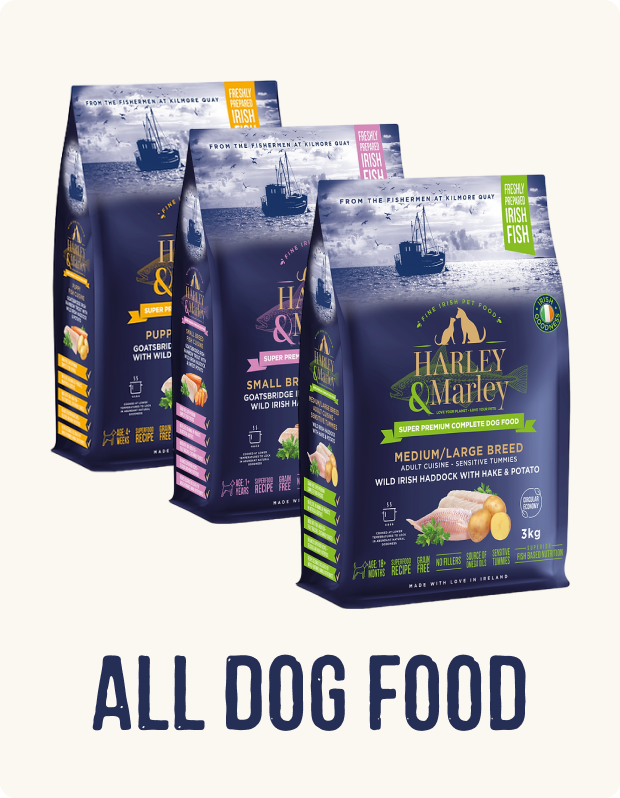
Harley & Marley’s Medium/Large Breed Complete Food is a fish-based complete-food option for owners of medium and large dogs comparing protein sources. Whether it’s suitable depends on your dog’s food history, preferences and nutritional needs, not simply on choosing fish over beef. For puppies, small breeds and senior dogs, Harley & Marley also offers Puppy Complete Food, Small Breed Complete Food and Senior Dog Complete Food.
Use the comparisons above to weigh your dog’s previous reactions, appetite and health needs. A different protein may be worth considering if beef doesn’t suit your dog, but suspected food allergies call for veterinary guidance rather than a food change alone.
Contact Harley & Marley to explore which complete-food option may suit your dog.
Make your next food choice with confidence
Your dog’s response to a food can guide your next step. Keep a simple record of meals, appetite, stool quality and any skin or ear changes; it can make conversations about diet more useful. If you suspect an allergy, follow veterinary guidance rather than trying several proteins in quick succession.
Treat your beef-versus-fish dog food comparison as a way to find what best suits your dog, not a contest with one universal winner. Harley & Marley offers Medium/Large Breed Complete Food, Puppy Complete Food and Small Breed Complete Food, with options to consider by life stage and size.
For help exploring suitable fish-based food options for your dog, contact Harley & Marley for protein advice. A thoughtful choice is a positive next step towards feeding your dog with greater confidence.
Frequently Asked Questions
So what meat should you choose?
Choose a protein your dog can eat comfortably in a complete food suited to their life stage and needs. Their food history can help: if they’ve eaten beef without problems, there may be no reason to switch just for variety. When comparing alternatives, consider taste, ingredients and how the food fits their routine, not just the protein named on the front.
What are the best meats for dogs?
No single meat is best for every dog. Beef, fish, chicken and pork can each contribute protein to a complete recipe, while their nutrient and fat profiles differ. Focus on the whole food rather than ranking ingredients in isolation. For example, a fish-based complete food offers an alternative to meat-based recipes, but suspected allergies call for a planned approach rather than trying proteins at random.
What are the protein, fat and calorie differences between beef and fish dog food?
There’s no fixed nutrient difference across all beef and fish foods, because recipes vary in ingredients, moisture and fat content. Compare the nutritional information and feeding guidance on the specific packs. A matching protein percentage doesn’t mean matching digestibility or calories. Also consider fish type: oily fish such as salmon differs in omega-3 content from lean white fish such as cod.
Which is better for dogs with food allergies or sensitivities, beef or fish?
Fish may be a useful option if your dog hasn’t eaten it before, but “novel” depends on their food history. It isn’t automatically suitable for every sensitive dog. During a veterinary-guided elimination diet, extras matter too: a beef-containing chew, table scrap or flavoured supplement can introduce another protein and make the result difficult to interpret.
Can beef or fish dog food cause common side effects or health risks?
Either recipe can cause problems if it doesn’t suit your dog or a food change happens abruptly. A sudden switch, for example, may upset digestion, so transition gradually and watch for changes in appetite and stools. Beef can be unsuitable for dogs reacting to that protein, while a fish recipe still needs to match your dog’s nutritional needs and health profile.
How do beef and fish dog food prices compare in Ireland?
Compare the cost per daily serving, as pack size, recipe and feeding amount all affect the total. A higher protein percentage alone doesn’t tell you which food offers better value.