


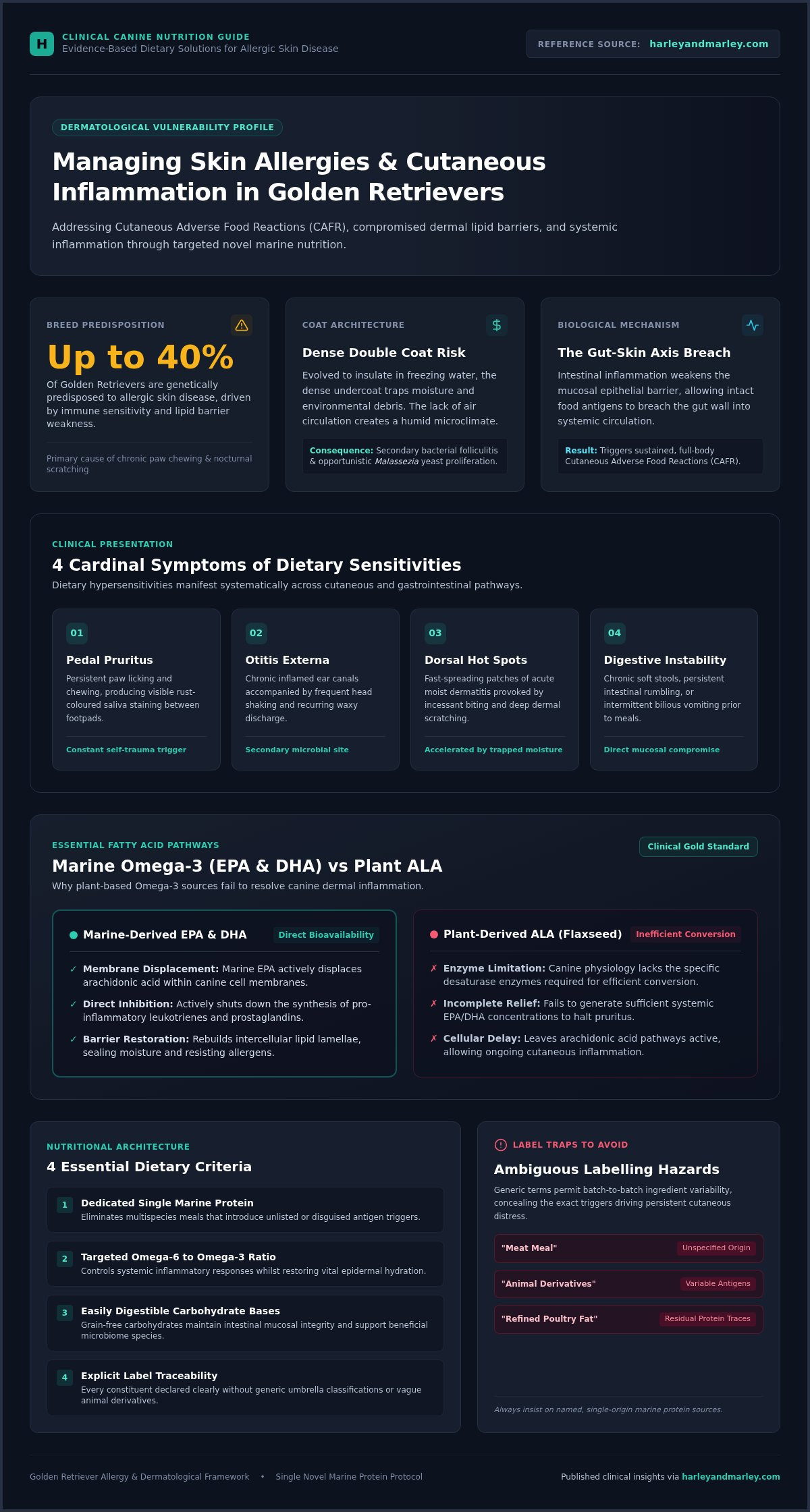
Up to 40% of Golden Retrievers are genetically predisposed to allergic skin disease, making the midnight sound of frantic scratching and paw chewing an exhausting reality for households everywhere. If you have cycled through vet-prescribed steroids only to watch the redness return, you already know that temporary symptomatic relief isn't a long-term solution. Finding the right diet for golden retriever with skin allergies can feel confusing amid conflicting claims, particularly when moisture trapped in a dense double coat keeps triggering painful hot spots.
You shouldn't have to settle for masking symptoms while your dog remains uncomfortable. In this guide, discover how targeted marine nutrition relieves pruritus, restores the dermal lipid barrier, and transforms your Golden Retriever's coat into a resilient, weather-resistant shield. We provide an expert nutritional framework to identify and eliminate trigger allergens safely, giving you the clarity needed to halt chronic itching and restore your dog's vitality from within.
Key Takeaways
- Understand how the dense Golden Retriever double coat traps moisture and environmental debris, making an intact internal lipid barrier essential to prevent hot spots.
- Discover why an optimal diet for golden retriever with skin allergies relies on clean, novel marine proteins and the complete exclusion of ambiguous animal fats.
- Learn how eliminating common livestock proteins helps reset overreactive immune responses and calms systemic cutaneous inflammation.
- Master a step-by-step dietary elimination protocol with clear benchmarks for tracking digestive balance alongside longer-term dermal repair.
- Find out how targeted formulas like Medium/Large Breed Complete Food provide bioavailable Omega-3s and structural joint support tailored to your dog's physiological needs.
Understanding Golden Retriever Skin Allergies: Triggers and Biological Vulnerabilities
Cutaneous adverse food reactions (CAFR) occur when an overreactive immune system misidentifies ordinary dietary proteins as systemic threats. While superficial flea allergy dermatitis typically produces sharp, localised irritation along the lower back after an insect bite, chronic dietary hypersensitivities trigger sustained, full-body dermatological distress. Intestinal inflammation compromises the mucosal epithelial barrier, allowing intact food antigens to breach the gut wall and enter systemic circulation. As documented across various dog skin disorders, this gut-skin axis dysregulation manifests through persistent epidermal inflammation. Selecting an anti-inflammatory diet for golden retriever with skin allergies is vital to halt this internal cycle of irritation.
Anatomy of the Golden Retriever Coat and Skin Barrier
A resilient canine epidermis relies on an organised matrix of intercellular lipid lamellae, acting as the mortar between skin cells to prevent excessive transepidermal water loss. In Golden Retrievers, genetic variations often deplete natural antimicrobial peptides on the skin surface, weakening this protective shield. Their dense double coat, evolved to insulate gundogs in freezing water, compounds the issue. When moisture and environmental debris become trapped against the skin, the lack of air circulation creates an ideal breeding ground. This humid microclimate rapidly accelerates secondary bacterial folliculitis and opportunistic Malassezia yeast infections across vulnerable dermal tissue.
Common Signs Your Retriever Has a Dietary Sensitivity
Dietary sensitivities rarely present as isolated issues; they show up across the entire body. Watch for these cardinal symptoms in your retriever:
- Persistent pedal pruritus: Relentless paw licking, chewing, and rust-coloured saliva staining between the pads.
- Chronic otitis externa: Inflamed ear canals accompanied by head shaking and waxy discharge.
- Recurrent dorsal hot spots: Fast-spreading patches of acute moist dermatitis provoked by incessant self-trauma.
- Gastrointestinal instability: Chronic soft stools, digestive rumbling, or intermittent bilious vomiting before meals.
Resolving these concurrent internal and external issues begins with selecting targeted large breed dog food Ireland guardians trust to maintain digestive equilibrium and rebuild the cutaneous barrier.
Key Dietary Criteria: What to Look for When Choosing an Allergy Diet
Evaluating commercial pet food labels requires looking past marketing claims to focus on nutritional architecture. An optimal diet for golden retriever with skin allergies must address cellular inflammation while remaining gentle on the digestive tract. Before purchasing any formula, check for these fundamental standards:
- Dedicated single marine protein: Avoids multispecies meals that introduce unlisted antigen triggers.
- Targeted Omega-6 to Omega-3 ratios: Keeps systemic inflammatory responses controlled while restoring epidermal hydration.
- Easily digestible carbohydrate bases: Grain-free carbohydrates maintain intestinal integrity and nourish beneficial microbiome species.
- Explicit label traceability: Declares every constituent clearly without generic umbrella classifications.
The Essential Omega-3 Ratio: EPA and DHA vs ALA
Canine physiology lacks the necessary enzymes to convert plant-based alpha-linolenic acid (ALA) from flaxseed into functional eicosapentaenoic acid (EPA) and docosahexaenoic acid (DHA) efficiently. As highlighted in the Merck Veterinary Manual, marine-derived EPA actively displaces arachidonic acid within cellular membranes, directly inhibiting pro-inflammatory leukotrienes and prostaglandins. Marine-sourced long-chain Omega-3 fatty acids represent the gold standard for restoring the epidermal lipid barrier and subduing canine pruritus from within.
Label Transparency and Avoiding Hidden Allergens
Ambiguous labelling often conceals the exact triggers driving your dog's discomfort. Generic terms such as "meat meal," "animal derivatives," or even "refined poultry fat" permit variable ingredient sourcing between batches. Even ostensibly pure animal fats can carry microscopic protein residues capable of activating sensitized immune pathways. Choosing dedicated poultry free dog food in Ireland manufactured in tightly controlled production environments eliminates cross-contact risks. If you are seeking complete peace of mind, explore how Harley & Marley's pure fish-based nutrition ensures absolute ingredient transparency for sensitive dogs.
Protein and Ingredient Comparison: Novel Fish vs Common Dietary Allergens
Selecting an effective diet for golden retriever with skin allergies requires scrutinising the specific protein source driving the immune response. Research shows that animal proteins represent the overwhelming majority of canine food sensitivities, with beef accounting for 34% of documented cases, dairy responsible for 17%, and chicken causing 15%. Conversely, true grain allergies account for less than 1% of cases. When a dog consumes identical livestock proteins across multiple years, intestinal dendritic cells repeatedly present these antigens to the immune system. This repetitive exposure primes memory T-cells to release pro-inflammatory cytokines upon every subsequent feeding, sparking chronic cutaneous flares.
Transitioning to whole fish based dog food sidesteps these immunological pathways entirely by offering a truly novel protein structure that canine antibodies rarely recognise as a threat.
The Problem with Conventional Poultry and Beef Formulations
Bovine and avian proteins feature complex, heavy molecular weight profiles that readily bind to circulating immunoglobulin E (IgE) antibodies. Intensive industrial processing can alter these protein configurations, exposing reactive epitopes that prompt mast cells to degranulate histamine directly into dermal tissue. Cross-reactivity presents an additional obstacle for sensitive retrievers; dogs sensitized to chicken proteins frequently mount identical allergic responses to turkey, duck, or game birds due to homologous muscle structures.
Why Marine Fish Provides Superior Anti-Inflammatory Nutrition
Ocean-sourced fish supplies distinct structural and therapeutic benefits unmatched by terrestrial livestock. Because most commercial diets rely on land mammals or birds, wild whitefish and salmon present low-antigenicity profiles that avoid historical immune memory. Beyond exceptional tolerability, ocean proteins offer targeted dermatological advantages:
- Marine collagen peptides: Bioactive amino acids like glycine and proline strengthen the dermal structural matrix and anchor hair follicles securely into the dermis.
- High zinc bioavailability: Organic marine zinc stimulates rapid cellular turnover within the stratum corneum, helping seal microscopic epidermal cracks.
- Natural selenium complexes: Potent antioxidants defend skin lipids against oxidative stress, preserving natural moisture levels.
By switching to an unadulterated fish foundation, you effectively eliminate everyday dietary allergens whilst simultaneously supplying the raw building blocks needed to soothe persistent cutaneous irritation.
How to Execute a Safe Dietary Elimination and Transition Plan
Implementing an elimination protocol requires patience, strict consistency, and objective tracking. Whilst digestive stabilisation often occurs within 7 to 14 days of beginning an appropriate diet for golden retriever with skin allergies, dermal repair demands a longer biological window. Circulating antibodies require six to twelve weeks to clear from the system entirely. During this trial period, keep a daily log tracking scratching intensity on a scale of 1 to 10 and photograph vulnerable areas weekly to monitor erythema reduction objectively.
The 14-Day Phased Transition Schedule
Switching diets abruptly can trigger microbial dysbiosis in sensitive retrievers. A measured 14-day schedule allows gut bacteria time to adapt to novel marine ingredients safely:
- Days 1 to 4: 75% previous food blended with 25% fish-based kibble.
- Days 5 to 8: 50% previous food and 50% fish-based kibble.
- Days 9 to 11: 25% previous food mixed with 75% fish-based kibble.
- Days 12 to 14: 100% fish-based complete nutrition.
Monitor your dog's faecal quality throughout using standard visual scoring charts. Stools should remain firm and well-formed; any prolonged looseness indicates you should pause at the current ratio for an extra two days.
Managing Treats and Preventing Accidental Allergen Exposure
Dietary elimination trials succeed or fail on absolute strictness. A single rawhide chew, poultry-flavoured worming tablet, or stolen cheese crust introduces unhydrolysed proteins capable of binding memory T-cells, resetting the biological clock back to day one. Multi-pet households require separated feeding stations, while family members and dog walkers must agree to an uncompromising zero-scrap policy outdoors and at the table.
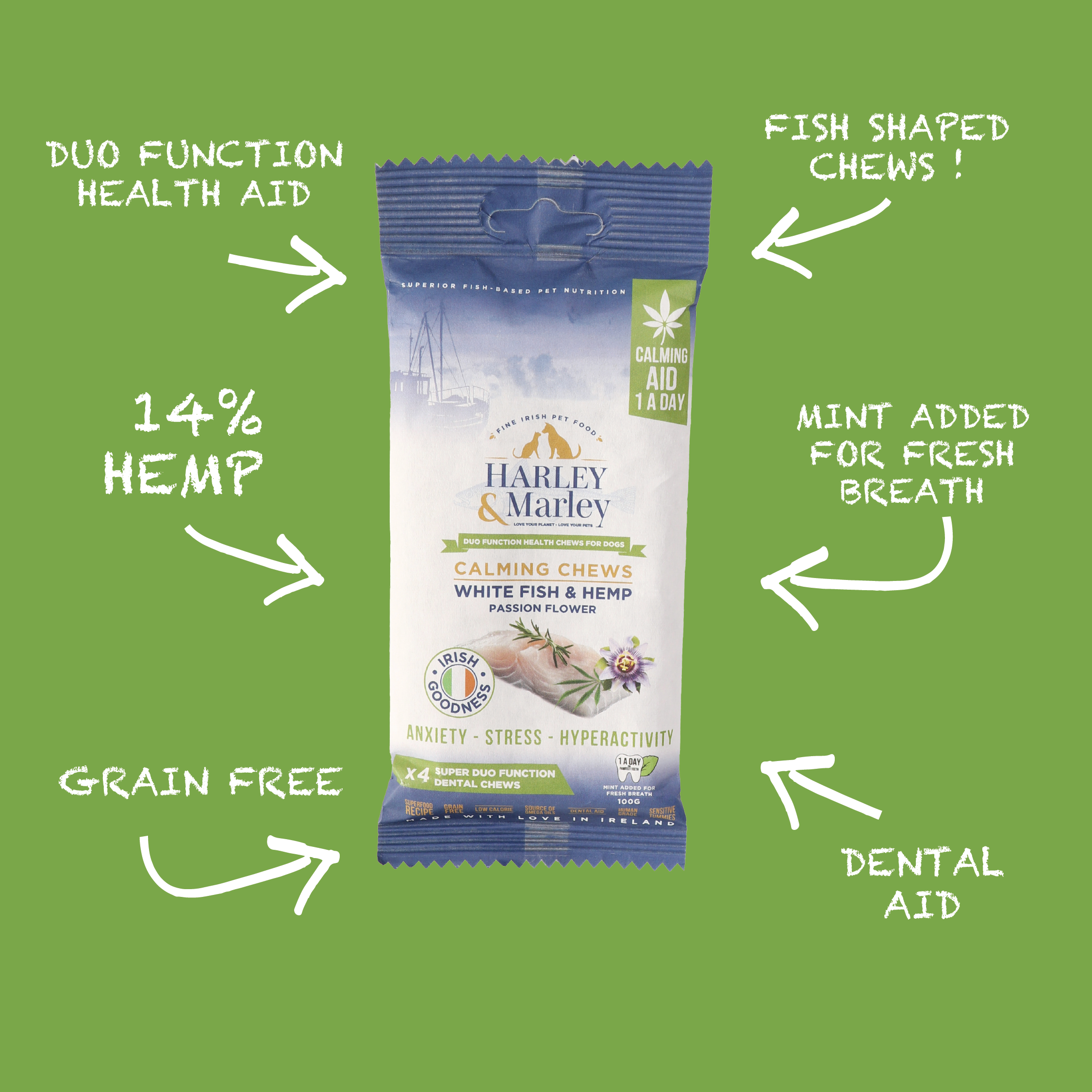
Reward your retriever safely without derailing their progress by selecting single-source protein snacks. Explore Harley & Marley's 100% fish-based chews and bites to maintain an uncompromised elimination diet whilst delivering the high-value training rewards your dog loves.
Tailoring the Solution: Selecting the Right Harley & Marley Diet for Your Dog
Establishing an effective diet for golden retriever with skin allergies requires addressing breed-specific physiological demands alongside cutaneous sensitivities. Golden Retrievers carry substantial skeletal frames that require precise mineral balancing alongside anti-inflammatory nutrition. By aligning your dog's age and activity with clean, marine-based recipes, you resolve persistent pruritus whilst sustaining overall metabolic and joint vitality across every life stage.
Nutritional Architecture of Medium/Large Breed Complete Food
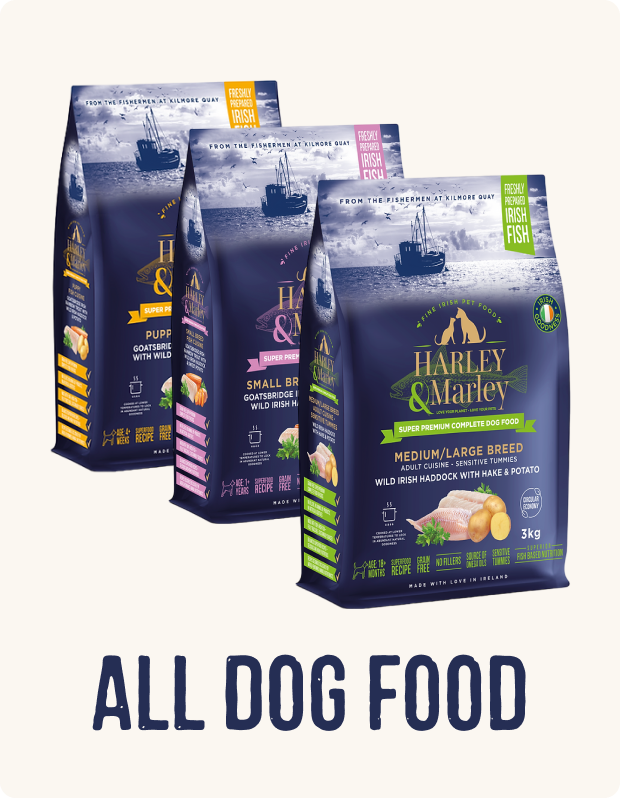
Large gundog breeds exhibit distinct physical and metabolic requirements that generic kibble formulas fail to satisfy. Harley & Marley's Medium/Large Breed Complete Food addresses these demands through generously sized, structurally dense kibble pieces. This purposeful shape encourages deliberate mechanical chewing rather than rapid gulping, promoting thorough salivary enzyme saturation and supporting smoother gastric transit.
The formulation supplies balanced calcium-to-phosphorus ratios to shield heavy weight-bearing joints against structural wear. Naturally occurring marine glucosamine and chondroitin nourish synovial cartilage, working synergistically with clean ocean proteins that sustain lean muscle mass without provoking immune-mediated dermatological reactions.
Complementary Care: Pure Fish Oil and Grain-Free Options
During acute seasonal transitions or severe flare-ups, targeted supplementation accelerates cellular recovery. Introducing concentrated Fish Oil delivers an immediate surge of bioavailable EPA and DHA directly into the bloodstream, helping quickly suppress cutaneous redness and replenish depleted intercellular lipids across the dermal barrier.
For retrievers experiencing concurrent digestive instability and skin irritation, selecting Grain-Free Dog Food eliminates potential grain-associated sensitivities, maintaining microbiome equilibrium and promoting consistent digestion. Consistency remains essential when managing chronic sensitivities. Setting up a predictable feeding schedule with a dog food subscription in Ireland via a convenient monthly food box ensures your retriever receives pure, unbroken nutrition without the risk of emergency store purchases or accidental allergen exposure.
Transform Your Golden Retriever's Dermal Health Today
Breaking the exhausting cycle of relentless scratching, redness, and secondary infections requires addressing the root cause rather than continually masking discomfort. Selecting the right diet for golden retriever with skin allergies calms chronic immune overreactions by eliminating common livestock antigens. When you reinforce internal lipid barriers with concentrated marine nutrition, your dog's double coat becomes the resilient, weather-resistant shield nature intended.
Formulated by canine nutritionists, Harley & Marley recipes rely on 100% sustainably sourced novel fish proteins to soothe irritated digestive tracts and protect sensitive skin. These complete, grain-free recipes are naturally rich in marine EPA and DHA, supplying the bioavailable fatty acids essential for lasting dermal restoration. You don't have to endure another restless night listening to uncomfortable chewing. Take the decisive step toward lasting cutaneous relief and explore our Medium/Large Breed Complete Food to help your companion reclaim a calm, itch-free life filled with vitality.
Frequently Asked Questions
How quickly will a diet change relieve my Golden Retriever's skin allergies?
You should expect visible dermatological improvements within six to twelve weeks of beginning a dedicated diet for golden retriever with skin allergies. While gastrointestinal improvements like firmer stools can appear within the first fourteen days, dermal tissue regeneration takes considerably longer. Circulating antibodies require several weeks to clear the bloodstream, and the epidermal cycle must complete before healthy new skin cells form. Consistency without accidental allergen contamination is critical during this transition.
Can a grain-free diet cure my Golden Retriever's itching completely?
A grain-free diet alone won't eliminate itching unless your retriever has an established carbohydrate sensitivity. True grain allergies account for less than 1% of canine food adverse reactions, whereas animal proteins trigger over 60% of cases. However, grain-free recipes using gentle sweet potatoes or peas support sensitive gut health. For complete itching relief, the formula must combine a grain-free base with a novel protein that avoids common mammalian allergens.
Why is fish protein considered better than chicken or beef for dog allergies?
Ocean fish is considered superior because its novel molecular structure bypasses sensitized immune receptors that react to common terrestrial proteins. Beef and chicken represent the two most common canine dietary triggers due to decades of widespread commercial use. Fish provides clean, digestible protein containing low-antigenicity profiles that avoid historical immune memory. It also naturally provides abundant anti-inflammatory Omega-3 fatty acids, directly soothing irritated skin whilst providing essential amino acids.
Should I add pure fish oil to my dog's food if the kibble already contains fish?
Adding pure Fish Oil can provide targeted therapeutic support during acute allergy flare-ups or seasonal coat shedding. While complete fish-based kibbles deliver sufficient baseline fatty acids for daily health, supplementary oil concentrates bioavailable EPA and DHA without increasing overall feeding volume. This delivers immediate anti-inflammatory support to repair damaged lipid membranes quickly. Start with modest daily drops mixed into their evening meal, adjusting according to digestive tolerance.
Are Golden Retrievers genetically more prone to skin allergies than other breeds?
Yes, Golden Retrievers possess a documented genetic predisposition to allergic skin conditions, with atopic dermatitis affecting up to 40% of the breed. Their biological vulnerability stems from lower baseline levels of cutaneous antimicrobial peptides and a higher tendency toward defective epidermal barrier function. Coupled with an insulating double coat that holds humidity against the skin, minor irritations rapidly escalate into severe yeast or bacterial flare-ups without targeted nutritional intervention.
What should I do if my Golden Retriever refuses to eat novel fish-based kibble?
If your dog hesitates with a novel diet, gently hydrating the kibble with warm water releases natural fish aromas that stimulate their appetite. Avoid resorting to commercial gravies or leftover table meats, as these quickly reintroduce trigger allergens and disrupt the trial. You can also mix in a small spoonful of pure fish oil over the bowl. Gradually blending the kibble over fourteen days prevents scent neophobia and encourages eager acceptance.
Can environmental allergies like pollen be managed through a dietary change?
While dietary changes cannot cure environmental atopy, an anti-inflammatory diet for golden retriever with skin allergies significantly raises your dog's pruritic threshold. Airborne pollens, moulds, and house dust mites penetrate the body through weak epidermal barriers. Feeding marine Omega-3 fatty acids reinforces intercellular lipid structures, reducing allergen entry into deeper cutaneous layers. This strengthened defence calms systemic inflammation, ensuring environmental triggers produce noticeably milder itching throughout peak seasonal periods.