


Could the very protein you're feeding to "fix" your dog's digestion actually be the culprit behind those midnight garden trips? Many owners find themselves trapped in a cycle of switching between different poultry or meat-based kibbles, only to be met with the same loose stools and uncomfortable flatulence. Finding the best dog foods for sensitive stomach can feel like a daunting task when faced with complex ingredient labels and conflicting advice. It's exhausting to watch your companion struggle whilst vet bills for unexplained sensitivities continue to climb.
We understand that you want more than just a temporary fix; you want a long-term, sustainable feeding plan that restores your dog's vitality. This guide reveals why fresh, Irish fish is the ultimate clean protein for delicate guts. You'll learn how to bypass the complexity of land-based proteins to achieve consistent, healthy stools and a noticeably happier, more energetic dog. We shall break down the functional advantages of grain-free, fish-led nutrition and provide the clarity you need to choose a diet that truly supports your dog's holistic health.
Key Takeaways
- Learn to recognise the subtle signs of digestive distress, such as intermittent loose stools and stomach noises, to address sensitivities before they escalate.
- Understand why traditional land-based proteins like chicken are frequent irritants and how switching to a cleaner protein source can eliminate common triggers.
- Discover why fish-based nutrition is considered the gold standard when searching for the best dog foods for sensitive stomach due to its superior bioavailability and hypoallergenic properties.
- Master the "Clean Label" test to identify high-quality, single-protein recipes that simplify digestion and support a healthy gut microbiome.
- Explore how grain-free, Irish fish formulations provide a sustainable and nutritionally complete solution for dogs across all life stages.
Identifying the Signs of a Sensitive Stomach in Your Dog
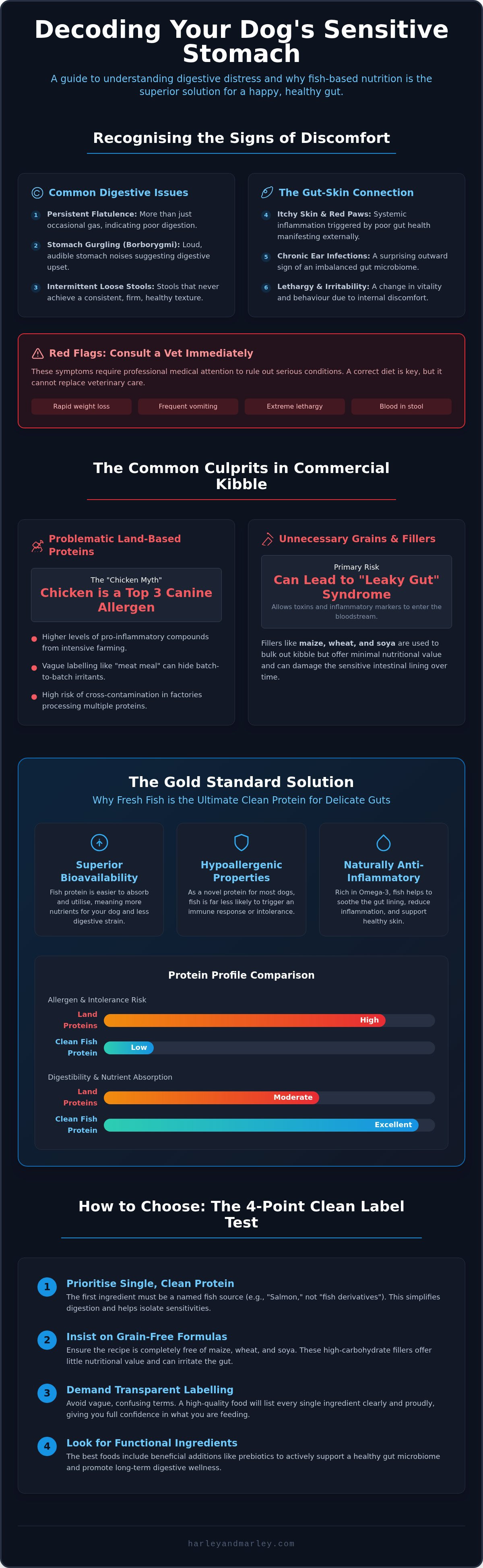
A sensitive stomach isn't merely a one-off bout of digestive upset after your dog finds a scrap of discarded food on a walk. It's a chronic condition. We define it as a persistent, long-term inability to process specific ingredients efficiently, which leads to a compromised quality of life for your companion. Whilst many owners search for the best dog foods for sensitive stomach, they often overlook the subtle, everyday indicators that their dog is struggling. Common symptoms include persistent flatulence, borborygmi (audible stomach gurgling), and intermittent loose stools that never quite resolve into a healthy, firm consistency. The frequency of these episodes is often the clearest indicator that the current diet is incompatible with their unique biology.
These physical symptoms carry a significant emotional weight. A dog with chronic gut discomfort often appears lethargic, subdued, or even irritable. Their usual vitality wanes, replaced by a protective behaviour that signals internal distress. It's vital to distinguish between a food allergy, which involves an overactive immune response, and a food intolerance, which is a purely digestive failure. Gaining a deeper perspective on understanding hypoallergenic diets helps clarify why certain proteins trigger these reactions whilst others provide relief. When you identify these signs early, you can move away from reactive "fixes" and towards a proactive, nutritional solution.
The Gut-Skin Connection
The canine body is an intricately interconnected system. Frequently, a dog's digestive issues won't stay confined to the gut; they manifest externally in ways that seem unrelated. Chronic ear infections, red, inflamed paws, or itchy skin are often the outward results of systemic inflammation triggered by poor gut health. When the microbiome is out of balance, the intestinal barrier can weaken, allowing pro-inflammatory markers to circulate throughout the body. This "gut-skin axis" means that the best dog foods for sensitive stomach must also support the body's natural immunity and barrier functions through clean, bioavailable ingredients.
When to Consult a Professional
Self-diagnosis has its limits, and as a conscious pet owner, you must recognise when it's time to seek expert advice. You should watch for "red flag" symptoms that require immediate veterinary attention:
- Rapid or unexplained weight loss
- Extreme lethargy or a refusal to eat
- Blood present in the stool
- Frequent vomiting alongside diarrhoea
These signs help rule out parasites or underlying medical conditions like Inflammatory Bowel Disease (IBD). If your vet confirms a sensitivity rather than a disease, a structured elimination diet remains the gold standard for diagnosis. This methodical approach allows you to identify specific triggers, paving the way for a sustainable feeding plan that restores your dog's health and happiness.
Why Traditional Meat Proteins Often Cause Digestive Distress
Many owners are surprised to learn that chicken is one of the top three canine allergens. This "Chicken Myth", the belief that poultry is inherently gentle and easy to digest, leads many to keep feeding the very ingredient causing their dog's distress. Intensive farming practices often result in land-based meats with higher levels of pro-inflammatory compounds compared to wild-caught or sustainably sourced alternatives. This explains why the search for the best dog foods for sensitive stomach often ends in frustration when sticking to traditional poultry or beef-based diets.
Transparency is often lacking in budget-friendly options. Terms like "animal derivatives" or "meat meal" allow manufacturers to use varying protein sources from batch to batch depending on market price. Understanding FDA pet food labeling regulations highlights how these vague descriptions can mask the presence of irritants that trigger a sensitive gut. Large-scale manufacturing plants also present a hidden risk; cross-contamination occurs when the same machinery processes multiple meat types, introducing trace allergens into otherwise "clean" recipes.
The Danger of Fillers and Grains
Fillers like maize, wheat, and soya are frequently used to bulk out kibble, yet they offer little nutritional value for dogs with delicate systems. These high-carbohydrate ingredients can lead to "leaky gut" syndrome, where the intestinal lining becomes permeable and allows toxins to enter the bloodstream. Choosing grain-free dog food isn't just a lifestyle choice; it's a physiological requirement for dogs that struggle with the inflammatory response triggered by modern cereal crops.
The Complexity of Land-Based Fats
Land-based meats like beef and pork are often high in heavy saturated fats. These fats are notoriously difficult for a sensitive canine pancreas to break down, potentially leading to acute or chronic pancreatitis in predisposed breeds. Transitioning to a cleaner, more bioavailable protein source reduces this metabolic burden significantly. Poultry-free dog food in Ireland is becoming the preferred choice for owners who want to eliminate the most common dietary triggers whilst ensuring their pet receives high-quality, sustainable nutrition.
The Biological Benefits of Fish for Canine Digestion
Fish protein offers a level of bioavailability that land-based meats simply cannot match. At a biological level, the muscle fibres in fish are shorter and contain less connective tissue than those found in beef or poultry. This structural simplicity allows a dog's digestive enzymes to break down the protein with far less metabolic effort. For an animal struggling with a delicate gut, this efficiency is transformative. It ensures that essential nutrients are absorbed in the small intestine whilst minimising the amount of undigested material reaching the colon to ferment and cause distress.
Beyond ease of transit, fish is naturally hypoallergenic. Because it hasn't been a staple of mass-produced, budget kibbles for decades, most dogs haven't developed the immunological sensitivities associated with common farm proteins. This makes marine-based recipes some of the best dog foods for sensitive stomach management. Additionally, white fish and salmon are inherently leaner than red meats, providing a high-density protein source that is exceptionally gentle on the pancreas. This reduces the risk of the inflammatory flare-ups often triggered by heavy saturated fats.
Omega-3s: More Than Just a Shiny Coat
The presence of EPA and DHA Omega-3 fatty acids provides a powerful anti-inflammatory effect that works from the inside out. Whilst many owners associate these fats with a glossy coat, their primary value for a sensitive dog lies in their ability to soothe the mucosal lining of the digestive tract. By reducing systemic inflammation, these fatty acids help stabilise the gut environment and improve stool consistency. We believe in the power of whole-fish nutrition rather than just isolated oil supplements; the natural synergy between the proteins, minerals, and fats in the whole animal provides a more holistic health outcome for your pet.
Amino Acid Profiles in Marine Protein
Marine proteins deliver a complete amino acid profile that supports every aspect of canine health, from muscle maintenance to cardiac function. Fish is a natural source of taurine, an amino acid critical for heart health that is often lacking in processed, grain-heavy diets. By choosing a fish-led diet, you provide the building blocks for strong muscles without the heavy caloric load or digestive burden of red meat. For those looking to dive deeper into the science of these formulations, our ultimate guide to fish-based dog food explores the functional advantages of marine nutrition amongst modern pet populations. This clean approach ensures your dog remains energetic and thriving, free from the lethargy that often accompanies chronic digestive upset.
How to Select the Best Dog Food for Sensitive Stomachs
Choosing a diet for a dog with digestive sensitivities requires a shift from marketing-led decisions to a "Clean Label" approach. When evaluating potential options, you should be able to identify every ingredient listed on the back of the bag without needing a dictionary of scientific terms. High-quality formulations prioritising transparency will always list a specific, single protein source. These mono-protein recipes are significantly safer for dogs with intolerances because they eliminate the "protein cocktail" effect found in budget brands, where trace amounts of various land-based meats can trigger a reaction. Identifying the best dog foods for sensitive stomach management often comes down to finding these simplified, high-integrity ingredient lists, which is why specialist international retailers like Petguru focus on providing premium, vetted nutrition.
Consistency is another critical factor that separates premium nutrition from generic alternatives. You should look for "fixed formulas" rather than "open formulas". An open formula allows manufacturers to alter the ingredients based on seasonal market prices whilst keeping the label descriptions vague. For a dog with a sensitive gut, even a minor change in the source of fats or fillers can lead to a flare-up. To further support a healthy gut microbiome, ensure the recipe includes natural prebiotics such as chicory root or beet pulp. These fibres nourish beneficial bacteria, helping to regulate bowel movements and improve overall nutrient absorption.
For many dogs, removing cereals is the final piece of the digestive puzzle. You might opt for a complete grain-free dog food to maximise transit ease and reduce the risk of inflammatory responses associated with wheat or maize. However, it's vital to avoid the "carb-heavy" trap. Some low-quality grain-free options simply replace cereals with excessive amounts of white potato or cheap starches. Instead, look for healthy carbohydrate alternatives like sweet potato or peas, which provide slow-release energy and essential vitamins without stressing the digestive lining.
Reading the Analytical Constituents
The analytical constituents box provides the hard data behind the ingredients. You must tailor the protein-to-fat ratio to your dog's life stage; active adults typically require more energy, whilst sensitive seniors benefit from a leaner profile to avoid taxing the pancreas. Pay close attention to the ash content, which represents the mineral residue in the food. A balanced ash level ensures your dog receives necessary minerals like calcium and phosphorus without overloading their system. Finally, verify that the food is free from hidden sugars and artificial preservatives like BHA or BHT. These synthetic additives are known irritants that have no place in a diet designed for vitality. To provide your companion with a stable, high-performance diet, browse our super premium fish-based dog food range today.
Harley & Marley: Precision Fish Nutrition for Sensitive Paws
We are a proudly Irish-owned business dedicated to redefining canine health through 100% fish-based, poultry-free nutrition. Our commitment to purity means we never include meat or animal derivatives in our formulations. By sourcing our ingredients from the cold, clean waters of the Atlantic, we ensure maximum freshness and nutrient density. This "Conscious Expert" approach isn't just about nutrition; it's about a sustainable circular economy model that respects our environment whilst providing the best dog foods for sensitive stomach management. Our recipes are specifically designed to offer immediate relief to dogs struggling with chronic digestive distress.
By removing the complexity of land-based proteins and heavy fats, we allow your dog's digestive system to rest and recover. It's a holistic method that treats the root cause of sensitivities rather than just masking the symptoms. We take pride in our clean-label aesthetic, ensuring that every bag of Grain-Free Dog Food we produce meets the highest standards of purity and bioavailability. This transparency creates an atmosphere of trust, allowing you to feel confident in the long-term health outcomes for your companion.
Tailored for Every Life Stage
Digestive needs evolve significantly as your dog grows. We provide specialised formulations ranging from puppy food in Ireland to Senior Dog Complete Food. Kibble size and nutrient density are carefully adjusted to suit different requirements; small breeds require smaller pieces for safe mastication, whilst larger breeds benefit from specific mineral balances. Our unique inclusion of seaweeds and high-potency fish oils ensures every life stage receives the natural Omega-3 and Omega-6 fatty acids required for holistic vitality and a resilient gut microbiome.
The Convenience of Consistency
Abrupt dietary changes are often the catalyst for a sensitive stomach flare-up. A dog food subscription in Ireland ensures you never face the "emergency" food swap at a local shop when your supply runs low. Our monthly food box and curated bundles for dogs provide the long-term stability your pet's digestive system needs to thrive. This reliable rhythm builds confidence in a sustainable feeding plan that delivers consistent, healthy stools and a happier, more energetic dog every single day. Explore our range of fish-based foods for sensitive stomachs and discover the transformative power of clean, marine-led nutrition.
Restoring Your Dog's Digestive Vitality
Managing a sensitive stomach doesn't have to be a journey of trial and error. By choosing proteins with high bioavailability and avoiding the inflammatory triggers found in land-based meats, you can transform your dog's daily comfort. We've explored why fish-based nutrition serves as the gold standard for gut health, offering a clean, hypoallergenic alternative that supports the microbiome whilst providing essential Omega-3 fatty acids. Transitioning to a transparent, "clean label" diet is the most effective way to identify the best dog foods for sensitive stomach management for your unique companion.
At Harley & Marley, we combine our "Conscious Expert" approach with a sustainable circular economy model to deliver super premium Irish fish directly to your bowl. Our grain-free and poultry-free formulations are crafted to ensure your dog thrives at every life stage, from puppyhood to their senior years. You deserve the confidence of a consistent feeding plan, and your dog deserves the joy of a settled, healthy gut. Switch to Harley & Marley Fish-Based Nutrition Today and experience the difference that pure, marine-led nutrition can make. Your dog's path to a happier, more energetic life starts with a single, mindful choice.
Frequently Asked Questions
Is fish-based dog food really better for a sensitive stomach than chicken?
Fish is a superior choice because it offers shorter muscle fibres and less connective tissue than land-based proteins. This structural simplicity makes it easier for a dog's enzymes to process. Whilst chicken is often marketed as a gentle option, it remains a frequent allergen that can trigger chronic inflammation. Choosing fish-led recipes is a proven strategy for those seeking the best dog foods for sensitive stomach management and long-term digestive comfort.
How long does it take to see an improvement after switching to a fish diet?
You can typically expect to see improvements in stool consistency within 7 to 10 days of completing a successful transition. For more systemic issues like skin irritation or low energy, it usually takes between 6 and 8 weeks for the full benefits of a clean-label fish diet to manifest. This timeframe allows the gut microbiome to stabilise and the anti-inflammatory Omega-3 fatty acids to work through the dog's entire system.
Can I feed my puppy fish-based food if they have a sensitive stomach?
You can certainly feed your puppy fish-based nutrition. Our Puppy Complete Food is specifically formulated to support rapid growth whilst remaining exceptionally gentle on a developing digestive tract. It provides the essential DHA and EPA required for cognitive development and joint health without the heavy, saturated fats found in traditional puppy kibbles. This ensures your young companion builds a strong foundation of health without the distress of frequent loose stools.
What is the best way to transition a dog with a sensitive stomach to new food?
A gradual 10-day transition is the gold standard for dogs with delicate systems. You should start by mixing 25% of the new fish-based food with 75% of their current diet for the first three days. Slowly increase the proportion of the new food every few days until the old food is completely replaced. This methodical approach allows the digestive enzymes and beneficial gut bacteria to adapt without causing a sudden inflammatory response.
Does grain-free dog food actually help with loose stools?
Yes, grain-free dog food can be highly effective for managing loose stools. Many dogs struggle to process the complex carbohydrates found in wheat, maize, or soya, which can ferment in the large intestine and cause gas or diarrhoea. By using more digestible alternatives like sweet potato, our recipes ensure a slower transit time and better nutrient absorption. This is why many owners consider grain-free options amongst the best dog foods for sensitive stomach issues.
Is Harley & Marley dog food suitable for dogs with skin allergies?
Our recipes are ideally suited for dogs with skin allergies. Because skin health is intrinsically linked to gut health, removing common irritants like poultry and grains often resolves chronic itching and redness. The high levels of natural Omega-3 and Omega-6 fatty acids found in our Irish fish help to reinforce the skin's moisture barrier and reduce systemic inflammation. This holistic approach ensures your pet feels comfortable both inside and out.
Why is your dog food specifically made in Ireland?
We manufacture our food in Ireland to guarantee the highest standards of freshness and provenance. Being an Irish-owned business allows us to utilise a sustainable circular economy model, sourcing fresh fish directly from local waters. This proximity reduces the time between catch and production, preserving the delicate oils and proteins that are vital for sensitive pets. It's a commitment to quality that mass-produced, imported brands simply cannot replicate in their supply chains.
Can a dog be allergic to fish?
Whilst it's biologically possible for a dog to be allergic to any protein, fish is exceptionally rare as a primary allergen. Most canine food allergies are triggered by beef, dairy, or wheat due to their long-term prevalence in budget pet foods. Fish remains a novel and highly bioavailable protein for most dogs, making it a safe and effective choice for an elimination diet or a long-term plan for managing chronic digestive sensitivities.