


If your tiny companion is constantly scratching, the "premium" chicken or beef kibble in their bowl might actually be the culprit. It's heartbreaking to watch a small puppy struggle with red, inflamed skin or a sensitive tummy when you're trying your best to provide a healthy start. You've likely spent hours deciphering complex ingredient lists and visiting the vet; yet the irritation persists. The cycle of discomfort is exhausting for both you and your pet.
Finding the best puppy food for small dogs with allergies shouldn't be a stressful cycle of trial and error. We understand the worry that poor nutrient absorption might stunt your puppy's growth or dull their natural vitality. This guide reveals why clean, fish-based nutrition acts as the ultimate hypoallergenic solution for small breeds. By prioritising high-density Omega-3s and pure Irish sourcing, you can finally achieve a shiny coat and a settled stomach. We'll explore the functional benefits of fish proteins, explain how to simplify your feeding routine, and show you how to ensure your puppy thrives without the irritation of hidden meat allergens.
Key Takeaways
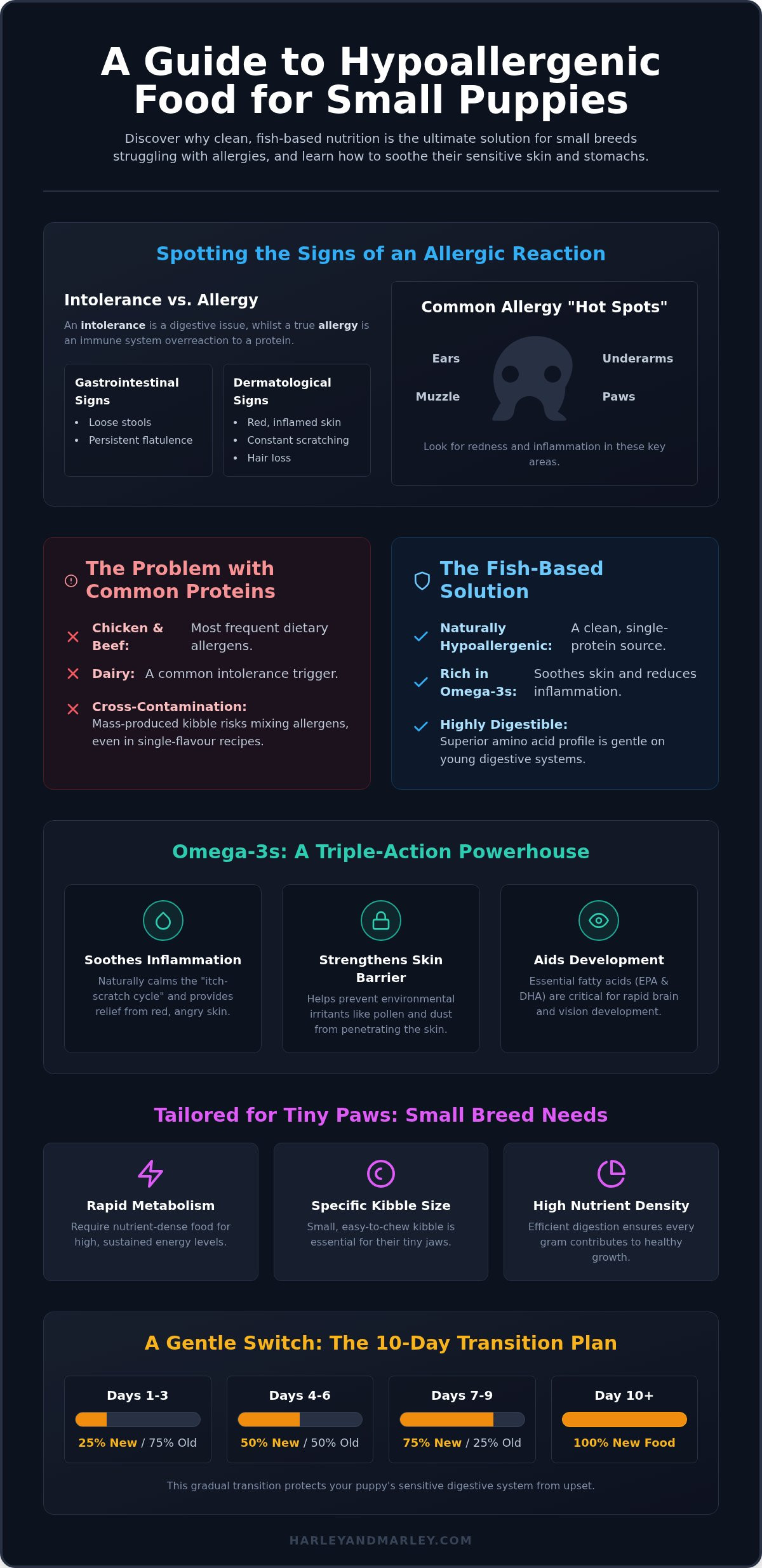
- Learn to distinguish between simple dietary intolerances and clinical allergies by identifying common small breed "hot spots" like paws, ears, and underarms.
- Discover why clean, fish-based protein is the best puppy food for small dogs with allergies due to its naturally hypoallergenic profile and anti-inflammatory Omega-3 fatty acids.
- Understand why "grain-free" marketing doesn't guarantee safety if hidden meat triggers are still present in the recipe.
- Recognise the importance of high nutrient density and specific kibble sizes tailored to the rapid metabolic rates and tiny jaws of small breed puppies.
- Follow a gentle 10-day transition strategy to successfully introduce new proteins whilst protecting your puppy’s sensitive digestive system from upset.
Identifying Allergy Symptoms in Small Breed Puppies
Spotting the early signs of a dietary issue is the first step toward relief. Whilst many owners assume a "sensitive stomach" is just a quirk of the breed, it often signals a deeper immune response. A food intolerance typically involves the digestive system, leading to temporary upset. In contrast, a true clinical allergy is an overreaction of the immune system to a specific protein. Identifying Allergy Symptoms in Small Breed Puppies requires a keen eye for specific "hot spots" where irritation frequently occurs.
Small breeds often exhibit redness or inflammation in the paws, ears, and underarms. Because their bodies are so close to the ground, they're frequently exposed to environmental irritants that can exacerbate existing food sensitivities. This leads to the "itch-scratch cycle," a distressing pattern where the puppy scratches to find relief, causing further skin damage and potential secondary infections. This constant irritation doesn't just affect their skin; it alters their behaviour, making them restless or irritable. Hypoallergenic puppy food is a diet free from common triggers like beef, dairy, and poultry.
Gastrointestinal vs. Dermatological Signs
Digestive symptoms like loose stools and persistent flatulence are often the initial indicators of a problem. These signs suggest that the puppy's system is struggling to process specific ingredients. Beyond the gut, dermatological changes are highly visible. You might notice your puppy's muzzle becoming red or patchy, or see significant hair loss around the eyes. Small breeds are particularly prone to these visible reactions because their skin is often more delicate and their metabolic rates are higher, causing internal inflammation to manifest externally quite rapidly.
The Problem with Common Puppy Food Proteins
Standard puppy recipes rely heavily on chicken and beef, which are the most common dietary allergens in canine nutrition. Even when a label claims to be a specific flavour, factory cross-contamination is a significant risk in mass-produced kibble. Finding the best puppy food for small dogs with allergies often involves moving away from these traditional meats toward novel proteins. According to a 2026 survey by PetMD, fish-based proteins are now a top recommendation by veterinarians for dogs with sensitivities. Using a clean-label, fish-only approach ensures that your puppy isn't consuming hidden triggers that hinder their growth and comfort.
Why Fish is the Gold Standard Protein for Sensitive Paws
Fish stands apart as a nutritional powerhouse, specifically because it offers a clean, single-protein source that avoids the complexities of traditional livestock meats. For owners seeking the best puppy food for small dogs with allergies, the purity of the protein is paramount. Many commercial diets labelled as hypoallergenic still rely on vague "animal fats" or "meat derivatives," which can introduce trace amounts of chicken or beef. By contrast, a dedicated fish-based diet ensures that no hidden allergens disrupt your puppy's recovery.
Fish is naturally rich in Omega-3 fatty acids, which play a structural role in maintaining the skin barrier. A healthy barrier prevents environmental allergens, such as pollen or dust, from penetrating the skin and triggering a reaction. This holistic approach treats the internal cause whilst providing a physical shield against external irritants. By focusing on a single, high-quality protein, you eliminate the risk of cross-contamination often found in multi-meat recipes.
Omega-3s: Beyond Just a Shiny Coat
The benefits of EPA and DHA extend far beneath the surface of a glossy coat. These essential fatty acids are critical for the rapid brain and vision development occurring in your puppy's first months. For sensitive pups, Omega-3s act as natural anti-inflammatories that actively soothe the "itch-scratch cycle" mentioned earlier. Incorporating high-quality fish oil for dogs Ireland can significantly reduce systemic inflammation, providing tangible relief from red, angry skin and persistent irritation.
The Digestibility Factor
Small breed puppies have incredibly high metabolic rates, meaning they require a diet that is both nutrient-dense and exceptionally easy to process. Fish proteins have a superior amino acid profile compared to red meats; they are broken down more efficiently by young digestive systems. When selecting the best puppy food for small dogs with allergies, the ease of digestion is just as vital as the protein source itself. This high bioavailability ensures that every gram of food contributes to growth rather than waste. When Deciphering Labels: Grain-Free vs. Hypoallergenic, it becomes clear that digestibility is the silent hero of allergy management. Better absorption leads to firmer stools and more consistent energy levels, allowing your puppy to thrive without the burden of gastrointestinal strain.
Choosing a diet that prioritises these functional benefits is the most reliable way to secure your pet's long-term health. If you're ready to simplify your routine, exploring a sustainable fish-based puppy food can provide the peace of mind that comes with transparent, Irish-sourced nutrition.
Deciphering Labels: Grain-Free vs. Hypoallergenic
Marketing terminology in the pet food industry can be notoriously difficult to navigate. A common misconception amongst owners is that a "grain-free" label automatically guarantees a product is allergy-safe. Whilst removing grains like wheat, corn, and soya is beneficial for many pets, a grain-free recipe can still contain high-allergen meat proteins like chicken or beef. Finding the best puppy food for small dogs with allergies requires a deeper look into the composition to ensure both the carbohydrate and the protein sources are non-reactive.
The "clean label" movement has gained significant momentum in 2026, as pet owners demand greater transparency. For a puppy with a sensitive system, a shorter ingredient list is almost always superior; it reduces the statistical likelihood of an adverse reaction. When evaluating a new food, use this checklist to spot hidden triggers often found in lower-quality kibble:
- Animal Derivatives: Vague terms that hide the specific species used.
- Meat Meal: A processed powder that often contains a mix of various livestock.
- Poultry Fat: Frequently added to fish-flavoured foods for palatability but can trigger chicken allergies.
- Artificial Colours and Preservatives: Non-functional additives that can irritate a puppy's delicate gut lining.
The Truth About "Meat Meal" and Derivatives
The term "meat meal" is a red flag for any owner managing a puppy's clinical allergies. Because it's a rendered product, there is no way to verify if it contains traces of beef, pork, or poultry. This ambiguity is dangerous for a small breed puppy whose immune system is already on high alert. Harley & Marley addresses this risk by using only identifiable, sustainable fish sources. Our commitment to transparency ensures you know exactly what is entering your pet's bowl, building a foundation of trust through scientific formulation and ethical sourcing.
Why Grain-Free Matters for Small Breed Digestion
Whilst grains aren't always the primary allergen, they are often difficult for small dogs to process efficiently. Heavy grains can lead to bloating, lethargy, and inconsistent energy levels in breeds with fast metabolisms. Transitioning to a complete grain-free dog food allows for the inclusion of superior carbohydrate sources like sweet potato. These complex carbohydrates provide a steady release of glucose, ensuring your puppy remains playful without the "sugar crashes" associated with cereal-based fillers. This focus on high-quality, grain-free ingredients supports better nutrient absorption and long-term vitality.
The Small Breed Advantage: Kibble Size and Nutrient Density
A common error in pet nutrition is treating all puppies as a monolith. In reality, a five-kilogram terrier has vastly different physiological requirements than a thirty-kilogram retriever. Small breed puppies require significantly more calories per pound of body weight than their larger counterparts to fuel their rapid growth and higher metabolic rates. Because their stomachs are physically tiny, they simply cannot consume large volumes of food in one sitting. This makes finding the best puppy food for small dogs with allergies a matter of finding the right balance of concentrated, non-reactive nutrients.
High-quality fish-based dog food for small breeds solves this challenge by packing essential proteins and fats into smaller, more manageable portions. This ensures your puppy receives the necessary building blocks for development without overloading their delicate digestive system. By prioritising nutrient density, you ensure every mouthful contributes to their long-term health and vitality.
Metabolism and Energy Requirements
Small breeds possess an incredibly fast metabolic rate. This biological reality puts them at a higher risk of hypoglycaemia, or dangerously low blood sugar, if they go too long between meals. They need consistent, high-quality fuel to maintain their energy levels. Fish proteins offer a cleaner energy source that young systems convert into vitality for play and growth. By balancing these proteins with healthy fats, such as the Omega-3s found in sustainable Irish fish, we provide the sustained energy required for optimal small breed development. This steady release of energy prevents the spikes and crashes often seen with low-quality, cereal-filled diets.
Dental Health and Small Jaws
The physical shape of the food is just as important as the ingredients inside. Small puppies have crowded mouths, making them more susceptible to plaque build-up and dental issues later in life. A specifically designed, smaller kibble size ensures that tiny jaws can chew effectively, which provides a natural mechanical cleaning action on the teeth. Large breed kibble can act as a physical barrier to eating. This causes some puppies to avoid their bowl or swallow pieces whole, which leads to choking risks. Establishing a solid oral hygiene routine early is vital. Thinking about your pet's comfort now will make managing senior dog dental health Ireland far simpler in the years to come.
To ensure your tiny companion gets the precise, hypoallergenic nutrition they deserve, view our small breed puppy range and discover the difference that premium Irish fish can make.
Transitioning to a Premium Fish-Based Puppy Diet
Successfully moving your pet onto a new protein source is a delicate process. When dealing with sensitive systems, a rushed transition often triggers the very gastrointestinal distress you're trying to avoid. Finding the best puppy food for small dogs with allergies is only half the battle; the implementation determines the long-term success of the diet. You must allow the gut microbiome sufficient time to adapt to the clean, nutrient-dense profile of fish proteins. This patience pays dividends in the form of a settled stomach and reduced systemic inflammation.
During the first fortnight, you might observe what some specialists call a "healing crisis." This is a period where the skin may appear slightly more inflamed or the puppy might itch more frequently as the body begins to process out legacy allergens. Don't be discouraged by these temporary shifts. Monitor your puppy's stool consistency and the emerging shine in their coat during the first month. These are the primary indicators that the internal inflammation is subsiding and the new nutrients are being absorbed effectively.
The 10-Day Transition Schedule
A gradual approach is non-negotiable for small breeds. Unlike generic advice that suggests a three-day switch, a ten-day window provides the necessary buffer for tiny digestive tracts to adjust without stress. This methodical pace reduces the likelihood of loose stools or refusal to eat.
- Days 1-3: Combine 25% of the new fish-based food with 75% of the previous diet.
- Days 4-6: Move to a 50/50 split to balance the transition.
- Days 7-10: Increase to 75% new food, reaching 100% by the tenth day.
For younger puppies or those with particularly sensitive jaws, adding a splash of warm water to the bowl can be incredibly helpful. This softens the kibble and releases the natural aromas of the fish, making the meal more palatable whilst aiding the initial stages of digestion.
Long-Term Allergy Management
Consistency is the cornerstone of successful allergy management. Fluctuations in ingredient quality or sudden changes in protein sources can reset your progress and cause symptoms to return. Utilising a dog food subscription Ireland ensures you always have the specific formula your puppy needs. It's also vital to remain disciplined with rewards. You must avoid all meat-based treats whilst your puppy is on this elimination diet; even a single chicken-based biscuit can trigger a flare-up. Selecting the right puppy food Ireland provides the foundation for a lifetime of holistic health, ensuring your companion grows up with a vibrant, itch-free coat and the vitality they deserve.
Securing Your Puppy's Vibrant Future
Watching your small breed companion struggle with constant itching or digestive upset is difficult, but the solution is often found in pure, functional nutrition. By moving away from complex meat-based recipes and embracing the clarity of 100% fish-only protein sources, you eliminate the hidden triggers that disrupt your pet's growth. We've explored how the high-density Omega-3s in fish support the skin barrier, whilst the specific kibble size ensures your puppy can chew comfortably and absorb every nutrient. Finding the best puppy food for small dogs with allergies is about more than just avoiding reactions; it's about providing the foundation for a lifetime of health.
Our sustainably sourced Irish fish recipes are entirely grain-free and hypoallergenic, designed specifically to meet the high metabolic demands of small breeds. You can finally replace the frustration of vet visits with the peace of mind that comes from a simple, reliable feeding routine. Explore our Premium Fish-Based Puppy Food and Subscriptions to begin your journey toward a thriving pet. Your puppy's transition to a shiny, itch-free coat starts with the very next meal.
Frequently Asked Questions
Can puppies be allergic to chicken or beef?
Yes, chicken and beef are documented as the most prevalent food allergens in canine nutrition. Because these proteins are standard in most commercial recipes, puppies often develop a sensitivity through overexposure. Switching to a clean, fish-only protein source eliminates these common triggers entirely. This allows the immune system to recover whilst providing the essential building blocks for growth without the risk of hidden meat derivatives or cross-contamination.
Is grain-free food safe for small breed puppies with allergies?
Grain-free recipes are highly effective for puppies with sensitivities to common cereal fillers like wheat or corn. However, it's vital to ensure the food remains nutrient-dense to fuel a small breed's fast metabolism. Premium grain-free options replace heavy cereals with easily digestible carbohydrates like sweet potato. This combination provides steady energy levels and reduces the risk of bloating, making it a safe and functional choice for allergic puppies.
How long does it take for a puppy’s skin to clear up after switching to fish-based food?
Visible improvements in your puppy's skin and coat usually manifest within four to eight weeks of a complete dietary switch. Whilst gastrointestinal relief can occur sooner, the skin requires a full cycle of cell regeneration to heal. You may observe a brief period where symptoms persist as the system clears out legacy allergens. Consistency is paramount during this phase; avoid introducing any outside proteins that could reset this biological clock.
Does fish-based puppy food provide enough protein for growth?
High-quality fish provides a complete and highly bioavailable amino acid profile that exceeds the requirements for healthy puppy growth. It is an exceptional protein source that is often easier for small stomachs to break down than traditional red meats. By choosing the best puppy food for small dogs with allergies, you ensure your pet receives concentrated nutrition that supports muscle development and immune health without the inflammatory baggage of common meat allergens.
What is the best way to feed a small puppy with a sensitive stomach?
Feeding a small puppy with a sensitive stomach requires a focus on high digestibility and portion control. Offer three to four small meals daily to prevent hypoglycaemia and avoid overloading the digestive tract. Using the best puppy food for small dogs with allergies ensures the gut isn't struggling with complex ingredient lists. Softening the kibble with a little warm water can also aid the digestive process, making it gentler on a young pet's delicate system.
Can I give my allergic puppy meat-based treats?
You should strictly avoid meat-based treats when managing a puppy with known allergies. Even a single biscuit containing poultry fat or beef derivatives can trigger a flare-up and undo weeks of progress. To maintain a successful hypoallergenic routine, choose treats that mirror their main diet. Fish-based chews and bites provide the same anti-inflammatory benefits whilst ensuring your puppy remains within the safety of their elimination diet.
Why is fish better than lamb or venison for allergies?
Fish is often superior to lamb or venison because it contains high levels of EPA and DHA Omega-3 fatty acids. These specific fats actively reduce skin inflammation and support the immune system in a way that land-based proteins cannot. Many puppies have also been previously exposed to lamb in commercial foods, whereas sustainable Irish fish acts as a truly clean protein source that is less likely to trigger a reactive response.
How do I know if my small dog has a food allergy or an environmental one?
Distinguishing between the two involves looking at the timing and location of the irritation. Food allergies typically cause persistent, year-round symptoms, including chronic ear infections or constant paw licking. Environmental allergies are often seasonal and linked to specific triggers like pollen or grass. If the symptoms remain consistent regardless of the season, a dietary trial with a fish-based recipe is the most reliable method to identify a food-related issue.