


What if the answer to recurring stomach upsets and itchy skin isn’t another “hypoallergenic” bag with a complicated label? Finding dog food for food intolerance can feel exhausting, especially when flare-ups return, ingredients are hard to decipher and you’re left wondering whether your dog is uncomfortable because of something in their bowl. A clearer, more consistent approach can make it easier to spot patterns and make informed choices.
This guide explains how food intolerance differs from food allergy, which signs to watch for and why a vet-supervised elimination diet can help identify a trigger. It also covers what to look for in dog food labels and why a clearly identified fish protein may be a useful option to discuss with your vet. Fish naturally provides Omega-3 fatty acids, which support skin health, while a fish-only recipe avoids meat-based ingredients that can make protein tracking more complicated.
You’ll learn how to keep a food-and-symptom diary, introduce a new food gradually when appropriate and maintain a steady feeding routine. The aim is practical: help you make informed choices that support comfortable digestion and healthy skin, while knowing when to involve your vet.
Key Takeaways
- Learn how digestive signs such as flatulence and loose stools can differ from allergy-related symptoms, and when to discuss concerns with your vet.
- See why a clearly identified fish protein may make ingredient choices easier when searching for dog food for food intolerance.
- Find out what to look for on food labels, including the named protein source and any grain ingredients your vet has advised you to avoid.
- Learn how a gradual 10-day food transition may help avoid unnecessary digestive upset when your vet has not advised a different approach.
- Understand why a consistent feeding routine and careful symptom tracking matter when investigating a possible food reaction.
Understanding Food Intolerance vs. Allergy in Dogs
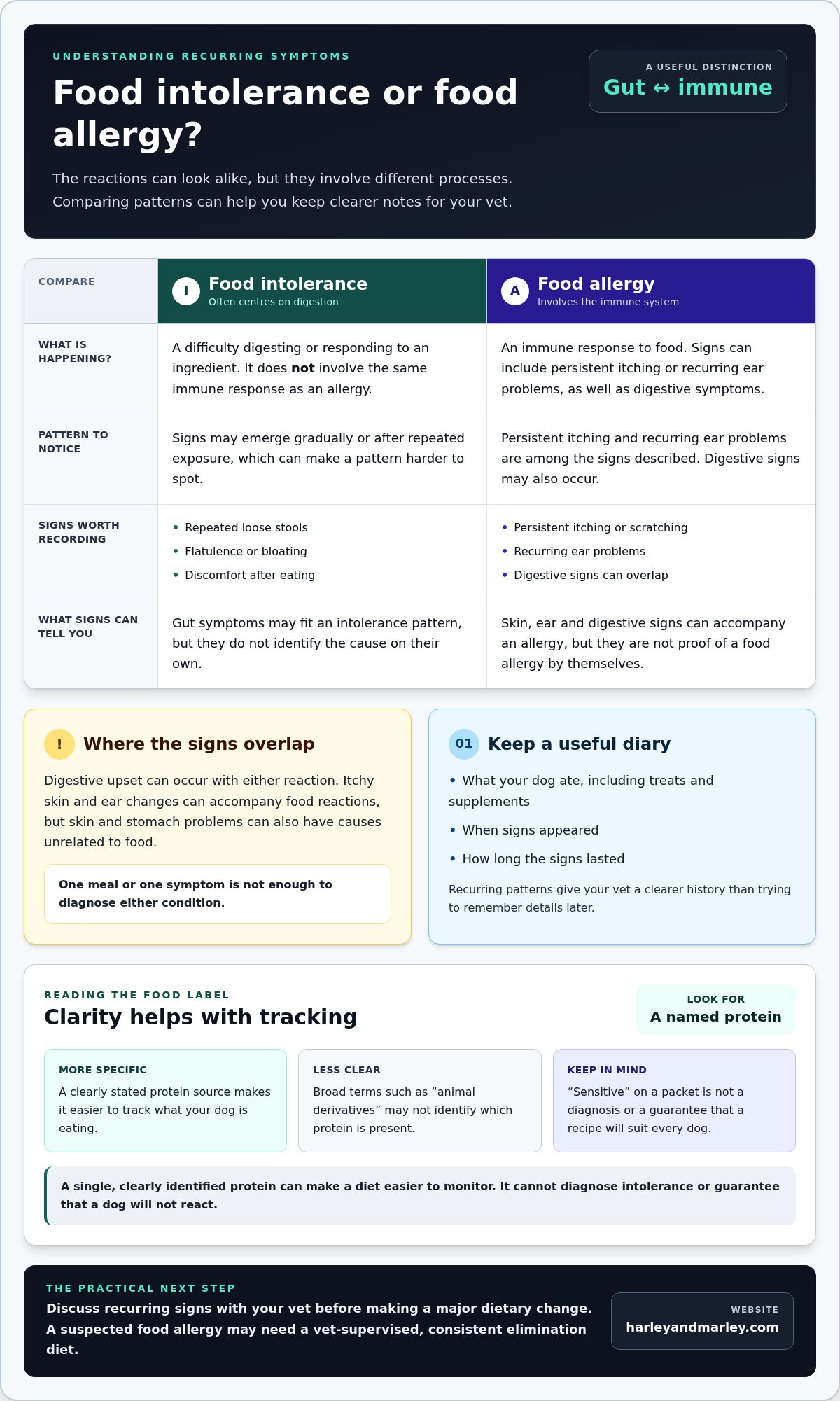
Repeated digestive upsets are frustrating, particularly when the cause isn’t obvious. Food intolerance and food allergy are different reactions, although their signs can overlap. An intolerance is generally a difficulty digesting or responding to an ingredient. It doesn’t involve the same immune response as an allergy. Symptoms may emerge gradually or after repeated exposure, making a pattern harder to spot than a sudden reaction. Neither should be diagnosed from one meal or symptom alone.
Allergies involve the immune system and can cause persistent itching or recurring ear problems, as well as digestive signs. Intolerance more often centres on the gut. A useful overview of ingredients and food types is available in Dog Food on Wikipedia, but it can’t identify the cause of an individual dog’s symptoms. Skin and stomach problems can also have causes unrelated to food, so speak with your vet before making a major dietary change.
The Most Common Symptoms of Canine Intolerance
Look for recurring patterns rather than isolated incidents. Signs worth recording include:
- Digestive distress: repeated loose stools, flatulence, bloating or discomfort after eating.
- Skin and ear changes: itchy paws, persistent scratching, recurring ear infections or a dull coat. These can accompany food reactions, but aren’t proof of intolerance on their own.
- Changes after meals: restlessness, reduced energy or signs of discomfort that appear consistently after feeding.
Keep a simple food-and-symptom diary. Note what your dog ate, when signs appeared and how long they lasted. Include treats and supplements, not just meals. This gives your vet a clearer history than trying to remember details weeks later.
Why “Sensitive” Foods Can Still Be Difficult to Assess
“Sensitive” on a packet isn’t a diagnosis or a guarantee that a recipe will suit every dog. Read the full ingredient list and look for a clearly stated protein source. Broad terms such as “animal derivatives” may not give you enough detail to track which protein your dog is eating. Clear ingredient information makes it easier to keep the diet consistent and interpret any changes.
Manufacturing processes can also involve shared equipment. Cross-contact between ingredients may matter for dogs with a confirmed allergy, but it shouldn’t be assumed for every food or factory. If your vet recommends an elimination diet, discuss how to interpret ingredient and production information as part of the trial.
Clean-label Nutrition as a Practical Starting Point
Simpler ingredient information supports better observation, but it doesn’t prove that a food is suitable or replace veterinary guidance. A single, clearly identified protein can make a diet easier to monitor than a recipe with several animal proteins. It cannot diagnose an intolerance or guarantee that a dog won’t react. Harley & Marley’s complete dog food is fish-only, without meat-based ingredients, giving owners a clearly defined protein choice for a consistent feeding routine.
For suspected food allergy, a strict elimination diet supervised by a vet is the recognised way to investigate triggers. Keep the trial consistent, including treats and extras, and follow your vet’s instructions before drawing conclusions.
Why Fish is the Gold Standard Protein for Sensitive Systems
Fish can be a useful protein choice for dogs with suspected food sensitivities, particularly when their usual diet contains proteins they’ve eaten regularly. Fish is not automatically suitable for every dog. A clearly identified fish protein can, however, offer a different option and make it easier to keep track of what’s in the bowl.
Fish protein can be highly digestible, but digestibility depends on ingredient quality, how the food is made and the complete recipe. Beef or chicken isn’t inherently difficult for every dog to digest; an individual dog may simply react to a protein they’ve encountered before. A fish-based complete food provides a defined protein source alongside the nutrients needed for daily feeding. When considering dog food for food intolerance, that clarity can be valuable, especially when a vet is guiding a structured diet trial.
Omega-3 and the Skin Barrier
Oily fish naturally contains omega-3 fatty acids, including EPA and DHA. These fats help regulate inflammatory processes and support normal skin function. For dogs with itchy or dry skin, appropriate omega-3 intake may support the skin barrier. It won’t identify or remove the cause of a food reaction, and results vary between dogs.
A healthy skin barrier helps retain moisture and provides protection from irritants. Coat condition is influenced by the whole diet and overall health, so a shiny coat shouldn’t be treated as proof that an intolerance has resolved. For a broader look at nutrition and coat condition, explore the best dog food for a shiny coat.
The Bioavailability Advantage
Bioavailability describes how well nutrients are digested and absorbed for the body to use. Fish protein supplies amino acids, the building blocks dogs need for normal body functions, and can be readily digestible in a well-formulated food. The key question isn’t which protein is universally easiest to digest, but which complete recipe suits the individual dog and provides a protein source that can be monitored consistently.
In practical terms, a digestible protein supplies nutrients the gut can absorb as food moves through the digestive tract.
When food is digested and absorbed efficiently, less undigested material may reach the large intestine, where it can contribute to gas or changes in stool. Some owners may notice firmer, smaller stools after a suitable dietary change, but stool quality also depends on portion size, fibre, hydration and individual health. Track changes rather than assuming fish will produce the same result for every dog.
Fish may also be considered a novel protein when a dog hasn’t eaten it regularly. “Novel” is relative: previous exposure matters, and no protein is guaranteed to be new or non-reactive for every dog. Harley & Marley’s fish-only complete food offers a consistent way to feed a clearly defined protein. Explore fish-based complete dog food as one option to discuss with your vet.
Identifying Common Triggers: Grains, Poultry, and Additives
Ingredient investigations often start with grains, but the protein source deserves equal attention. A 2016 systematic review identified chicken among the more commonly reported canine food allergens, whilst true grain allergies are rare. That doesn’t mean chicken is harmful to every dog or that all grains cause problems. Reactions are individual, so consider which ingredients your dog has eaten and how their symptoms change.
Chicken and white fish shouldn’t be described as inherently inflammatory or soothing. For a dog that reacts to chicken, a fish recipe may offer a different protein to investigate with veterinary guidance. Harley & Marley offers grain-free options for owners who want to exclude grain ingredients. Grain-free isn’t automatically better for every dog and doesn’t, by itself, diagnose or resolve an intolerance.
The Chicken Myth: Why Poultry-Free Matters
Chicken can appear in recipes whose front-of-pack description focuses on another ingredient. Check the full label for named poultry ingredients as well as broad terms such as “animal derivatives”, which may not identify the source clearly. A fish-only food can simplify protein tracking by keeping the recipe’s animal protein source consistent. Learn more about poultry-free dog food in Ireland and why chicken can be easy to overlook.
Don’t assume that shared manufacturing equipment means a particular food is contaminated. Production practices vary, and information on the label may not describe every processing detail. If your dog has a diagnosed allergy and needs strict avoidance, discuss ingredient and manufacturing information with your vet as part of the dietary plan.
Grain-Free vs. Grain-Inclusive for Intolerances
Grain-free may be relevant when a vet has identified a particular grain-related sensitivity, but it isn’t a universal requirement for dogs with digestive issues. Some dogs tolerate grains well; others may need to avoid a specific ingredient. Gluten sensitivity and grain allergy are not interchangeable, so base the choice on your dog’s history and veterinary advice rather than a blanket rule.
Carbohydrates can contribute energy in a complete diet, whether they come from grains or other sources. “Grain-free” alone doesn’t tell you the recipe’s nutritional quality, digestibility or suitability. Nor does “filler” have a precise meaning that lets you judge a food without reading its ingredients and nutritional information.
Use this quick label checklist to guide closer inspection. It isn’t a universal list of ingredients every sensitive dog must avoid:
- Named proteins: note chicken, poultry or any other protein your vet suspects.
- Vague terms: look for broad derivative descriptions that make the source unclear.
- Grain ingredients: check for the specific grain your dog may need to avoid.
- Additives: record colours, flavourings or preservatives if a vet suspects a link. Their presence alone doesn’t prove they cause a reaction.
For a simpler ingredient profile, consider Harley & Marley’s fish-only complete food as one option to discuss with your vet.
The Road to Recovery: How to Transition Your Dog Safely
A steady plan makes food changes easier to interpret. If your vet suspects a food allergy, work together on a strict elimination diet rather than switching foods repeatedly. The trial commonly lasts 8–12 weeks, and every treat, chew, table scrap and flavoured supplement may affect the results. Ask your vet which complete diet to use and what your dog can have between meals.
Conducting a Successful Elimination Diet
Start with the protein and other ingredients agreed with your vet, then keep the trial consistent. Don’t add other proteins or unapproved extras: even a small treat can make it harder to tell whether the diet is helping. Fish-based food may be suitable for some dogs, but it isn’t automatically appropriate for every elimination trial.
Chews need the same scrutiny as meals. Harley & Marley’s fish skin dog chews should only be used during a trial if their ingredients fit the plan and your vet approves them. Don’t assume a chew is suitable simply because it’s fish-based.
Keep a brief daily record of meals, stool consistency, scratching and ear symptoms. Skin signs can take longer to settle than digestive signs, so follow the vet’s full trial period before judging the result. Seek veterinary advice if symptoms worsen.
Managing the Transition Phase
For a routine change that your vet hasn’t instructed you to make abruptly, a gradual 10-day transition can help your dog adjust. One practical schedule is:
- Days 1–3: Mix 25% new food with 75% current food.
- Days 4–6: Feed half new food and half current food.
- Days 7–9: Mix 75% new food with 25% current food.
- Day 10: Feed the new food alone, if your dog is tolerating the change.
These ratios are a guide, not a substitute for your vet’s instructions. A prescribed elimination trial may require a specific start and diet, so follow your vet’s advice on how to make the change without compromising the plan.
If stools become loose, don’t press ahead automatically. Hold at the current ratio or pause the change, keep fresh water available and contact your vet if the problem persists or your dog seems unwell. The guide to dog food for loose stools offers further troubleshooting context.
Once you and your vet have settled on a suitable food, a regular monthly food box can help maintain a consistent supply and reduce last-minute food changes. Explore Harley & Marley’s monthly food box as a practical way to support that routine.
The Harley & Marley Solution: Premium Irish Fish Nutrition
For owners comparing dog food for food intolerance, clear ingredient information and a consistent protein source can make daily feeding easier to manage. Harley & Marley is an Irish-owned brand specialising in super-premium, fish-only complete dog food, with grain-free options. Its recipes provide a clearly defined protein choice without meat-based ingredients, while complete food is intended to provide balanced daily nutrition.
The brand’s approach also reflects a focus on sustainable, circular economy nutrition. Choosing a food should still begin with your dog’s individual needs and, where intolerance or allergy is suspected, your vet’s guidance. A fish-only food isn’t a diagnosis or a guaranteed remedy, but a clearly defined recipe can help maintain a consistent feeding routine.
Crafted for Every Life Stage
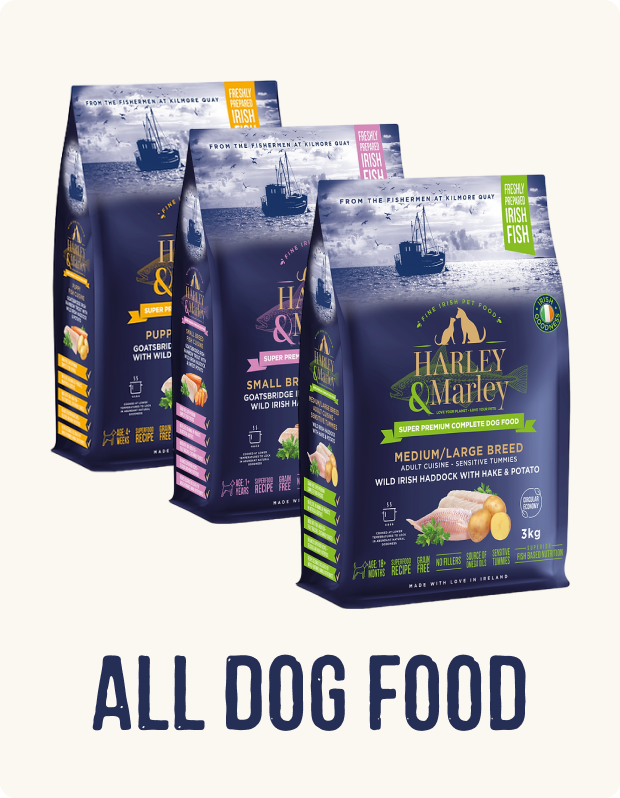
Dogs’ nutritional needs change over time, so Harley & Marley offers complete food for puppies, small breeds, medium and large breeds, and senior dogs. These options make it easier to choose food tailored to a dog’s life stage and size, rather than treating every dog as if their needs were identical. Follow the feeding guidance on the pack and adjust portions to your dog’s condition and activity with veterinary advice as needed.
For puppies, choose a complete food intended for growth and introduce it in line with your vet’s advice, especially if you’re investigating a suspected sensitivity. Adult dogs may suit a small-breed or medium/large-breed option, whilst senior dogs can have different feeding considerations. Fish naturally contains omega-3 fatty acids, and fish oil is also available as a separate offering. Ask your vet whether an additional supplement is suitable, particularly during a controlled diet trial, when extra ingredients may affect consistency.
Whatever the life stage, don’t assume that a different format or supplement will resolve symptoms by itself. Keep meals measured and routine, and record changes in stool, skin and comfort so you can discuss them with your vet.
A Conscious Choice for Irish Owners
Harley & Marley brings Irish ownership together with an emphasis on sustainable practices and circular economy nutrition. That gives owners a way to consider both the food’s ingredient approach and the values behind the brand without relying on broad claims about environmental impact. For dogs needing a consistent food, routine matters too: a dog food subscription in Ireland can make regular replenishment more convenient and reduce the temptation to switch foods when supplies run low.
Keep any suspected elimination diet aligned with your vet’s instructions, including treats and supplements. Once you’ve established a suitable routine, explore Harley & Marley’s fish-based complete dog food as a clear, fish-only option for your dog’s bowl.
Make the Next Feeding Choice with Confidence
Finding dog food for food intolerance can take patience, but your next step doesn’t need to be complicated. Keep your vet involved, follow the agreed feeding plan consistently and give yourself time to observe how your dog responds. A clear routine can help you spot patterns and decide what to discuss at your next check-in.
For owners seeking a simpler ingredient approach, Harley & Marley offers fish-only recipes without meat-based ingredients, as well as grain-free options. Every dog is different, so choose a food that fits your dog’s needs and any veterinary guidance rather than expecting one recipe to suit every sensitive stomach.
Browse our range of premium fish-based dog food for sensitive stomachs and take a considered next step towards a feeding routine that feels clearer and easier to maintain. With thoughtful choices and steady observation, you can support your dog’s wellbeing one meal at a time.
Frequently Asked Questions
Is fish-based dog food good for dogs with food intolerances?
Fish-based food can be a useful option if your dog tolerates fish and the recipe suits their nutritional needs. A clearly identified protein can also make it easier to track ingredients during a vet-guided diet trial. However, fish isn’t automatically hypoallergenic, and a dog can react to any protein. For dog food for food intolerance, base your choice on your dog’s history and your vet’s advice, not the protein source alone.
How can I tell if my dog has a food intolerance or a seasonal allergy?
You can’t reliably distinguish them from symptoms alone, because itching and digestive upset may have several causes. Seasonal allergies may follow a recurring pattern linked to time outdoors or particular seasons, whilst a food-related problem may continue throughout the year. Note when symptoms start, what your dog has eaten and whether signs change over time. Share those observations with your vet, who can advise on suitable tests or a controlled diet trial.
What is the best grain-free dog food for a sensitive stomach in Ireland?
There isn’t one grain-free food that’s best for every sensitive dog. Consider Harley & Marley’s grain-free fish-based complete food if you’re looking for a clearly defined protein and a complete meal, and choose the life-stage option that suits your dog. Grain-free isn’t automatically necessary for digestive sensitivity. If your dog has persistent symptoms, ask your vet whether avoiding a particular grain is appropriate before changing their diet.
Can I give my dog treats if they are on an elimination diet?
Why is chicken often a problem for dogs with itchy skin?
Chicken is one of the commonly reported food allergens in dogs, and an affected dog may develop persistent itching or other signs. That doesn’t mean chicken causes itchy skin in every dog; environmental allergies and other conditions can look similar. Chicken may also appear in foods whose main flavour or protein sounds different, so check ingredient labels carefully. A vet can help determine whether a food allergy is likely and how to investigate it.
How long does it take for a new diet to improve my dog’s skin?
Skin changes can take weeks to assess, so don’t judge a suspected food allergy trial after a few meals. Veterinary guidance commonly involves a strict elimination diet lasting 8–12 weeks. Keep the diet and symptom notes consistent throughout, and follow your vet’s advice about when to review progress. If your dog’s itching worsens, their skin becomes sore or they seem unwell, seek veterinary advice rather than waiting for the trial to end.
Is a fish-only diet nutritionally complete for my dog?
A fish-only protein source doesn’t by itself tell you whether a food provides complete nutrition. Look for food described as complete and suitable for your dog’s life stage, then follow its feeding guidance. Harley & Marley offers fish-based complete food for puppies, small breeds, medium and large breeds, and senior dogs. If your dog has a medical condition or is following a prescribed diet, ask your vet before making a change.
What should I do if my dog refuses to eat fish-based food?
Don’t force the change or let food refusal continue without checking your dog’s wellbeing. If you’re making a routine switch, ask your vet whether a gradual transition is suitable and offer measured meals in a calm, familiar setting. Avoid adding extra ingredients if your dog is on an elimination diet, as they may affect the trial. If refusal persists, your dog misses meals or shows other symptoms, contact your vet for advice.