


What if changing your dog’s food makes meals easier, but leaves the real problem untreated? If your older dog struggles with dry or hard food, finding easy to chew food for senior dogs with bad teeth can feel like the first priority. A more manageable texture may help at mealtimes, but reluctance to eat or difficulty chewing can also signal dental discomfort that a diet change alone won’t resolve.
You’re right to look for food your dog can eat comfortably without compromising nutrition. Texture matters, but so does checking that a food is labelled complete and suitable for your dog’s life stage. A “senior” label is a useful starting point, not a substitute for reading the nutritional information and feeding guidance.
This guide explains how to compare food textures, when softening dry food may be an option, and what to look for in a complete senior diet. It also covers signs that call for veterinary advice and how Harley & Marley’s fish-based complete food for senior dogs fits into your comparison.
Key Takeaways
- Judge easy to chew food for senior dogs with bad teeth by how comfortably your individual dog eats it, not by a label alone.
- Distinguish complete food, which is intended to provide a full diet, from treats and supplements.
- Compare dry, softened and soft-format foods for texture, feeding guidance and nutritional suitability.
- Use a checklist to assess dental changes, life-stage suitability, serving guidance and your dog’s response at mealtimes.
- Consider Harley & Marley’s complete food for senior dogs alongside your dog’s chewing ability and nutritional needs.
Soft food for senior dogs with bad teeth: owner guide
A meal that’s easier to manage may help an older dog eat, but it won’t diagnose or treat dental disease. “Easy to chew” isn’t a medical category or one fixed texture. It means food your individual dog can eat comfortably. One dog may manage small pieces, whilst another may cope better with food softened according to the product’s feeding guidance. The right choice depends on your dog, not age alone.
Dogs can find chewing difficult for several reasons, and getting older doesn’t establish the cause. A change in appetite or eating style deserves attention rather than being dismissed as a normal part of ageing. At mealtimes, notice whether your dog approaches the bowl and then backs away, chews unusually slowly, drops pieces, favours one side of the mouth or seems uncomfortable. These observations can help you describe the change to a vet.
When chewing difficulty may signal more than ageing
Watch for changes from your dog’s usual behaviour, including avoiding food, hesitating before bites or taking longer to finish. Contact a vet promptly if the change is sudden, your dog appears in pain, you notice bleeding or eating has reduced. Don’t wait for a texture change to resolve these signs. For more background on recognising and caring for oral health concerns, see this guide to senior dog dental health.
Compare mealtimes with your dog’s normal routine. Note whether food is left uneaten, pieces are dropped or chewing looks different, and share those observations with the veterinary team. A dog may still show interest in food even when chewing is uncomfortable, so appetite alone doesn’t rule out a dental problem.
Food can support mealtimes, but it cannot treat dental disease
A manageable texture may make eating less difficult, but it won’t address the underlying cause of oral pain. Choosing food is a routine feeding decision; diagnosing dental disease, providing treatment and advising on recovery or aftercare are matters for a veterinary professional. If your dog is struggling, seek veterinary advice rather than relying on a diet change alone.
Avoid trying to solve sore or damaged teeth with hard chews or bones. They don’t replace an assessment and may be unsuitable for a dog already showing discomfort. Keep a simple record of what your dog eats and how they manage it, and follow veterinary guidance about feeding if treatment is needed. For general context on types of dog food and nutritional needs, remember that a broad overview can’t determine what’s appropriate for an individual dog with dental symptoms.
How texture and complete nutrition affect food choices for older dogs
A meal’s manageability isn’t determined by texture alone. The size of each piece, the portion served and your dog’s eating behaviour all matter. A smaller serving may be easier for some dogs to manage, for example, but repeatedly leaving food or struggling to chew shouldn’t be treated as a simple feeding preference. Look for food your dog can eat comfortably that also meets their nutritional needs.
Complete dog food is formulated to provide the nutrients a dog needs from their daily diet when fed according to its guidance. Treats and supplements can have a place, but they aren’t a substitute for complete food unless a veterinary professional advises otherwise.
What complete food means when choosing a senior dog diet
Check the packaging for a complete-food statement and guidance on the life stage the food suits. Follow the stated daily feeding advice, taking account of your dog’s individual needs and any professional recommendations. A senior label can help you identify food intended for older dogs, but it doesn’t show by itself that the food will suit every senior or prevent or treat age-related health conditions.
Texture and nutrition are separate considerations. A soft food may be easier for a particular dog to manage, but that doesn’t automatically make it nutritionally complete. Equally, complete food may not be comfortable for a dog with chewing difficulty. For further context on the benefits of soft dog food for senior dogs, consider texture alongside the product’s feeding and nutritional information.
How to notice whether a meal is manageable
Observe your dog through the whole meal, not just whether they approach the bowl. Notice if they chew comfortably, eat willingly and finish their usual portion without repeated pauses or dropping food. A brief note of what they ate and how they managed it can help you spot a pattern and explain it clearly if you seek veterinary advice.
If your dog continues to struggle, accepting softer food doesn’t rule out an underlying dental issue. Persistent difficulty warrants veterinary attention. A change in texture may support mealtimes, but it cannot identify or resolve the cause.
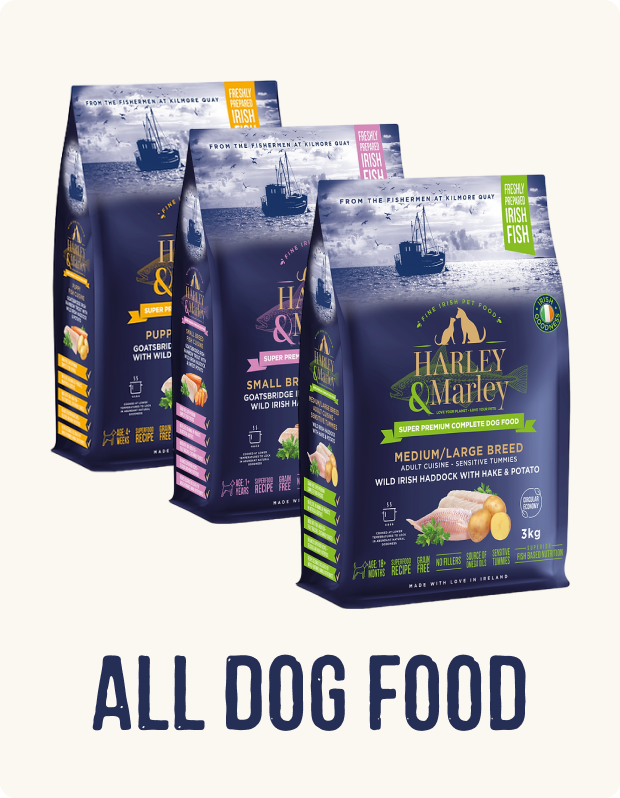
Once comfort and completeness are in view, ingredient preferences can help refine your choice. Harley & Marley’s senior dog food is a fish-based complete option to consider in light of your dog’s chewing ability and nutritional needs. Explore fish-based dog food nutrition for broader ingredient context, or browse complete food for senior dogs as part of your comparison.
Soft food, softened kibble, or dry food: compare the options carefully
There isn’t one format that suits every older dog. Compare how a food feels to eat with whether it’s nutritionally complete, fits your dog’s needs and is accepted at mealtimes. A softer texture may be worth considering if chewing seems difficult, but it doesn’t diagnose or treat dental disease. If your dog has ongoing trouble eating or diagnosed dental problems, follow veterinary advice when choosing a format.
Dry food
Dry food is served as supplied, so your dog needs to manage its existing texture. Watch whether your dog chews comfortably and finishes the portion, rather than assuming dry food is unsuitable for every dog with dental concerns.
Dry food softened with water
Adding water can change the texture, but the result depends on the food and preparation. Follow the product’s directions and any veterinary guidance. Moistening food can also change how you serve and handle the meal, so don’t assume preparation or storage instructions are the same as for dry food.
Soft-format food
This offers a different texture from dry food, which some dogs may manage more comfortably. Check the packaging to see whether it’s labelled complete and suitable for your dog’s life stage. A soft texture alone doesn’t establish nutritional completeness.
When owners compare dry and softer food formats
Texture is one part of the decision, not a shortcut to the best choice. Consider your dog’s preferences, ability to manage the food and nutritional needs together. If trying softened food, use the preparation guidance on its packaging or provided by your vet. A change in texture may help make a meal more manageable, but it isn’t a dental treatment. Persistent difficulty, discomfort or a diagnosed dental condition calls for veterinary guidance.
If your goal is easy to chew food for senior dogs with bad teeth, assess the food and your dog’s response rather than relying on broad format labels. Harley & Marley offers complete food for senior dogs. Compare the product information and feeding guidance with your dog’s chewing ability.
Why hard chews are not a substitute for an easier meal
A complete meal, a treat, a chew and a supplement have different roles. Chews and treats aren’t interchangeable with complete food, and a supplement doesn’t turn a meal into a complete diet. Don’t assume a hard chew is appropriate for a dog with painful or damaged teeth, or that a fish-based chew will clean teeth or relieve discomfort. If chewing causes concern, ask your vet what’s suitable for your dog.
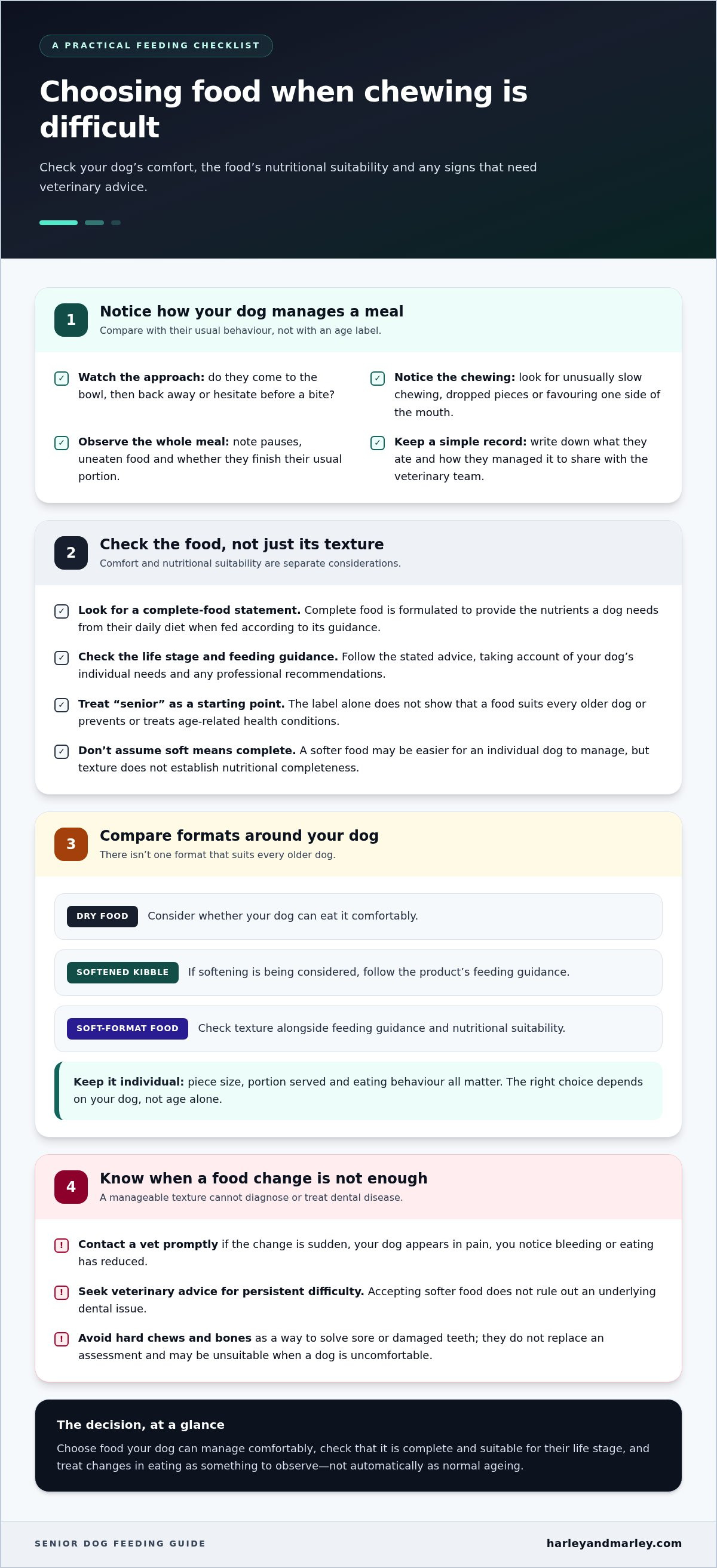
A practical checklist for choosing easy-to-manage senior dog food
A deliberate check before buying can help you compare food by comfort and nutritional suitability, rather than relying on a senior label or texture claim alone. Use these steps to guide your choice, and treat any ongoing change in how your dog eats as useful information to discuss with a vet.
Four checks before choosing a food
- Address chewing difficulty first. If your dog has newly started avoiding food, chewing differently or struggling to eat, arrange a veterinary assessment. A food change may make a meal more manageable, but it can’t identify the cause of discomfort.
- Consider the texture your dog can manage. Observe how your dog eats their current food and consider whether a different format or preparation may be more comfortable. Don’t assume every older dog needs soft food, or that a food described as soft will suit your dog.
- Confirm that the food is complete. Check the label to distinguish a complete daily diet from a treat or supplement. Treats and supplements can complement meals, but shouldn’t be assumed to provide a full diet.
- Check life-stage suitability and serving guidance. Read the product label for the intended life stage and feeding instructions. Use the guidance as a starting point, and consider your dog’s individual needs and any advice from your veterinary professional.
Introducing a suitable food and monitoring your dog
Once you’ve chosen an appropriate food, follow the manufacturer’s instructions for changing diets and serving the product. Avoid improvising preparation, especially if you’re considering adding water, unless the product guidance or your vet supports it. Judge a change by your dog’s comfort and overall eating behaviour, not simply by whether the bowl is emptied.
During mealtimes, watch for willingness to eat, comfortable chewing, usual appetite and whether your dog finishes their normal portion. Keep a brief note of what was offered and any changes you observed; this can make it easier to recognise a pattern. If eating remains difficult, appetite drops, or signs of discomfort appear or worsen, seek veterinary advice rather than continuing to adjust food without guidance.
For owners comparing easy to chew food for senior dogs with bad teeth, these checks keep comfort, completeness and professional advice in view. Harley & Marley offers complete food for senior dogs. Assess it against your dog’s chewing ability and the label’s feeding guidance. Explore senior dog food as part of your comparison.
Choosing Harley & Marley senior food for a dog with chewing difficulties
Harley & Marley offers complete food for senior dogs, with fish-based nutrition. It’s an option to consider as you compare diets for an older dog. A senior label doesn’t establish whether a particular food will be comfortable for your dog to chew. Consider your dog’s eating behaviour, life stage, nutritional needs and any advice from your veterinary professional.
How to assess the senior food against your dog’s needs
Start with the product information. Check that the food is complete, intended for your dog’s life stage and accompanied by feeding guidance. Then consider that guidance alongside your dog’s observed eating behaviour and any recommendations from your vet. A complete senior diet and a dental treatment plan serve different purposes.
Be specific about what your dog manages at mealtimes. Does chewing appear comfortable? Are portions eaten willingly, or does your dog pause, drop food or leave some behind? These observations help you judge whether the food seems manageable, but they can’t establish the cause of a problem. If a vet has advised a particular approach to feeding, use that advice to inform your choice.
For anyone looking for easy to chew food for senior dogs with bad teeth, avoid choosing by age label or ingredient preference alone. Harley & Marley focuses on fish-based canine nutrition, and its senior food is a complete diet. Consider whether it fits your dog’s needs and can be eaten comfortably, rather than expecting a food choice to resolve dental difficulty.
When the right next step is veterinary advice
Prioritise a veterinary assessment if your dog seems painful, stops eating or is struggling to chew. A food choice can support everyday feeding, but it can’t diagnose an oral problem or replace treatment. Keep those decisions separate: get professional guidance on symptoms and dental care, then choose food in light of your dog’s needs and the feeding advice provided.
If your dog’s needs are understood and the senior food appears suitable, consider which purchasing option works for your routine. Harley & Marley food is available as individual purchases, in bundles and through a monthly food box. These are purchasing options, not health benefits, so let convenience follow rather than determine your nutritional and texture assessment.
Take a considered next step: explore Harley & Marley and its senior dog food, then compare the product information with your dog’s chewing ability and feeding needs.
Choose the next step that suits your dog
Let your dog’s needs, not a general idea of what older dogs should eat, guide your next decision. Compare product information with the texture your dog can manage and the feeding guidance you’ve been given. If you’re unsure, take your observations from mealtimes to your veterinary professional; a more manageable meal and care for an underlying dental problem are separate needs.
Your search for easy to chew food for senior dogs with bad teeth doesn’t have to end with guesswork. Focus on food that is complete, appropriate for your dog’s life stage and suitable for their individual chewing ability. Harley & Marley’s senior range is one option to assess against those needs.
Review the product details and choose at your own pace. Explore complete food for senior dogs, then decide whether it fits your dog’s needs. Observe how your dog manages meals and follow veterinary guidance if chewing remains difficult.
Frequently Asked Questions
What is the easiest food for a senior dog with bad teeth to eat?
There’s no single easiest food for every dog; it depends on what your dog can comfortably manage. Some dogs cope better with a softer texture, whilst others manage their usual food without difficulty. If you’re looking for easy to chew food for senior dogs with bad teeth, compare texture and completeness, and observe how your dog eats. A new struggle with chewing should prompt veterinary advice, not just a food change.
Can I soften dry dog food for a senior dog with bad teeth?
Dry food can often be softened with water, but follow the specific product’s preparation guidance and any advice from your vet. Try an appropriate serving and observe whether your dog eats more comfortably. Don’t assume that adding water makes a food suitable for every dog or changes its nutritional completeness. If your dog still hesitates, drops food or appears uncomfortable, arrange veterinary advice rather than continuing to alter the meal.
Is wet food better than dry food for dogs with dental problems?
Not automatically. A soft-format food may feel more manageable to a dog that struggles with harder pieces, but the best choice depends on the individual dog and whether the food is complete and appropriate for them. Dry food may remain suitable for some dogs. If your dog has diagnosed dental disease, ask your vet what texture and feeding approach fits their situation, rather than treating wet food as a remedy.
Should I change my older dog’s food if they are dropping kibble?
Don’t rely on a diet change alone. Dropping kibble can indicate that eating has become difficult, so note whether it happens repeatedly, affects one side of the mouth or occurs with other changes in appetite. Contact your vet for advice, particularly if this is new or worsening. Until you understand the cause, avoid forcing your dog to continue with food they appear unable to manage comfortably.
Can senior dog food help a dog with bad teeth?
Senior dog food can meet nutritional needs when it’s complete and appropriate for your dog, but it doesn’t treat dental disease or guarantee a manageable texture. Read the feeding guidance and consider how your dog handles the food. Harley & Marley offers complete food tailored for senior dogs; assess its suitability against your dog’s chewing ability and any advice from your vet.
When should I take a senior dog with chewing problems to the vet?
Seek veterinary advice if chewing difficulty is sudden or persistent, your dog seems painful, eats less or stops eating. Bleeding or a marked change in how your dog handles food also warrants prompt attention. Keep track of when the problem started and what you’ve observed at meals, such as dropped food or repeated pauses. Those details can help the vet assess the change.
Are dog chews suitable for senior dogs with bad teeth?
Not necessarily. A chew is a treat, not a replacement for a complete meal, and a dog with painful or damaged teeth may find chewing uncomfortable. Don’t assume that a chew is suitable because it’s marketed for dogs or made with fish. If your senior dog has dental symptoms, ask your vet whether chews are appropriate, and prioritise their advice over using a chew to address the problem.