


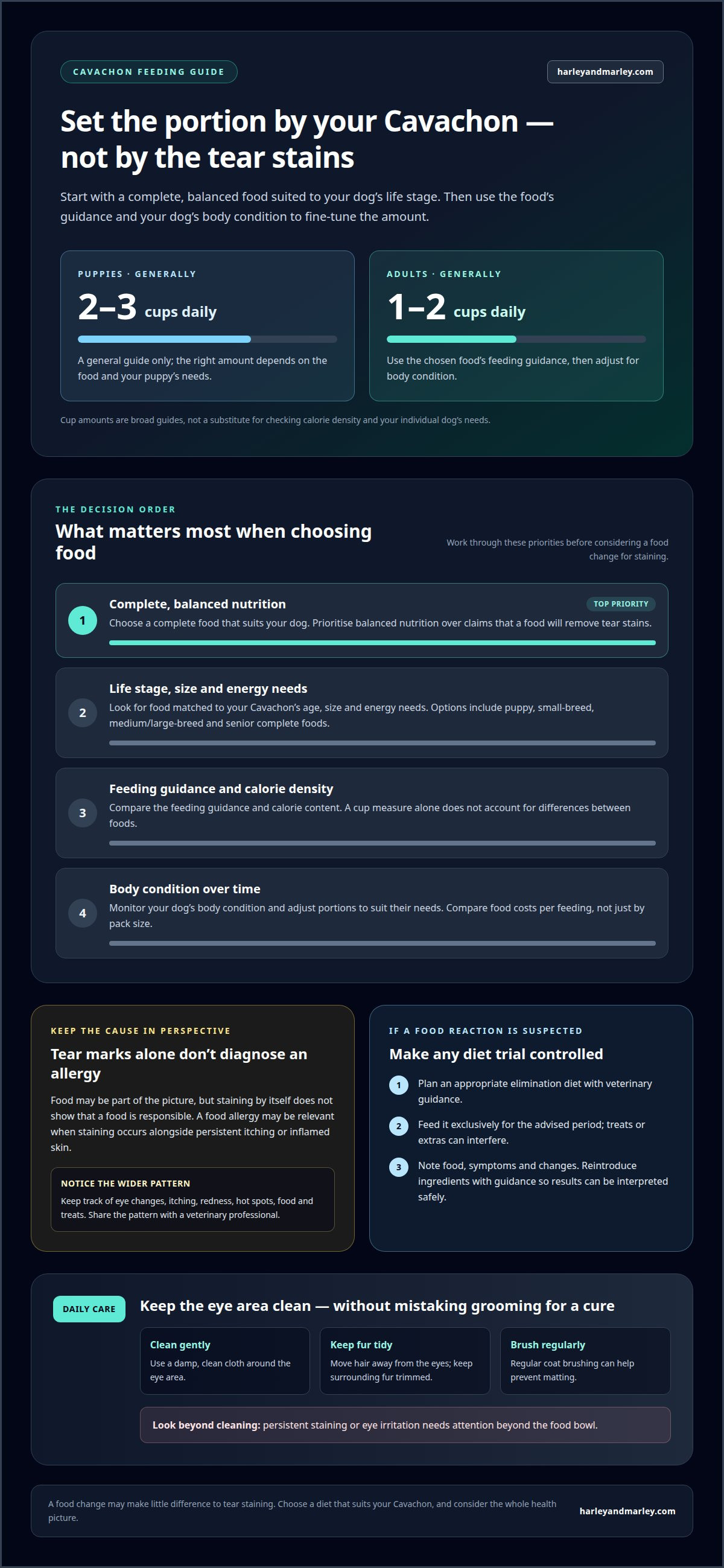
Adult Cavachons generally eat about 1-2 cups of food a day, while puppies generally need about 2-3 cups, with the right amount depending on the food’s calorie content and your dog’s needs. Choosing food for a Cavachon with tear stains means looking for a complete, balanced diet and serving a suitable portion, rather than assuming a food change will clear the marks. Tear stains can have causes beyond diet, so they’re best considered alongside your dog’s overall health.
It’s understandable to look for a simple food-based answer when tear staining keeps returning. Changing food may make little difference, and switching too quickly or choosing a diet that doesn’t suit your Cavachon can make mealtimes harder.
This guide explains how to think about portions, what to look for in your Cavachon’s diet and which health issues may be relevant to tear stains. You’ll also learn when staining needs attention beyond the food bowl, so you can make practical choices with your dog’s wellbeing in mind.
Key Takeaways
- Set portions by your Cavachon’s life stage, body condition and the calorie density of its food, rather than relying on a cup measure alone.
- Tear staining can have causes beyond diet, so notice accompanying eye or skin changes and consider the wider health picture.
- A food change may not reduce staining; look for a complete diet that suits your dog instead of switching foods repeatedly.
- Learn which breed-related health conditions may be relevant and when tear staining calls for attention beyond the food bowl.
Cavachon diet and daily food portions
Choose complete food suited to your Cavachon’s life stage, then tailor portions to its needs. Tear staining alone doesn’t tell you which diet is right.
Choosing suitable Cavachon food
A suitable diet is complete food matched to your dog’s age, size and energy needs. In Ireland, available options include puppy, small-breed, medium/large-breed and senior complete foods. Compare the feeding guidance and calorie density, then monitor your dog’s body condition as you portion meals.
For a Cavachon with tear stains, prioritise consistent, balanced nutrition over food that claims to remove staining.
Grain-free and limited-ingredient diets
Grain-free food excludes grains, while a limited-ingredient recipe contains fewer ingredients. Either may be relevant when a food allergy is suspected, but neither is automatically a solution for tear stains. A Cavachon owner reported that changing kibble made little difference to staining, and the dog was fussy about the replacement. Harley & Marley’s Grain-Free Dog Food is one Irish-market option, not a treatment for eye staining.
Daily portions vary with age and the food’s calorie density. Cavachon puppies generally eat about 2-3 cups daily, while adults generally eat about 1-2 cups. Cavachons may need food with relatively high calorie density because of their metabolism, but use the chosen food’s guidance and adjust for body condition. In Ireland, food costs depend on recipe, pack size and how much your dog eats; compare cost per feeding rather than pack size alone.
Plan an elimination diet with veterinary guidance: choose an appropriate diet, feed it exclusively for the advised period, and avoid treats or extras that could interfere. Keep notes on food, symptoms and changes. Reintroducing ingredients also needs guidance so the results can be interpreted safely.
For daily eye-area care, dampen a clean cloth and gently move hair away from the eyes. Keep surrounding fur trimmed and brush the coat regularly to help prevent matting. These grooming steps support cleanliness, but persistent staining or eye irritation needs attention beyond cleaning.
Cavachon health conditions
Tear staining can occur alongside eye or skin conditions, but it doesn’t identify a specific cause. Look for accompanying signs, such as itchy skin, eye changes or discomfort, rather than treating stains alone as proof of an allergy.
Food allergies and tear stains
A food allergy is an adverse reaction to an ingredient and may affect a dog’s skin. It may be relevant when a Cavachon has persistent itching or inflamed areas as well as staining. However, tear marks alone don’t show that food is responsible. Atopic dermatitis can affect the ears, paws and skin, so note where irritation appears and whether it accompanies eye symptoms.
Ingredients to avoid with suspected allergies
There isn’t one ingredient every Cavachon with suspected allergies should avoid. The relevant ingredient depends on the individual dog’s reaction, so removing several foods without a clear plan can make the diet harder to assess. Which ingredients should you avoid? Avoid a suspected trigger identified through a veterinary-guided assessment, rather than cutting out foods based on tear staining alone. A controlled elimination diet can help assess a suspected food reaction.
Other conditions associated with the breed affect different parts of the body. Cataracts cloud the eye’s lenses and may blur vision or lead to blindness, so changes in how your dog sees warrant attention. Mitral valve disease may begin as a heart murmur in puppies and can progress to heart failure. Cushing’s disease involves excess cortisol production by the adrenal glands.
Syringomyelia can cause neck or shoulder discomfort when a small bone near the skull’s nape obstructs spinal-fluid flow. Watch for signs of pain or sensitivity around the neck and shoulders. Cavachons can also develop itchy, red skin or hot spots; if these persist despite home care, seek veterinary attention when they haven’t improved after 3-5 days. Record symptoms, affected areas and any food changes. That timeline helps distinguish a recurring skin problem from staining alone and gives a veterinarian useful details for assessment.
A forum participant said their dog’s tear stains had been present since the dog was a few months old.
Can food or food allergies cause tear stains in dogs?
Food can be part of the picture, but tear staining alone doesn’t show that a Cavachon has a food allergy. One owner reported little change after switching kibble, illustrating why a new recipe isn’t a reliable test by itself. Look for a pattern involving the eyes, skin and what your dog eats.
A food allergy is more plausible when staining appears alongside recurring skin irritation or itching. Atopic dermatitis typically affects a dog’s ears, paws and skin, so note whether those areas are also affected. These signs don’t identify a particular food ingredient. They’re useful observations to share during a veterinary assessment, rather than a reason to remove several foods at once.
Keep a simple record before changing meals. Note the food and treats your Cavachon eats, when eye staining is visible, and whether itching, redness or hot spots occur. Record dietary changes and whether the skin signs change too. For example, stains that remain much the same while the food changes offer little support for blaming that food. A diary helps distinguish a repeated pattern from a one-off observation.
If you suspect a food reaction, an elimination diet needs a clear plan and consistent feeding. A veterinary professional can help choose an appropriate diet and explain how to assess the response. Extra treats or flavoured additions can make the result harder to interpret, so record every food item during the assessment. Don’t treat a grain-free label as proof that a diet suits an allergic dog.
Persistent eye staining deserves attention in its own right, especially if accompanied by visible irritation or changes in your dog’s behaviour. Food changes are not a substitute for assessing eye or skin symptoms. The useful question is whether a consistent food-related pattern accompanies other signs, not simply whether tear marks are present. This can prevent unnecessary diet changes and help focus the next conversation on your Cavachon’s actual symptoms.
Cavachons may inherit cataracts, which cloud the eye’s lenses and can cause blurred vision and potential blindness. This possibility is separate from food-related tear staining.
What diet is best for a Cavachon with tear stains?
Choose complete food matched to your Cavachon’s life stage and nutritional needs. Food for a Cavachon with tear stains should support everyday nutrition, not promise to clear the marks. Puppies, adult dogs and seniors have different requirements, so start with food appropriate for your dog’s age. Then consider the feeding guidance, calorie density and whether your dog eats it consistently.
Look beyond front-of-pack claims. Check the ingredients and feeding instructions, and make sure the food is complete for your dog’s life stage. Grain-free or limited-ingredient labels don’t automatically make a diet the right choice. If you suspect a particular ingredient is causing a reaction, a planned assessment is more useful than removing several foods at once.
Consistency helps you assess a change. Introduce new food gradually and avoid changing treats or other parts of the diet at the same time. For example, switching meals while adding new treats makes it difficult to identify what affected appetite or digestion. Measure portions and account for extras so you can observe your dog’s routine clearly.
Staining alone doesn’t tell you which food to choose, and changing kibble may make little difference. If your Cavachon also has itchy skin, red patches or irritated eyes, take those signs seriously rather than relying on diet changes alone. The best food for a Cavachon with tear stains is a complete diet suited to its needs, not a promised stain remedy.
Explore complete dog food options as you compare suitable diets.
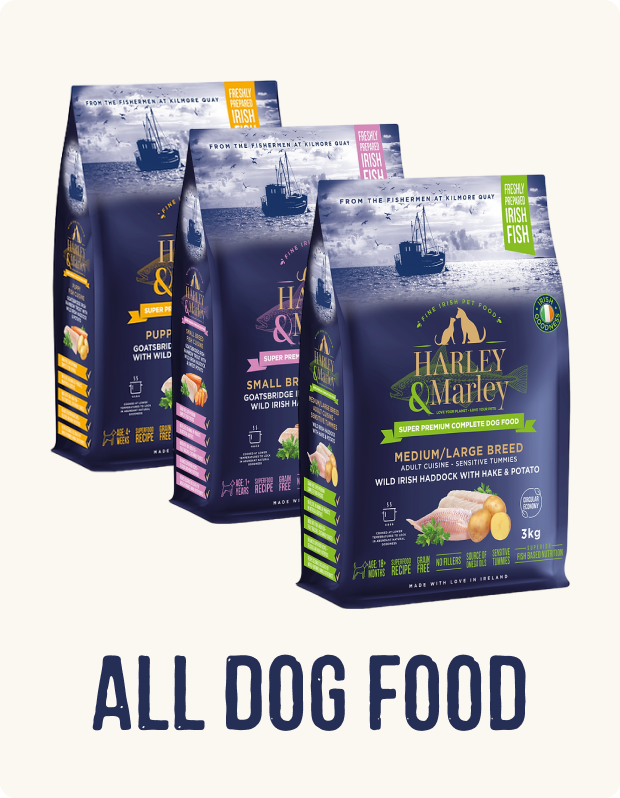
Harley & Marley: Medium/Large Breed Complete Food
Harley & Marley’s Medium/Large Breed Complete Food is a complete-food option to consider for your Cavachon’s everyday meals. Tear stains alone don’t determine which food is suitable, and this food isn’t a treatment for eye staining. Match your choice to your dog’s life stage and feeding needs, and use the product’s feeding guidance to plan portions.
Cavachons vary in size, so consider your individual dog rather than relying on the breed name alone. Harley & Marley also offers Puppy Complete Food, Small Breed Complete Food and Senior Dog Complete Food for those life-stage or size categories. If eye or skin symptoms persist, food selection cannot replace veterinary assessment.
Visit harleyandmarley.com to explore Harley & Marley’s complete food options.
Make your Cavachon’s next meal a considered choice
Make your next step a clearer picture of your dog’s routine, not another quick food swap. Briefly note meals, treats, appetite and any changes around the eyes or skin. This record can help you decide whether the feeding routine needs adjustment or whether the concern goes beyond the food bowl. It also gives you a practical starting point for discussing portions and food suited to your dog’s life stage.
Choosing food for a Cavachon with tear stains is about supporting everyday nutrition, not expecting a diet to erase staining. Harley & Marley’s complete food options give you choices to consider alongside your dog’s needs. For guidance on feeding, contact Harley & Marley about your Cavachon’s diet. A thoughtful routine, supported by careful observation, is a positive next step for your dog.
Frequently Asked Questions
What causes tear stains in Cavachons?
Tear stains develop when moisture from tears repeatedly marks the fur beneath the eyes, but staining alone doesn’t reveal why the eyes are watering. Hair around the eyes, irritation or a tear-drainage problem may be relevant; food allergy is one possibility, particularly alongside itchy skin. Notice whether one or both eyes are affected and whether redness or discomfort appears. Always see a vet if a problem persists.