


What if the secret to your puppy’s lifelong health isn't found in a traditional meat-based diet, but in the cold, nutrient-dense waters off the Irish coast? You likely spend hours scrutinising labels, worried that a single wrong choice might lead to digestive upsets or stunted growth. It's a common anxiety for any dedicated pet parent. Choosing a high-quality grain free puppy food is often the first step toward a settled stomach and a vibrant, energetic companion.
We agree that your puppy deserves a diet as clean and functional as your own, free from the fillers and common allergens that often complicate early development. This guide clarifies the confusion surrounding grain-free marketing by focusing on the proven benefits of fish-based nutrition. You'll discover how specific marine proteins and Omega-3s support brain function and skin health, providing you with a clear, expert-led strategy for your puppy's long-term well-being. From understanding ingredient purity to managing growth stages, we provide the confidence you need to nourish your new best friend correctly.
Key Takeaways
- Understand why excluding common grains like wheat and maize supports a puppy's naturally short digestive tract for more efficient nutrient absorption.
- Learn how grain free puppy food utilising high-quality marine proteins offers a clean amino acid profile that is easier to digest than traditional land-based meats.
- Discover why complex carbohydrates such as sweet potato provide a more stable glycaemic index than grains, ensuring consistent energy levels for your growing pup.
- Master the essential seven-day transition schedule to safely introduce fish-based nutrition whilst protecting your puppy’s delicate microbiome.
- Identify the benefits of choosing Irish-owned, sustainable nutrition that prioritises traceable ingredients and ethical sourcing.
Understanding Grain-Free Puppy Food: Why It Matters for Your New Arrival
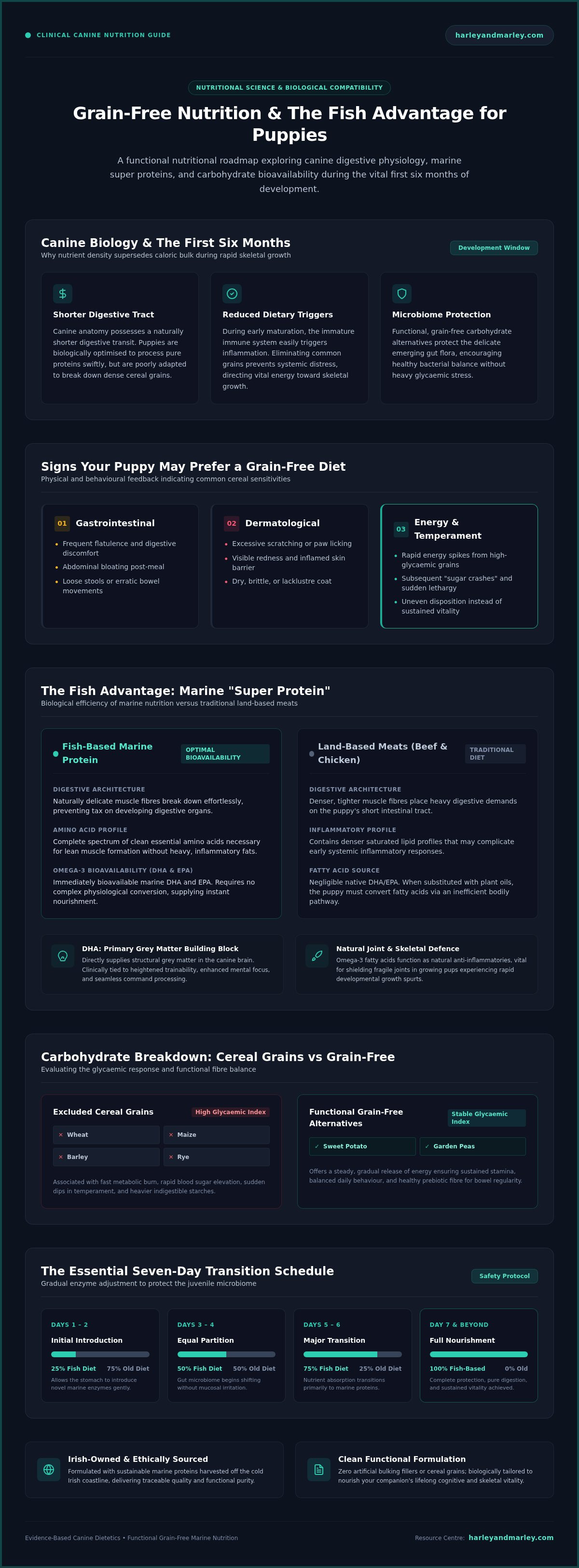
Defining grain-free puppy food is straightforward; it refers to recipes formulated without wheat, maize, barley, or rye. These cereals are typically replaced with more digestible carbohydrates like sweet potato or peas. For a young dog, this choice often aligns better with their evolving biology. Puppies possess shorter digestive tracts than humans, making them highly efficient at processing proteins but occasionally less adept at breaking down complex, grain-based starches. Understanding canine nutritional requirements is the first step in recognising that early life stages require nutrient density over caloric bulk.
Adopting a "gentle start" philosophy during the first six months is vital. This period represents a window of rapid physiological change where the immune system is still finding its balance. By choosing a grain free puppy food, you reduce the number of potential dietary triggers your puppy encounters. While grains aren't inherently harmful to every dog, a simplified nutritional profile allows the body to focus its energy on cognitive development and skeletal growth rather than managing inflammatory responses.
The Rise of Grain-Free Canine Nutrition
Pet nutrition has evolved significantly from the filler-heavy diets of the past. Today, functional puppy food prioritises "clean label" ingredients that offer specific health benefits. This shift reflects a broader movement towards transparency and ethical sourcing amongst Irish pet owners. It's helpful to distinguish between "grain-free" and "low carb" options. A grain-free diet isn't necessarily a ketogenic one; it simply swaps cereal grains for alternative fibre sources that support a healthy microbiome without the heavy glycaemic load.
Common Signs Your Puppy May Prefer a Grain-Free Diet
Your puppy's body often provides the best feedback regarding their diet. If you notice consistent flatulence, bloating, or loose stools, it might indicate a struggle with grain digestion. Skin health is another major indicator. Excessive scratching, redness, or a dull, brittle coat can suggest a sensitivity to common cereal proteins. Energy levels also tell a story. High-glycaemic grains can lead to rapid spikes and subsequent "sugar crashes," resulting in a puppy who is hyperactive one moment and lethargic the next. A grain free puppy food approach, particularly one paired with stable energy sources like sweet potato, promotes a more even temperament and sustained vitality.
The Fish Advantage: Why Fish-Based Recipes Excel for Growing Pups
Fish represents a biological "super protein" for the developing canine. Its protein structure is naturally more delicate and easier to break down than the denser muscle fibres found in beef or chicken. This ease of digestion ensures your puppy absorbs vital nutrients efficiently without taxing their maturing system. We advocate for a "Clean Protein" approach; fish delivers a complete profile of essential amino acids required for muscle development without the heavy, inflammatory fats typical of land-based meats. This purity is why we prioritise sustainable, premium fish as our sole protein source, ensuring every meal is both ethical and effective.
A robust skin barrier is another significant benefit of marine-based nutrition. The natural oils found in fish help nourish the dermis from within, reducing the likelihood of early-life sensitivities or dry, itchy skin. When researching modern formulations, the FDA's investigation into grain-free diets underscores the need for expert formulation that prioritises bioavailable nutrients. By choosing a high-quality grain free puppy food, you're providing a foundation that supports both external vitality and internal health.
DHA, EPA, and Cognitive Development
Marine-sourced Docosahexaenoic Acid (DHA) and Eicosapentaenoic Acid (EPA) are essential for a puppy's neurological progress. Unlike plant-based Omega-3s, which require a complex conversion process, fish-based DHA is immediately available for the body to use. This direct access supports better "trainability" and focus, helping your puppy process new commands and environments with greater ease. DHA is the primary structural fatty acid in the grey matter of the canine brain.
Natural Anti-Inflammatory Properties
The Omega-3 fatty acids in fish act as natural anti-inflammatories, which is a critical advantage for growing pups. These nutrients help protect developing joints, particularly in larger breeds that experience rapid growth spurts. Beyond skeletal support, these healthy fats contribute to long-term heart health by maintaining flexible blood vessels and supporting cardiac function. If you're curious about how this impacts your dog's future, you can read The Benefits of Fish-Based Puppy Food for Growth. For those ready to switch, our Puppy Complete Food offers a balanced, fish-only solution that simplifies your feeding routine whilst maximising nutritional impact.
Deciphering the Label: Grains vs Grain-Free Carbohydrates
While protein often takes centre stage, puppies require carbohydrates for essential energy and fibre. It is a common misconception that grain free puppy food is entirely carbohydrate-free. Instead, the focus shifts from low-cost fillers to complex, functional sources that support a puppy’s metabolic health. Understanding the nutritional requirements for growing puppies reveals that the source of these calories matters just as much as the quantity. The right balance ensures they have the stamina for both rapid physical development and daily play.
The primary difference lies in the glycaemic index. Grains like wheat and corn are high-glycaemic, meaning they digest quickly and cause rapid spikes in blood sugar. This can lead to erratic behaviour and "sugar crashes" that disrupt a puppy’s natural rhythm. By opting for a grain free puppy food that utilises sweet potato and peas, you provide slow-release energy. This sustained fuel is vital for consistent physical growth and cognitive focus. At Harley & Marley, our commitment to purity means we never use artificial additives or colours amongst our functional ingredients; we rely on the natural integrity of whole foods to nourish your pup.
Understanding Functional Fillers
Sweet potato is far more than a simple substitute for grain. It is a nutritional powerhouse, providing an abundant source of Vitamin A for vision health and soluble fibre to ensure firm stools. Peas and legumes also play a strategic role, offering plant-based protein synergy that complements the amino acid profile of our fish. When scrutinising labels, be wary of vague terms like "cereal derivatives" or "vegetable by-products." These are often hidden grains used to bulk out inferior recipes, lacking the traceable provenance of a truly premium diet.
Protein-to-Carb Ratios for Growth
Finding the ideal balance is crucial for skeletal and muscular development. A high-protein diet is essential, but it must be meticulously balanced with healthy fats and digestible fibres to prevent over-nutrition, which can lead to joint issues in larger breeds. For a deeper dive into how these components work together, you can read our guide on Complete Grain-Free Dog Food: What You Need to Know. This balance ensures your puppy receives the fuel they need without the inflammatory risks associated with processed grains.
How to Safely Transition Your Puppy to a Grain-Free Diet
Switching your puppy to a grain free puppy food is a significant step toward supporting their long-term vitality, but the process must be handled with care. A puppy’s digestive system is a delicate ecosystem. Their microbiome requires time to recalibrate and produce the specific enzymes needed to process a high-quality fish protein source. Moving too quickly can result in "nutritional shock," a state of digestive distress that often leads to avoidable discomfort and owner anxiety. A methodical transition ensures the gut remains stable whilst adapting to more nutrient-dense ingredients.
During the first week, monitoring stool consistency is your most reliable metric for success. Ideally, stools should remain firm and well-formed. If you notice a softening, it simply means the transition is moving slightly faster than the puppy’s gut can manage. In these instances, stay at the current ratio for an extra day or two until their system settles. Proper hydration is also essential; high-quality dry kibble requires adequate water intake to facilitate smooth digestion and nutrient transport.
The 7-Day Transition Schedule
Following a structured timeline is the most effective way to introduce our fish-based nutrition. This gradual shift allows the puppy’s metabolism to adjust without overwhelming their system.
- Days 1-2: Combine 75% of the previous food with 25% of the new grain-free fish-based recipe.
- Days 3-4: Move to a 50/50 split to balance the digestive workload evenly.
- Days 5-6: Increase to 75% new food and 25% of the old diet.
- Day 7: Your puppy is now ready for 100% premium grain free puppy food.
Troubleshooting Common Transition Issues
If your puppy experiences loose stools during the switch, don't panic. This is often a temporary response to the increased bio-availability of the new ingredients. You can find more detailed advice in our Dog Food for Loose Stools Ireland: 2026 Digestibility Guide. To maintain optimal growth, ensure you are feeding the correct amounts of our Puppy Complete Food based on their adult weight benchmarks: small puppies (<10 kg) typically need 65g to 180g daily, whilst medium breeds (10 kg to 20 kg) require 180g to 360g. Larger breeds (20 kg to 40 kg) should receive between 360g and 540g to support their rapid skeletal development.
Ready to provide your new arrival with the best start in life? Simplify their development by choosing our Puppy Complete Food for a clean, sustainable, and grain-free foundation.
Harley & Marley: Premium Irish Fish-Based Puppy Nutrition
Harley & Marley represents a purposeful shift in how we approach canine wellness in Ireland. Our Puppy Complete Food isn't just another product on a shelf; it's a scientifically formulated solution rooted in Irish coastal provenance. By choosing an Irish-owned business, you're supporting a circular economy that prioritises sustainability and ethical responsibility. Our recipes utilise high-quality fish ingredients, ensuring a nutrient-dense profile whilst maintaining a minimal environmental footprint. Choosing a premium grain free puppy food shouldn't be a matter of guesswork; it should be a decision backed by transparency and local expertise.
For busy households, our monthly food box takes the logistical stress out of puppy ownership. It ensures you never run out of high-quality grain free puppy food during those critical growth spurts when nutritional demand is at its peak. This subscription model allows you to focus on the joy of your new arrival, knowing their developmental fuel is consistently delivered to your door. It's a convenient, reliable way to manage the varying feeding stages of a growing dog without the need for last-minute trips to the shop.
The Conscious Expert Choice
Our fish-only approach provides a safe haven for puppies who may have early sensitivities to common terrestrial proteins. By excluding meat and poultry entirely, we eliminate the risk of cross-contamination that often occurs in large-scale manufacturing facilities. We recognise that different puppies grow at different rates. That's why we provide tailored Puppy Complete Food formulations for both Small Breeds and Medium/Large Breeds. These options ensure that the protein and mineral levels are perfectly calibrated for their specific skeletal needs, supporting a healthy growth trajectory from the very first bowl.
Beyond the Bowl: Treats and Supplements
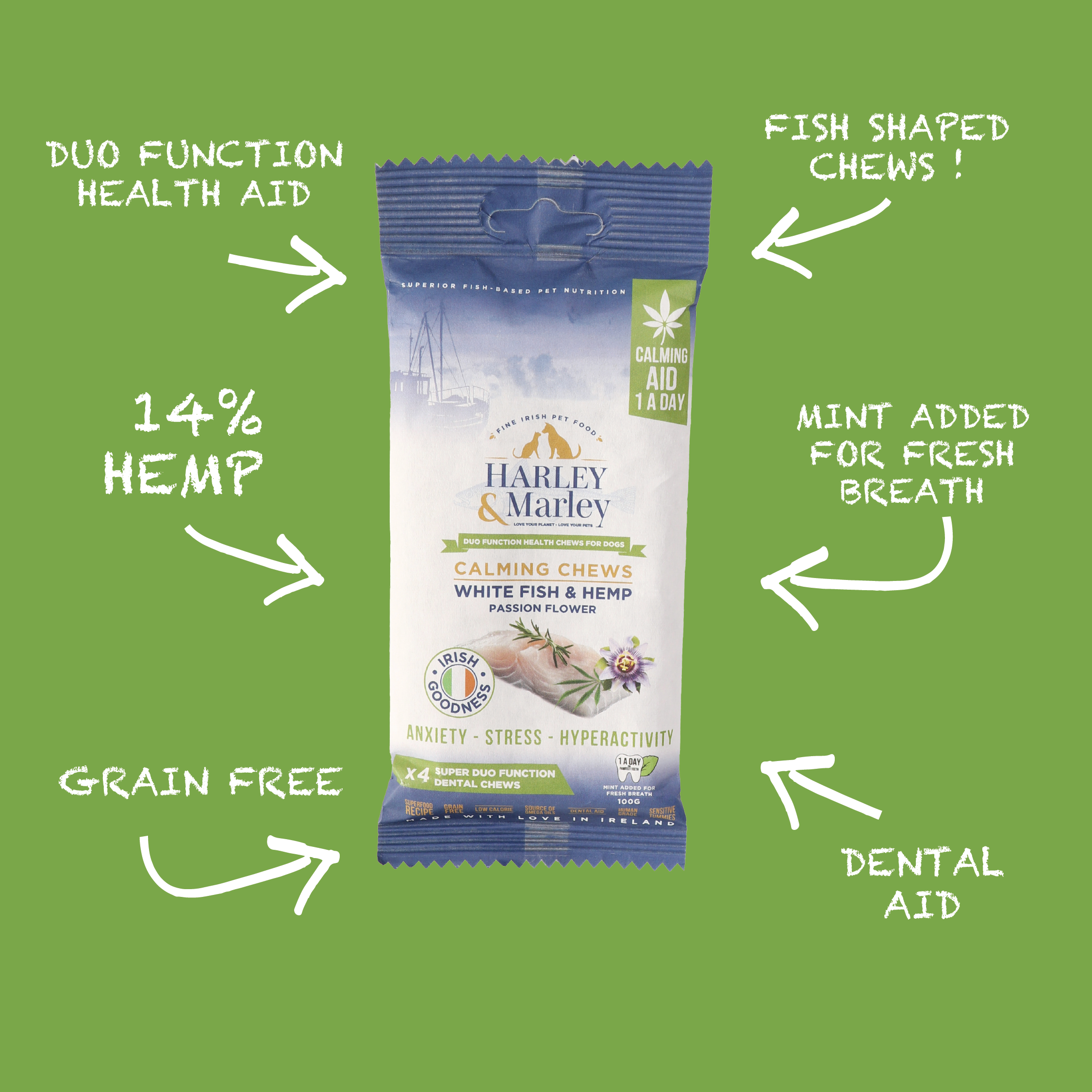
Training is a cornerstone of early puppy life, and our Chews & Bites offer a functional alternative to processed treats. These fish-based rewards provide high-value motivation that reinforces positive behaviour without compromising your puppy's dietary integrity. To further enhance their nutritional foundation, our pure Fish Oil supplements can be added to their daily meals. This provides a concentrated boost of marine Omega-3s, supporting joint flexibility and a radiant coat as they transition into adulthood. Every element of our range is designed to work in harmony, providing a holistic strategy for your puppy's vitality.
Explore our range of Grain-Free Puppy Food and Subscriptions to give your puppy the optimal start they deserve.
Empowering Your Puppy’s Developmental Journey
Choosing the right nutritional foundation is one of the most impactful decisions you'll make for your new companion. By prioritising a high-quality grain free puppy food, you eliminate common dietary triggers whilst providing the clean, bioavailable protein your puppy needs to thrive. We've explored how marine-sourced DHA fuels cognitive development and why slow-release carbohydrates like sweet potato ensure consistent energy for those vital early months.
Our commitment to 100% Irish-owned, sustainable nutrition means your puppy receives a diet free from meat, poultry, and artificial fillers. This fish-only strategy isn't just about avoiding grains; it's about embracing a functional, expert-led approach that supports every growth milestone with precision. You now have the tools to transition your pup safely and the confidence to read labels with a specialist's eye. The journey to a healthy, energetic adult dog begins with the very first bowl. We're here to help you navigate every step with transparency and care.
Give your pup the best start with our Grain-Free Puppy Food Box
Frequently Asked Questions
Is grain-free puppy food safe for all breeds?
Yes, grain-free diets are safe for all breeds when they are expertly formulated to be nutritionally complete. High-quality recipes, such as our Puppy Complete Food, provide the precise balance of proteins, fats, and minerals required for early development. While smaller breeds benefit from the high nutrient density, large breeds require specific calcium-to-phosphorus ratios to ensure steady skeletal growth. Every breed can thrive on a fish-based diet that prioritises bioavailable nutrients over low-cost cereal fillers.
Can I switch my puppy to grain-free food immediately?
You shouldn't switch your puppy’s diet overnight. A sudden change can overwhelm their developing digestive system, leading to loose stools or temporary lethargy. We recommend a seven-day transition period to introduce grain free puppy food safely. Start by mixing 25% of the new fish-based recipe with 75% of their current diet. Gradually increase the proportion of the new food every two days. This methodical approach allows the gut microbiome to adapt without unnecessary stress.
Does grain-free puppy food cause heart issues?
Current research has not established a direct causal link between grain-free diets and heart issues like DCM. Non-hereditary heart conditions are complex and multifactorial, involving genetics and overall nutrient bioavailability. Our recipes are formulated by experts to ensure they are nutritionally complete and balanced. We focus on high-quality marine proteins and essential amino acids to support cardiac health throughout your puppy's growth phases. Always choose a reputable brand that leads with science and transparency.
Why is fish-based puppy food better than chicken or beef?
Fish provides a clean protein source that is naturally easier for puppies to digest than land-based meats. Terrestrial proteins like beef and chicken are common allergens that can trigger inflammatory responses in sensitive pups. Fish is naturally rich in preformed DHA and EPA, which are vital for retinal and brain development. By choosing a fish-only diet, you eliminate the risk of cross-contamination with poultry or red meat by-products, ensuring a much purer nutritional profile.
Will grain-free food help my puppy’s itchy skin?
Yes, grain-free fish-based diets are often highly effective for puppies with cutaneous sensitivities. Many skin irritations and itchy behaviours are linked to intolerances toward grains or common meat proteins. The high levels of Omega-3 fatty acids found in fish help nourish the skin barrier and reduce systemic inflammation. Switching to a grain free puppy food can lead to a noticeably shinier coat and a significant reduction in excessive scratching or redness within just a few weeks.
How much grain-free food should I feed my puppy daily?
Feeding amounts depend on your puppy's current weight and their expected adult size. Small puppies under 10 kg typically require 65g to 180g daily, whilst medium breeds between 10 kg and 20 kg need 180g to 360g. Large breeds can require up to 540g per day to support their significant skeletal needs. Always refer to the specific feeding guide on our packaging to ensure your puppy maintains a steady, healthy growth rate without over-nutrition.
Is Harley & Marley puppy food suitable for sensitive stomachs?
Our Puppy Complete Food is specifically designed for puppies with delicate digestive systems. We use a single-source fish protein that is gentler on the gut than mixed meat recipes. By excluding wheat, maize, and barley, we remove the most common triggers for bloating and flatulence. Our recipes also include prebiotic fibres like chicory inulin to support a healthy microbiome. This makes it an ideal choice for puppies prone to digestive upsets or soft stools.
What are the best grain substitutes in puppy food?
The most effective grain substitutes are complex carbohydrates with a low glycaemic index, such as sweet potato and peas. These ingredients provide sustained energy and essential dietary fibre without causing the blood sugar spikes associated with white rice or corn. Sweet potato is particularly valuable as it is rich in Vitamin A and antioxidants. These functional alternatives ensure your puppy remains satiated and energetic whilst supporting a healthy, stable metabolic rate during their most active months.