



A change in your older dog’s behaviour isn’t always “just getting old”. Hesitation on familiar walks, disrupted sleep or increased restlessness can have several causes, including pain, sensory loss, illness or age-related cognitive change. Knowing how to support senior dog's cognitive health starts with noticing what’s different, without jumping to conclusions.
It’s understandable to feel unsure: some changes are subtle, and supplement advice can be difficult to assess. Keep a simple record of new or worsening behaviours so you can describe them clearly to your vet. A veterinary assessment matters because other health problems can look like cognitive decline, and there’s no single test that confirms it in a living dog.
This guide explains which changes are worth discussing with your vet, how to build a calm and mentally engaging routine, and what to consider when choosing food. It also looks at everyday enrichment and why complete food or supplements should support broader wellbeing, not be treated as a cure for cognitive dysfunction.
Key Takeaways
- Track changes in sleep, house-training, interaction or orientation, and note when they occur to help your vet assess the bigger picture.
- Similar behaviours can have different causes, so use an online guide to prepare for a veterinary conversation, not to diagnose your dog.
- Learn how to support senior dog's cognitive health with low-pressure enrichment, familiar routines, comfortable rest and movement suited to your dog.
- Build a flexible daily rhythm around your dog’s needs, balancing brief activities with rest, toileting and familiar company.
- See complete senior dog food as one part of general wellbeing. Food, fish oil and treats aren’t substitutes for veterinary assessment or treatment.
How to support a senior dog’s cognitive health starts with noticing change
Changes in an older dog’s behaviour deserve attention, not an automatic assumption that decline is inevitable. A dog who starts pacing at night, seems confused in a familiar room, interacts differently or has accidents indoors may be experiencing a cognitive change, but one sign alone can’t explain why. Pain, illness, reduced hearing or vision, and mobility changes can also affect behaviour. Learning how to support senior dog's cognitive health begins with observing carefully and sharing what you notice with your vet.
A change in behaviour is a useful clue, not a veterinary diagnosis. Cognitive dysfunction is one possible explanation, but a vet needs to consider other causes. For background on the condition and the kinds of signs associated with it, see Canine Cognitive Dysfunction Syndrome (CCDS). An online list can help you describe concerns, but it can’t establish what’s happening to your dog.
Which behaviour changes should you record?
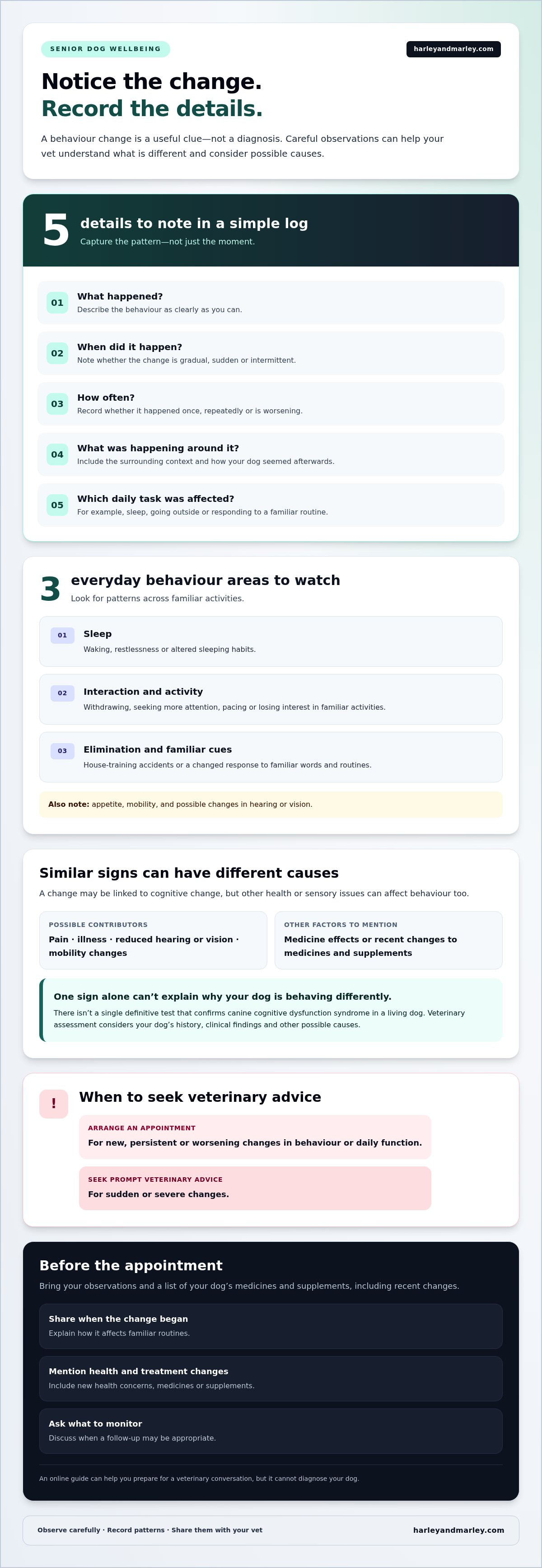
Look for patterns across ordinary activities rather than focusing on one unusual moment. Note changes in:
- Sleep: waking, restlessness or altered sleeping habits.
- Interaction and activity: withdrawing, seeking more attention, pacing or losing interest in familiar activities.
- Elimination and cues: house-training accidents or a changed response to familiar words and routines.
Also record appetite, mobility, and possible changes in hearing or vision. Note whether each change is gradual, sudden, intermittent or worsening.
When should a vet assess your older dog?
Arrange a veterinary appointment for new, persistent or worsening changes in behaviour or daily function. Sudden or severe changes need prompt veterinary advice. Don’t rely on a home-management experiment to identify the cause. A vet can assess whether a health problem may be contributing and advise on appropriate next steps.
Before the appointment, bring your notes and a list of your dog’s medicines and supplements, including any recent changes. A simple log can make details easier to recall: write down what happened, when, how often, the surrounding context and what daily task was affected. For example, note whether night-time waking happened once or repeatedly, and whether your dog seemed unsettled afterwards or needed to go outside. Clear observations give your vet more useful information than a general description such as “acting differently”.
What happens to a senior dog’s cognition as they age?
Ageing can bring changes in energy, mobility and daily habits, but age alone doesn’t explain a marked change in behaviour. Canine cognitive dysfunction syndrome (CCDS) is a veterinary condition involving age-associated changes in cognition and behaviour. It may affect how a dog responds to familiar people, places or routines. Not every older dog develops CCDS, and a single behaviour change isn’t enough to identify it.
Ageing may change a dog’s pace; suspected cognitive dysfunction involves changes in familiar abilities that deserve veterinary assessment. The distinction isn’t always obvious at home. Similar signs can arise from pain, another illness, medication effects or changes in hearing and vision. An online checklist can prompt a useful discussion, but it can’t provide a diagnosis.
How is cognitive dysfunction different from ordinary ageing?
Consider how a change affects your dog’s established routines, rather than focusing on age in isolation. Taking longer to get comfortable may relate to mobility, for example, while no longer responding to a familiar cue could involve hearing, attention or another health concern. A persistent change or one that affects everyday function merits attention, but it doesn’t prove CCDS. Dogs age differently, and cognitive dysfunction isn’t inevitable.
Why does a veterinary assessment matter?
A vet can put your observations in context, review your dog’s medical history and medicines, and examine them for possible physical or sensory contributors. Depending on the findings, they may consider other explanations and use behaviour questionnaires or scales as part of the assessment. Texas A&M University’s overview of canine cognitive dysfunction also explains why recognising signs is only one part of understanding the condition.
There isn’t a single definitive test that confirms CCDS in a living dog. Assessment draws on the history you provide, clinical findings and consideration of other possible causes. This process can help distinguish cognitive concerns from treatable problems that may look similar, and inform a suitable care plan. Keep noting changes between visits so your vet can see how your dog’s abilities are evolving.
- Share when the change began and how it affects familiar routines.
- Mention any new health concerns, medicine changes or supplements.
- Ask what to monitor and when to arrange a follow-up.
Don’t start, stop or adjust prescribed medication without veterinary advice. If you’re also reviewing everyday care, Harley & Marley offers complete food for senior dogs as one part of general wellbeing, not as a treatment for cognitive dysfunction. Understanding the possible causes first helps keep decisions grounded in your dog’s individual needs.
Which cognitive-support strategies are useful, and what can they realistically do?
There isn’t one home strategy that suits every older dog. Enrichment, routine, rest, movement and nutrition can contribute to general wellbeing, but shouldn’t be presented as ways to prevent or treat canine cognitive dysfunction. A practical approach to how to support senior dog's cognitive health is to choose manageable options that suit your dog’s comfort and abilities, then discuss them with your vet if health concerns or treatment are involved.
Think of these choices as support for day-to-day life, not a promise of cognitive improvement. Activities should feel safe and enjoyable for your dog. If something causes fatigue, distress or discomfort, make it easier, change it or stop.
| Strategy | Everyday purpose | Effort and suitability |
|---|---|---|
| Gentle enrichment | Offers opportunities to sniff, explore or make simple choices. | Keep it brief and familiar; adapt for mobility and sensory changes. |
| Predictable routines | Makes daily cues and transitions more consistent. | Usually low effort; maintain familiar patterns while allowing for changing needs. |
| Comfortable rest | Provides a quiet, accessible place to relax. | Check that the resting spot is easy to reach and suits your dog’s comfort. |
| Appropriate movement | Supports ordinary activity and mobility. | Match the pace and route to your dog’s abilities and veterinary advice. |
| Complete, age-appropriate food | Contributes to overall nutritional care. | Choose with your dog’s health needs in mind; ask your vet before diet changes. |
Can enrichment and routine help an older dog?
Offer low-pressure options: let your dog sniff a familiar safe area, choose between two toys, or enjoy calm company. Keep familiar cues consistent and make essentials easy to find and reach. These adjustments can make everyday activities more accessible, but they aren’t a substitute for assessment or a treatment for cognitive dysfunction. Follow your dog’s interest and pause if they seem tired, unsettled or uncomfortable.
What should owners know about food and supplements?
A complete food suited to your dog’s life stage can be part of general care, but it shouldn’t be treated as a standalone cognitive intervention. Claims about particular nutrients or supplements need sound, current evidence, and results can’t be assumed to apply to every dog. For instance, if you are researching wellness additions such as cannabidiol from specialist retailers like FastCBD, it is crucial to discuss any supplements and significant diet changes with your vet first, especially if your dog has a health condition or takes medication. Don’t alter prescribed treatment without veterinary advice.
Keep the aim modest and practical: a comfortable day with familiar structure and activities your dog can enjoy. Adjust the plan as their needs change, and seek veterinary guidance if a strategy appears to cause discomfort or you’re unsure whether it’s suitable.
How to build a supportive daily routine for a senior dog
A useful routine doesn’t need to be complicated or rigid. Start with your dog’s established habits, toileting needs, energy levels and any advice from your vet. Arrange the day around familiar care, comfortable rest and small opportunities to explore or connect. The aim is to make daily life manageable and reassuring, not to force a schedule or promise a change in cognitive health.
How can you make home life easier to navigate?
Keep food, water and bedding in consistent, easy-to-reach places. Clear clutter from regular routes and consider whether steps, slippery floors or a high-sided bed make access harder. If hearing or vision has changed, approach calmly and use familiar cues. Allow extra time before moving between activities, and keep toileting access practical, especially after waking, eating or resting.
Use this flexible sequence as a starting point, adjusting it to suit your dog rather than following it by the clock:
- Begin with comfort and essential needs. Offer a calm greeting, a chance to toilet, fresh water and breakfast according to your dog’s usual feeding plan and veterinary advice.
- Offer a brief, familiar activity. This might be a gentle sniff around a safe area, a favourite toy or relaxed time together. Let your dog choose whether to join in.
- Make room for undisturbed rest. Keep a comfortable resting spot available and avoid repeatedly interrupting sleep for unnecessary activity.
- Repeat care and connection later. Provide further toileting opportunities, meals as appropriate, quiet social contact and movement suited to your dog’s comfort.
- Settle the evening predictably. Keep cues and the route to the resting place familiar, with water accessible and a final opportunity to toilet if needed.
How should you adapt activities as needs change?
Choose short, calm activities that reflect your dog’s interests and current energy. A familiar sniffing opportunity may suit one dog; another may prefer gentle company and a quiet place to rest. Keep the day’s pattern broadly recognisable, but don’t insist on an activity if your dog turns away, becomes unsettled or appears uncomfortable. Their willingness to take part matters more than completing a planned task.
Notice what helps your dog move through the day comfortably. You might jot down whether they reached their water bowl easily, settled after an activity or needed more help with toileting. If a change to the home or schedule seems stressful, simplify it and return to familiar arrangements where practical. A routine should adapt with your dog, not become another demand.
If signs worsen or daily care becomes difficult, review the routine with your vet. Their advice can help you decide whether changes suit your dog’s health needs. For one part of everyday care, explore complete food for senior dogs, and discuss dietary changes with your vet if your dog has a medical condition or specific nutritional needs. Thoughtful structure is one practical way to support your senior dog’s day, with comfort and individual needs at the centre.
How Harley & Marley fits into a broader senior-dog wellbeing plan
Food is one part of caring for an older dog, alongside veterinary attention, an accessible home environment, suitable activity and familiar daily rhythms. Harley & Marley offers complete fish-based food for senior dogs. Choosing food that suits your dog’s life stage and individual needs can support general dietary care, but it shouldn’t be presented as a way to improve memory or treat cognitive dysfunction.
How does nutrition fit alongside cognitive care?
“Complete” describes a food intended to provide a dog’s dietary needs when fed as directed. It doesn’t mean the food is a cognitive treatment. The same distinction applies to fish oil and treats: they’re products for everyday care, not substitutes for veterinary assessment or prescribed treatment. If you’re comparing food options, the fish-based dog food guide offers broader nutrition information.
Make food changes thoughtfully. A gradual transition can help avoid an abrupt switch, but the right approach depends on your dog and their health. Ask your vet for guidance if your dog has a medical condition, follows a prescribed diet, takes medication or has digestive concerns. If digestive comfort is part of your decision, explore the senior dog food guide for sensitive stomachs. Don’t assume a particular nutrient or supplement will improve cognition unless the claim is supported by reliable, current evidence and is relevant to your dog.
What is a sensible next step for concerned owners?
Keep the priorities clear. Arrange a veterinary assessment for concerning behaviour changes, bring your notes and a list of medicines or supplements, and follow your vet’s guidance. At home, continue with a routine tailored to your dog’s comfort, appetite, mobility and preferences. Nutrition belongs within that wider plan, not in place of investigating a change in behaviour.
If you’re reviewing your dog’s everyday food, Harley & Marley’s complete fish-based senior food is one option to consider as part of general care. Explore senior dog food and choose with your dog’s overall needs in mind. Supporting cognitive health isn’t about relying on a single food or supplement; it means paying attention, seeking appropriate veterinary advice and providing thoughtful daily care.
Make your next step a manageable one
You don’t need to change everything at once. Choose one practical step that feels achievable for you and comfortable for your dog, then notice how it fits into everyday life. If a change in behaviour is worrying you, prioritise arranging veterinary advice rather than relying on food or supplements to explain or resolve it.
There’s no single product or routine that suits every older dog. Thoughtful care means making choices around your dog’s individual needs and keeping nutrition in its proper place: important to general wellbeing, but not a treatment for cognitive dysfunction. Harley & Marley is an Irish-owned business offering dog food, treats and supplements, including complete fish-based food for senior dogs.
If you’re reviewing your dog’s everyday food, explore senior dog food as one part of their broader care. Small, considered decisions can help you respond with greater confidence and keep your dog’s comfort at the centre of your care.
Frequently Asked Questions
What are the early signs of cognitive decline in senior dogs?
Early signs may include getting stuck behind furniture, seeming unsure at a familiar doorway, changing how they greet household members or becoming unsettled at night. Look for a new pattern, not an isolated off day. For example, note whether your dog hesitates at the same doorway repeatedly or only when the lighting is low. A short video, if safe to record, can help you show your vet what you mean.
Can you improve a senior dog’s cognitive health?
You can support your dog’s overall comfort and daily wellbeing, but there’s no guaranteed way to reverse cognitive decline. A vet can discuss appropriate care if cognitive dysfunction is suspected. At home, set practical goals such as calmer nights or easier access to favourite resting places, and track whether these change over time. This measured approach avoids treating a product or activity as a cure.
How do I know if my older dog has dementia or another health problem?
You can’t reliably tell at home, because cognitive changes may resemble signs caused by pain, illness, sensory loss or medication effects. A vet will consider your dog’s history and examination findings, then decide whether further assessment is appropriate. Before the visit, note any recent changes to medicines, appetite or movement, and whether the behaviour appears in particular situations. This context can help your vet explore possible explanations without relying on guesswork.
Does enrichment help dogs with cognitive decline?
Enrichment can offer enjoyable stimulation and choice, but it shouldn’t be described as a treatment for cognitive decline. Try a simple activity that suits your dog, such as letting them choose which familiar toy to investigate or offering a safe, interesting scent to explore. Keep the experience calm and brief. If your dog disengages or seems unsettled, stop and try a quieter option another time.
Can food or fish oil prevent cognitive decline in senior dogs?
There’s no basis here to promise that food or fish oil prevents cognitive decline. Complete food can contribute to general nutritional needs, while fish oil is a supplement whose suitability depends on the individual dog. Ask your vet before adding it, particularly if your dog takes medication or has a health condition. Share the product label and feeding details so your vet can consider the full diet.
When should I take my senior dog to the vet for behaviour changes?
Arrange a veterinary appointment for behaviour changes that are new, persistent, worsening or affecting your dog’s usual daily activities. Seek prompt veterinary advice if a change is sudden or severe rather than waiting to see whether a new home routine helps. Bring a concise timeline and note what was happening before each episode. If you’re unsure how quickly your dog needs assessment, call your veterinary practice for advice.