



Labradors are medium shedders, with heavier shedding typically occurring twice a year as the seasons change. Their double coat has a water-resistant topcoat and a thick insulating undercoat, so loose hair is part of normal coat renewal. Managing Labrador shedding with diet can support skin and coat health, but food won’t stop natural shedding.
If you share your home with a Labrador, you’ll know how quickly loose hair can end up on floors, clothes and furniture. The first step is knowing what’s normal for the breed and what might signal a problem.
Learn why Labradors shed, when seasonal coat changes are expected, and how diet and supplements may support coat health. You’ll also find out when hair loss or skin changes call for a veterinary check, so you can care for your dog with confidence.
Key Takeaways
- Expect a Labrador’s shedding to increase as the seasons change; its double coat naturally releases loose hair.
- Choose a balanced diet that supports skin and coat health, and discuss supplements with your vet before adding them.
- Watch for bald patches, hair loss in clumps or irritated skin, which warrant a veterinary check.
- Learn how regular grooming and the right feeding choices can make loose hair easier to manage.
1. Dietary supplements for excessive shedding
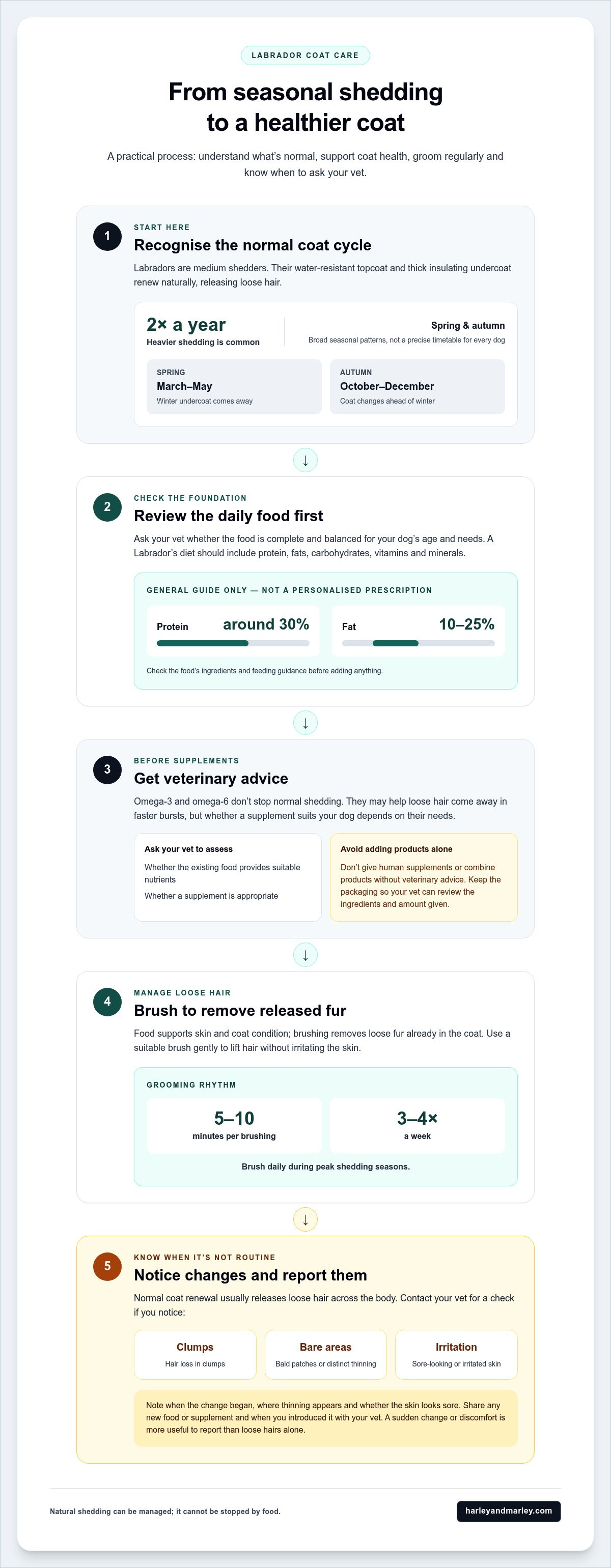
Start with your Labrador’s daily food, not a supplement. An imbalanced diet can contribute to excessive shedding, so ask your vet to assess whether the food is complete and balanced for your dog’s age and needs. A Labrador’s diet should include protein, fats, carbohydrates, vitamins and minerals. One general guide recommends around 30% protein and between 10% and 25% fat; these figures aren’t a personalised prescription. Check the food’s ingredients and feeding guidance before adding anything. For owners, managing labrador shedding with diet begins with understanding the whole food, not focusing on one nutrient.
Omega-3 and omega-6 supplements don’t stop normal shedding. They may help shorten the shedding period by encouraging loose hair to come away in faster bursts. A vet can advise whether a supplement suits your dog and whether its existing food already provides suitable nutrients. Excess hair loss can also have causes beyond diet, so note when it began and whether you see clumps, bald patches or irritated skin. Those signs warrant a veterinary check.
Do Labrador shedding supplements work, and what do they cost in Ireland? Omega-3 and omega-6 may help shedding happen in faster bursts, but they won’t prevent it; whether a supplement is suitable depends on your dog’s needs. Compare the cost per serving and ask your vet whether the ingredients suit your Labrador before buying.
What foods or supplements are unsafe for Labradors? Don’t give your dog human supplements or combine products without veterinary advice: ingredients and serving instructions may not be suitable. Keep the packaging so your vet can review the ingredients and the amount given.
What grooming steps help manage Labrador shedding alongside diet? Brush for five to ten minutes, three to four times a week, and daily during peak shedding seasons. Use a suitable brush gently to lift loose hair without irritating the skin. For practical managing labrador shedding with diet, pair balanced meals with regular grooming: food supports coat condition, while brushing removes loose fur already in the coat.
2. Is Shedding a Sign of a Health Issue?
Seasonal shedding is expected, but hair loss in clumps, bald patches or irritated skin warrants a veterinary check. While brushing, note where thinning appears, whether the skin looks sore and when the change began. Share these observations with your vet. A sudden change or signs of discomfort are more useful to report than loose hairs alone.
Nutrition can support coat condition, though it can’t explain every change. A high-quality, balanced diet supplies protein and other nutrients needed for healthy skin and coat. Omega-3 and omega-6 fatty acids, vitamin E and biotin are associated with skin and coat support. If your Labrador’s coat looks dull or their skin is dry, review the food’s ingredients and feeding guidance with your vet rather than adding several supplements at once.
Can diet reduce Labrador shedding or only improve coat health? A balanced diet may support healthy skin and coat, particularly if an imbalanced diet contributes to excess hair loss. It won’t stop normal seasonal shedding, and changing food won’t address every possible health cause.
Which dog foods are best for Labrador shedding and coat health in Ireland? Choose a complete food suited to your dog’s life stage, with balanced nutrients and ingredients that provide quality protein and essential fats. Compare the feeding guidance and nutritional information on the label. If your Labrador has skin symptoms or unusual hair loss, discuss food suitability with your vet.
Veterinary advice matters before using supplements. A vet can assess your Labrador’s diet, skin and overall health, then advise whether omega-3 or omega-6 supplementation is appropriate. Keep a note of any new food or supplement and when you introduced it; that record can help your vet assess changes in the coat. If hair loss appears alongside irritated skin, prioritise the veterinary check over trying another product.
3. Why Labradors shed and the role of their double coat
A Labrador’s double coat has two distinct layers. The water-resistant topcoat protects the dog’s outer surface, while the thick undercoat provides insulation. Both layers grow and renew, so loose hairs are a normal part of coat maintenance. When the undercoat sheds, you may find noticeably more fur around your home, even if your dog’s skin looks healthy and the coat remains evenly covered.
Seasonal changes commonly bring heavier shedding. Labradors typically shed more in spring and autumn, often heavily twice a year. In spring, they lose winter undercoat, with the seasonal increase often occurring between March and May. Shedding may rise again between October and December as the coat changes ahead of winter. These are broad patterns, not a precise timetable for every dog.
How much do Labrador Retrievers shed seasonally? They often shed heavily twice a year, in spring and autumn, as the undercoat changes. The amount varies, but you may collect more loose hair when brushing during these periods than between seasonal changes.
Normal coat renewal usually means loose hair comes away across the body rather than leaving distinct bare areas. You may find fur on bedding or clothing, or tufts caught in the undercoat during brushing. Check the skin as well as the hair: bald patches, clumps of hair loss or irritation warrant a veterinary check, rather than being treated as routine seasonal shedding.
A double coat also explains why food alone cannot prevent natural shedding. A balanced diet supports skin and coat condition, while brushing removes hairs already released from the undercoat. During heavier seasonal shedding, brush regularly and check for tangles or skin changes. This helps distinguish a normal coat change from a new or uneven pattern that needs attention.
Labrador shedding level
Labradors are generally classed as medium shedders, but that label can understate the work involved at home. Loose hair can stand out on dark trousers, pale upholstery or a freshly swept floor. How much you notice also depends on coat colour, furnishings and brushing frequency. A Labrador may seem to shed more simply because its fur contrasts with the surface.
Expect the amount of loose hair to change through the year. Seasonal changes often bring heavier shedding twice a year. Temperature shifts around spring and autumn can prompt the undercoat to loosen, leaving tufts in the brush or on bedding. Shedding is usually less dramatic between these periods, but loose hairs may still appear on clothes and furniture.
To assess your dog’s pattern, watch the coat rather than counting hairs. Notice whether loose fur comes away evenly or gathers in one area. Check for redness, irritation or bare patches during grooming. An even coat with loose hairs differs from sudden, localised hair loss: clumps, bald areas or irritated skin call for a veterinary check.
Set up a simple routine to make changes easier to spot. Brush your Labrador in the same well-lit place and observe whether the amount of loose hair is increasing or decreasing. Keep track of seasonal changes and any new food or supplement. This gives you a useful comparison over time, rather than relying on how much fur you find after one busy day.
Diet supports coat condition, while brushing helps remove hair already shed. If you’re reviewing everyday nutrition for a medium or large dog, explore food options for medium and large breeds as one part of your routine. A clear takeaway: expect a medium level of shedding overall, with heavier periods during seasonal coat changes.
Harley & Marley: Medium/Large Breed Complete Food
Harley & Marley’s Medium/Large Breed Complete Food is a complete-food option to consider when reviewing your Labrador’s everyday meals. A balanced diet supports skin and coat health, but food won’t prevent normal seasonal shedding or replace veterinary care for bald patches, clumps or irritated skin.
Choose food suited to your dog’s life stage. Harley & Marley also offers Puppy Complete Food and Senior Dog Complete Food. When comparing options for a Labrador, consider the feeding guidance and nutritional information alongside your dog’s age and needs. Keep brushing as part of your coat-care routine, and speak with your vet about unusual hair loss or supplements.
For more information about Harley & Marley’s food options, visit harleyandmarley.com.
Make coat care part of a steady routine
A calm, consistent approach is more useful than reacting to every patch of fur on the sofa. Choose a feeding routine you can maintain, follow the food’s feeding guidance, and avoid introducing several new products at once. This makes it easier to understand what suits your dog and keeps everyday care manageable.
For managing Labrador shedding with diet, think beyond a quick fix. Nutrition is one part of your dog’s wider care, alongside attentive grooming and watching for changes in their skin or coat. If you’re considering food for your dog’s needs, Harley & Marley offers Medium/Large Breed Complete Food, Puppy Complete Food and Small Breed Complete Food.
Contact Harley & Marley for help choosing a suitable food option. A thoughtful routine can make caring for your Labrador feel more straightforward.
Frequently Asked Questions
How Much Do Labrador Retrievers Shed?
Labradors are medium shedders, with heavier coat loss during seasonal changes. Fur may look more noticeable on a dark jumper than on pale flooring, so assess your dog’s coat and skin rather than judging by household surfaces alone. Note when loose fur increases: a marked change from your dog’s usual pattern gives your vet useful context.
How Much Do Labs Shed?
Labs shed a moderate amount overall, though the fur you notice varies with the season and your home. Even a short-haired Labrador can leave loose hairs on blankets, car seats and clothing. To compare changes, look at the same areas of your dog’s coat over time rather than relying on how much fur you find after one day.
Is Shedding a Sign of a Health Issue?
Shedding alone is not necessarily a health problem, but a new pattern deserves attention. Take a clear photo if you spot thinning, and note whether it is localised or widespread. Hair loss in clumps, bald patches or irritated skin warrants a veterinary check. Bring notes about recent food or supplement changes to help explain the timeline.
What Is a Double Coat?
A double coat has two layers: an outer coat and a softer undercoat. In Labradors, the outer layer is water-resistant, while the undercoat provides insulation. Loose hairs can come from either layer. When brushing, lift loose fur gently rather than pulling or scraping the skin.
Why Do Dogs Shed so Much?
Dogs shed as their coats renew, and the amount depends partly on coat type and seasonal changes. A Labrador’s undercoat may release more loose fur as the seasons and temperatures shift. Indoor lighting and heating may also affect a dog’s seasonal pattern. If shedding becomes patchy or comes with skin irritation, treat it differently from an even coat change.
What nutrients support a healthy Labrador coat and skin?
Protein, omega-3 and omega-6 fatty acids, vitamin E and biotin are among the nutrients associated with skin and coat support. A complete, balanced food helps provide nutrition as a whole, rather than relying on one ingredient alone. Read the feeding guidance and ingredients, and discuss supplements with your vet before adding them to your Labrador’s meals.