


What if the word “natural” on a dog food bag tells you less than the ingredient list beside it? Choosing natural dry dog food can feel confusing when labels are crowded with unfamiliar terms, especially if your dog has itchy skin, a sensitive stomach or simply isn’t thriving on their current diet. Wanting better-quality nutrition is a sensible concern, not a reason to feel guilty.
This guide explains what “natural” can mean, what to look for in a complete food and why fish-based protein may be an option for dogs whose current diet doesn’t suit them. Ingredient transparency and nutritional completeness matter more than front-of-pack claims alone. We’ll also look at fish nutrients and how to compare foods for your dog’s life stage, size and individual needs. Harley & Marley offers complete fish-based food for dogs at different life stages, with grain-free options. By the end, you’ll have a practical framework for comparing labels and choosing with greater confidence.
Key Takeaways
- Look beyond “natural” on the packaging: ingredient transparency and a complete, balanced formulation matter when choosing natural dry dog food.
- Learn why fish protein and omega-3 fatty acids may offer nutritional benefits for your dog’s skin, coat and wellbeing.
- Check the ingredients and match the food to your dog’s life stage, size and activity level.
- Grain-free is not automatically the right fit for every dog; consider the whole formulation and your dog’s individual needs.
- Compare complete fish-based foods by life stage, and consider a monthly food box if regular replenishment would be useful.
What Defines Truly Natural Dry Dog Food in 2026?
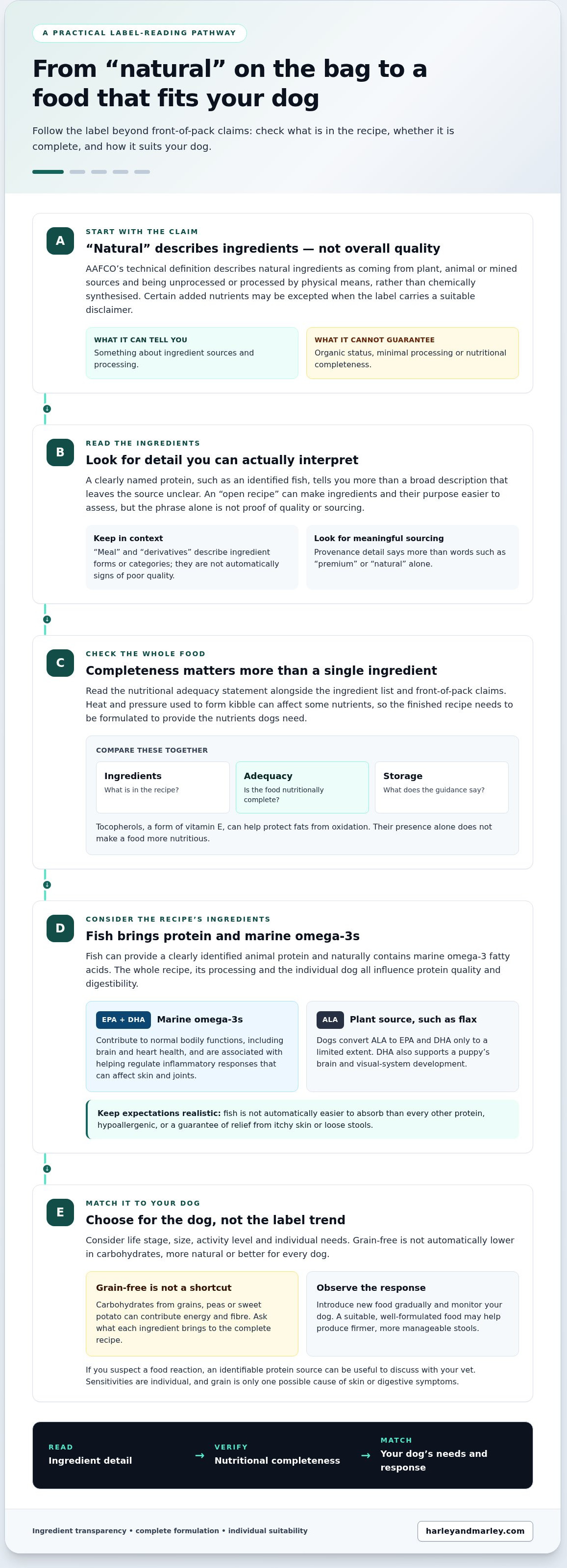
“Natural” sounds reassuring, but it isn’t a complete measure of food quality. AAFCO’s technical definition describes natural ingredients as coming from plant, animal or mined sources and being unprocessed or processed by physical means, rather than chemically synthesised. It allows an exception for certain added nutrients when the label carries a suitable disclaimer. This definition helps explain the term, but it isn’t a universal quality grade: natural doesn’t automatically mean organic, minimally processed or nutritionally complete. Check the food’s nutritional adequacy statement as well as its front-of-pack claims.
A clear ingredient list helps you understand what is in the recipe. Named ingredients, such as a clearly identified fish, tell you more than broad terms that leave the source unclear. “Meal” and “derivatives” aren’t automatically signs of poor quality; they describe ingredient forms or categories. Consider the full ingredient declaration and nutritional profile rather than judging one word in isolation. For a wider overview of food formats and composition, see Dog food.
The Anatomy of a Clean Label
Look for a clearly stated protein source and ingredient descriptions specific enough to interpret. An “open recipe” can make ingredients and their purpose easier to assess, but the phrase itself isn’t proof of quality or sourcing. Useful transparency means the label gives meaningful detail. Sourcing claims are more informative when they explain provenance rather than relying on words such as “premium” or “natural” alone.
Preservation matters, too. Tocopherols, a form of vitamin E, can help protect fats from oxidation. Their presence doesn’t by itself make a food more nutritious, just as a synthetic preservative name doesn’t tell the whole story about the finished recipe. Compare the ingredient list, nutritional adequacy statement and storage guidance together.
Why Dry Food Can Still Be Truly Natural
Kibble’s shape doesn’t determine whether its ingredients are natural. Dry foods are commonly made using processes such as extrusion, which applies heat and pressure to form the pieces and support food safety. Heat can affect some nutrients, so the finished recipe must be formulated to provide the nutrients dogs need. “Minimally processed” isn’t a guarantee that a food is complete or better suited to every dog.
Dry food can also be practical: it’s easy to portion and store, making consistent feeding simpler for busy households. Judge the recipe by its ingredients, nutritional completeness and suitability for your dog, not by the assumption that dry food is inherently unnatural.
The Biological Advantage of Fish-Based Natural Proteins
Fish can be more than a different flavour in the bowl. As the animal protein in a complete recipe, it offers a clearly identified protein source and naturally contains marine omega-3 fatty acids. Protein quality and digestibility depend on the whole recipe, its processing and the individual dog, so fish isn’t automatically easier to absorb than every other protein. For dogs that tolerate it well, a fish-based diet can be a practical option when their current food doesn’t suit them.
Omega Fatty Acids: Nature’s Superfood
Marine omega-3s include EPA and DHA, whilst plant sources such as flax provide ALA, which dogs convert to EPA and DHA only to a limited extent. EPA and DHA contribute to normal bodily functions, including brain and heart health, and are associated with helping regulate inflammatory responses that can affect skin and joints. DHA supports the development of a puppy’s brain and visual system.
A fish-based recipe may support coat condition over time, though coat lustre also depends on overall nutrition and health. Harley & Marley’s fish-based dog food guide explores how marine nutrition can fit into a dog’s diet. Look for a complete formulation and clear ingredient information rather than assuming omega-3s alone guarantee a visible change.
Gentle Digestion for Sensitive Stomachs
Food sensitivities are individual. A dog may react to a particular protein they’ve eaten before, but fish isn’t inherently hypoallergenic, and no protein can promise relief from itchy skin or loose stools. A fish-based recipe can make the protein source easier to identify, which may be useful when discussing a suspected food reaction with your vet. A complete diet also needs balanced nutrients, not just one appealing ingredient.
Digestibility can influence stool quality. A well-formulated food that suits your dog may help produce firmer, more manageable stools, while sudden diet changes or an unsuitable recipe can disrupt digestion. Introduce a new food gradually and monitor your dog’s response. For more on factors that can affect stool consistency, read this guide to dog food for loose stools in Ireland.
If you’re considering fish-based nutrition, explore Harley & Marley’s fish-based food as one option for your dog’s bowl.
Navigating the Grain-Free Debate: Fillers vs. Functional Ingredients
Grain-free doesn’t automatically mean lower-carbohydrate, more natural or better for every dog. Dry food needs a source of energy and structure, and carbohydrates from ingredients such as grains, peas or sweet potato can contribute energy and fibre. The useful question is what each ingredient brings to the complete recipe, not whether it contains grains. In natural dry dog food, a carbohydrate ingredient isn’t a “filler” simply because it’s present.
Grain-free recipes may suit dogs with a diagnosed intolerance to a particular grain, but grain allergies are only one possible cause of skin or digestive symptoms. Refined grains and whole or ancient grains also aren’t interchangeable: processing affects their structure, whilst nutritional value depends on the ingredient and the finished diet. No single label claim tells you whether a food is right for your dog.
Is Grain-Free Right for Your Dog?
Consider a complete grain-free dog food when it suits your dog’s individual needs, rather than assuming grain-free is a universal upgrade. Check that the food is labelled complete for the relevant life stage and that its recipe provides balanced nutrition. The FDA has not established that grain-free diets cause canine dilated cardiomyopathy (DCM); the issue is complex, and the agency advises owners to discuss diet choices with their vet. Grain-free status alone is not a guarantee of heart health.
Look at what replaces the grains. Peas and sweet potato, for example, can contribute carbohydrate, but their presence doesn’t by itself prove a recipe is balanced or superior. Judge the full ingredient list and nutritional adequacy statement together.
Common Fillers to Avoid in Natural Food
Ingredient terms need context. “Animal derivatives” and “vegetable protein extracts” can be broad descriptions, but they aren’t automatic proof of poor quality; clear identification of sources makes a recipe easier to understand. A named protein, such as fish, gives more information than a vague front-of-pack claim. The same principle applies to the carbohydrates in the recipe.
Scan the declaration for artificial colours and flavourings, as well as added sugars or salt. These ingredients can make a food more appealing without being the feature that makes it nutritionally complete. Compare the full recipe rather than relying on “grain-free” or “premium” wording alone. The aim is a clear, complete formulation that suits your dog, with ingredients included for a useful nutritional purpose.
How to Choose the Best Natural Kibble for Your Dog’s Life Stage
A useful label check goes beyond the front-of-pack claims. Start with the first five ingredients and look for a clearly named protein source, such as fish, rather than relying on broad marketing language. Ingredient order offers a starting point, not a full measure of nutritional value, so also read the complete recipe and nutritional adequacy statement.
Next, match the food to your dog’s life stage, size and activity. A growing puppy has different nutritional needs from a less active senior, whilst calorie requirements can vary between individual dogs of the same breed. Look for a complete food designed for the relevant life stage, and check the feeding guide against your dog’s body condition. Functional additions such as prebiotics or joint-support nutrients may be useful, but their presence doesn’t replace a balanced formulation.
Provenance matters. Check where the food is made and whether its sourcing is explained clearly. When changing foods, transition gradually over about 10 days, mixing increasing amounts of the new food with the current diet and watching for changes in appetite or digestion.
Puppies and Small Breeds
Puppies need a complete diet formulated for growth, with appropriate energy and carefully balanced minerals. Avoid trying to accelerate growth by feeding more than directed, particularly for a puppy expected to become large, as steady development is preferable. Explore this guide to puppy food in Ireland for more on fish-based nutrition for young dogs.
For small breeds, kibble size can make pieces easier to pick up and chew. Don’t assume dry kibble alone keeps teeth clean; routine dental care still matters.
Large Breeds and Senior Vitality
Large-breed dogs benefit from food suited to their size and life stage, with measured portions and a healthy body condition helping avoid unnecessary strain on joints. Read more about choosing large breed dog food in Ireland. For seniors, lower activity may mean adjusting calories, but age alone isn’t a reason to assume protein should be reduced. Adequate high-quality protein can help maintain muscle; the right amount depends on the individual dog’s health and needs.
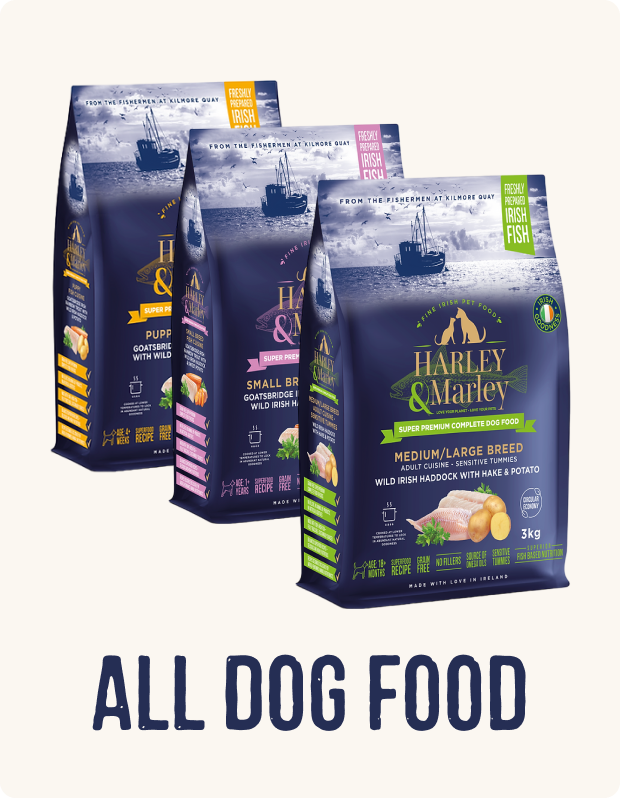
Harley & Marley offers complete fish-based food for puppies, small breeds, medium and large breeds, and senior dogs. Explore complete fish-based dog food to compare options for your dog’s stage of life.
Harley & Marley: Conscious Irish Nutrition for Every Dog
Harley & Marley is an Irish-owned business focused on fish-based canine nutrition and a circular-economy approach. Its range centres on complete fish-based dog food, with treats, chews, bites and fish oil supplements also available. The fish-only focus offers an alternative for owners looking for a clearly identified animal protein in their dog’s food.
When comparing provenance, look for specific information about where ingredients come from and how the food is made. Country of origin alone can’t prove a recipe’s quality or environmental impact. Ingredient transparency and the finished food’s nutritional completeness matter too. Together, these details offer a more useful basis for choosing natural dry dog food than a broad “natural” claim on the bag.
The range includes complete food for puppies, small breeds, medium and large breeds, and senior dogs, alongside grain-free options. Each life stage brings different nutritional needs, so choose a complete recipe that matches your dog’s age and size. Fish-based nutrition also provides a distinctive alternative for households looking for a clear animal-protein source.
The Convenience of a Monthly Subscription
Keeping a dog’s food routine consistent can be easier when replenishment is planned. Harley & Marley’s monthly food box offers a convenient way to organise regular supplies of your dog’s food. The right amount depends on your dog and the feeding guidance, so use the food’s instructions to plan ahead rather than assuming one schedule suits every household. Read more about choosing a dog food subscription in Ireland.
Sustainably Sourced, Thoughtfully Made
Harley & Marley’s business has a focus on sustainable, circular-economy pet nutrition. When assessing sustainability claims, look for clear information about ingredients and how they are used, rather than relying on general environmental language. The brand’s fish-only focus gives its nutrition a distinct identity, while its complete recipes are designed for dogs at different life stages.
Explore the natural dry dog food range to compare fish-based complete food options for your dog’s size and stage of life.
Choose nutrition with clarity and confidence
The right natural dry dog food is more than a reassuring claim on a bag. Look for a clear protein source, a complete recipe suited to your dog’s life stage and ingredient information that helps you understand what you’re feeding. Grain-free isn’t automatically best for every dog, but a fish-based recipe can offer a distinct protein choice for dogs with individual dietary needs.
Harley & Marley offers fish-based complete food for puppies, small breeds, medium and large breeds, and seniors, with grain-free options available. For dogs with sensitivities, a clearly identified fish protein may be worth exploring, although no food can be guaranteed hypoallergenic or right for every dog.
Ready to compare fish-based food for your dog? Shop Harley & Marley’s range of complete fish-based dog food.
Frequently Asked Questions
Is fish-based natural dry dog food better for dogs with allergies?
It may suit some dogs, but fish isn’t automatically hypoallergenic or better for every allergy. Dogs can react to different ingredients, and itchy skin or digestive upset can have causes other than food. A fish-based recipe offers a clearly identified protein source that may be useful when considering alternatives, but discuss suspected food allergies with your vet. Choose a complete food appropriate for your dog, and monitor their response after any gradual diet change.
What is the difference between grain-free and natural dog food?
Grain-free describes a recipe without grains; natural refers to ingredient sourcing and processing, so the terms don’t mean the same thing. A grain-free food isn’t necessarily natural, and a natural food may contain grains. Neither label alone confirms that a food is nutritionally complete or right for your dog. Read the ingredient declaration and look for a statement that the food is complete for your dog’s life stage.
Can I feed fish-based dry food to my puppy every day?
Yes, if it’s a complete food formulated for puppies and you follow its feeding guidance. Growing dogs need a diet suited to development, including carefully balanced energy and minerals, so adult food isn’t automatically appropriate. Harley & Marley offers fish-based Puppy Complete Food. Measure portions according to the pack guidance and your puppy’s condition, and ask your vet for advice if you have concerns about growth, appetite or a specific health need.
How long does it take to see the benefits of a natural diet on my dog’s coat?
There’s no single timeline, and a diet change won’t improve every coat concern. Coat condition can depend on overall nutrition, health, grooming and other individual factors, so changes may take several weeks or longer to become noticeable. Keep your dog’s routine consistent and observe coat shine, skin comfort and digestion over time. If itching, hair loss or skin irritation persists, consult your vet rather than relying on food changes alone.
Is natural dry dog food more expensive than standard kibble?
It can be, but “natural” doesn’t automatically mean a higher price, and the cost varies between foods. Compare the feeding guide and daily portion as well as the bag price, since serving sizes differ between recipes and dogs. Also assess whether the food is complete, suited to your dog’s life stage and transparent about its ingredients. Choose based on nutritional suitability and your budget, rather than the front-of-pack claim alone.
Why does Harley & Marley only use fish in their dog food?
Harley & Marley focuses exclusively on fish-based nutrition, offering a clearly defined animal protein and a source of marine omega-3s. Its fish-only focus gives owners seeking a different protein source a consistent option across complete foods for puppies, small breeds, medium and large breeds, and senior dogs.
How do I transition my dog to a new natural dry food safely?
Introduce the new food gradually over about 10 days, mixing a small amount into your dog’s current food and increasing it step by step. This gives you time to monitor appetite and stools as the diet changes. Avoid making several food changes at once, since that can make it harder to identify what has affected digestion. If your dog develops persistent vomiting, diarrhoea or other concerning signs, contact your vet.
Does natural dry dog food contain any preservatives?
It may. Dry food needs protection from spoilage and oxidation, particularly because fats can deteriorate when exposed to air, light or heat. Some recipes use tocopherols, a form of vitamin E, as antioxidants; other preservation approaches are possible. “Natural” doesn’t necessarily mean preservative-free, and the ingredient list is the best place to check what a particular food contains. Follow the pack’s storage instructions to help maintain freshness after opening.
Explore Harley & Marley’s complete fish-based dog food range to find an option for your dog’s life stage.