


The most unusual-sounding protein may not be novel to your dog at all. Novel protein dog food is only “novel” in relation to what an individual dog has eaten before, so an unfamiliar-sounding ingredient isn’t automatically a new option for your pet.
Food labels can be confusing. A food made with one protein source isn’t necessarily novel, and a “novel” claim doesn’t diagnose or treat an allergy. Your dog’s dietary history matters, as does whether the food is complete and suitable for their life stage.
This guide explains what novel protein means, how it differs from single-protein food, and when a change may be worth discussing with your vet. You’ll learn what to check in the ingredient list and nutritional information, how to consider your dog’s previous foods, and when professional guidance is important. We’ll also look at fish-based complete food as one option to assess against that history, without assuming fish is novel for every dog.
Key Takeaways
- Assess novel protein dog food against your dog’s full food and treat history, not the ingredient’s reputation.
- Novel, familiar, single-protein and hydrolysed diets describe different things.
- Use a practical checklist to review the food label and confirm the diet is complete and suited to your dog’s life stage.
- Discuss suspected food reactions and diet changes with your vet, as symptoms can have causes beyond food.
- Consider fish-based complete food only after checking whether your dog has eaten fish before.
What is novel protein dog food, and what does novel actually mean?
A novel protein is a protein source an individual dog hasn’t eaten before. Novelty isn’t a permanent feature of an ingredient: fish, rabbit or another protein could be unfamiliar to one dog and familiar to another, depending on its food history. Novel protein diets are often discussed as hypoallergenic options, but “novel” describes a dog’s previous exposure. It doesn’t guarantee allergy relief.
A protein is novel only if that individual dog hasn’t previously eaten it; the label alone can’t establish that. Novel protein dog food is therefore food built around a protein that may be new to your dog, rather than a particular ingredient that is universally novel or hypoallergenic.
Other diet terms describe different features. Limited-ingredient usually signals a restricted ingredient list, but doesn’t tell you whether the protein is new to your dog. Hydrolysed describes protein processed into smaller components; it isn’t simply another way of saying “novel”. These categories can overlap, but they aren’t interchangeable. If you’re considering a diet for suspected food reactions, your vet can help decide which approach is appropriate.
How is novel protein different from single-protein dog food?
“Single-protein” describes the number of protein sources in a recipe, not whether your dog has eaten that protein before. A food with one protein source can still use a familiar ingredient. Check the full ingredient list for all named animal-derived ingredients, not only the protein highlighted on the front of the pack. Other animal ingredients may affect whether the food fits your dog’s dietary history.
Does an unusual ingredient automatically count as novel?
No. A protein that sounds uncommon may already have featured in your dog’s foods, treats, chews or supplements. Where possible, check packaging and ingredient lists, then note which animal-derived ingredients your dog has encountered. Don’t assume an unusual-sounding source is universally novel or hypoallergenic. Your dog’s individual history is what matters.
That history can be less obvious than it seems. Treats, chews and supplements all contribute to exposure, and owners may not remember every ingredient in an older food. A written record can help you compare options and give your vet clearer information if you’re exploring a diet change. The name on the bag is a starting point, not proof that the protein is new to your dog.
How novel protein diets relate to suspected food reactions
Recurring itching, ear irritation or digestive upset can be worrying, but these signs don’t point to one cause. Food may be involved, yet similar symptoms can also arise for other reasons. Changing to novel protein dog food on its own can’t confirm what’s behind them or guarantee they’ll improve.
A food change is a choice; a professionally guided elimination diet is a structured process for investigating a suspected food reaction. If you’re concerned, speak with your veterinary professional before changing your dog’s diet. Tufts University’s Cummings School of Veterinary Medicine explains the role of a dietary elimination trial in assessing suspected food allergies. Your vet can advise whether this approach is suitable and how to carry it out.
What signs might prompt a conversation with your vet?
Raise recurring skin or ear concerns, or digestive changes, with your vet, especially if they persist or return. These signs don’t diagnose a food reaction: different underlying causes can produce similar symptoms. Avoid assuming food is responsible or switching diets repeatedly without guidance.
A brief record can make the conversation more useful. Note when signs occur, what your dog has eaten and any changes in their routine. Keep food packaging or photograph the ingredient lists if you still have them. This gives your vet more detail than front-of-pack claims alone.
Why is dietary history important?
A protein can only be considered novel for your dog if they haven’t been exposed to it before. Review more than their main meals: treats, chews, table scraps and supplements can all contain animal-derived ingredients. Include past foods and extras where you can, not just what your dog eats now.
This history can affect whether a proposed protein is appropriate for a professionally planned trial. If your dog has already eaten it in a treat or previous food, it may not be a suitable novel choice. A protein switch alone also can’t be relied on to resolve symptoms. Your vet can assess the wider picture and advise on the diet and monitoring plan.
Once you’ve discussed your dog’s needs with your vet, compare suitable foods by checking their full ingredient lists and confirming they’re complete and appropriate for your dog. Harley & Marley offers fish-based complete foods for different life stages and sizes. Fish may be familiar to some dogs, so assess it against your dog’s history. You can explore fish-based complete dog food as one option to discuss, not as a guaranteed novel diet.
Novel protein, hydrolysed or familiar protein: how do the options compare?
These terms describe different things: a protein’s history in your dog’s diet, the number of protein sources, or how the protein has been processed. None is automatically the best choice for every dog or concern. If you’re considering a diet because of suspected food reactions, a vet can help guide the decision. A clinical review in the Journal of the American Veterinary Medical Association discusses current perspectives on etiology, diagnosis, and management.
| Term | What it describes | What to check and when to seek advice |
|---|---|---|
| Novel protein | A protein source your dog hasn’t previously eaten. | Compare the ingredients with your dog’s food, treat, chew and supplement history. Ask your vet whether it’s suitable if investigating a suspected reaction. |
| Familiar protein | A source your dog has eaten before. It may still be part of a suitable everyday food. | Check the full ingredient list and whether the food is complete and appropriate for your dog’s life stage. Seek veterinary guidance if the change relates to symptoms. |
| Single-protein | A recipe using one protein source; the term doesn’t show whether that source is novel. | Check for all animal-derived ingredients, including those beyond the main named protein. Discuss suitability with your vet if it’s for a dietary trial. |
| Hydrolysed protein | Protein broken into smaller components through processing. This describes how it’s prepared, not whether it’s new to your dog. | Check the food’s intended use and follow veterinary advice, particularly if it’s being considered as part of an investigation into food reactions. |
| Limited-ingredient | A label description suggesting a restricted ingredient list, not proof that the food suits a particular dog. | Read the full ingredient list and assess it against your dog’s history and nutritional needs. |
How should owners weigh the trade-offs?
Start with your dog’s dietary history, then consider whether the food is complete and appropriate for their life stage. Fish, plant or insect protein isn’t automatically novel; your dog may have encountered it in a previous food or treat. Likewise, “limited-ingredient” or “single-protein” wording alone can’t establish that a food is right for a suspected dietary reaction.
Keep medical needs and personal preferences distinct. An interest in sustainability may inform your food choices, but it doesn’t establish that a diet is nutritionally suitable or medically appropriate. For suspected reactions, ask your vet which approach fits your dog and how to assess it. For everyday feeding, compare the label, completeness and life-stage suitability rather than relying on the novel protein dog food claim alone.
How to assess a novel protein dog food before changing diets
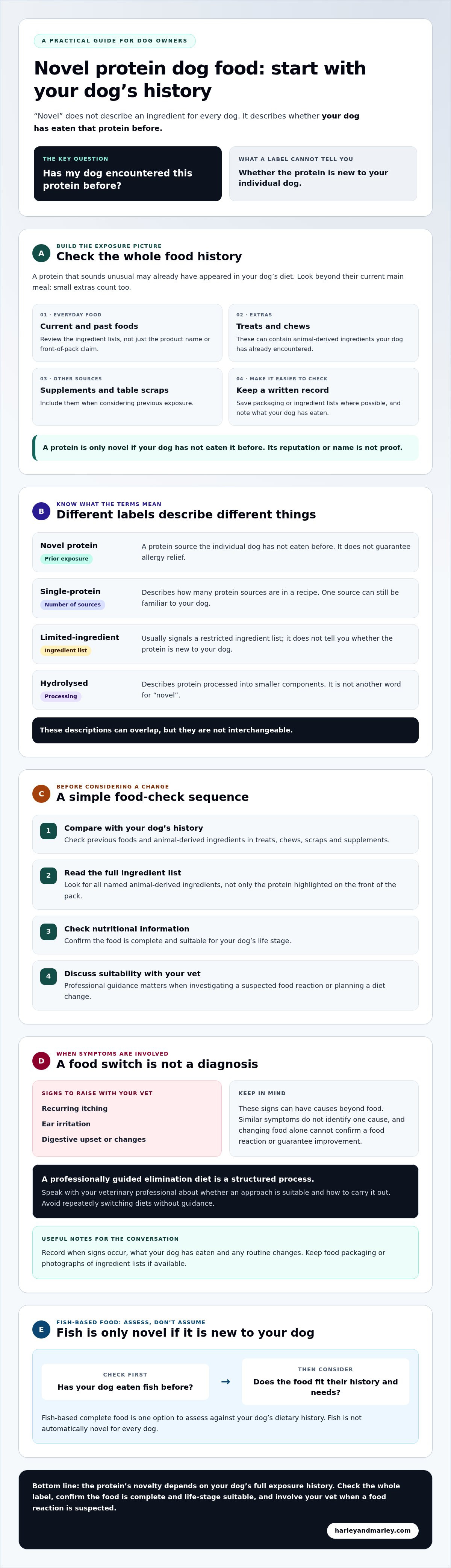
A careful check involves more than spotting an unfamiliar protein on the front of a pack. Use this five-step checklist to compare the food with your dog’s history and needs.
- Record the diet history. List previous main foods and note the animal-derived ingredients in treats, chews, table scraps and supplements. This helps you judge whether a protein is genuinely new to your dog.
- Define the goal. Are you choosing an everyday food, or responding to a suspected food reaction? If symptoms are the reason for considering a change, speak to your vet before starting a diet trial.
- Check the label. Identify the named protein sources and read the full ingredient list, including ingredients beyond the headline protein. Look for confirmation that the food is complete and appropriate for your dog’s life stage.
- Ask your vet. Seek professional guidance on whether the food fits your dog’s needs, particularly if the change is intended to investigate a possible reaction.
- Monitor consistently. Follow the manufacturer’s transition directions unless your vet advises otherwise. Keep a record of food, treats and observable changes, and share it with your vet if you have concerns.
What should you check on the label?
Check that the named protein sources match the diet you intend to feed, and consider all animal-derived ingredients rather than relying on a front-of-pack claim. Look for wording that identifies the food as complete, then check that it’s suitable for your dog’s life stage. Puppies, adult dogs and senior dogs may have different nutritional needs, so don’t assume one food suits every dog.
Terms such as “grain-free”, “natural” or “limited-ingredient” don’t prove that a food is suitable for a suspected allergy or dietary trial. Judge the ingredient information and complete-food status separately from marketing language. If a label is unclear, ask the manufacturer about the product details and discuss suitability with your vet.
How should a food change be planned?
For a suspected reaction, a casual switch may not answer the question you’re trying to investigate. Ask your vet whether a planned trial is appropriate and how to keep the diet consistent. Treats, chews and supplements matter too; unrecorded extras can make it harder to understand what your dog has eaten.
Use the label to check ingredients, completeness and life-stage suitability; use veterinary advice to assess suspected reactions and plan a diet trial. If you’re comparing fish-based options against your dog’s dietary history, you can explore complete fish-based dog food from Harley & Marley. Fish may be new to one dog and familiar to another, so check their past foods and treats before deciding whether it fits your aim.
Could fish-based complete dog food suit your dog’s dietary history?
Fish may be unfamiliar to one dog and familiar to another. A dog might have eaten it in a complete food, treat or supplement, so its presence in a new recipe doesn’t by itself make the protein novel. Review the full dietary history first, especially if you’re considering novel protein dog food because of suspected food reactions.
When might fish be worth discussing with your vet?
If recurring skin, ear or digestive concerns prompted your search, talk with your vet before choosing a food or beginning a diet trial. Share the foods, treats, chews and supplements your dog has had, including any fish-based items. This helps your vet assess whether fish is genuinely unfamiliar and whether it fits the plan. Fish-based food isn’t automatically hypoallergenic or medically suitable for a particular dog.
If poultry exposure is relevant to the discussion, poultry-free dog food guidance may offer additional context, but it isn’t a substitute for veterinary advice. For digestive signs such as loose stools, you can also read this guide to dog food for loose stools; ongoing or recurring symptoms warrant a conversation with your vet.
How can you explore fish-based food responsibly?
Start with the label. Check the named ingredients against your dog’s food history, and confirm that the food is complete and appropriate for their life stage. Harley & Marley offers fish-based complete foods for puppies, small breeds, medium and large breeds, and senior dogs. Choose an option based on your dog’s life stage and dietary history, not simply on the word “fish” on the pack.
For broader context on fish nutrition, explore this fish-based dog food guide. Use it alongside the product label and, where symptoms or an elimination diet are involved, your vet’s advice. A careful comparison can help you decide whether a fish-based complete food is worth considering, without assuming it’s novel for every dog.
Choose with your dog’s history in mind
The right protein depends on what your dog has eaten before, not on whether an ingredient sounds unusual. A single-protein or limited-ingredient label doesn’t prove that the food is novel, and suspected food reactions need veterinary guidance rather than guesswork.
Before changing diets, review your dog’s meals, treats and supplements, check the full ingredient list, and confirm the food is complete and suited to their life stage. These checks help you compare options with more confidence whilst keeping your dog’s nutritional needs at the centre of the decision.
Harley & Marley offers complete fish-based foods for different life stages and sizes, alongside grain-free options and flexible ways to purchase. Fish may or may not be novel for your dog, so compare the ingredients with their dietary history. Explore Harley & Marley fish-based complete dog food as one option to consider.
With a clear history and advice from your vet where needed, you can make a thoughtful choice for your dog. Explore Harley & Marley’s fish-based complete foods and compare the ingredients with your dog’s needs.
Frequently Asked Questions
What is novel protein dog food?
Novel protein dog food contains a protein source your individual dog hasn’t eaten before. “Novel” depends on their dietary history, not on whether an ingredient sounds unusual or is marketed as uncommon. A protein may be new to one dog but familiar to another. This type of food may be considered as part of a vet-guided dietary approach, but the label alone doesn’t diagnose a food allergy or promise symptom relief.
Is fish a novel protein for dogs?
Fish is novel only if a dog hasn’t previously eaten it. Check past complete foods and extras such as fish treats, chews or supplements, as these may mean your dog has already been exposed. Fish-based food can be an option to assess against that history, but it isn’t automatically novel, hypoallergenic or suitable for every dog. If you’re considering fish because of recurring symptoms, discuss the choice with your vet.
Can novel protein dog food help with allergies?
A diet using a protein the dog hasn’t eaten before may be one option a veterinary professional considers when investigating a suspected food allergy. It isn’t a diagnosis or a guaranteed treatment, and itching or digestive signs can have causes beyond food. A vet can advise whether a structured dietary trial is appropriate and which food to use. Follow their guidance rather than changing foods repeatedly based on symptoms alone.
What is the difference between novel protein and single protein dog food?
“Novel protein” describes whether the dog has previously eaten a protein source. “Single protein” describes a recipe that uses one protein source, but that source may still be familiar to the dog. Check the full ingredient list, including other animal-derived ingredients, rather than relying only on the front-of-pack wording. If you’re choosing food to investigate a suspected reaction, ask your vet whether the recipe fits the intended dietary plan.
How do I know whether a protein is new to my dog?
Review the ingredients in your dog’s previous complete foods, treats, chews, table scraps and supplements. Packaging or photographs of ingredient lists can help, particularly if you can’t remember every food they’ve tried. Look for all animal-derived ingredients, not just the main protein named on the pack. If the history is incomplete or the food is being considered for a dietary trial, ask your vet for help assessing it.
Should I change my dog to a novel protein diet without speaking to a vet?
If you’re considering a diet because of recurring skin, ear or digestive signs, speak with your vet before changing your dog’s food. Similar symptoms can have different causes, and an unplanned switch may not give clear answers. Your vet can assess whether a dietary trial is appropriate and advise how to keep it consistent. For a routine food change, check that the food is complete and suitable for your dog’s life stage.
Is grain-free dog food the same as novel protein dog food?
No. “Grain-free” describes a food made without grains, while “novel protein” means the protein source is new to that individual dog. A grain-free recipe may contain a protein your dog has eaten before, and a food with a novel protein isn’t necessarily grain-free. Check both the ingredients and the food’s complete status. Neither label, on its own, establishes that a diet is suitable for suspected allergies.