


Did you know that whilst most pet parents blame the local park for their dog's itchy skin, up to 15% of allergic skin diseases are actually triggered by the bowl in your kitchen? It is exhausting to watch your companion suffer through yet another round of mystery ear infections or relentless paw licking, especially when expensive vet visits only seem to offer temporary relief. If you are tired of decoding confusing labels, understanding the specific signs your dog has a food allergy is the first step toward restoring their vitality and your peace of mind.
We believe that true health starts with transparency and scientific rigour. You deserve a clear path out of the cycle of persistent scratching and toward a solution that respects your dog’s biology. In this essential 2026 checklist, we will explore the subtle and overt clinical signs of canine food sensitivities. You will learn how to identify common protein triggers through expert-led nutritional guidance and discover a practical plan to implement a sustainable, fish-based diet that supports a healthy skin barrier for the long term.
Key Takeaways
- Identify the specific signs your dog has a food allergy, including the persistent itch-scratch cycle and chronic ear issues that often signal a dietary trigger.
- Learn the biological difference between a simple intolerance and a true allergy to better understand your companion's unique nutritional needs.
- Master the framework for distinguishing year-round food sensitivities from seasonal environmental irritants to avoid unnecessary and expensive vet visits.
- Follow a professional guide to the elimination diet trial; this ensures you correctly isolate problematic proteins rather than just swapping one commercial brand for another.
- Explore the functional benefits of poultry-free, fish-based nutrition for calming inflammation and restoring the natural integrity of your dog's skin.
Understanding Canine Food Allergies: More Than Just a Sensitive Tummy
Identifying the root cause of your dog’s discomfort requires looking beyond the digestive tract. Whilst many owners assume a bout of loose stools indicates a "sensitive stomach", the reality is often more complex. Correctly identifying the specific signs your dog has a food allergy often involves distinguishing between a simple digestive upset and a systemic immune response. Scientists use the umbrella term Adverse Food Reactions (AFR) to categorise any abnormal response to an ingested ingredient. This includes both immunological reactions and metabolic failures. Understanding the specific Canine Food Allergies that fall under this category is vital because the physiological mechanism dictates the long-term treatment plan.
A common misconception is that an allergy will appear immediately after trying a new brand. In truth, many dogs experience a "threshold effect". Their immune system may tolerate a specific protein for months or even years before reaching a breaking point. Once this biological threshold is crossed, the body begins to treat that familiar protein as a hostile invader, finally triggering the visible signs your dog has a food allergy. This delayed onset is why simply remembering what your dog ate yesterday is rarely enough to find the culprit.
Allergy vs. Intolerance: Why the Distinction Matters
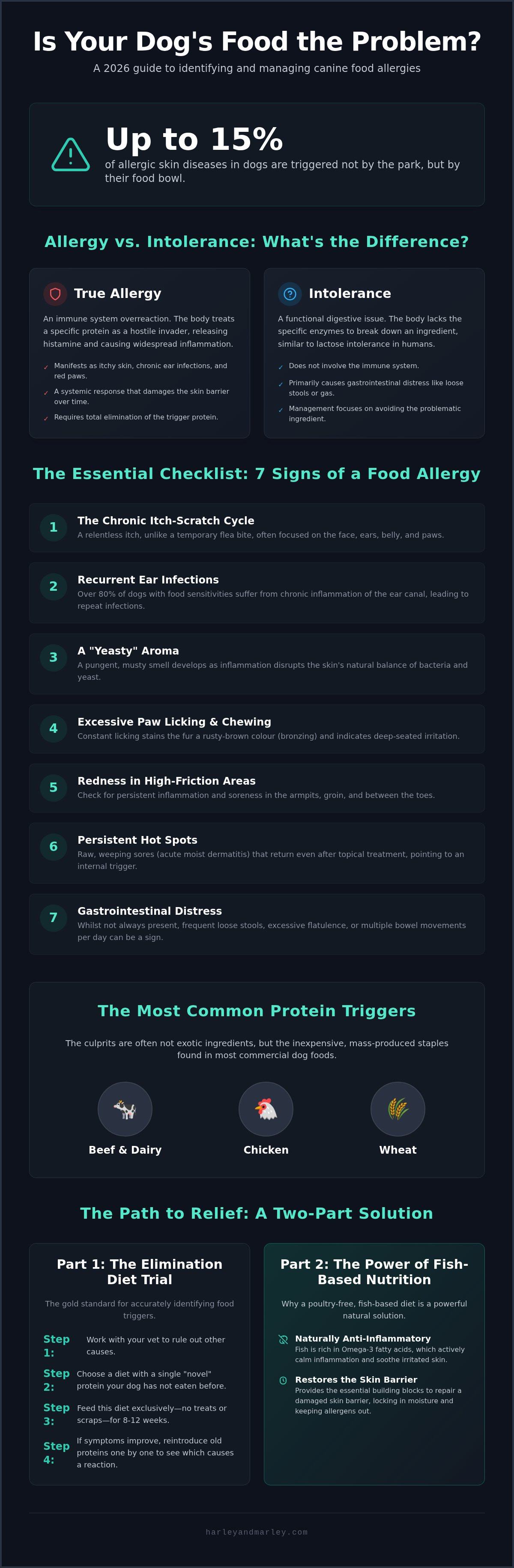
An allergy is a defensive overreaction by the immune system. When an allergic dog eats a specific protein, their body releases histamine and other chemicals that cause widespread inflammation. This often manifests as itchy skin, chronic ear infections, or red, irritated paws. Conversely, an intolerance is a functional digestive issue, much like lactose intolerance in humans. It doesn't involve the immune system but rather a lack of the necessary enzymes to break down a specific ingredient. Whilst both can cause distress, managing an allergy requires the total elimination of the offending protein to prevent long-term systemic damage to the skin barrier.
The Common Triggers in Standard Dog Food
The most frequent allergens aren't exotic ingredients; they are the primary staples of the mass-market pet food industry. Research indicates that beef, dairy, chicken, and wheat account for the vast majority of adverse reactions in the canine population. These proteins are used extensively because they are inexpensive and readily available for large-scale production. For owners, moving away from these industrial fillers is often the first step toward recovery. Switching to high-quality, poultry-free dog food Ireland can provide a "clean slate" for the immune system, especially when using a novel protein source like sustainably sourced fish that is naturally rich in anti-inflammatory Omega-3.
The Essential Checklist: 7 Telling Signs Your Dog Has a Food Allergy
Observing your dog's daily habits provides the most reliable data for a clinical diagnosis. Whilst environmental factors often cause seasonal flare-ups, the signs your dog has a food allergy are typically persistent and present year-round. This checklist focuses on the systemic breakdown of the skin barrier and internal digestive stress. If your companion exhibits several of these behaviours, it is time to consider a Veterinary-Approved Elimination Diet to isolate the specific protein trigger.
- The Chronic Itch-Scratch Cycle: Unlike a temporary flea bite, this itch is relentless and often focuses on the face, ears, and belly.
- Recurrent Ear Infections: Over 80% of dogs with food sensitivities suffer from chronic inflammation of the ear canal.
- The "Yeasty" Aroma: A pungent, musty smell often develops as the skin's natural microbiome is disrupted by inflammation.
- Excessive Paw Licking: Constant moisture from saliva causes the fur to turn a rusty brown colour, known as bronzing.
- Redness in High-Friction Areas: Look for inflammation in the armpits, groin, and between the toes.
- Persistent Hot Spots: These raw, weeping sores often return even after successful topical treatment because the internal trigger remains.
- Gastrointestinal Distress: Frequent bowel movements or chronic flatulence indicating a failure to process specific ingredients.
Dermatological Signs: Looking Beyond the Surface
The skin is the largest organ in the body and acts as a mirror for internal health. When a dog reacts to a protein like chicken or beef, the inflammation often concentrates in areas with thin skin or high moisture. You might notice your dog obsessively chewing their paws or rubbing their face against the furniture. This isn't just a habit; it is a desperate attempt to soothe deep-seated irritation. Identifying these signs your dog has a food allergy early can prevent the development of secondary bacterial infections that complicate the recovery process.
Gastrointestinal and Behavioural Indicators
Whilst skin issues are the most visible symptom, the gut often provides the first warning. Research suggests that over 20% of dogs with food sensitivities exhibit gastrointestinal signs alongside skin irritation. Dogs with these sensitivities frequently have more than three bowel movements a day, often with a soft or inconsistent texture. If you notice "scooting" or excessive gas after mealtime, your dog’s system is likely struggling to break down complex proteins or fillers. Switching to a high-quality dog food for dogs with loose stools Ireland can help stabilise the microbiome. For many pet parents, transitioning to a grain-free dog food enriched with Irish-sourced fish provides the immediate relief their companion needs.
Allergy or Environment? Distinguishing Food Triggers from Seasonal Irritants
One of the most complex challenges for any pet parent is determining whether a flare-up is caused by the environment or the bowl. Whilst the symptoms often look identical to the naked eye, the timing and response to treatment provide vital clues. Environmental allergies, or atopy, are typically cyclical and triggered by seasonal changes in pollen, moulds, or grasses. Conversely, the signs your dog has a food allergy are persistent; they do not disappear when the leaves fall or the frost sets in. For many owners, Distinguishing Food Triggers from environmental ones is the only way to stop the cycle of expensive, temporary fixes.
The medical response also serves as a diagnostic tool. Environmental irritants often respond well to antihistamines or low-dose steroids because they target a specific, external histamine release. Food allergies rarely show significant improvement with these medications because the trigger is being ingested daily, causing a constant state of systemic inflammation. It is also important to recognise that these conditions are not mutually exclusive. Research indicates that up to 33% of dogs diagnosed with atopic dermatitis also suffer from a concurrent food allergy, meaning a dual approach to management is often necessary for complete relief.
The Year-Round Rule for Dietary Triggers
If your companion’s scratching is as intense in the depths of December as it is in the heat of July, the culprit is almost certainly dietary. Nature’s irritants have a distinct peak and trough. You might notice a grass allergy flares up after a walk in a hay field, whilst a food sensitivity remains a steady, exhausting constant. We recommend keeping a "Symptom Diary" to track these patterns. Recording what your dog eats alongside the intensity of their itching helps you see through the noise of seasonal changes and identifies the true signs your dog has a food allergy.
Location of the Itch: A Diagnostic Clue
In addition to tracking health patterns, maintaining your pet's safety through secure communication is another way to provide peace of mind; to learn more about anonymous pet identification, visit Curb Samaritan.
Where your dog scratches can be just as telling as when they scratch. Food sensitivities tend to manifest in the "ears and rears" and the paws. If your dog is scooting or has chronic ear inflammation without a clear environmental cause, the gut is the likely source. Environmental allergies often involve the eyes and muzzle more significantly, leading to watery eyes and frequent sneezing. For owners of larger animals, this distinction is critical; large breed dog food Ireland must be formulated to support a vast skin surface area that is vulnerable to both types of irritation. Identifying the specific location helps you and your vet decide whether to focus on environmental barriers or a total dietary overhaul.
Taking Action: How to Conduct a Veterinary-Approved Elimination Diet Trial
Confirming a diagnosis is a process of exclusion. Whilst the checklist in the previous sections helps you recognise the signs your dog has a food allergy, the definitive proof comes from a strict elimination diet trial. This is considered the gold standard by veterinary professionals globally. Many owners attempt to resolve the issue by simply switching brands, but this often fails. If the new food still contains the same underlying protein, such as chicken or beef, the immune system will continue its defensive response. A true trial requires a complete break from all previous ingredients to allow the body's inflammatory markers to return to baseline.
Patience is the most critical component of this process. It typically takes between 8 and 12 weeks for the immune system to fully "reset" and for the skin barrier to begin repairing itself. During this window, your dog must consume nothing but the chosen novel protein and a single carbohydrate source. This means no table scraps, no meat-based dental chews, and no flavoured medications unless approved by your vet. Even a single accidental treat can trigger a flare-up and reset the clock on your progress. It is a commitment that requires total discipline, but the reward is a thriving, itch-free companion.
Choosing a Novel Protein: Why Fish is the Expert Choice
A novel protein is a source that your dog has never ingested before. For most dogs raised on standard commercial diets, fish represents the ultimate clean protein. Many "sensitive" diets on the market still include poultry fat or hydrolysed chicken, which can perpetuate the very issues you are trying to solve. Opting for poultry free dog food Ireland ensures that you are removing the most common avian triggers entirely. Fish is also naturally rich in Omega-3 fatty acids (EPA and DHA), which actively soothe the skin whilst you wait for the allergens to clear the system. The purity of Irish-sourced fish provides a consistent, high-quality foundation that avoids the complex meat-meal blends found in mass-market products.
Common Pitfalls During an Elimination Trial
The "One Bite" rule is the most frequent cause of trial failure. A tiny piece of cheese or a single meat-based biscuit is enough to reignite the immune response. You must also scrutinise hidden triggers; many heartworm preventatives or joint supplements use beef or liver flavouring to increase palatability. Total family-wide cooperation is essential. Ensure everyone in the household understands that any "accidental" feeding is a setback for your dog's health. For a consistent and controlled recovery, you can order our grain-free dog food to ensure your dog has a steady supply of pure, fish-based nutrition throughout their trial. Eliminating the signs your dog has a food allergy requires total dietary discipline, but this strict protocol is the only way to move toward a permanent, itch-free solution.
The Power of Fish-Based Nutrition: Why a Poultry-Free Diet is the Natural Solution
Once you have identified the signs your dog has a food allergy through a controlled trial, the focus must shift from elimination to long-term restoration. Choosing a sustainable, high-quality protein source is the most impactful decision a pet parent can make. Premium fish-based nutrition is not merely a "chicken alternative"; it is a functional tool that actively repairs the damage caused by chronic inflammation. For dogs suffering from systemic sensitivities, a grain-free and poultry-free approach provides the cleanest possible nutritional profile, allowing the immune system to remain calm whilst the body heals.
Restoring a dog's health requires more than just removing the trigger. It requires nutrient-dense ingredients that support the skin's natural defences. Fish is uniquely suited for this purpose because it is a highly digestible, complete protein that lacks the complex structures often found in land-based meats. By simplifying the bowl, you reduce the metabolic stress on your dog's system, paving the way for a life free from the exhausting cycle of scratching and vet visits.
Omega-3: The Biological Repair Kit for Itchy Skin
The primary benefit of fish lies in its high concentration of Omega-3 fatty acids, specifically EPA and DHA. These essential fats act as natural anti-inflammatories, reducing the production of chemicals that cause the intense itching and redness associated with allergies. When a dog has a food sensitivity, their skin barrier often becomes "leaky" and compromised, leaving them vulnerable to secondary infections. Omega-3s help reinforce this barrier from the inside out, promoting a resilient, shiny coat that serves as a visible sign of internal health. You can find more detail on these functional benefits in our ultimate guide to fish-based dog food.
Why Harley & Marley is the Trusted Choice for Sensitive Dogs
At Harley & Marley, we believe in the power of "Clean Label" nutrition. Our formulations are built around sustainably sourced Irish fish, ensuring that your companion receives maximum nutrient density without the risk of hidden meat-meal fillers. By providing a diet that is entirely free from grains and poultry, we eliminate the variables that often trigger the signs your dog has a food allergy in the first place. Our commitment to purity means we never use artificial additives, focusing instead on the natural vitality found in our local coastal waters. This methodical approach to sourcing ensures that every bowl supports holistic health and long-term vitality. To provide your companion with consistent, high-quality relief, we invite you to explore our range of hypoallergenic fish-based dog food subscriptions today.
Restoring Your Companion’s Vitality Through Precise Nutrition
Recognising the signs your dog has a food allergy is a transformative moment in your journey as a pet parent. You now understand that chronic itching and recurrent ear infections aren't just surface-level issues; they're systemic responses to specific protein triggers. By implementing a strict elimination trial and moving toward a poultry-free diet, you're addressing the root cause rather than just masking the symptoms. This methodical approach is the only way to ensure lasting relief and structural skin repair for your companion.
Our commitment to clean label nutrition focuses on 100% Irish sustainable fish, providing a grain-free foundation that's exceptionally rich in Omega-3. It's time to replace confusion with confidence and provide the purity your dog's biology demands. To start this new chapter of health and vitality, Switch to a Poultry-Free, Fish-Based Subscription Today. Your dog's path to a comfortable, thriving life starts in the bowl, and we're honoured to be your trusted partner in their recovery.
Frequently Asked Questions
Can a dog suddenly develop a food allergy to something they have eaten for years?
Yes, dogs can develop a sensitivity to a protein they have consumed for years without issue. This often occurs due to the threshold effect, where the immune system eventually reaches a breaking point after prolonged exposure. Once this threshold is crossed, the body begins to treat the familiar ingredient as a hostile invader. This is why the signs your dog has a food allergy often appear seemingly out of nowhere in adulthood.
How long does it take for food allergy symptoms to disappear after changing diet?
It typically takes between 8 and 12 weeks for the immune system to reset and for the skin barrier to show visible signs of repair. Whilst gastrointestinal improvements might be seen within a few days, the inflammatory markers in the skin take much longer to subside. You must be patient and strictly adhere to the new diet during this window to ensure that all previous allergens have completely cleared from your dog's system.
Are grain-free diets better for dogs with skin allergies?
Grain-free diets are often beneficial because they eliminate common fillers like wheat, which is a frequent allergen for many dogs. Whilst proteins like beef or chicken are the most common triggers, removing grains reduces the overall antigenic load on the immune system. For dogs with compromised skin barriers, a grain-free approach often provides a cleaner, more digestible nutritional profile that supports the body's natural healing processes and reduces systemic inflammation.
What is the most common food allergy in dogs in the UK and Ireland?
Research confirms that beef (34%), dairy (17%), chicken (15%), and wheat (13%) are the most frequent food allergens in dogs. These ingredients are used extensively in mass-market pet foods because they are cost-effective and widely available. Because these proteins are so prevalent, many dogs develop sensitivities to them over time. This is why switching to a poultry-free, fish-based diet is often recommended as a primary step for managing chronic skin and digestive issues.
Can I use a blood test to diagnose my dog’s food allergy?
Blood tests for food allergies are generally considered unreliable by veterinary dermatologists as they often produce false positives. These tests may suggest sensitivities to ingredients that are not actually problematic for your companion. The only definitive method for diagnosing a food sensitivity is a strict elimination diet trial lasting up to 12 weeks. This approach allows you to observe the clinical signs your dog has a food allergy and confirm the trigger through systematic reintroduction.
Is fish a good protein source for puppies with sensitive skin?
Fish is an excellent protein source for puppies, especially those showing early signs of skin sensitivity. It provides a highly digestible, clean protein that is less likely to trigger an immune response than common land-based meats. Additionally, the high Omega-3 content in fish supports the development of a healthy skin barrier and a resilient coat. Our Puppy Complete Food is specifically formulated with sustainably sourced Irish fish to support growth whilst protecting sensitive systems.
What treats can I give my dog during an elimination diet trial?
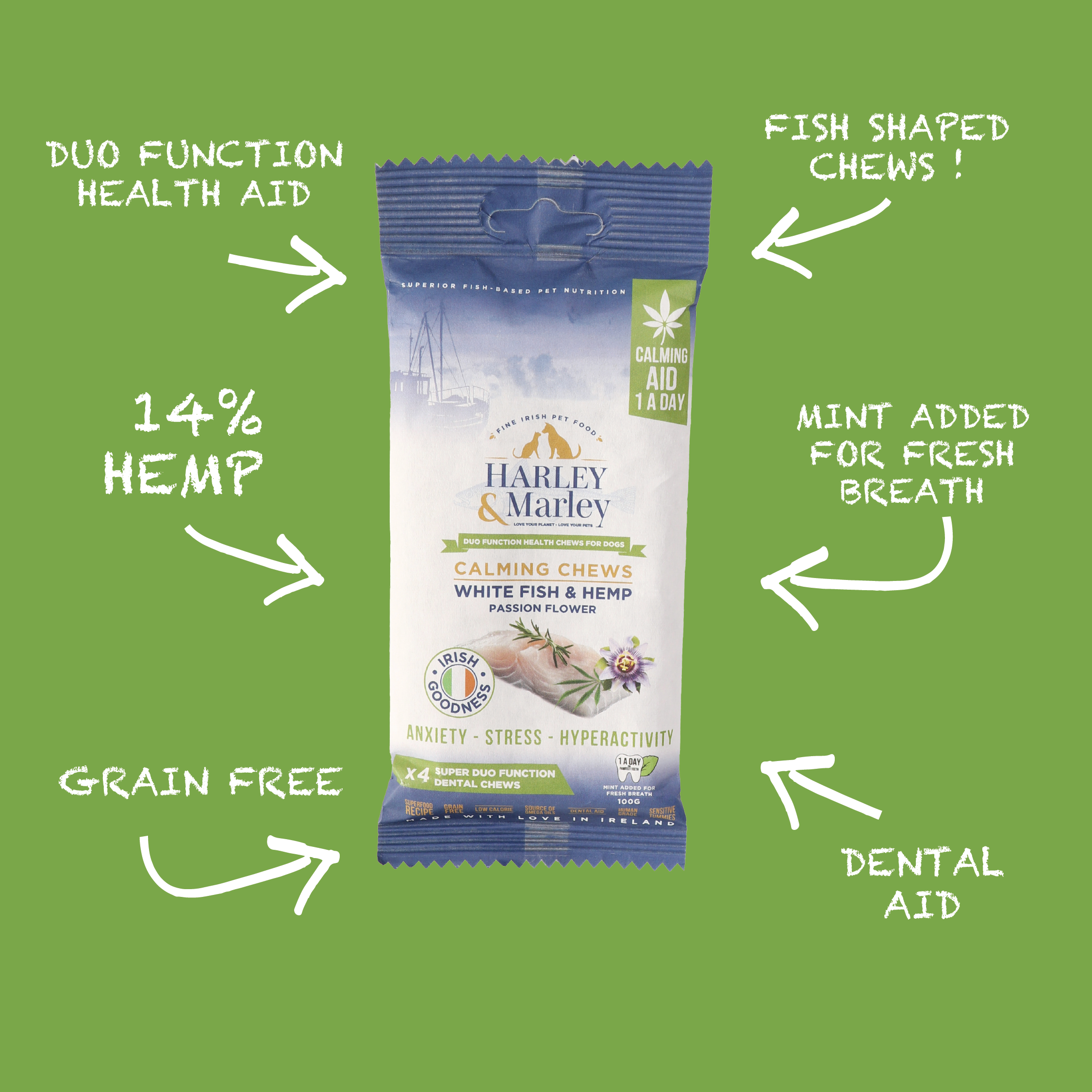
During an elimination trial, you must only provide treats that consist of the exact same novel protein as the trial food. If you are feeding a fish-based diet, you should only use 100% fish treats, such as our Chews & Bites. You must strictly avoid all table scraps, flavoured dental chews, and even flavoured medications. Even a tiny piece of an unapproved protein can trigger a reaction and reset the 12-week diagnostic clock.
Why does my dog keep getting ear infections despite cleaning them?
Chronic ear infections are a classic indicator of an underlying food sensitivity rather than poor hygiene. When a dog is allergic to an ingredient, the lining of the ear canal becomes inflamed, creating an ideal environment for yeast and bacteria to flourish. Cleaning only treats the secondary infection; it does not address the internal trigger. Veterinary professionals frequently observe that persistent ear issues are among the most common reasons pet parents seek nutritional guidance.