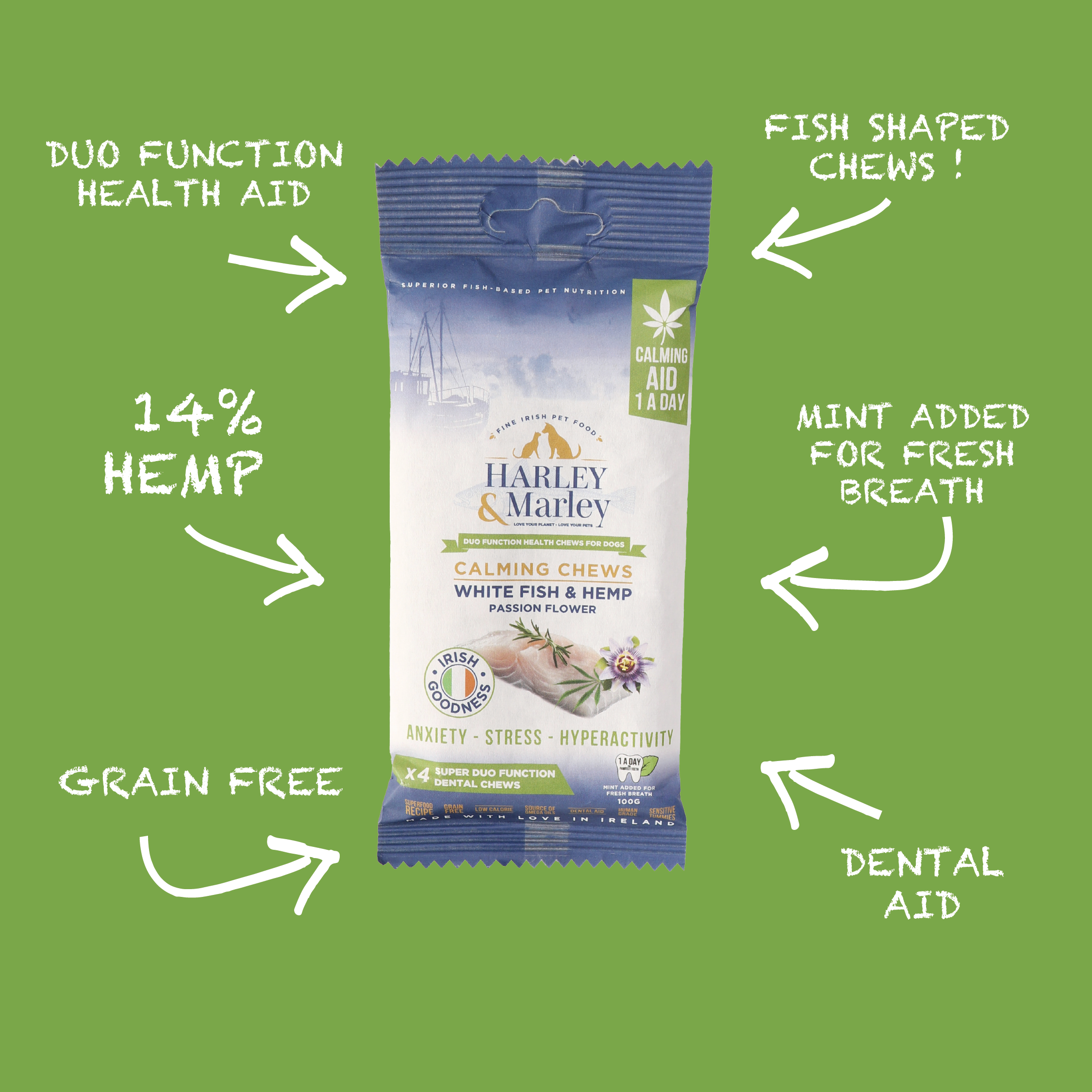



What if a treat could reward your dog whilst supporting their everyday wellbeing? If dull, flaky skin, persistent itching or a sensitive stomach have you rethinking what goes in the treat tin, the benefits of fish dog treats are worth exploring. Fish can provide marine omega-3s, including EPA and DHA, which play a role in supporting skin, coat and joint health.
It’s natural to want treats your dog enjoys, whilst also considering whether the ingredients suit their needs and how they are sourced. For dogs sensitive to poultry, a poultry-free fish option may be worth considering, although individual sensitivities vary. Treats aren’t a substitute for veterinary advice.
In this guide, learn what fish treats may contribute to your dog’s diet, what to check on ingredient labels and how to use treats thoughtfully for rewards. We’ll also look at sourcing claims and the difference between fish chews, bites and fish oil. The aim is to help you choose a treat with your dog’s needs and routine in mind.
Key Takeaways
- Fish treats may provide marine omega-3s that support skin, coat and joint health.
- Check labels for clearly named fish ingredients, additional ingredients and feeding guidance.
- Poultry-free fish options may suit some dogs with food sensitivities, but fish can cause a reaction too.
- Use treats thoughtfully for rewards, and don’t rely on them to replace dental care.
- Check sourcing information rather than assuming that every fish product has the same environmental impact.
What are the Primary Benefits of Fish Dog Treats?
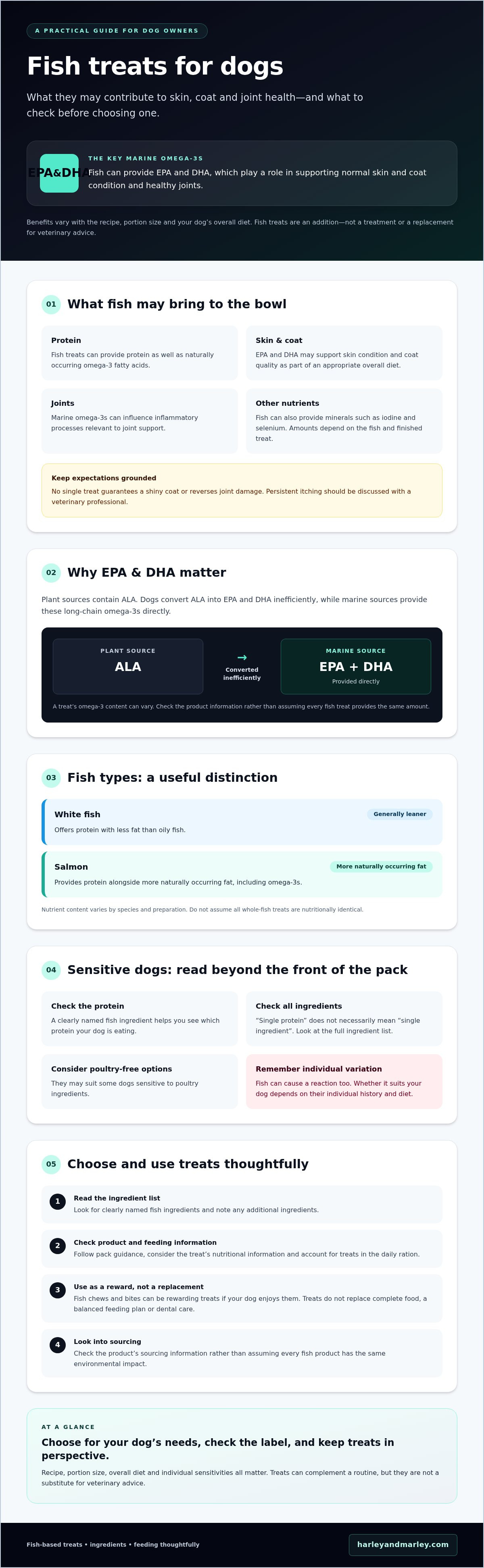
Fish treats can be a tasty reward and a source of protein and naturally occurring omega-3 fatty acids, including EPA and DHA. These fats are valued for their role in supporting normal skin and coat condition and healthy joints. The benefits of fish dog treats depend on the recipe, portion size and your dog’s overall diet. Check the ingredient and product information rather than assuming every fish treat has the same nutritional profile.
A clearly worded ingredient list helps you see which protein your dog is eating. A single-protein fish treat may be useful if you’re keeping track of possible food sensitivities. However, “single protein” doesn’t necessarily mean “single ingredient”, and dogs can react to fish too. If your dog enjoys the taste, fish-based chews and bites can also make rewarding treats. Their distinctive aroma may appeal to a dog’s keen sense of smell, though preferences vary.
For a broader approach to feeding, Harley & Marley specialises in fish-based nutrition, including grain-free options. Explore this guide to fish-based dog food to learn how a consistent protein source may fit into your dog’s everyday routine.
The Nutritional Profile of Different Fish
White fish is generally lean, offering protein with less fat than oily fish. Salmon provides protein alongside more naturally occurring fat, including omega-3s. Nutrient content varies by species and preparation. Fish can also provide minerals such as iodine and selenium, although amounts depend on the fish and the finished treat. Whole-fish ingredients may retain a range of naturally present nutrients, but processing methods matter. Look for clear ingredient information rather than assuming all whole-fish treats are nutritionally identical.
Fish and Other Protein Sources
Fish isn’t automatically better for every dog, and it’s too broad to label all red meat inflammatory. Marine EPA and DHA have anti-inflammatory properties, while poultry-free fish recipes avoid poultry ingredients that may be unsuitable for dogs sensitive to them. Fish may also be one of several novel protein sources, but whether it suits a particular dog depends on their individual history and diet.
Bioavailability describes how readily a dog can digest and absorb nutrients from fish protein for use in the body.
The Role of Omega-3 in Skin and Joint Health
Fish provides marine omega-3 fatty acids, particularly EPA and DHA. These differ from ALA, the omega-3 found in plant sources. Dogs convert ALA into EPA and DHA inefficiently, so marine sources provide these long-chain fats directly. EPA and DHA can influence inflammatory processes in the body, which is why they’re studied for their role in supporting joint comfort and healthy skin. They aren’t a treatment for disease, and a treat’s omega-3 content can vary. Check product information before relying on a treat as a regular source.
For itchy or dry skin, omega-3s may help support the skin’s natural moisture barrier. A healthy barrier helps limit water loss and may make skin less vulnerable to irritation. The American Kennel Club explains the benefits of fish oil for dogs, including skin, coat and joint support. Individual results vary. Persistent itching should be discussed with a veterinary professional, as food isn’t the only possible cause.
Supporting a Healthy Coat
Dietary fats help nourish the skin and hair follicles from which the coat grows. As part of an appropriate overall diet, EPA and DHA can support skin condition and coat quality, but no single treat guarantees a shiny coat. Think of fish treats as a possible addition, not a substitute for complete food or a balanced feeding plan. Follow the portion guidance on the pack and consider your dog’s diet as a whole when assessing any change.
Supporting Senior Dogs and Joint Health
Joint inflammation can contribute to discomfort, while inflammatory processes may also affect cartilage. EPA and DHA can influence some of these processes, making them relevant to joint support. Fish treats can’t reverse joint damage or replace veterinary care. For older dogs, comfort also depends on maintaining a healthy body condition. Treats contribute calories, so check the product’s nutritional information rather than assuming every fish option is low in fat, and account for treats in the daily ration.
Omega-3s also have a role in brain and nervous-system development, making DHA relevant during puppy growth. They’re one part of complete nutrition, not a reason to add treats without considering the puppy’s full diet. Read more about puppy food in Ireland and fish-based nutrition for growing dogs. For an everyday fish-based option, explore Harley & Marley’s fish chews, bites and fish oil.
Fish Treats and Sensitive Stomachs
For a dog reacting to a familiar protein, fish may be a useful alternative, particularly if it hasn’t featured regularly in their diet. It isn’t automatically hypoallergenic: any protein can trigger a reaction, and the term “hypoallergenic” has no strict, legally defined meaning for dog food. A carefully managed elimination diet, guided by a veterinary professional, is a more reliable way to investigate suspected food sensitivities than switching treats alone.
Food-related itching can affect paws as well as other areas of skin. Choosing a poultry-free option may help owners avoid a protein their dog is sensitive to. Harley & Marley’s fish-based nutrition is poultry-free. Read more about poultry-free dog food in Ireland and its relevance to itchy paws.
Check Ingredients for Possible Sensitivities
Beef, dairy and chicken are among common food allergens in dogs; wheat may also be a concern for some individuals. Fish treats can avoid those ingredients if the recipe contains no additional sources of them. Read the full label rather than relying on the description on the front of the pack. A clear ingredient list helps you identify what the treat contains; the word “fish” alone doesn’t guarantee a simple recipe. Grain-free is a preference, not proof that a treat will resolve digestive problems or suit every sensitive dog.
Dogs with inflammatory bowel disease (IBD) or persistent digestive symptoms need individual dietary guidance. Don’t use treats as a substitute for a veterinary-directed feeding plan, especially during an elimination trial, when even a small extra ingredient may interfere with assessing a response.
Digestibility and Stool Consistency
Fish protein can be digestible, but there’s no sound basis for claiming that fish muscle fibres are always shorter or that its collagen is inherently gentler on every dog’s digestive tract. Digestibility depends on factors such as the fish, preparation and individual dog. A sudden food change or too many treats can upset digestion, whatever the protein source.
If your dog has loose stools, introduce a new treat gradually and keep portions modest. Note any changes in stool quality and stop offering the treat if symptoms worsen. Fish-based treats may suit some dogs, but they can’t guarantee firmer stools or better energy. Persistent diarrhoea, discomfort or other ongoing symptoms warrant veterinary advice. The potential benefits of fish dog treats are best considered as part of your dog’s complete diet, alongside their individual tolerance.
Practical Uses: Chewing and Training
A treat can do more than reward good behaviour. Fish chews and bites offer different textures for different occasions: a chew gives a dog something to work on, whilst smaller bites are easy to portion during short training sessions. The distinctive fish aroma may make a reward more appealing in distracting surroundings, although preferences vary from dog to dog.
Chewing, Texture and Dental Care
Dried fish skin has a textured, chewy surface, so chewing may create friction against the teeth. That doesn’t make it a proven dental treatment. Plaque control depends on the individual chew and the dog’s chewing style, and treats can’t replace toothbrushing or professional dental care. Choose a chew that’s appropriate for your dog and supervise them. Avoid hard pieces that could be difficult or unsafe for them to manage.
Don’t assume fish treats are low in fat or calories. Nutritional content varies by fish and preparation, so check the feeding guidance and count treats as part of your dog’s daily intake. This is particularly useful during training, when small rewards can quickly add up.
Using Fish Treats as Training Rewards
Dogs often respond strongly to scent, which can make an aromatic fish bite a useful reward for practising recall or reinforcing a new behaviour. Choose small portions where appropriate and reward promptly, so your dog can connect the treat with the action. For longer sessions, alternate rewards and keep portions measured. No treat needs to carry the whole training exercise.
Texture can add variety too. A bite offers a quick reward, whilst a chew may provide a longer-lasting activity for a suitable dog. Supervise your dog with chews, and choose according to their size, chewing habits and dietary needs.
Fish naturally has a noticeable aroma, but smell alone isn’t evidence that a treat is fresh or high quality. Check the ingredient and storage information, follow the pack’s instructions, and keep treats sealed in their original packaging or another suitable airtight container. Store them as directed to preserve quality and help contain the scent between sessions.
To add fish rewards to your routine, explore fish chews and bites from Harley & Marley.
Sourcing, Sustainability and the Circular Economy
Choosing fish can be part of a considered approach to your dog’s treats, but the environmental story depends on more than the word “fish” on a pack. Species, fishing or farming methods, transport and processing all matter. Harley & Marley is an Irish-owned business with a circular-economy approach to fish-based nutrition. When choosing products, look for information about ingredient sourcing and how resources are used.
Check the difference between a fish-based treat and a fish-flavoured one. A fish-based treat identifies fish as an ingredient, while a fish-flavoured product may contain flavouring alongside other ingredients. Read the ingredient list and any sourcing information to understand what your dog is eating and where the fish comes from.
Check Provenance and Processing
Irish ownership doesn’t, on its own, confirm that every ingredient is caught in Irish waters. If local sourcing is important to you, look for clear information about the fish’s origin, species and supply chain rather than assuming it from a brand’s location. Shorter transport may reduce some transport-related emissions, but the full impact depends on the journey and production method.
Processing is another part of the picture. A circular-economy model aims to make better use of resources and reduce waste, but its practical impact depends on what happens at each stage. Look for specific details about sourcing, processing and by-product use. Clear information helps you assess a sustainability claim; broad phrases alone don’t tell the whole story.
Make an Informed Choice
Beef production typically requires substantial land, and its environmental footprint can be considerable. Fish may offer a lower-impact option in some circumstances, but it isn’t automatically the more sustainable choice. Impacts vary between species, fisheries and aquaculture systems. Responsible sourcing matters, especially as pressure on fish stocks differs by location. A supplier’s information about where and how its fish is sourced can help you make a more informed choice.
For a convenient way to plan regular feeding, explore this guide to a dog food subscription in Ireland. A subscription can help maintain a consistent routine, but it doesn’t by itself guarantee ethical sourcing, so continue to check ingredient and provenance details.
The benefits of fish dog treats can include more than a tasty reward. Choosing with care also means considering the ingredient’s origins and the production practices behind it. Read labels closely and look for evidence rather than relying on broad claims. That’s a practical way to consider your dog’s needs and the wider impact of your choices.
Choose a More Considered Treat for Your Dog
The benefits of fish dog treats can extend beyond a rewarding taste. Marine omega-3s may support skin, coat and joint health, whilst a clearly labelled fish-based option can help you make informed choices for a dog with sensitivities. Treats can also add variety to training, but they should complement a complete diet, not replace it. Check ingredients, portions and sourcing, and introduce new treats thoughtfully.
Harley & Marley is an Irish-owned business specialising in fish-based nutrition, with grain-free options and a range that includes fish chews, bites and food. Its circular-economy approach is part of the brand’s focus on fish-based nutrition.
Ready to find a fish-based treat for your dog? Explore Harley & Marley’s range of fish chews and bites, and check the product information to choose an option that suits your dog’s needs.
Frequently Asked Questions
Are fish dog treats safe for all breeds?
Fish dog treats can suit dogs of many breeds, but no treat is right for every individual. Choose a piece that’s appropriate for your dog’s size and chewing style, and supervise them, particularly with chews that could be swallowed in large pieces. Check the ingredients for known sensitivities and follow the pack’s feeding guidance. If your dog has a medical condition or a prescribed diet, ask your veterinary professional before introducing a new treat.
Do fish dog treats make my dog's breath smell?
Fish treats can leave a noticeable smell on your dog’s breath, especially straight after eating. The scent of a treat doesn’t necessarily mean it’s spoiled, but smell alone can’t confirm freshness either. Store it according to the packaging and check for changes in appearance or condition before offering it. Persistent bad breath, or breath accompanied by discomfort, warrants a conversation with your veterinary professional, as it may have causes unrelated to treats.
Can puppies eat dried fish skin treats?
Puppies may be able to eat fish treats, but choose one that’s suitable for their age, size and chewing ability. Dried fish skin can be firm or chewy, so supervise closely and avoid pieces that seem too hard or large for your puppy to manage safely. Treats should remain occasional rewards, not replace complete puppy food. If your puppy has a sensitive stomach or dietary requirements, check with your veterinary professional before introducing one.
How many fish treats can I give my dog per day?
There isn’t one daily amount that suits every dog or every fish treat. Check the pack’s feeding guidance, consider your dog’s size and activity, and include treats in their overall daily food allowance. If you’re using small bites for training, keep track of how quickly they add up and adjust meals if needed. Introduce new treats gradually, and reduce or stop them if you notice digestive upset or another unwanted reaction.
What is the difference between fish oil and fish treats?
Fish oil is a concentrated oil product, while fish treats are foods such as chews or bites that provide a reward and may also contain fish-derived nutrients. Their omega-3 content can differ, so don’t assume a treat provides the same amount as an oil supplement. Harley & Marley offers both fish oil and fish-based chews and bites. Follow each product’s own directions, and ask your veterinary professional if you’re considering adding supplements.
Are fish treats better for dogs with skin allergies than chicken?
Fish treats may be a useful alternative for a dog sensitive to chicken, particularly if fish is a protein they haven’t regularly eaten. But fish isn’t automatically hypoallergenic, and dogs can react to it too. The benefits of fish dog treats depend on your dog’s individual needs and the full ingredient list. For suspected food allergies, seek veterinary guidance; a structured elimination diet is more informative than changing treats alone.
How should I store fish treats to keep them fresh?
Follow the storage instructions on the packaging, as these can vary with the product and how it’s prepared. In general, reseal the original pack securely after use, or transfer treats to a clean, suitable airtight container if the label allows. Keep them in the place and conditions specified by the manufacturer, away from moisture. Check the packaging and treats before serving, and don’t offer them if their condition has changed.
Are fish treats suitable for senior dogs with few teeth?
Some senior dogs with few teeth may manage softer fish bites, but firm dried skins and chews could be difficult or uncomfortable to eat. Choose a texture your dog can handle without struggling, and supervise while they eat. Don’t soften a treat unless the packaging says this is suitable. If chewing has become painful or your dog is reluctant to eat, consult a veterinary professional to check their mouth and teeth.