


A fussy dog doesn’t always need a more exciting dinner. If you’re deciding what to feed a picky eater dog, start with a complete, balanced food suited to their age and breed size, keep meals consistent, and limit treats and toppers to no more than 10% of daily calories. A sudden loss of appetite can also point to a health concern, so it shouldn’t automatically be treated as fussiness.
It’s understandable to worry when your dog leaves a meal untouched, especially if they usually eat happily. But frequent food changes or extra snacks can make it harder to identify the cause and may reduce their interest in regular meals.
This guide explains how to manage mealtimes, set sensible limits on treats and recognise possible reasons for picky eating, from routine and food preferences to stress or health issues. You’ll also learn which changes to try first, when a missed meal may be less concerning and when to seek veterinary advice.
Key Takeaways
- Offer meals at consistent times and remove uneaten food after a short window, rather than leaving it available all day.
- Keep treats and meal toppers to no more than 10% of your dog’s total daily calories, and try toys or affection as rewards instead.
- Track meals, snacks and changes in appetite to help identify patterns and judge whether your dog is eating enough.
- Consider whether stress, heat, food preferences or discomfort could be affecting appetite, and seek veterinary advice if your dog suddenly refuses all food for 24 hours.
- Choose a complete food suited to your dog’s life stage and breed size, and make any change gradually to help avoid digestive upset.
Exercise and appetite
Daily activity can help establish a predictable appetite, particularly if your dog spends much of the day resting. Healthy adult dogs need at least an hour of exercise every day. Adapt walks and play to your dog’s age, fitness and mobility rather than expecting every dog to follow the same routine. A gentle sniffing walk provides movement and stimulation without making exercise unnecessarily strenuous.
Dogs may be hungrier after activity, so serve their usual meal once they’ve had time to settle. Avoid feeding immediately before or after exercise, as dogs need time for their stomachs to settle. Keep mealtimes consistent and note whether appetite changes after a walk, play session or quieter day. This pattern can help distinguish a food preference from a wider change in eating behaviour.
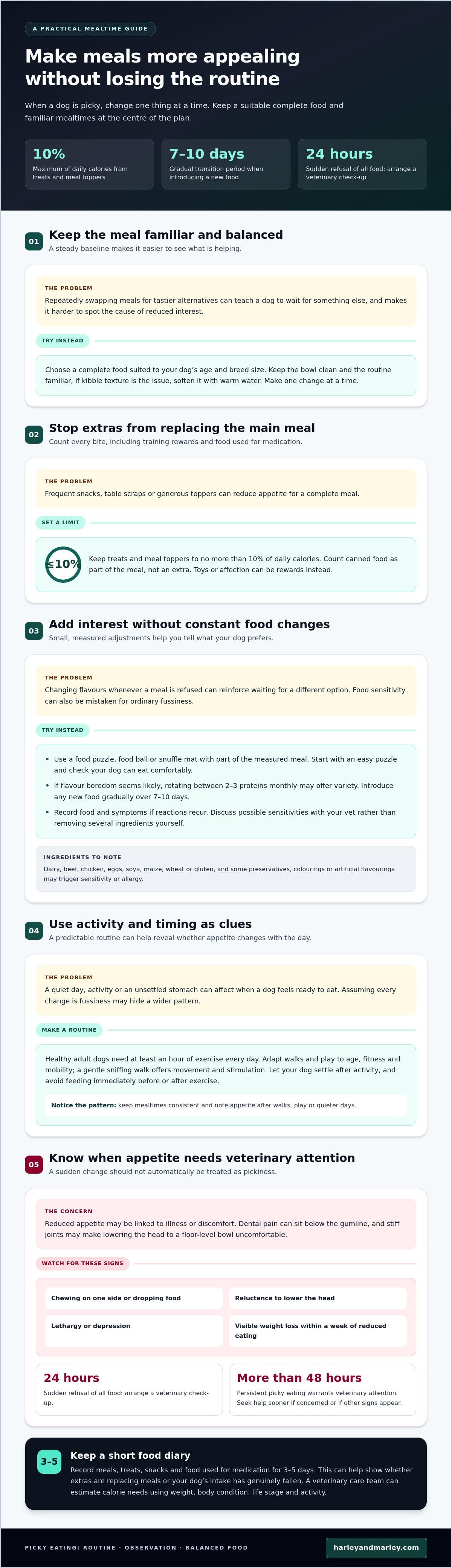
Don’t assume reduced appetite is simply fussiness. A sudden loss of interest in food, especially alongside lethargy or depression, may signal a health issue. If your dog suddenly refuses all food for 24 hours, arrange a veterinary check-up. Persistent picky eating for more than 48 hours also warrants veterinary attention; seek help sooner if you’re concerned or notice visible weight loss within a week of reduced eating.
Physical discomfort can make eating difficult, even if your dog approaches the bowl. Dental disease may sit below the gumline, so healthy-looking teeth don’t rule out oral pain. Stiff joints can also make bending to a floor-level bowl uncomfortable. Watch for chewing on one side, dropping food, reluctance to lower the head or a change in energy. These observations can help you describe the problem during a veterinary assessment.
A vet may assess reduced appetite with a physical examination, bloodwork, urinalysis, a faecal examination or dental X-rays. Keep a food diary for 3 to 5 days, recording meals, treats, snacks and food used to give medication. This record can show whether extras are replacing meals or whether your dog’s intake has genuinely fallen. A veterinary care team can estimate daily calorie needs from weight, body condition, life stage and activity, then guide portions using the food’s calorie content.
Too many treats can reduce appetite for a complete meal, especially when snacks are offered throughout the day. Record every bite, including training rewards, and compare this with your dog’s main meals. If a healthy dog occasionally misses a meal but maintains a healthy weight, has normal stools and shows good energy, one skipped serving may be less concerning. Sudden changes or other symptoms still deserve attention, rather than a succession of new flavours.
2. Are there any tips for managing picky eaters?
Deciding what to feed a picky eater dog starts with a complete food suited to their age and breed size. Keep the bowl clean and the routine familiar. If your dog accepts kibble but dislikes its texture, try softening it with warm water. Change one thing at a time so you can tell whether the adjustment makes eating easier.
Food sensitivity is different from ordinary fussiness. Dairy, beef, chicken, eggs, soy, corn, wheat or gluten, and some preservatives, dyes or artificial flavours can trigger sensitivity or allergy. Record foods and symptoms, then discuss recurring reactions with your vet rather than removing several ingredients yourself. A food diary can help identify patterns without making the diet less balanced.
Repeatedly replacing meals with tastier alternatives can teach a dog to wait for something better. If your dog prefers a particular texture, stick with a suitable food instead of changing flavours whenever they refuse a meal. Hand-feeding may help briefly while you address reduced appetite, but avoid making every meal dependent on it.
Food puzzles, food balls and snuffle mats can make familiar kibble more engaging. Start with an easy puzzle and part of the measured meal, then see whether your dog eats comfortably. A feeder that restricts access may not suit a large dog with higher calorie requirements, so use it only if your dog can still finish an appropriate portion.
For flavour boredom, rotating between 2-3 proteins monthly may offer variety. Introduce a new food gradually over 7-10 days to help avoid digestive upset. A small amount of canned food can top kibble, but count it as part of the meal, not an extra. Warm water can also soften kibble and release its aroma without adding another ingredient.
Typical dog-food prices in Ireland: Costs vary with food format, pack size and how much your dog needs. Compare foods by suitability and feeding guidance, not price alone.
Healthy choices: Choose a complete food matched to your dog’s age and breed size. If you suspect an allergy, record ingredients and symptoms to discuss with your vet.
Making meals appealing: Warm water can soften kibble and bring out its aroma. A familiar texture and clean bowl may also encourage eating without adding ingredients.
Changing food safely: Mix new food with the familiar food gradually over 7-10 days. Monitor digestion as you increase the new food.
Refusing food: If your dog suddenly refuses all food for 24 hours, arrange a veterinary check-up. Persistent picky eating beyond 48 hours also needs veterinary attention.
Choosing a brand: There’s no single best brand for every dog in Ireland. When deciding what to feed a picky eater dog, prioritise complete nutrition suited to age and breed size, then consider the texture and flavour your dog accepts.
Choose a complete dog food suited to your dog’s age and breed size. Familiar kibble softened with warm water, or a small amount of canned food counted as part of the meal, can make it more appealing. Introduce any new food gradually.
3. Scheduled meals and limiting free access to food
A consistent routine can help your dog recognise when food is available. Offer meals once or twice a day at regular times, such as morning and evening. Predictable feeding can encourage appetite before mealtimes and make changes in what your dog eats easier to notice. Measure each serving against the daily portion instead of topping up the bowl whenever it looks empty.
For a dog that grazes, put the meal down for 15 minutes, then remove what remains. Another approach is to remove uneaten food after up to 30 minutes. Choose a clear routine and apply it consistently, rather than extending the meal whenever your dog hesitates. Keep fresh water available, and don’t replace an untouched meal with a tastier option straight away. That can teach your dog to wait for variety.
Smaller portions may suit dogs that lose interest in a full bowl. Where appropriate, divide the daily amount into three or four servings instead of two meals. Keep the total daily ration the same, so extra feeding occasions don’t quietly increase intake. For example, split the measured morning portion between breakfast and a later serving, then divide the evening portion in the same way.
Pair mealtimes with calm, positive attention. Ask your dog to settle by the feeding area, put the bowl down and praise relaxed behaviour. Avoid coaxing, scolding or hovering over the bowl, which can make the eating area feel pressured. If your dog approaches and eats, offer gentle praise or a favourite toy rather than adding treats that could affect appetite.
A puzzle feeder can make familiar dog food more engaging. Start with an easy food ball or snuffle mat and part of the measured meal, then watch how your dog responds. If the feeder slows eating too much or frustrates your dog, return to a bowl. Interactive feeding should make food more interesting, not stop your dog from finishing an appropriate portion.
Time meals around activity with care. Dogs may feel hungrier after exercise, so offer food once your dog has settled. Don’t feed immediately before or after exercise; allow time for your dog’s stomach to settle. A regular walk, a quiet pause and then dinner can create a recognisable routine without making exercise a reward that must come before every meal.
Track the schedule for several days: note serving times, food left behind and any appetite changes. This can show whether a particular meal, activity or feeding method affects eating. If your dog’s appetite drops suddenly or refusal continues, don’t rely on stricter meal windows alone. Arrange veterinary advice to assess the change.
4. Avoiding treats and table scraps
Frequent snacks can reduce a dog’s interest in its complete meal. A biscuit after breakfast, training rewards during a walk and scraps at dinner all contribute to daily intake. For a picky dog, those extras may make the familiar bowl seem less appealing. Keep treats and toppers to no more than 10% of total daily calories, and offer the main meal before optional extras.
Count every treat, including small training pieces and chews. Break larger treats into smaller pieces, or use some of your dog’s measured food as a reward. This keeps positive reinforcement in the routine without adding as many extra calories. If your dog leaves dinner after snacks, reduce the snacks and see whether interest in the usual meal returns.
Table scraps can also encourage your dog to wait for something different. A dog given food from the table may learn to hold out for the next offer. Keep mealtimes predictable: feed your dog separately, clear plates promptly and ask family members not to share food. Cuddles, praise or a favourite toy can reward good behaviour without adding another snack.
Which human foods are safe or toxic? Don’t assume a human food is safe because it seems plain; some foods and ingredients are toxic to dogs. Avoid adding table scraps unless you know every ingredient is suitable for dogs, and keep human food out of reach.
Use toppers sparingly. A spoonful added to encourage eating still contributes calories, so count it within the daily treat-and-topper allowance rather than serving it on top. If your dog only eats when a topper appears, gradually reduce the amount instead of increasing it. This keeps the familiar meal central rather than making extra flavour a condition for eating.
Account for dental chews just as you would other edible treats. They may be part of your dog’s routine, but still contribute to overall intake. For a senior dog, appetite changes or difficulty chewing deserve attention. Softer food may help when dental sensitivity or a reduced sense of smell affects eating. Don’t mask persistent discomfort by offering more treats.
For a practical reset, set aside the day’s permitted treats before training begins. Use small rewards, avoid feeding from the table and note whether your dog eats more consistently. If appetite remains reduced or changes suddenly, treat it as a health concern rather than trying increasingly tempting snacks.
5. Reasons dogs may be picky eaters
A dog’s appetite can change for several reasons, so look for patterns before changing ingredients. Record meals, snacks, stools, energy and weight in a diary for 3 to 5 days. Include household changes, warmer weather, altered walks or a new feeding location. This context helps distinguish a brief response to routine or temperature from a persistent change that needs attention.
Stress may reduce appetite after a move, visitors, a new pet or disruption at home. Stress-related appetite suppression usually lasts between three and five days, or until the dog feels more secure. Keep the bowl in a quiet, familiar place and maintain ordinary routines. If appetite doesn’t return or your dog seems unwell, don’t assume stress explains the change.
Discomfort can make eating difficult, even when a dog approaches the bowl. Dental disease may be hidden below the gums, so healthy-looking teeth don’t rule out oral pain. Watch for dropping food, chewing differently or avoiding firm pieces. Joint stiffness may make bending uncomfortable; arthritis affects an estimated one in five adult dogs. These signs can help your vet assess what is affecting mealtimes.
Age can alter how food smells and feels. A senior dog with dental sensitivity or a reduced sense of smell may be more willing to eat softer food. Notice whether your dog manages softened meals more easily or hesitates before chewing. When deciding what to feed a picky eater dog, distinguishing a texture preference from pain is more useful than repeatedly changing ingredients.
Portion size is another possible cause. A dog may skip meals if their daily intake already includes uncounted chews, treats or toppers. Use your dog’s goal weight alongside food-packaging guidance or a vet’s recommendation to assess the portion. A veterinary care team can estimate calorie needs using weight, body condition, life stage and activity, then relate that estimate to the food’s calorie content.
Some dogs naturally eat less in hot summer weather and more in cold winter weather. Compare appetite with temperature, routine and activity before concluding that a food has become unsuitable. The question of what to feed a picky eater dog should not distract from sudden changes: refusal of all food for 24 hours, lethargy, depression or visible weight loss within a week of reduced eating calls for veterinary attention. Look for patterns, but take abrupt or worsening appetite loss seriously.
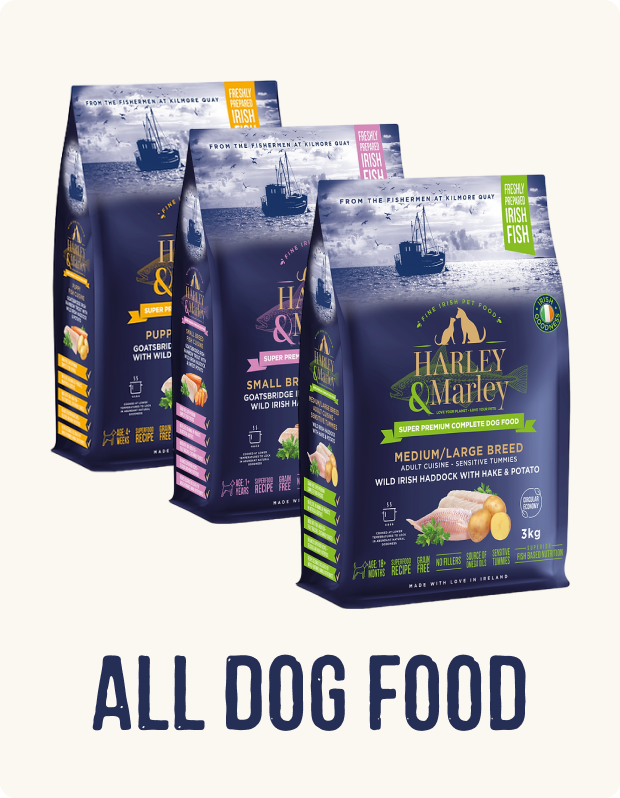
Harley & Marley: Medium/Large Breed Complete Food
Harley & Marley’s Medium/Large Breed Complete Food is fish-based complete food for owners choosing meals suited to a medium or large dog. Complete food provides a straightforward foundation for a consistent feeding routine, rather than relying on table scraps or multiple toppers to tempt your dog. Choose food according to your dog’s breed size and life stage. Harley & Marley also offers Puppy Complete Food, Small Breed Complete Food and Senior Dog Complete Food.
If you decide to change foods, introduce the new food gradually over 7-10 days to help reduce the risk of digestive upset. A food change won’t address an underlying health concern, so seek veterinary advice if appetite loss is sudden or persistent. To explore the complete food options, visit Harley & Marley online.
Build a calmer feeding routine from here
Your next step is to make one considered choice, then give your dog a stable routine around it. Deciding what to feed a picky eater dog is easier when you focus on complete food suited to their life stage and breed size, rather than chasing every new preference. Keep a brief note of what your dog accepts and how they respond, so future choices reflect their needs, not just one uncertain mealtime.
Harley & Marley offers Medium/Large Breed Complete Food, Puppy Complete Food and Small Breed Complete Food. If you’re considering one of these options for your dog, contact Harley & Marley for feeding advice and explore a suitable next step.
Small, steady decisions can make feeding feel more manageable. Pay attention to your dog’s signals and take the next step with confidence.
Frequently Asked Questions
Are there any tips for managing picky eaters?
Yes. Keep a simple record of meals, snacks and appetite changes, then use it to spot patterns. For example, note whether your dog eats less after several training rewards or avoids a particular texture. Change one factor at a time so you can tell what helps. If you need to introduce a new food, do so gradually and keep the rest of the routine stable.
How can I get my picky pup to eat their food?
Offer a complete puppy food in a calm, familiar place, and make sure your pup can manage the kibble comfortably. Harley & Marley’s Puppy Complete Food has a very small kibble size. You can soften dry food with warm water to bring out its aroma. If your puppy’s appetite changes suddenly or they seem unwell, arrange a veterinary check rather than relying on meal adjustments.
Is it behavioural?
It can be. A dog may learn to wait for a preferred snack if meals are repeatedly replaced with tastier options, or may eat less during a stressful change at home. Consider the context: does your dog eat readily when the room is quiet or a familiar person serves the meal? A sudden change in eating still deserves attention, since behaviour alone can’t rule out discomfort.
Is there an underlying medical condition?
Possibly. Reduced appetite can accompany discomfort or illness, and dental disease may be hidden below the gums even when teeth look healthy. Note changes such as dropping food, chewing differently, low energy or altered stools, then share them with your vet. Assessment may include an examination and tests such as bloodwork, urinalysis or a faecal exam. Sudden refusal of all food for 24 hours needs a veterinary check.
Should I feed my picky dog a homemade diet?
Not without a properly formulated recipe. Human foods alone don’t meet a dog’s nutrient requirements, and homemade diets need appropriate vitamin and mineral supplementation. Recipes require specific ingredient amounts; substitutions can alter the nutrient balance. Most online recipes aren’t designed by nutritionists or veterinarians and may lack essential nutrients. If you’re considering home-prepared meals, discuss nutritional formulation with your veterinary care team first.
Is wet food or dry food better for picky dogs?
Neither format is automatically better for every dog. Choose a complete food suited to your dog’s age and breed size, then consider which texture they accept and can eat comfortably. Dry food can be softened with warm water; wet food may appeal to a dog that prefers a softer texture. If refusal is new, don’t assume the food format is the cause without considering possible discomfort.
Can I mix wet and dry dog food for a picky eater?
Yes, provided both foods are suitable for your dog and you account for the combined portion. Mixing can introduce a different texture, but adding wet food also changes the meal’s overall calorie content. Introduce the combination gradually instead of switching abruptly, and watch your dog’s digestion and appetite. Don’t leave wet food out for more than two hours.
What medical problems can cause a dog to become a picky eater?
Dental disease can make chewing uncomfortable, including disease below the gumline that isn’t obvious at home. Arthritis or other joint stiffness may make reaching a floor-level bowl difficult. Reduced appetite can also accompany other health problems, which is why a vet may assess your dog’s overall condition and use bloodwork, urinalysis or a faecal exam. Sudden appetite loss, lethargy or visible weight loss warrants prompt attention.