


Your dog isn't simply being stubborn when they walk away from their bowl; they're communicating a clear message about biology, aroma, or daily routine. Watching nutritious food sit untouched is deeply frustrating, and wondering what to do when your dog refuses to eat kibble often brings a lingering worry about dental pain or undiagnosed digestive upset. It's entirely natural to feel anxious when a once-eager eater suddenly sniffs their dinner and turns their back.
You don't have to surrender to endless coaxing or fret over wasted meals. Discover expert-approved steps to diagnose why your dog refuses kibble and restore healthy, enthusiastic feeding habits safely. In this guide, we examine how to distinguish veterinary emergencies from selective habits, explore immediate, gentle methods to make dry food appetizing through aroma, and establish a sustainable routine that makes mealtime calm and joyful once more.
Key Takeaways
- Distinguish between critical medical symptoms, such as dental discomfort or sudden anorexia, and non-urgent behavioural selectivity.
- Discover what to do when your dog refuses to eat kibble by understanding their scent-driven biology, where aroma and food freshness matter far more than taste.
- Correct counterproductive feeding habits, including free-choice grazing, by establishing a structured fifteen-minute meal window that restores healthy appetite cues.
- Learn gentle methods to awaken dry food, utilising warm moisture or cold-pressed fish oil to safely enhance aroma without disrupting dietary balance.
- Identify when persistent mealtime hesitation indicates an intolerance to current ingredients, signalling the need for an aromatic, grain-free complete food upgrade.
Diagnosing Why Your Dog Refuses to Eat Kibble: Medical vs Behavioural
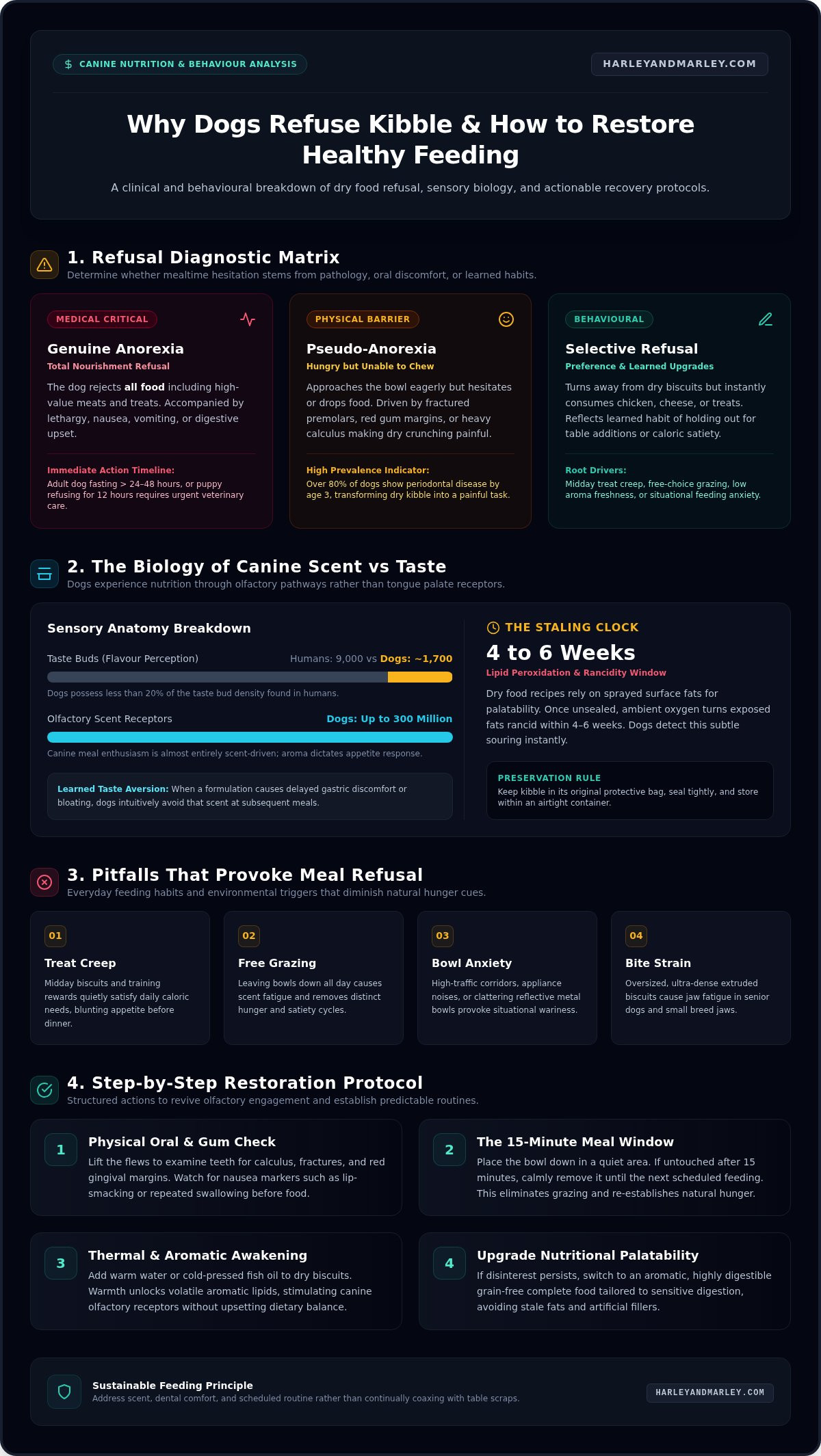
Determining what to do when your dog refuses to eat kibble starts with diagnostic clarity. A canine turning away from food is communicating either physical distress or behavioural calculation. Distinguishing between genuine anorexia, where an animal refuses all nourishment, and selective inappetence, where they reject dry biscuits but readily accept high-value treats, dictates your immediate course of action. While a sudden lack of appetite can stem from underlying metabolic illness, selective refusal typically reflects environmental habits or subtle oral discomfort.
Physical and Medical Triggers Behind Food Refusal
Perform a gentle physical assessment before assuming stubbornness. Gently lift your dog's flews to inspect the gums and teeth; red margins, heavy calculus, or fractured premolars transform crunching dry food into an excruciating task. Over 80% of dogs show signs of periodontal disease by age three, making dental ache the primary driver of pseudo-anorexia, where a hungry dog approaches the bowl but hesitates to bite. Watch closely for subtle markers of nausea, such as lip smacking, excessive swallowing, or turning away after a brief sniff. If food refusal is accompanied by lethargy, vomiting, or digestive upset, review guidance on dog food for dogs with loose stools Ireland to evaluate gastrointestinal sensitivity. If an adult dog maintains a complete fast beyond 24 to 48 hours, or if a puppy refuses meals for twelve hours, contact a veterinary professional immediately.
Recognising Learned Behaviour and Preference Dynamics
When physical pathology is ruled out, preference dynamics usually explain the impasse. Canine companions are keen observers of human habits. If turning away from a bowl reliably produces roast chicken, cheese, or savoury gravies within ten minutes, your dog has simply learned to hold out for an upgrade.
Consider these everyday lifestyle factors when evaluating what to do when your dog refuses to eat kibble:
- Treat creep: Training rewards and midday biscuits quietly satisfy caloric needs, blunting appetite before dinner.
- Feeding environment: High-traffic hallways, noisy appliances, or reflective metal bowls can provoke situational anxiety.
- Nutritional density: Formulations aligned with standard canine dietary requirements and commercial dry food are nutrient-dense; small breeds often feel genuinely satiated on surprisingly modest daily rations.
The Biology of Canine Taste: Why Kibble Becomes Unappealing
Dogs experience their meals primarily through their scent receptors rather than their tongues. While humans navigate food with roughly 9,000 taste buds, dogs possess only around 1,700. Their nasal passages, however, house up to 300 million olfactory receptors. If a bowl of food lacks a rich, fresh scent profile, it simply fails to register as appetizing. Understanding what to do when your dog refuses to eat kibble requires looking past simple flavour preferences and assessing the physical and aromatic condition of the food itself.
Olfactory Fatigue and Stale Bag Oxidation
Dry food recipes rely on sprayed surface fats for their initial palatability. Once a bag is opened, continuous exposure to ambient oxygen and moisture begins a process of lipid peroxidation. Within four to six weeks, these exposed fats turn rancid. While the human nose rarely detects this subtle souring, a dog's keen sense of smell picks it up immediately. To prevent olfactory fatigue and food rejection, store dry biscuits in their original protective bag, seal it tightly, and house the bag inside an airtight storage bin.
Texture, Chewing Difficulty, and Oral Comfort
Mechanical fatigue often masquerades as stubborn pickiness. Dense, oversized biscuits demand serious jaw pressure. For mature pets or smaller breeds, crunching through rock-hard extruded pellets puts strain on sensitive mouths. Consulting clinical guidance on pseudo-anorexia and appetite loss in dogs illustrates how hunger remains intact even when oral distress prevents eating. Checking advice on senior dog dental health Ireland can help you evaluate whether bite size, biscuit shape, or tender gums are stopping your dog from crunching comfortably.
Digestive Discomfort and Dietary Intolerances
Canines possess an instinctual survival mechanism known as learned taste aversion. When an ingredient triggers delayed gastric upset, bloating, or cramping, the dog intuitively avoids that scent at subsequent meals. Mass-market kibbles frequently utilise poultry meals and heavy fillers that can burden sensitive digestive tracts. Switching to an easily digestible, single-source protein such as fish-based complete dog food provides soothing gastrointestinal relief while offering natural marine aromas that rekindle genuine enthusiasm at mealtime.
Common Mealtime Mistakes Pet Parents Make When Dogs Refuse Food
Well-meaning owners frequently complicate feeding challenges by reacting with anxiety. When a dog walks away from their bowl, human concern often triggers an immediate urge to fix the problem through quick improvisations. Knowing what to do when your dog refuses to eat kibble requires identifying how routine habits can unintentionally reinforce mealtime resistance. Small adjustments to your daily habits can quickly turn hesitant grazers into enthusiastic eaters.
The Pitfall of Free-Feeding and Food Buffets
Leaving dry food out all day strips meals of their natural value. Indefinite bowl access leads to olfactory boredom; when kibble sits exposed to indoor airflow for hours, remaining surface fats lose their enticing scent profile. Grazing also blunts natural metabolic hunger cues, leaving the digestive system in a constant state of low-level processing. Scheduled feeding creates predictable digestive rhythms, building healthy appetite anticipation that free-choice feeding completely eliminates.
The Treat Trap and Escalating Bribery
Panic-induced bribery creates a behavioural loop that is tough to break. Offering cheese, cooked sausages, or excessive treats the moment dry food is rejected teaches your dog that skipping dinner yields an immediate upgrade. Research from veterinary nutritionists highlights that non-complete toppers and snacks should never exceed 10% of daily caloric intake, as exceeding this threshold risks serious nutrient dilution.
Review these common routine missteps when considering how to break the cycle:
- The hasty menu change: Switching dry food bags every few days disrupts gut microbiota, causing loose stools and chronic digestive suspicion.
- Hovering and fussing: Standing tensely over the bowl, offering hand-fed morsels, or begging your pet to eat transfers nervous energy and creates genuine mealtime anxiety.
- Erratic timing: Feeding at wildly irregular hours throws off ghrelin release, the hormone responsible for stimulating hunger.
- Counterproductive toppings: Smothering biscuits in rich, fatty human foods rather than applying proven veterinary strategies for re-engaging a picky dog's appetite teaches pets to selectively lick off garnishes while ignoring their complete nutrition.
Establishing clear boundaries transforms the feeding environment. Understanding what to do when your dog refuses to eat kibble is less about dramatic culinary intervention and more about restoring predictable, stress-free structure to their day.
How to Re-Engage Your Dog's Appetite: Step-by-Step Action Plan
Transforming mealtime resistance into focused enthusiasm requires a systematic framework rather than desperate bargaining. Knowing what to do when your dog refuses to eat kibble involves resetting expectations while gently making dry food biologically compelling. By combining clear behavioral boundaries with sensory enrichment, you can rekindle your companion's appetite safely without disrupting their digestive tract.
Step 1: Implement the 15-Minute Feeding Window
Structure creates security. Present the bowl calmly at the exact same times daily, step away, and refrain from watching your dog. If they ignore the meal or walk away, quietly lift the bowl after precisely fifteen minutes without offering any vocal praise, scolding, or substitute meals. Fasting between planned sittings prompts natural metabolic cues. Withhold all chews, treats, and scraps until the next scheduled sitting, where the portion is served anew to establish healthy feeding discipline.
Step 2: Hydrate and Release Scent Compounds
Moisture unlocks the volatile fatty acids trapped within extruded biscuits. Because canine ingestion drive depends on scent cues, adding warm water (heated to canine body temperature, around 38°C) instantly amplifies appealing aromas across the room. Allow the dry biscuits to steep for ten minutes. This creates a rich, savory gravy while softening dense pieces, easing the mechanical burden on dogs suffering from sensitive gums or slight tooth wear. Never use boiling water, as extreme heat degrades delicate added vitamins.
Step 3: Introduce Nutrient-Dense, High-Aroma Natural Toppers
When warm water alone does not suffice, functional toppers offer an enticing, clean-label solution without resorting to fatty human leftovers. Drizzling a small measure of cold-pressed marine oil over dry food delivers an immediate surge of rich, natural scent that awakens finicky appetites instantly. Unlike artificial gravies or table scraps, pure marine oils provide targeted benefits: they supply essential EPA and DHA fatty acids that support joint mobility and coat luster whilst remaining gentle on reactive stomachs. For an immediate, natural way to revitalize flat dry biscuits, explore pure marine enrichment by choosing an omega-rich fish oil topper for daily meals.
For mentally energetic dogs, pair this routine with innate foraging outlets. Serving rehydrated biscuits in snuffle mats or puzzle boards channels predatory hunting drive into mealtime, making the food itself far more engaging.
Upgrading the Bowl: Switching to Palatable Nutrition
Persistent refusal often signals an incompatibility with your dog's current diet rather than simple obstinacy. If structured feeding windows and warm hydration fail to restore interest, your dog is likely experiencing low-level gastrointestinal inflammation or simply rejecting low-grade ingredients. Evaluating what to do when your dog refuses to eat kibble ultimately means looking closely at the formulation itself. Switching to clean, sustainably sourced nutrition can reignite healthy enthusiasm while settling reactive stomachs.
The Nutritional Superiority of Fish-Based Canine Diets
Marine proteins offer distinct biological advantages over traditional livestock meals. Naturally rich in umami flavour compounds, ocean fish delivers a powerful olfactory profile that appeals directly to canine sensory instincts without requiring artificial palatants. This high natural bioavailability ensures amino acids are absorbed effortlessly without taxing sensitive organs. Incorporating purposeful fish-based dog food introduces essential EPA and DHA fatty acids that actively soothe internal gut inflammation.
For mature companions or dogs plagued by chronic digestive hesitation, choosing the best dog food for senior dogs with sensitive stomachs Ireland provides easily broken-down nourishment. Pairing pure ocean fish with digestible, grain-free carbohydrates like sweet potato avoids the bloating and immune reactions frequently triggered by poultry, wheat, or red meat proteins.
Executing a Seamless 7-Day Food Transition
Abrupt menu changes risk acute gastroenteritis and loose stools, reinforcing food aversion. Moving to a new recipe demands a measured, progressive schedule to allow intestinal microflora to adapt smoothly.
Follow this clinically proven seven-day schedule to transition successfully:
- Days 1–2: Serve 75% of the original kibble alongside 25% of the new fish-based food.
- Days 3–4: Blend a 50/50 ratio, observing stool firmness and overall eating pace.
- Days 5–6: Increase to 75% new food and 25% original diet to solidify digestive tolerance.
- Day 7 onward: Feed 100% of the new grain-free complete food.
For dogs with pronounced digestive sensitivities, extending this protocol across 14 days provides extra gut protection. Understanding what to do when your dog refuses to eat kibble means pairing biological patience with ingredients that honour their natural physiology.
Restoring Calm and Enthusiasm to Your Dog's Bowl
Mastering what to do when your dog refuses to eat kibble comes down to honouring their biology and holding consistent boundaries. You don't need complicated tricks to solve this puzzle. Once you rule out dental discomfort, moving away from all-day grazing and treat bribery creates the physiological space for genuine hunger. Softening biscuits with warm moisture or establishing structured feeding windows quickly restores mealtime discipline.
When routine adjustments reveal that your dog simply dislikes their current biscuits, upgrading their nutrition offers a fresh start. Discover how Harley & Marley's naturally aromatic, fish-based complete food reignites mealtime excitement for selective dogs nationwide. Formulated with 100% sustainably sourced fish, these grain-free recipes eliminate poultry and red meat whilst packing every bite with natural marine umami aromas and restorative omega-3 fatty acids. With patient structure and pure ingredients, joyful mealtimes are entirely within reach.
Frequently Asked Questions
How long can a healthy dog safely go without eating kibble?
A healthy adult dog can safely go without eating for 24 to 48 hours, provided they stay hydrated. Puppies, toy breeds, and dogs with pre-existing conditions require much faster intervention; contact a vet if they refuse food for more than 12 hours. If your adult dog skips two consecutive meals but behaves normally and drinks water, focus on structured routine adjustments before suspecting an acute health crisis.
Will my dog starve themselves if they refuse dry food?
A physically sound dog will rarely starve themselves to death out of stubbornness. They will, however, hold out for days if they anticipate an eventual reward of human scraps or rich treats. Understanding what to do when your dog refuses to eat kibble means maintaining firm mealtime boundaries. Stand firm with scheduled feedings so your companion realises that their complete dry food is their sole, dependable source of daily nourishment.
Is it safe to mix warm water or broth into my dog's kibble?
Yes, adding warm water or plain, onion-free bone broth is both safe and highly beneficial. Gentle warmth releases aromatic fats that immediately stimulate olfactory receptors, making biscuits far more enticing. Ensure the liquid is comfortably warm rather than boiling to protect essential micronutrients. Always discard any uneaten, hydrated food after thirty minutes, as moist kibble left at room temperature rapidly attracts harmful environmental bacteria.
Can feeding too many treats cause a dog to stop eating their meals?
Absolutely. Midday snacks, training rewards, and dental chews easily satisfy a dog's daily caloric threshold without offering balanced nutrition. Treats and meal toppers should never exceed 10% of your dog's total daily calories. When dogs graze on rich treats between meals, they experience little biological hunger at dinner, which encourages them to ignore wholesome dry food in hopes of receiving tastier treats later.
How do I know if my dog's refusal is a medical emergency?
Food refusal becomes an emergency when accompanied by secondary clinical signs. Contact a veterinary clinic immediately if your dog displays lethargy, repeated vomiting, persistent diarrhoea, pale gums, or signs of severe abdominal discomfort. Additionally, refusing water alongside meals warrants swift medical care. When dealing with sudden inappetence, observing overall physical behaviour helps clarify whether you are facing a routine preference issue or an acute veterinary concern.
What should I do if my senior dog suddenly stops chewing their hard food?
Inspect their mouth immediately for broken teeth, inflamed gums, or loose molars. Over 80% of mature pets suffer from dental pathology, turning hard kibble into an agonising ordeal. Soften their biscuits with warm water or drizzle nutrient-dense fish oil to ease chewing. If chewing pain persists, consult your vet for an oral examination and consider transitioning to a digestible complete food formulated specifically for senior dogs.
Why does my dog refuse their kibble but eagerly eat human food?
Human meals contain intense aromas, elevated fats, and rich salts that easily outshine standard extruded biscuits. Dogs quickly learn that refusing their bowl prompts concerned owners to offer tasty kitchen alternatives. Determining what to do when your dog refuses to eat kibble in this situation involves breaking the upgrade cycle. Stop all table handouts entirely and rely on high-aroma, fish-based complete meals that satisfy their scent cravings naturally.