


It’s 3:00 AM, and the rhythmic, wet sound of your dog licking their paws is echoing through the bedroom again, keeping you both awake. You’ve checked for thorns and rinsed their feet after walks, yet the cycle continues until their skin is stained a rusty red. You aren't alone in wondering, "why is my dog always licking his paws" every time they settle down. It is heartbreaking to watch your companion in such obvious discomfort, especially when the root cause feels like a total mystery.
Persistent paw licking is rarely just a habit; it is often "skin-talk," a clear signal of internal inflammation frequently triggered by common meat proteins or environmental irritants. In this guide, we’ll help you decode these signals by identifying the underlying medical and behavioural triggers. You’ll discover how to reduce inflammation naturally and why a specialised, fish-based diet can provide the lasting relief your dog deserves. We will explore everything from seasonal allergies to the functional benefits of high Omega-3 nutrition, ensuring you can avoid unnecessary steroid treatments and return to peaceful, lick-free nights.
Key Takeaways
- Recognise that persistent licking is a clinical symptom of pododermatitis, indicating internal inflammation rather than a simple behavioural habit.
- Identify common meat proteins like chicken and beef as frequent dietary triggers that answer why is my dog always licking his paws throughout the year.
- Learn to differentiate between fluctuating seasonal environmental allergies and the persistent, year-round symptoms typically associated with food sensitivities.
- Understand the functional role of the gut-skin axis and how "clean" protein sources can naturally reduce paw redness and irritation.
- Discover why a specialised fish-based diet rich in marine-sourced EPA and DHA provides superior anti-inflammatory support compared to plant-based alternatives.
Understanding the Root Causes of Canine Paw Licking
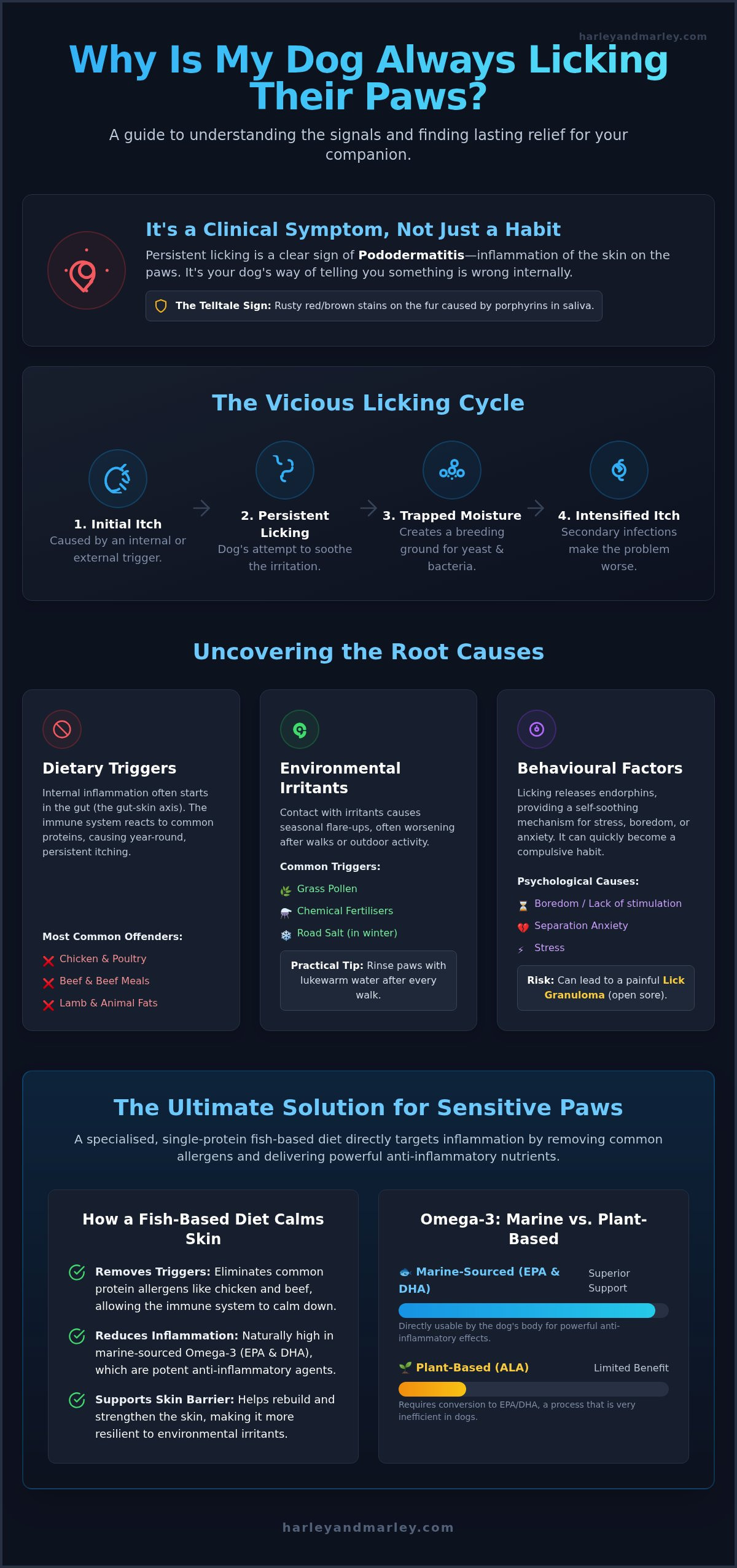
If you find yourself asking, "why is my dog always licking his paws" during the quiet hours of the night, it's vital to view the behaviour as a symptom rather than the problem itself. Licking is a physiological messenger. It indicates that the underlying tissue is irritated, itchy, or painful. Canine pododermatitis is the clinical term for this inflammation, encompassing a range of conditions that affect the feet. Whilst occasional grooming after a walk is normal, obsessive licking is distinctive; it's intense, repetitive, and often difficult to interrupt. You might notice the fur changing colour, turning a tell-tale rusty brown. This is caused by porphyrins, which are iron-containing molecules found in canine saliva that stain light-coloured hair over time.
This persistent dampness creates a secondary problem. The moisture trapped between the toes becomes a breeding ground for yeast and bacteria, which further intensifies the itch. This creates a "licking cycle" where the dog's attempt to soothe the area actually causes more profound irritation. Recognising this early is the first step toward breaking the loop and restoring your dog's comfort.
Environmental Irritants and Seasonal Allergies
Many dogs in Ireland react to invisible triggers in the landscape. Grass pollen, chemical fertilisers used on gardens, and even the salt spread on icy pavements during winter can cause immediate contact dermatitis. These irritants often cause seasonal flares, peaking during the high-pollen months of spring and summer. If you notice the licking increases after a trip to the park or a run through tall grass, environmental factors are likely at play. A simple but effective intervention is rinsing your dog's paws in lukewarm water immediately after every walk to physically remove these microscopic particles before they can penetrate the skin barrier.
Behavioural Factors: Boredom and Anxiety
When investigating why is my dog always licking his paws, we must also consider the psychological landscape. Dogs are sentient creatures who experience stress, boredom, and separation anxiety. Licking releases endorphins in the brain, providing a self-soothing mechanism that helps them cope with a lack of mental stimulation. What begins as a response to a minor itch can quickly transition into a deeply ingrained habit. If left unchecked, this compulsive behaviour can lead to a Lick granuloma, a thickened, open sore caused by the constant friction of the tongue. You can often tell the licking is behavioural if it occurs primarily when the dog is left alone or when they are resting in the evening without a focus. Addressing this requires a dual approach of physical relief and increased mental enrichment.
The Dietary Link: How Food Allergies Manifest in Paws
The answer to why is my dog always licking his paws often lies deep within the digestive system. This connection is known as the gut-skin axis. It describes how the health of the microbiome and the specific proteins a dog consumes directly influence the state of their skin and coat. When a dog’s immune system mistakenly identifies a common protein as a threat, it triggers a cascade of internal inflammation that eventually surfaces at the extremities.
This biological process is driven by histamine release. When a sensitive dog eats an allergen, their body produces chemicals that cause blood vessels to dilate and the skin to become pruritic, or itchy. Food allergies are known to cause itchy paws, leading to the relentless "itch-scratch-lick" cycle. The most common offenders are frequently the base proteins found in standard commercial diets, specifically:
- Chicken and poultry derivatives
- Beef and beef-based meals
- Lamb and animal fats
Why Chicken is Often the Hidden Culprit
In many Irish households, chicken is the default protein, yet it's also one of the most prevalent allergens for dogs with sensitivities. Finding truly poultry free dog food Ireland has become a priority for owners of itchy pets. The challenge is that many "sensitive" recipes still include hidden animal fats or "poultry meal" tucked away in the ingredients list. These derivatives can be enough to sustain the inflammatory response. Transitioning to a single-protein source, such as a fish-based diet, removes these variables and allows the skin's natural barrier to begin the healing process without constant histamine interference.
The Role of Grains and Fillers in Skin Irritation
Dietary triggers aren't always limited to proteins. High-carbohydrate fillers and certain grains can exacerbate the issue by promoting yeast overgrowth. If your dog's paws have a distinct, slightly sweet or "musty" smell, it's likely a yeast infection fuelled by the sugars in their diet. This overgrowth makes the skin even itchier, explaining why is my dog always licking his paws even after the initial allergen is removed. Moving towards a clean-label, Grain-Free Dog Food eliminates these starchy fuels, effectively starving the yeast and reducing the biological urge to lick. It's a purposeful approach that prioritises functional nutrition over cheap bulkers to ensure your dog’s vitality from the inside out.
Environmental vs. Dietary: Identifying the Trigger
Distinguishing between an environmental reaction and a dietary sensitivity is the cornerstone of effective treatment. To understand why is my dog always licking his paws, you must first observe the timing of the behaviour. Dietary allergies typically manifest as year-round discomfort because the trigger is present in every meal. Conversely, environmental triggers often fluctuate with the seasons, peaking when specific pollens or moulds are prevalent in the Irish air. Atopy is a genetic predisposition to develop allergic reactions to these otherwise harmless environmental substances.
Before assuming an allergy, perform a thorough physical inspection of the paws. Gently spread the toes to look for foreign bodies like grass seeds, which are notorious for burrowing into the skin. Check for cysts or interdigital furuncles; these are painful, deep-seated inflammatory bumps between the toes that often occur due to deep bacterial infections. If the skin between the pads is clear but the licking persists, it's time to evaluate external versus internal triggers more closely.
Spotting the Signs of Contact Dermatitis
Contact dermatitis is often identified by where the redness occurs. If the inflammation is confined strictly to the underside of the paw or the pads themselves, your dog has likely stepped on something irritating. This could be a new floor cleaner used in the home, a specific fertiliser on a neighbour's lawn, or even de-icing salts during the winter months. A sudden onset of licking immediately following a walk is a strong indicator. Using a simple paw wash of lukewarm water acts as both a remedy and a diagnostic tool; if rinsing the paws consistently stops the licking, the trigger is almost certainly environmental.
Recognising Chronic Nutritional Deficiencies
We must look beyond what is added to the diet and consider what might be missing. Chronic nutritional deficiencies, particularly a lack of Essential Fatty Acids (EFAs), significantly weaken the skin barrier. Without these vital lipids, the skin becomes dry, brittle, and prone to micro-cracks that allow allergens to penetrate more easily. This is why many dogs on standard meat-based diets continue to itch despite "sensitive" labels. High-quality fish based dog food provides bioavailable Omega-3s that plant-based sources simply cannot match. These marine-sourced nutrients strengthen the cellular structure of the skin from the inside out, creating a resilient barrier that reduces the overall inflammatory load and provides a long-term solution for itchy paws.
Practical Steps to Soothe Your Dog’s Irritated Paws
Addressing the question of why is my dog always licking his paws requires a methodical, lifestyle-first approach rather than a quick fix. Whilst heavy medications like steroids or immunosuppressants offer rapid relief, they often mask symptoms without resolving the underlying cause. True healing begins with a systematic reduction of inflammatory triggers. This process demands patience and absolute consistency; biological changes in the skin barrier do not happen overnight. You should commit to a new routine for at least eight weeks before evaluating its success.
During this period, monitor the paws daily for signs that necessitate professional veterinary intervention. If you notice bleeding, a foul odour, limping, or the presence of pus, these indicate a deep-seated secondary infection that requires clinical treatment. For most dogs, however, environmental management and nutritional adjustments are the most effective long-term solutions.
Immediate Relief and Paw Hygiene
Topical care provides immediate comfort whilst you work on internal triggers. Epsom salt soaks are an excellent starting point; they help draw out toxins and soothe the heat associated with pododermatitis. Alternatively, specialised antiseptic wipes can manage the bacterial load on the skin surface. After any soak or walk, you must dry the paws thoroughly, particularly between the toes and around the pads. Residual moisture is a primary driver of fungal overgrowth, which intensifies the itch and keeps the licking cycle active. Once dry, applying a natural, lick-safe balm can help seal the skin and prevent painful cracking. If the licking is particularly obsessive, consider using protective breathable booties or a soft collar to allow the skin a window of time to heal without further trauma.
The Elimination Diet: A Systematic Approach
If you suspect a dietary trigger, an elimination diet is the most reliable diagnostic tool available. This involves transitioning your dog to a novel protein source they have never consumed before, with fish being the premier choice due to its "clean" profile and high bioavailability. This trial must last between six and eight weeks to allow the body to clear existing allergens. Adhering to a "zero-treat" rule is vital; even a single piece of chicken-based biscuit or a scrap of table food can restart the inflammatory cascade and invalidate the trial.
As the weeks progress, look for holistic improvements beyond the paws. You should see a noticeable increase in coat lustre and a reduction in general skin redness. Furthermore, pay close attention to digestion; a successful diet change often results in more consistent stools. For guidance on identifying the right formula, consult our guide on dog food for dogs with loose stools Ireland. To begin your dog's journey toward lasting relief, explore our range of sustainably sourced, Grain-Free Dog Food designed specifically for sensitive systems.
Why a Fish-Based Diet is the Ultimate Solution for Sensitive Paws
If you have spent months asking why is my dog always licking his paws, the solution often requires a fundamental shift in their nutritional foundation. Fish is widely regarded by specialists as the premier hypoallergenic protein for dogs with sensitivities. Unlike chicken or beef, which are ubiquitous in commercial pet foods, fish is a novel protein for many animals. This lack of prior exposure reduces the likelihood of an overactive immune response. By removing the primary inflammatory triggers and replacing them with a clean, single-protein source, you allow the body’s internal systems to return to a state of equilibrium.
Our fish-only philosophy at Harley & Marley is built on the principle of purity. We strictly avoid the "hidden" meat derivatives and animal fats that plague many standard sensitive-skin formulas. This clean-label approach ensures that no stray poultry proteins can undermine your dog’s recovery. When you feed a diet that is genuinely free from meat-based fillers, you are not just managing symptoms; you are eliminating the source of systemic inflammation. It is a bold, science-led alternative to the status quo of the pet food industry.
The Anti-Inflammatory Power of Omega-3
The secret to resolving chronic paw issues lies in the specific type of fats your dog consumes. Marine sources are naturally abundant in Eicosapentaenoic Acid (EPA) and Docosahexaenoic Acid (DHA). These specific Omega-3 fatty acids are highly bioavailable, meaning the dog’s body can use them immediately to strengthen the skin barrier. Plant-based sources like flaxseed contain Alpha-Linolenic Acid (ALA), which dogs struggle to convert into useful EPA and DHA. High levels of marine-sourced Omega-3 directly inhibit the production of pro-inflammatory chemicals, effectively dampening the histamine response that causes the initial itch. This nutritional intervention turns the skin from a fragile, reactive surface into a resilient, healthy barrier.
Harley & Marley’s Clean-Label Fish Nutrition
We believe that the best results come from the freshest ingredients. Our grain-free, fish-based complete meals are formulated to provide holistic support for dogs failing on traditional meat-based diets. By utilising sustainable Irish sourcing, we ensure that the delicate fatty acids in our fish remain potent and effective. This regional craftsmanship isn't just about ethics; it's about the tangible vitality of the pets we serve. Transitioning to a diet that prioritises functional nutrition over cheap fillers can be the turning point in your dog's journey toward comfort. Switch to a fish-based diet today and soothe your dog’s paws to see the difference that clean, marine-led nutrition can make.
Restoring Your Dog’s Comfort with Targeted Nutrition
Decoding the signals your dog sends through their skin is the most effective way to break the cycle of chronic irritation. We've explored how persistent licking is rarely just a habit; it is a physiological response to internal inflammation or external triggers. Understanding why is my dog always licking his paws allows you to move beyond temporary topical fixes and address the root cause, whether it's seasonal atopy or a sensitivity to common meat proteins like chicken and beef.
By prioritising premium Irish fish-based nutrition, you provide your dog with the high Omega-3 levels necessary for robust skin barrier support. Our grain-free and poultry-free recipes are designed to soothe sensitive systems and restore the tangible joy of a healthy, thriving animal. It's time to swap restless, itchy nights for the peace of mind that comes from clean, functional ingredients. Discover our range of hypoallergenic fish-based dog food and take the first step toward a more comfortable future for your companion. You've the power to transform their vitality through the bowl; start today and watch them flourish.
Frequently Asked Questions
Is it normal for dogs to lick their paws occasionally?
Occasional grooming is a natural part of a dog's hygiene routine, similar to how they clean the rest of their body. However, if the behaviour becomes repetitive or difficult to interrupt, it indicates a problem. You should look for signs of redness or skin breaks. Normal grooming lasts seconds; obsessive licking can continue for minutes and often occurs when the dog is resting or bored, signalling underlying discomfort.
Can a chicken allergy cause my dog to lick his paws?
Chicken is one of the most common dietary allergens that can explain why is my dog always licking his paws. Many commercial foods use poultry as a primary protein, which can trigger a systemic inflammatory response in sensitive dogs. This inflammation often manifests as itchy paws or recurrent ear infections. Switching to a "clean" protein like fish removes this trigger and allows the immune system to settle naturally.
How long does it take for a diet change to stop paw licking?
A successful diet trial typically requires six to eight weeks of strict adherence to see a significant reduction in paw licking. This timeframe allows the body to fully clear old allergens and for the skin barrier to regenerate. It's vital to maintain a "zero-treat" policy during this window. Consistency is the only way to determine if a nutritional change is providing the long-term relief your dog needs.
Why are my dog’s paws turning a brown colour?
The rusty brown or red staining on your dog's paws is caused by porphyrins, which are iron-containing molecules found in canine saliva. When a dog licks an area excessively, these porphyrins saturate the fur and oxidise, leaving a permanent stain. This discolouration is a reliable clinical indicator of chronic irritation or pododermatitis. The stain will only grow out once the underlying itch is resolved and the licking stops.
Does grain-free dog food help with itchy skin?
Grain-free dog food can be highly beneficial for dogs with itchy skin, particularly if yeast overgrowth is present. Starchy grains and high-carbohydrate fillers provide the sugar that fuels yeast on the skin surface. By removing these ingredients, you effectively starve the yeast, reducing the "musty" smell and the intense itchiness between the toes. A clean, grain-free recipe supports a more resilient skin microbiome and reduces systemic inflammation.
Can I use fish oil supplements to help with paw inflammation?
High-quality fish oil is an exceptional tool for managing paw inflammation due to its concentrated levels of EPA and DHA. These marine-sourced Omega-3 fatty acids act as natural anti-inflammatories that strengthen the cellular structure of the skin barrier. Unlike plant-based oils, fish oil is highly bioavailable for dogs. Adding it to their daily routine helps dampen the histamine response that leads to the question of why is my dog always licking his paws.
Are there specific breeds more prone to paw licking?
Certain breeds are genetically predisposed to atopy and skin sensitivities, making them more prone to chronic paw licking. This includes West Highland White Terriers, Labradors, Golden Retrievers, and Bulldogs. These breeds often have a more reactive immune system or skin folds that trap moisture and allergens. For these dogs, a proactive approach to nutrition and environmental hygiene is essential to maintain long-term comfort and prevent chronic inflammation.