


The simplest-looking ingredient list isn’t automatically the right choice for a sensitive German Shepherd. Finding the best diet for german shepherds with sensitive digestion means looking beyond front-of-pack claims to nutritional adequacy, life-stage suitability and how your dog actually responds.
If loose stools, vomiting or excess gas have you second-guessing every meal, you’re not alone in wanting a clear answer. A food change may help some dogs, but recurring symptoms can also have causes that need veterinary attention. This guide explains how to compare food options, check that a food is complete and appropriate for your dog, and recognise when to involve your vet.
We’ll look at recipe features such as protein sources, grain-free claims and fish-based foods, without treating any one ingredient as a guaranteed solution. You’ll also learn how to introduce a new diet gradually, often over 7 to 14 days, and what to monitor during the change. The aim is to make a considered choice based on your dog’s needs, not guesswork.
Key Takeaways
- The best diet for german shepherds with sensitive digestion depends on your dog’s needs and response, not a single ingredient or marketing claim.
- Check that a food is complete and suitable for your German Shepherd’s life stage, then compare its ingredients and feeding guidance.
- Use the label to assess the protein source, fat and fibre. Compare familiar complete foods, fish-based options and vet-directed diets without assuming one will suit every dog.
- Notice whether digestive signs are occasional, persistent, recurring or worsening, and involve your vet when symptoms raise concern.
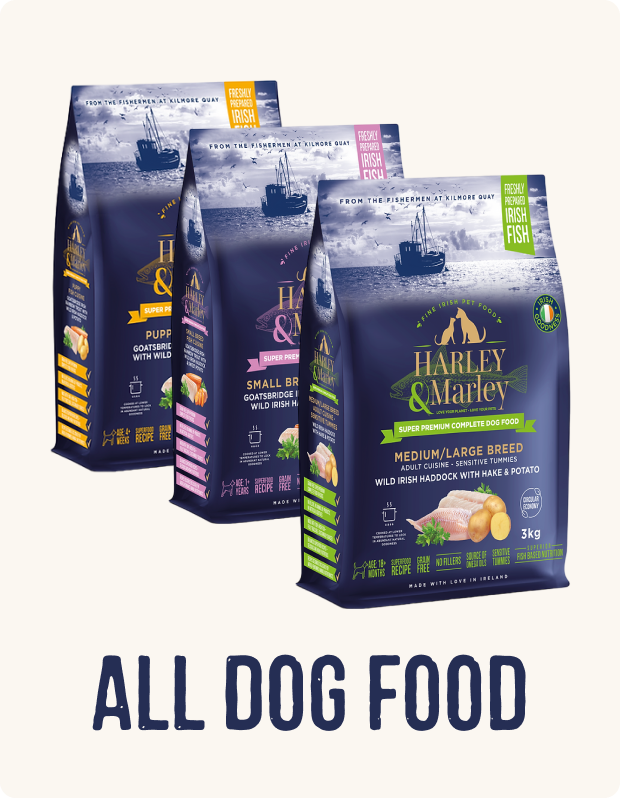
- Harley & Marley offers fish-based complete food categories, including medium and large breed options. Check the current label to assess suitability for your dog.
What does sensitive digestion look like in a German Shepherd?
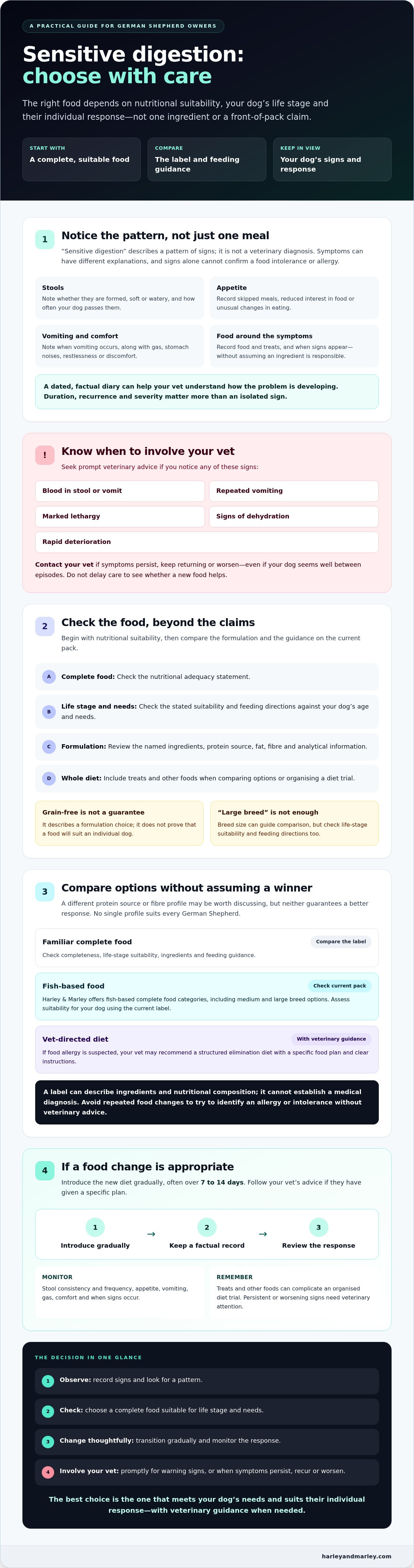
“Sensitive digestion” describes a pattern of signs, not a veterinary diagnosis. One softer stool in a dog who is otherwise comfortable and eating normally may be worth monitoring. Repeated or worsening changes need more attention. Loose stools, vomiting, excess gas, reduced appetite or restlessness can have different explanations, so symptoms alone can’t confirm a food intolerance or allergy.
Digestive symptoms are clues to investigate, not proof that a particular food is causing the problem. A breed overview, such as this guide to the German Shepherd, offers general background but can’t identify the cause of an individual dog’s symptoms. The best diet for german shepherds with sensitive digestion depends on the dog’s overall needs and, when symptoms persist, veterinary guidance.
Which digestive signs should German Shepherd owners notice?
Look for patterns rather than focusing on a single incident. Keep a dated record of:
- Stools: Note whether they’re formed, soft or watery, and how often your dog passes them.
- Appetite: Record skipped meals, reduced interest in food or unusual changes in eating.
- Vomiting and comfort: Note when vomiting occurs, along with gas, stomach noises, restlessness or signs of discomfort.
- Changes around meals: Record food, treats and when symptoms appear, without assuming a particular ingredient is responsible.
Duration, recurrence and severity matter more than an isolated sign. A dated diary with clear observations can help your vet understand how the problem is developing and what questions to consider. Keep the notes factual rather than using them to diagnose the cause yourself.
When should digestive symptoms be assessed by a vet?
Seek prompt veterinary advice if you notice blood in the stool or vomit, repeated vomiting, marked lethargy, signs of dehydration or rapid deterioration. Contact your vet if symptoms persist, keep returning or worsen, even if your dog seems well between episodes. Don’t delay care to see whether a new food helps.
Food sensitivity is only one possible explanation for digestive signs, and a diet trial may not be appropriate until other concerns have been assessed. Avoid diagnosing an allergy, intolerance or breed-linked disease from symptoms alone. Your vet can advise on the right next step and whether a carefully managed food change is suitable.
What should a German Shepherd’s sensitive-digestion diet provide?
Start with nutritional suitability, not a promise on the front of the pack. Choose a food described as complete and appropriate for your dog’s life stage and feeding needs. Then assess the formulation, including its protein source, fat, fibre and ingredient information. No single profile suits every German Shepherd.
A food label describes ingredients and nutritional composition; it can’t establish a medical diagnosis. If you suspect an allergy or intolerance, speak with your vet rather than trying to identify the cause through repeated food changes. Your vet may recommend a structured elimination diet, with a specific food plan and clear instructions, to investigate a suspected food allergy.
How should owners compare protein, fibre, and ingredients?
Read the current pack rather than relying on broad claims such as “gentle” or “sensitive”. Check the named ingredients, analytical information, nutritional adequacy statement and feeding guidance. Compare like with like: a different protein source or fibre profile may be worth discussing, but neither guarantees a better response. Include treats and other foods in your comparison, since they can complicate an organised diet trial.
Grain-free isn’t automatically better for digestion. It describes a formulation choice, not proof that a food will suit a particular dog. The best diet for german shepherds with sensitive digestion is one that meets nutritional needs and suits the individual, with veterinary input if symptoms persist or food allergy is suspected.
Does a German Shepherd need a large-breed formula?
Breed size can help guide your comparison, but don’t choose by the words “large breed” alone. Check the food’s stated life-stage suitability and feeding directions against your dog’s age and needs. Puppy, adult and senior dogs can have different nutritional requirements, so a food suited to one stage may not be suitable for another. For more context, see this large-breed dog nutrition guide.
The American Kennel Club describes the breed’s noble character and high intelligence, but general breed information can’t determine an individual dog’s diet. Harley & Marley offers fish-based complete food categories, including medium and large breed options. If considering one, check the current label for ingredients, life-stage suitability and feeding guidance, or browse the fish-based complete food options as a starting point for comparison.
How do the main food options compare for digestive sensitivity?
No food category is a universal winner. Compare familiar complete food, fish-based complete food and any vet-directed therapeutic diet using the same criteria: nutritional adequacy, ingredient transparency, suitability for your dog’s life stage and your dog’s response. A new or “novel” protein, including fish, isn’t automatically hypoallergenic or medically suitable. Whether a protein is new to your dog depends on what they have eaten before.
Food allergy and intolerance are not interchangeable terms. Tufts University’s veterinary nutrition team explains the distinction in its guide to food allergies and food intolerances. If an allergy is suspected, your vet can help decide whether a structured diet trial is appropriate. Switching casually between several recipes can make it harder to work out what your dog is responding to.
When might a fish-based complete food be worth considering?
Fish-based food is one category to assess, not a treatment or guaranteed solution. Check the current label for the full ingredient list, nutritional adequacy statement, stated life-stage suitability and feeding guidance. Harley & Marley offers fish-based complete food categories, including medium and large breed options, which owners can compare with their dog’s needs and current diet.
For broader ingredient context, read this fish-based dog food guide. If you’re considering a fish-based option because you suspect an allergy, discuss it with your vet first. Fish protein may already have been part of your dog’s diet, and the label alone can’t determine whether it is suitable for an allergy investigation.
What do grain-free and sensitive-digestion labels actually tell you?
These phrases describe a food’s positioning or formulation, but they don’t show by themselves that it will suit your dog. Grain-free means grains are excluded from that recipe; it doesn’t identify every possible trigger or establish that grains caused digestive signs. “Sensitive digestion” wording also can’t replace checking the full formulation and nutritional information.
Compare the ingredient list and complete-food status, then consider whether the food matches your dog’s age and feeding needs. If signs persist or recur, seek veterinary advice rather than relying on label claims or making repeated changes. Once a food has been assessed as suitable, you can browse fish-based complete food options as one category to compare.
How can you trial a new diet safely and assess the result?
A food trial is most useful when you change one thing at a time and know what you’re monitoring. If digestive signs persist, recur or worsen, speak with your vet before changing your dog’s food. Follow their advice and the new food’s feeding guidance rather than switching abruptly or setting a trial period by guesswork.
During a routine change, keep portions consistent and avoid introducing new treats, supplements or other dietary changes at the same time, unless your vet advises otherwise. Making several changes at once makes it difficult to tell what may have affected your dog. If symptoms worsen or you notice a concerning change, stop the trial and contact your vet rather than waiting for the food to take effect.
What should a food-and-symptom diary include?
Keep a simple, dated record that you can share at a consultation. Note meals and portions, treats, stool consistency and frequency, appetite, comfort, and when any signs occur in relation to eating. Also record medication and relevant changes at home, such as a new routine or access to different food. These details give your vet useful context, but they can’t diagnose the cause by themselves.
How long should a diet trial last?
There’s no single trial length that suits every dog or every reason for changing food. Follow the plan set by your vet, including how to manage the transition and what to do if signs continue. If food allergy is suspected, assessment may require a controlled, vet-directed elimination trial, rather than simply trying a fish-based or grain-free food and judging the result on its own.
For additional reading on stool changes, see this guide to loose stools in dogs. It can offer general context, but it doesn’t replace an individual veterinary assessment. A careful, consistent approach helps you and your vet judge whether the best diet for german shepherds with sensitive digestion is genuinely suiting your dog.
Once you’ve checked that a food is appropriate for your dog and discussed any ongoing symptoms with your vet, explore fish-based complete food options as one category to compare. Check the current label and feeding guidance before deciding whether an option fits your dog’s needs.
How to choose a suitable complete food for your German Shepherd
Make your decision based on your dog’s needs and the current product label, not a breed label or a promise of digestive benefits. Use this checklist to compare options:
- Life stage: Check that the food is stated as suitable for your dog’s age and feeding needs.
- Complete-food status: Confirm that it is labelled as a complete food for the intended life stage, rather than a complementary food.
- Label clarity: Review the current ingredient list and nutritional information. Check that the details are clear enough to compare formulations.
- Feeding guidance: Read the directions and consider whether they fit your dog’s routine and needs.
- Veterinary advice: If symptoms continue, recur or are medically complex, discuss the food choice with your vet before making a change.
This checklist gives you a practical way to assess the best diet for german shepherds with sensitive digestion without assuming that one ingredient, label claim or recipe suits every dog.
Does a fish-based medium or large breed food fit your dog?
Harley & Marley offers fish-based complete food categories, including medium and large breed options. Consider them as options to evaluate, not as a cure or a guarantee against food allergy. Check the specific food’s current ingredients, complete-food statement, stated life-stage suitability and feeding guidance before deciding whether it matches your dog’s needs. For related ingredient considerations, see this poultry-free dog food guide. A fish-based or poultry-free description alone can’t confirm medical suitability.
What is the next step if the food appears suitable?
If your dog’s symptoms are ongoing or their dietary needs are medically complex, confirm your plan with your vet. If you’re comparing a food, have the label details to hand so you can discuss the ingredients and feeding guidance clearly. Once you’ve established that an option is suitable, it can be purchased individually or through a monthly food box, depending on your preference. These are purchasing formats, not health benefits.
Ready to compare the details? Compare Harley & Marley’s complete fish-based food against your checklist, and use the current label to judge whether an option fits your German Shepherd.
Choose your German Shepherd’s next meal with confidence
The best diet for german shepherds with sensitive digestion isn’t defined by a “sensitive” label alone. Compare complete-food status, life-stage suitability, ingredients and feeding guidance, then consider your dog’s response. If symptoms persist, recur or cause concern, speak with your vet before relying on a food change to solve them.
Harley & Marley offers complete fish-based food options for medium and large breeds, alongside food for different life stages and grain-free options. These are categories to assess against your dog’s needs, not guaranteed solutions for digestive problems. Check the current label carefully before choosing.
Compare Harley & Marley’s complete fish-based dog food and review the details at your own pace. With clear observations, careful label checks and veterinary guidance when needed, you can make a considered choice and take the next step with confidence.
Frequently Asked Questions
What is the best food for a German Shepherd with a sensitive stomach?
The best diet for german shepherds with sensitive digestion is a complete food suited to the dog’s life stage and individual needs, rather than a recipe chosen by a “sensitive stomach” claim alone. Compare the current label, ingredients and feeding guidance, and monitor your dog’s response. If signs persist or recur, consult your vet before making a significant change, as symptoms alone can’t identify the cause.
Can fish-based food help a German Shepherd with sensitive digestion?
Fish-based complete food may be one option to compare, but it isn’t a guaranteed remedy or automatically hypoallergenic. Check the current label for ingredients, complete-food status and life-stage suitability, and consider whether your dog has eaten that protein source before. If you suspect a food allergy, ask your vet about an appropriate assessment rather than relying on a routine switch.
Is grain-free food better for German Shepherds with digestive problems?
No, grain-free food isn’t automatically better for a dog with digestive signs. The term tells you grains are excluded from the recipe, but it doesn’t identify what is causing your dog’s symptoms or show that the full formulation suits them. Compare the ingredient list and nutritional information, and choose a complete food appropriate to your dog’s life stage. Seek veterinary advice if digestive problems persist or return.
How do I change my German Shepherd’s food without upsetting their stomach?
Change food gradually, following your vet’s advice and the new food’s feeding guidance. A transition commonly takes 7 to 14 days, but a dog with a sensitive stomach may need longer; ask your vet what pace is suitable. Keep portions consistent and avoid adding new treats or supplements during the change unless advised. Record stools, appetite and comfort, and contact your vet if signs worsen.
When should I take my German Shepherd to the vet for digestive problems?
Seek prompt veterinary advice for blood in vomit or stool, repeated vomiting, marked lethargy, signs of dehydration or rapid deterioration. Arrange advice if digestive signs persist, recur or worsen, even if your dog seems comfortable at times. Don’t delay care to trial a different food. A vet can assess the symptoms and help determine whether a dietary change is appropriate or whether further investigation is needed.
Can a food allergy cause loose stools in a German Shepherd?
A food allergy can be one possible explanation for loose stools, but loose stools alone don’t confirm an allergy. Other factors can cause similar signs, so avoid diagnosing the problem or repeatedly changing foods without guidance. If an allergy is suspected, ask your vet whether a controlled elimination diet is suitable. Follow the plan closely, as extra foods or treats may make the results harder to interpret.
What should I look for on a dog food label for a German Shepherd?
Check that the food is labelled complete and suitable for your dog’s life stage. Read the current ingredient list and nutritional information, then review the feeding guidance for your dog’s needs. For a medium or large breed food, check its stated suitability rather than relying on the breed description alone. If your dog has ongoing symptoms or specific medical needs, discuss the label with your vet before changing diets.