


Could a dog food with salmon on the front of the pack still be the wrong choice for everyday feeding? Absolutely. A search for “salmon dog food complete” is about more than a named ingredient: it’s about finding a food that provides the nutrition your dog needs at their particular life stage.
Labels can be confusing because “complete” and “complementary” mean different things. A complete food is intended to provide a full daily diet when fed as directed, whilst a complementary food needs to be paired with other foods. And a salmon recipe isn’t automatically the right fit for every dog.
This guide explains what to check on the label and how to compare salmon content, other ingredients and nutritional claims without relying on marketing language. You’ll also learn to check life-stage suitability, consider your dog’s size and individual needs, and recognise when it’s sensible to ask your vet before changing their diet. The aim is to help you make a considered choice, with a clear understanding of what the food can and can’t tell you.
Key Takeaways
- Learn what “complete” says about a food’s nutritional role, and what it doesn’t prove about ingredient quality.
- Use the full label, not the salmon claim alone, to compare ingredients, analytical constituents and feeding guidance.
- Check that salmon dog food complete is labelled as suitable for your dog’s life stage before considering it for everyday feeding.
- Compare foods using current packaging, and note missing details rather than guessing.
- Explore fish-based complete food categories only after checking your dog’s needs; ask your vet if you’re unsure about suitability or a diet change.
What Does “Complete Salmon Dog Food” Actually Mean?
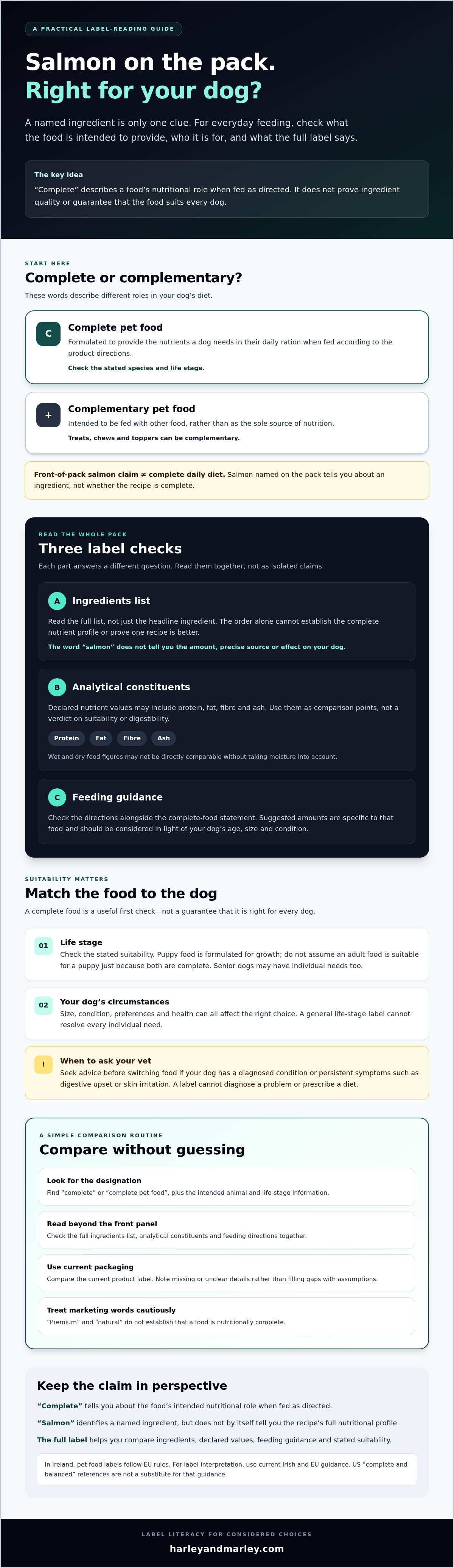
A complete pet food is formulated to provide the nutrients a dog needs in their daily ration when fed according to the product’s directions. In Ireland, pet food labels follow EU rules, so look for a clear designation such as “complete pet food” and check the stated animal and life stage. “Complete” describes the food’s nutritional role, not whether its ingredients are superior or whether it suits every dog.
This distinction matters when searching for salmon dog food complete: salmon named on the front of a pack tells you about an ingredient, not whether the recipe supplies a full daily diet. A food may feature salmon but be labelled complementary, meaning it isn’t intended to be fed as the sole source of nutrition. For general background on food types and composition, see Dog food; for label interpretation, refer to current Irish and EU guidance.
How can you recognise complete food on the label?
Check the packaging for the words “complete” or “complete pet food”, alongside the intended species and any life-stage information. Read the product description and feeding directions as well as the front-of-pack claims. Terms such as “premium” and “natural” may describe a product’s positioning, but they don’t establish that it is nutritionally complete. If the designation is unclear or missing, don’t assume the food is suitable as your dog’s sole diet. Check the manufacturer’s information or ask for clarification.
By contrast, “complementary pet food” indicates that the product is intended to be fed with other food. A treat, chew or topper may be offered alongside a main meal, but salmon or other appealing ingredients don’t make it a complete diet.
Does “complete” mean suitable for every dog?
No. Read the stated life stage carefully. A food intended for adult dogs may not be labelled as suitable for puppies, whilst a puppy food is formulated for growth. Senior dogs may also have individual needs that a general life-stage label can’t resolve. Feeding directions help you use the food as intended, but they don’t replace advice tailored to your dog.
Completeness is a useful first check, not a guarantee of individual suitability. Your dog’s size, condition, preferences and health can all affect the right choice. If your dog has a diagnosed condition or persistent symptoms such as digestive upset or skin irritation, ask your vet before switching foods. A label can guide comparison; it can’t diagnose a problem or prescribe a diet.
Which Nutritional Details Matter in Complete Salmon Dog Food?
Once you’ve confirmed that a food is labelled complete, compare the rest of the pack. The ingredients list, analytical constituents and feeding guidance each answer different questions, so read them together. The word “salmon” on the front doesn’t tell you how much salmon the recipe contains, its precise source or what effect the food will have on your dog.
What should you check beyond the salmon ingredient?
Read the full ingredients list, not just the headline ingredient. It shows the components named by the manufacturer, but the order alone can’t establish the complete nutrient profile or prove that one recipe is better than another. Recipes may also use different ingredient descriptions, so avoid judging quality from a single phrase.
Next, look at the analytical constituents, the declared nutrient values on the pack. Depending on the label, these may include protein, fat, fibre and ash. Use them as comparison points, not a verdict: the figures don’t reveal every detail of digestibility or nutritional suitability. If you’re comparing different formats, such as wet and dry food, remember that the figures may not be directly comparable without taking moisture into account.
Finally, check feeding guidance alongside the complete-food statement. The suggested amount is specific to that food and should be considered in light of your dog’s age, size and condition. For a general explanation of the US term “complete and balanced” and its connection with AAFCO standards, see the FDA’s Complete and Balanced guidance. It’s a US reference, not a substitute for current Irish and EU labelling guidance.
How do life stage and individual needs affect suitability?
Match the label’s intended life stage to your dog. Puppies are growing and may have different nutritional requirements from adult dogs, so don’t assume an adult food is suitable for a puppy simply because both foods are complete. Check the current product label for its stated suitability rather than relying on a general claim or an older product description.
Individual circumstances matter too. A complete food may meet its stated nutritional purpose, but that doesn’t mean it’s the right choice for every dog, particularly one with a diagnosed condition, suspected allergy or ongoing symptoms. Ask your vet for guidance before choosing a diet for a medical concern or changing food in response to persistent signs.
If you’re comparing options, Harley & Marley offers fish-based complete food categories to investigate. Check the current ingredients and nutritional information carefully, especially if salmon is important to your decision. Start with your dog’s needs, then assess what the pack can actually verify.
How to Compare Complete Salmon Dog Food Labels Fairly
A side-by-side check is more useful than choosing the pack with the boldest salmon claim. Use the current packaging for each food, including the full ingredient list and feeding directions. If information isn’t given or can’t be verified, write “not stated” rather than filling the gap with an assumption. This makes a salmon dog food complete comparison clearer and more reliable.
Which label details belong in a side-by-side comparison?
Use a simple table to separate label facts from impressions. Copy the wording and figures accurately, and note whether each food is wet or dry. The table is a framework, not a ranking: a higher figure or more appealing phrase isn’t automatically evidence of better suitability.
| Check | Food A | Food B |
|---|---|---|
| Completeness | Exact wording on current pack, or “not stated” | Exact wording on current pack, or “not stated” |
| Life stage | Stated age or life-stage suitability | Stated age or life-stage suitability |
| Ingredients | Full list, including how salmon is described | Full list, including how salmon is described |
| Analytical constituents | Copy declared values and units | Copy declared values and units |
| Feeding guidance | Record the pack’s recommended amount and basis | Record the pack’s recommended amount and basis |
| Format | Wet, dry or other format; note missing details | Wet, dry or other format; note missing details |
Portions aren’t interchangeable: follow the guidance for each specific food and consider your dog’s individual circumstances. Analytical constituents are useful for comparing declared values, but figures for different formats may not be directly comparable. For context on how nutrients relate to canine needs, consult the Merck Veterinary Manual’s overview of nutritional requirements for dogs.
How should you interpret salmon and limited-ingredient claims?
Salmon in the ingredients list doesn’t prove that it’s the recipe’s only animal protein. Check every ingredient, and distinguish stated facts, such as named ingredients, from subjective descriptions like “best” or “gentle”. Claims about allergy relief or improved digestion shouldn’t be treated as guaranteed outcomes. If you’re checking for poultry ingredients, the poultry-free dog food guidance offers related context, whilst the fish-based dog food guide broadens the comparison beyond salmon. For suspected allergies or ongoing symptoms, seek veterinary advice rather than relying on marketing claims.
How to Choose and Introduce a Complete Salmon Food
Choosing salmon dog food complete enough for everyday feeding means checking more than the flavour on the front of the pack. Make the decision in stages, then introduce any new food thoughtfully. Your dog’s age, health and normal eating habits all matter.
- Confirm life stage: Check that the food is labelled complete and intended for your dog’s age group.
- Review the current label: Read the ingredients, feeding instructions and any relevant suitability information.
- Consider your dog’s needs: Account for their size, condition and any dietary advice you’ve already received.
- Ask your vet when needed: Get guidance before changing food for a diagnosed condition, suspected allergy or ongoing symptoms.
What should you check before changing your dog’s food?
Start with the proposed food’s current packaging, not an old listing or a portion guide for another brand. Confirm the complete-food designation and intended life stage, then review any veterinary advice that applies to your dog. Feeding amounts vary with the specific food and the individual animal, so don’t transfer a scoop size or daily portion from the food you’re replacing. Follow the new product’s directions and ask your vet if they conflict with individual guidance.
How can you make a food transition more manageable?
Use the transition directions provided by the food maker, or follow your vet’s individual plan. There’s no single schedule that suits every dog and food, so avoid applying a fixed timetable without product-specific or veterinary advice. Keep routines consistent where practical, and observe your dog’s appetite, stools and general wellbeing as the change takes place.
A change in routine can make it harder to judge how a new food is going, so note what you observe rather than trying to diagnose the cause. If concerning signs persist or your dog seems unwell, contact your vet for advice before continuing or making further changes.
Once you know what to look for, you can explore fish-based complete food options and check each current label against your dog’s needs. Harley & Marley offers fish-based complete food categories for different life stages and breed sizes. Verify ingredients and suitability before choosing, particularly if you’re looking for salmon specifically.
Finding a Fish-Based Complete Food That Fits Your Dog
A suitable choice comes down to more than the protein named on the front of the pack. Before selecting salmon dog food complete for everyday feeding, make sure the food is labelled complete, matches your dog’s life stage and has a current label you can assess. Then consider your dog’s individual circumstances, including any dietary advice from your vet. These checks help you compare products using information that matters, rather than broad claims alone.
What does Harley & Marley offer dog owners?
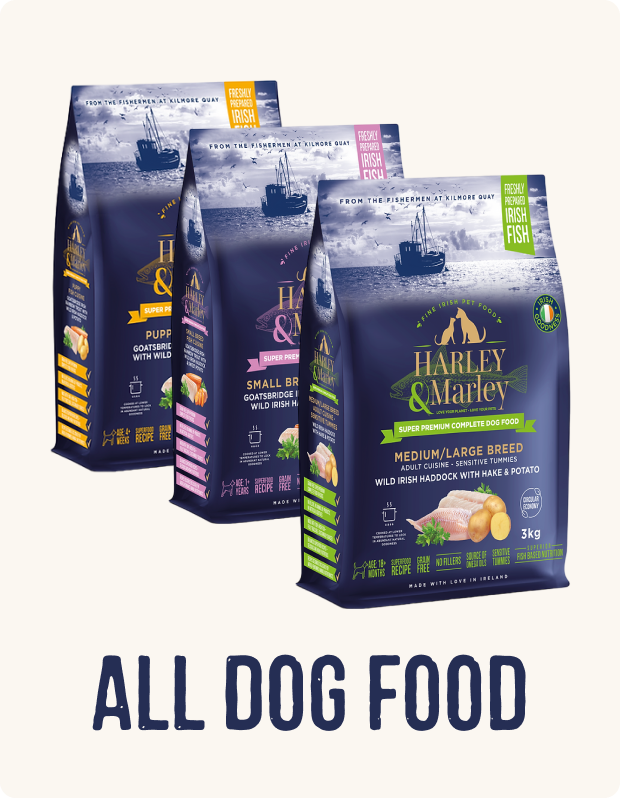
Harley & Marley is an Irish-owned business focused on fish-based canine nutrition. Its complete food categories include options for puppies, small breeds, medium and large breeds, and senior dogs. These life-stage and size categories give owners different options to investigate, but each food’s current packaging remains the place to verify its ingredients, nutritional information and suitability.
Harley & Marley offers fish-based foods, so check the ingredient list if salmon specifically is important to your decision. The business also offers grain-free options. Grain-free isn’t automatically a better fit, so assess the full formulation and your dog’s needs rather than treating that feature as a quality measure.
What is a sensible next step after comparing labels?
Before ordering, revisit the checks that matter for your dog:
- Completeness: Confirm the food is intended to provide a complete daily diet when fed as directed.
- Life stage: Match the stated suitability to your dog’s age and circumstances.
- Full label: Review current ingredients, analytical constituents and feeding directions, and note anything that isn’t stated.
- Individual needs: Follow veterinary guidance for diagnosed conditions or ongoing concerns.
Harley & Marley food can be purchased individually or through a monthly food box. These are purchasing formats, not nutritional features; check the current product and box details before deciding which suits your requirements. If you’re looking specifically for a salmon recipe, verify the current ingredients rather than relying on a general fish-based description.
Explore Harley & Marley to review its fish-based food options.
Choose with confidence, one label at a time
The strongest choice isn’t necessarily the pack with the boldest salmon claim. Check that the food is labelled complete, confirm it suits your dog’s life stage, and compare the full ingredients, analytical constituents and feeding directions. Salmon on the label doesn’t by itself prove nutritional completeness or that the recipe fits your dog’s individual needs.
Use those checks when assessing salmon dog food complete options, and follow veterinary guidance if your dog has a diagnosed condition or ongoing symptoms. A careful label comparison can help you make an informed decision without relying on vague claims.
Harley & Marley offers fish-based complete food categories for puppies, small breeds, medium and large breeds, and senior dogs. Food is available for individual purchase and through a monthly food box. Check current ingredients and suitability before choosing, particularly if you want a salmon-specific recipe.
Explore Harley & Marley’s fish-based complete foods and choose an option that fits your dog’s needs.
Frequently Asked Questions
What does complete salmon dog food mean?
Complete salmon dog food is formulated to provide the nutrients a dog needs from their daily diet when fed according to the product’s directions. The word “salmon” identifies an ingredient, not proof that the food is nutritionally complete. Check the packaging for a complete-food designation and the intended life stage. A complementary food, treat or topper isn’t intended to provide a full diet on its own.
Can salmon dog food be fed every day?
Yes, if the product is labelled as a complete food for your dog’s life stage and you follow its feeding guidance. A salmon recipe labelled complementary isn’t designed to be the sole daily diet. The recommended amount depends on the specific food and your dog, so don’t transfer portions from another brand. Ask your vet for advice if your dog has a medical condition or specific dietary requirements.
Is salmon dog food suitable for puppies?
It can be, but only if the food is labelled complete and suitable for puppies or growth. Don’t assume adult food meets a puppy’s needs simply because it contains salmon or is described as complete. Check the current packaging for life-stage guidance and feeding instructions. Harley & Marley offers Puppy Complete Food; check its ingredients directly if you’re looking specifically for a salmon recipe.
How can I tell whether salmon dog food is nutritionally complete?
Look for a clear “complete” or “complete pet food” designation on the current packaging, then check that its stated life-stage suitability matches your dog. Read the full ingredients list, analytical constituents and feeding guidance as well. If you’re searching for “salmon dog food complete”, don’t rely on salmon being prominent on the front of the pack. If the completeness claim or intended use is unclear, ask the manufacturer to clarify.
Does salmon dog food contain only fish protein?
No, the presence of salmon doesn’t establish that it’s the recipe’s only protein source. Check the entire ingredients list for other animal-derived ingredients, not just the name or image on the front of the pack. A “limited ingredient” or similar marketing phrase doesn’t by itself confirm a single-protein recipe. If avoiding a particular ingredient is important, verify the current label and seek veterinary guidance about your dog’s dietary needs.
Can salmon dog food help a dog with food allergies?
It may not. A salmon-based recipe isn’t automatically suitable for a dog with an allergy, and the salmon claim alone doesn’t show that other potential allergens are absent. Don’t treat marketing claims about allergy relief as a diagnosis or treatment plan. If you suspect an allergy, or your dog has ongoing symptoms, speak with your vet before changing foods. They can advise on an appropriate approach for your dog.
How should I switch my dog to a new complete food?
Follow the new food’s transition instructions or your vet’s individual advice, rather than applying a fixed schedule to every dog. Use the new product’s own feeding guidance, as portions differ between foods. During the change, observe your dog’s appetite, stools and general wellbeing. If concerning signs persist or your dog seems unwell, contact your vet for advice instead of diagnosing the cause or making repeated diet changes yourself.