


Could the best food for bichon frise itchy skin be the wrong place to start? Persistent scratching is uncomfortable for your dog and worrying to watch, but food is only one possible cause. Environmental allergies, fleas and other issues can also irritate the skin, so a new diet cannot replace veterinary assessment.
It’s understandable to look for a clear answer in the food bowl. Yet labels can make it hard to compare protein sources, ingredients and whether a food is complete. A grain-free or “hypoallergenic” claim alone won’t show that it suits your dog. This guide explains when itching needs a vet’s attention and how to compare complete food options with your Bichon’s needs in mind.
You’ll learn what to check on ingredient lists, how fish-based small-breed food may fit as an option rather than a guaranteed remedy, and why suspected food allergies call for a measured, vet-guided approach. The aim is to help you choose a practical next step that supports your dog’s skin and overall nutrition, while keeping track of symptoms as you make any changes.
Key Takeaways
- Track when your Bichon scratches, licks or chews, and note other changes to help your vet assess possible causes.
- Find the best food for bichon frise itchy skin by comparing complete nutrition, protein sources and suitability for your dog’s life stage.
- Fish-based and limited-ingredient foods are options to discuss, not guaranteed answers; the right choice depends on your dog’s individual needs.
- Make food changes with a clear plan, changing one relevant variable at a time when your veterinary professional agrees.
- Consider small-breed fish-based food for practical feeding needs, and check the current label for ingredients and feeding suitability.
Best food for Bichon Frise itchy skin: what could be causing the irritation?
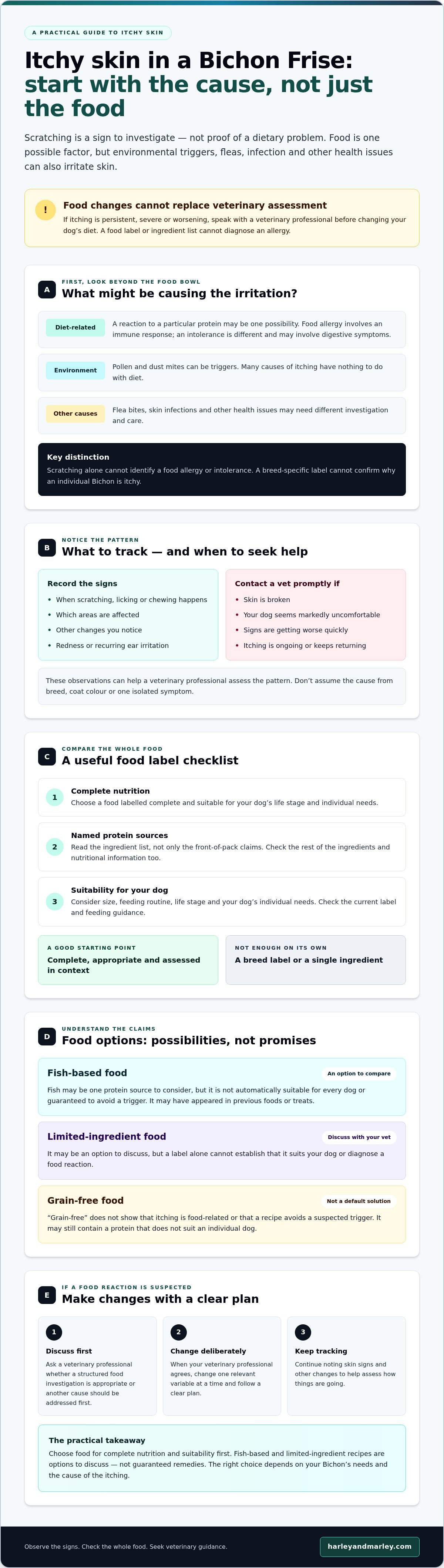
Watching a small dog scratch, lick or chew at their skin repeatedly can be upsetting, especially when you’re trying to work out what might bring relief. The best food for bichon frise itchy skin depends first on whether food is relevant at all. Itching is a sign to investigate, not proof of a dietary problem.
Possible causes include a reaction to something in the diet, environmental triggers such as pollen or dust mites, flea bites, skin infections and other health issues. A food allergy involves an immune response to a particular protein; an intolerance is different and may involve digestive symptoms. Neither can be identified from scratching alone.
How to recognise when itching needs veterinary attention
Look for repeated scratching, persistent paw licking, visible redness or ear irritation that keeps returning. Note when signs occur and which areas are affected, as these observations can help a veterinary professional assess the pattern. Seek prompt professional guidance if your dog has broken skin, seems markedly uncomfortable or is getting worse quickly. Ongoing itching also deserves assessment before you experiment with food.
Don’t assume the cause from breed, coat colour or one isolated symptom. The Bichon Frise has recognisable breed characteristics, but those features can’t confirm why an individual dog is itchy. Fleas, environmental exposure, infection and other conditions may need different investigation and care.
Can food cause a Bichon Frise to itch?
Food can be a factor for some dogs, but many itch triggers have nothing to do with diet. A breed-specific food label describes the intended dog or format; it doesn’t establish that your Bichon has a food allergy or show that the ingredients exclude a suspected trigger. Check the full ingredient list, but don’t treat it as a diagnostic test.
A possible food trigger is a question to investigate, not a confirmed diagnosis. If symptoms are persistent, severe or worsening, speak with a veterinary professional before changing your dog’s diet. They can help decide whether a structured food investigation is appropriate or whether another cause should be addressed first. This helps avoid relying on trial and error while your dog remains uncomfortable.
What should food for a Bichon Frise with itchy skin provide?
Start with nutritional suitability, not a promise to soothe skin. Choose a food labelled complete for your dog’s life stage and appropriate for their size, feeding routine and individual needs. A puppy, adult and senior dog may have different requirements, so check the label and feeding guidance rather than assuming one formula suits every Bichon.
A food choice should be complete, appropriate and assessed in context. Consider the whole diet alongside your dog’s symptoms and any veterinary advice. The best food for bichon frise itchy skin isn’t identified by a breed label or a single ingredient; it’s a suitable complete option that makes sense for the dog in front of you.
How to compare protein sources and ingredient lists
Read beyond the front-of-pack claims. Look for clearly named protein sources in the ingredients, then check the rest of the list and the nutritional information. If a veterinary professional suspects a food reaction, these details can help you compare diets and identify what your dog has previously eaten. They cannot confirm an allergy on their own. VCA’s guide to Food allergies in dogs explains why diagnosis requires a considered approach.
Fish may be one protein option to compare, but it isn’t automatically suitable for every dog or allergy-proof. A protein that seems unfamiliar to you may have appeared in your dog’s previous foods or treats. For a closer look at what fish-based diets involve, see this guide to fish-based dog food.
Does grain-free food help itchy skin?
Not by default. Grain-free describes a feature of the recipe, but it doesn’t establish that a dog’s itching is food-related or that the food avoids the ingredient causing a reaction. A recipe can be grain-free and still contain a protein that doesn’t suit an individual dog.
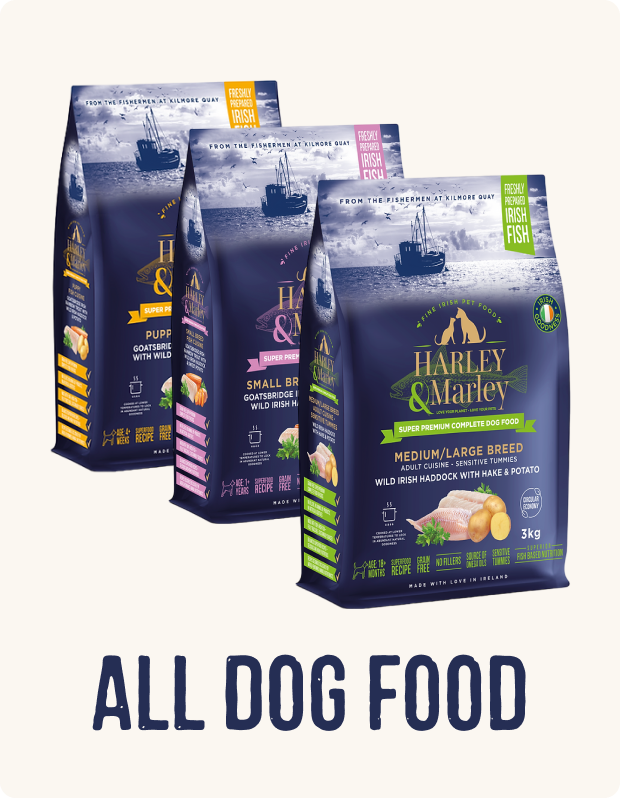
Compare the complete formulation, including named proteins, life-stage suitability and feeding guidance, rather than relying on one front-of-pack claim. If you suspect a food reaction, discuss the signs and any proposed diet change with a veterinary professional first. Harley & Marley offers fish-based complete food options, including a small-breed range. You can review small-breed food options and check current labels for ingredients and suitability.
Fish-based, limited-ingredient or standard food: which option is worth comparing?
Compare complete foods by what they contain and how well they fit your dog, not by a claim that one category will stop itching. A fish-based recipe may make its protein source easier to identify; a limited-ingredient food may have a shorter ingredient list. Neither label confirms what is causing your Bichon’s symptoms. Since the causes of itching in dogs include issues beyond diet, compare foods alongside veterinary guidance.
| Food option | What to compare | Practical question |
|---|---|---|
| Standard complete food | Named protein sources, full ingredients and nutritional completeness | Does it suit your dog’s life stage and normal feeding routine? |
| Fish-based complete food | How clearly the fish protein is identified and what other ingredients are included | Has your dog eaten these ingredients before, and is the food suitable for their needs? |
| Limited-ingredient complete food | Whether the list is genuinely useful for comparing ingredients your dog has encountered | Is it appropriate as an everyday complete food, or is a vet-guided plan needed? |
| Food selected for a veterinary-directed trial | The specific diet and feeding instructions advised for your dog | Can everyone in the household follow the plan consistently? |
When might fish-based food be a reasonable option to assess?
Fish-based food is one option if you’re comparing clearly named protein sources and want a complete food suited to your dog’s life stage and feeding needs. But fish isn’t automatically novel, suitable or allergy-proof; your dog’s previous diet and individual response matter. For practical size-related considerations, explore fish-based food for small breeds. This may help you assess format and suitability, but it cannot predict itch relief.
How does a veterinary-directed food trial differ from switching foods?
Changing foods at home is not the same as a structured trial to investigate a suspected food reaction. A veterinary professional can advise whether a trial is appropriate, which diet to use and how to feed it consistently. Treats, chews, table scraps and supplements may affect how the results are interpreted, so ask what your dog can have during the plan. Trying a new protein or a grain-free recipe alone won’t identify the cause.
The best food for bichon frise itchy skin is therefore not a category chosen by label alone. Compare complete nutrition, protein clarity, life-stage fit and feeding practicality, then use veterinary guidance to decide what makes sense for your dog.
How to change food and track your Bichon Frise’s skin safely
A planned change is more useful than switching foods in response to every flare-up. If your veterinary professional agrees that a diet change is appropriate, use a clear sequence: record what’s happening now, discuss the pattern and options with the vet, choose a complete food suited to your dog, then monitor consistently. Where possible, change one relevant variable at a time so you can make sense of what follows.
What should owners record before and after a food change?
Keep a simple dated log before you begin and continue it during the change. Brief, regular notes are more useful than relying on memory or one comfortable day. Include:
- Scratching, paw licking or chewing, and how often it happens
- Visible skin changes, such as redness or irritation, and any recurring ear concerns
- Meals, treats, chews, supplements and any food changes
- Stool changes, plus relevant environmental changes such as time outdoors or a change in household routine
A symptom diary turns scattered observations into a clearer account your veterinary professional can assess. Share the record at follow-up, including days when symptoms seem better or worse. It can help frame the discussion, but it can’t diagnose an allergy by itself.
How can you transition food without adding unnecessary variables?
Follow the new food’s transition guidance and your veterinary professional’s advice. Keep portions and feeding routines as consistent as you can, and avoid introducing new treats, supplements or multiple foods during an assessment unless advised. Even a small extra, such as a chew or a flavoured supplement, may make it harder to interpret a planned change. Ask the vet which extras, if any, are appropriate.
If you’re comparing protein sources, this article on poultry-free dog food considerations offers related context. A different protein isn’t automatically the right choice for your Bichon. Check the complete food’s ingredients and suitability, and make changes with professional guidance.
Use the same careful approach when assessing the best food for bichon frise itchy skin: choose a complete option based on your dog’s needs, then follow the agreed plan consistently without adding extra variables. Harley & Marley offers complete fish-based foods, including options for small breeds. Explore complete fish-based food options, and check current labels for ingredients, life-stage suitability and feeding guidance before deciding whether one fits your plan.
Choosing a suitable fish-based food for your Bichon Frise
Fish-based complete food can be one option to compare once you’ve considered your dog’s needs and, where appropriate, discussed the itching with a veterinary professional. It isn’t a medical treatment or a guaranteed way to improve skin. Suitability depends on the individual dog, the recipe’s ingredients and whether the food meets their nutritional and life-stage needs.
What to check on a fish-based food label
Review the current label rather than relying on a product description or assuming every recipe has the same formulation. Check that the food is described as complete and appropriate for your dog’s life stage, then look at:
- Named protein sources: Identify the fish and any other named animal proteins in the ingredients.
- Feeding guidance: Check the recommended amount and adjust only in line with the label and your dog’s needs.
- Nutritional information: Compare the analysis and confirm the food suits your dog’s overall feeding requirements.
A small-breed food format may be practical for a Bichon Frise, but breed size alone doesn’t establish that a particular recipe is suitable. Check the label for life-stage guidance, especially if your dog is a puppy or senior, and ask your veterinary professional if you’re unsure how it fits with an agreed food plan.
When could Harley & Marley fit into the comparison?
Harley & Marley is an Irish-owned online business offering fish-based complete foods for small breeds and other life stages, as well as fish oil and fish-based treats. Assess these foods alongside other complete options by checking their current ingredients, nutritional information and feeding guidance. They aren’t described here as Bichon-specific, and no food should be assumed to resolve itching.
Fish oil is a separate supplement, not a substitute for a complete diet. Ask a veterinary professional before adding it, particularly if your dog is being assessed for a suspected food reaction, so it doesn’t introduce an unplanned variable.
The best food for bichon frise itchy skin is the option that suits the dog’s nutritional needs and fits any veterinary guidance, not simply the one with the most appealing claim. Once you understand what you’re comparing, you can explore Harley & Marley’s fish-based food and review the current labels at your own pace.
Choose your next step with confidence
The best food for bichon frise itchy skin starts with understanding what may be behind the irritation. Food is one possible factor, but persistent, severe or worsening symptoms call for veterinary assessment rather than diet changes alone.
Once you’ve discussed your dog’s needs, compare complete foods by their named protein sources, ingredients, life-stage suitability and feeding guidance. A fish-based recipe may be worth assessing, but it isn’t a guaranteed remedy. Keep changes measured, follow professional advice and note how your dog responds.
Harley & Marley offers complete fish-based foods for small breeds and other life stages. Options are available as individual purchases, bundles or through a monthly food box subscription, giving you different ways to consider the range. Check current labels to see whether a food fits your Bichon’s needs.
Compare Harley & Marley’s fish-based dog food range as one part of an informed choice. With careful observation and the right guidance, you can take a steady, supportive next step for your dog.
Frequently Asked Questions
Can a fish-based food stop my Bichon Frise from itching?
A fish-based food may be one option to compare, but it can’t be promised to stop itching. Skin irritation may have causes unrelated to food, and dogs can respond differently to ingredients. Ask your vet whether diet could be relevant before changing your Bichon’s food, particularly if the itching persists, worsens or affects their comfort. A veterinary professional can help assess possible causes and discuss a suitable next step.
Is grain-free food better for a Bichon Frise with itchy skin?
No, grain-free food isn’t automatically better for itchy skin. The label describes a feature of the recipe; it doesn’t show that grains caused the irritation or that removing them will help. Compare the full ingredient list, nutritional information and life-stage suitability instead of relying on one front-of-pack claim. If you suspect a food reaction, ask your veterinary professional how to assess it safely before changing your dog’s diet.
How can I tell whether my Bichon Frise’s itching is caused by food?
Itching alone can’t confirm a food reaction. Your vet can assess your dog’s signs, consider other possible causes and advise whether a structured diet assessment is appropriate. Keep dated notes on scratching, licking, food, treats and changes in symptoms to share during the discussion. Avoid repeatedly changing foods without guidance, as several changes at once can make it harder to work out what may be affecting your dog.
Should I choose a limited-ingredient food for my itchy Bichon Frise?
A shorter ingredient list may make a food easier to compare, but it doesn’t diagnose an allergy or guarantee the food is suitable. Check that it’s complete, appropriate for your dog’s life stage and clear about its ingredients. If your vet suspects a food-related problem, ask whether a specific veterinary-guided diet trial is suitable before choosing a food. Check with them about treats and other extras, too.
Can I give my Bichon Frise fish oil for itchy skin?
Fish oil is a supplement, not a substitute for investigating persistent itching or feeding a complete diet. Whether it’s appropriate depends on your dog’s health needs and current food and supplements. Ask your vet before adding it, particularly if your dog is being assessed for a possible food reaction. Check the product’s current label and feeding directions, and don’t assume that giving more will be more helpful.
How should I change my Bichon Frise’s food if its skin is itchy?
Discuss the symptoms and a possible food change with your vet first. If a change is suitable, follow their advice and the food maker’s transition guidance. Keep other dietary variables as consistent as possible, and record symptoms, meals, treats and supplements as you go. Contact your veterinary professional again if itching worsens, your dog seems uncomfortable or new signs appear. This measured approach makes changes easier to assess.
When should I take my itchy Bichon Frise to the vet?
Arrange veterinary advice if itching is persistent, recurring or affecting your dog’s comfort. Seek prompt guidance for worsening irritation, broken skin or signs of distress. Don’t assume scratching means a food allergy; other causes may need attention. Your vet can assess your dog and help decide whether a dietary change, further investigation or another approach is appropriate. If you’re concerned about your dog’s condition, contact a veterinary professional rather than relying on food changes alone.