


A new food may reduce gas if the current diet is contributing to digestive upset, but a rushed switch can make it worse. For dogs with sensitive stomachs, a gradual transition over 14-21 days can give digestion more time to adjust.
It’s understandable to suspect your dog’s food when gas becomes frequent or unpleasant. But ingredients are only part of the picture: portion size and eating speed can also play a role. This guide explains how changing food may affect flatulence, how to make a transition gradually, and why puppies, senior dogs and dogs with sensitive digestion may need a gentler approach. You’ll also learn how smaller meals and slower feeding can help, and which digestive signs warrant prompt attention. The aim is to help you work out what may be behind your dog’s gas without making several changes at once.
Key Takeaways
- Food can contribute to flatulence, but eating too quickly, overeating and sudden diet changes may also play a part.
- Introduce a new food gradually, adjusting the pace if your dog develops digestive upset rather than rushing the change.
- For dogs that gulp their meals, try a slow feeder or divide the daily food into smaller portions.
- Persistent foul-smelling gas or gas alongside vomiting, diarrhoea, poor appetite or lethargy calls for veterinary attention.
- Puppies, senior dogs and dogs with sensitive digestion may benefit from a slower transition tailored to their needs.
1. What Causes Flatulence in Dogs?
Yes, changing dog food can reduce gas when your dog struggles to digest the current ingredients. A new food can also cause flatulence if introduced abruptly, because the digestive system has little time to adjust. Change one part of the diet at a time, then monitor gas and stools.
Most gas forms when poorly digested food ferments in the large intestine. Soybeans, beans, some grains and cruciferous vegetables can be harder for some dogs to digest. Dairy may also trigger gas, particularly in dogs that struggle with lactose. High-fat foods, spoiled food and overfeeding can contribute too. A food that suits one dog may not suit another.
Food isn’t the only possible cause. Dogs that gulp meals may swallow excess air, while stress or eating something unsuitable can also lead to flatulence. Boxers, Bulldogs and Frenchies may swallow more air because of their body shape. Occasional gas is a normal part of digestion; frequent or suddenly increased flatulence deserves closer attention.
A gradual change gives the digestive system time to adapt to different ingredients. An abrupt switch can alter what reaches the gut before digestion has adjusted, leading to gas or loose stools. Introduce the new food gradually so you can observe your dog’s response. If gas worsens, note the ingredients and timing rather than switching foods repeatedly.
Digestive improvements after a food change may appear within 2-3 weeks once the transition is complete. Coat improvements are often noticed within 4-8 weeks, while digestion, coat and energy may take 4-6 weeks to reflect a new food’s benefits. These timelines differ because digestion and coat condition respond on different schedules.
Highly digestible or gastrointestinal-friendly food may help when a vet recommends it. In Ireland, veterinary gastrointestinal diets are an option for dogs needing this type of food; cost depends on the format and amount fed. Food sensitivities can also involve particular ingredients, so record what your dog eats and any changes in stools or skin.
Arrange a vet visit if excessive gas occurs with vomiting, diarrhoea, lack of appetite or lethargy. A sudden increase in flatulence can also accompany conditions such as pancreatitis, inflammatory bowel disease or intestinal parasites.
Gas with repeated vomiting, ongoing diarrhoea, reduced appetite or unusual tiredness may signal a more serious problem than food-related flatulence. Note when symptoms began and what your dog has eaten, then share those details with the vet.
2. Gradually transitioning to a new dog food
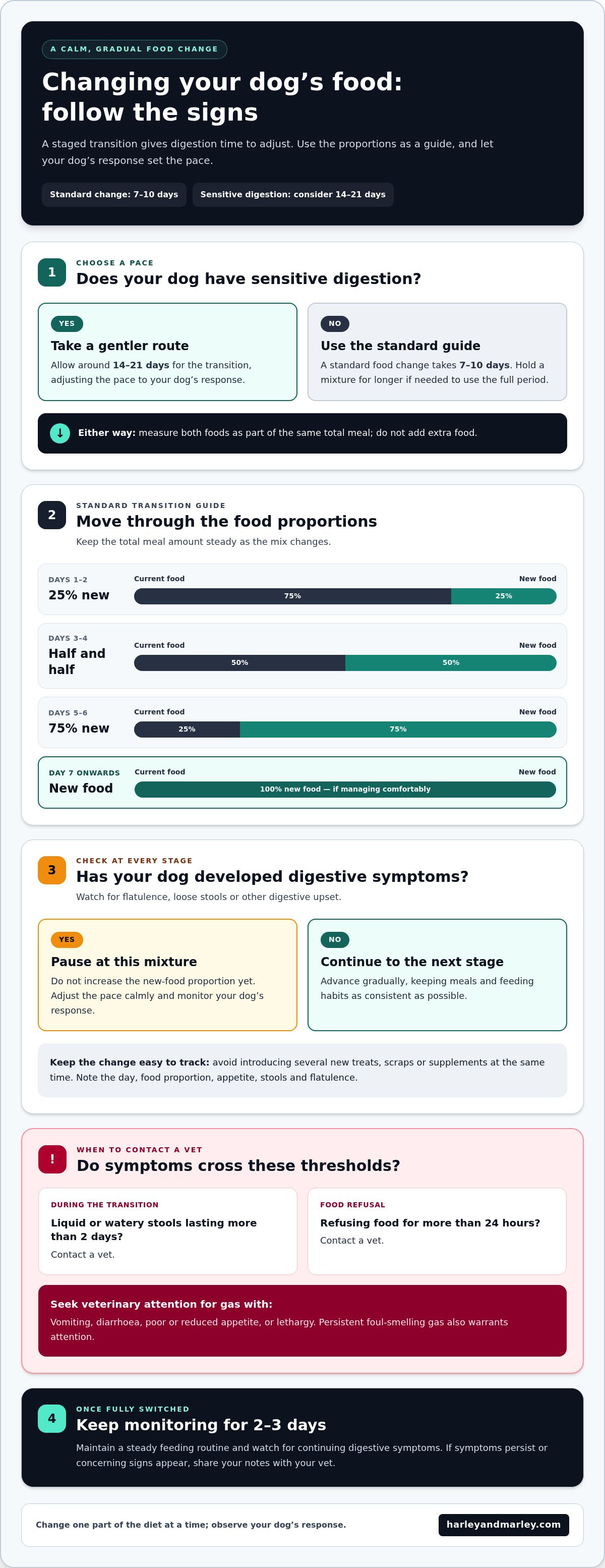
A standard change takes 7-10 days. Mixing the foods allows your dog’s digestive system to adjust gradually to different ingredients and nutrients. Use the proportions below as a guide, measuring each food as part of the same total meal rather than adding extra food.
- Days 1-2: Serve 75% of the current food and 25% of the new food.
- Days 3-4: Mix equal proportions of the current food and the new food.
- Days 5-6: Serve 25% of the current food and 75% of the new food.
- Day 7 onwards: Feed 100% of the new food, provided your dog is managing the change comfortably.
The staged proportions provide a clear starting point, not a reason to rush. To use the full 7-10 days, hold a current mixture for longer before increasing the new food. If flatulence, loose stools or other digestive symptoms appear, pause at that proportion instead of advancing. Make the adjustment calmly and keep an eye on your dog’s response at each stage.
Keep feeding habits as consistent as possible during the transition. Serve meals at the usual times and avoid introducing several new treats, scraps or supplements alongside the new food. Otherwise, if gas or altered stools develop, it will be harder to identify whether the food change or another ingredient contributed. Keep the daily amount appropriate too, since excessive portions can add digestive strain.
Food supplies nutrients that gut bacteria help process. A sudden change in ingredients can alter what reaches the digestive system before it has adjusted, which may contribute to gas or soft stools. A gradual transition gives you time to observe appetite, stool consistency and flatulence. Note changes alongside the day and food proportion; this record makes patterns easier to discuss with your vet.
Once the new food is fully introduced, monitor your dog for a further 2-3 days. Keep the feeding routine steady and watch for continuing digestive symptoms. Contact a vet if liquid or watery stools last more than 2 days during the transition, or if your dog refuses food for more than 24 hours. A dog’s lifestyle, age and previous response to food changes can all affect how smoothly the routine settles.
3. Slow feeders and smaller meals
A dog that eats quickly can swallow excess air, which may contribute to flatulence. A slow feeder or puzzle feeder makes eating take more effort and can help prevent rapid gulping. Watch your dog during a usual meal: if the food disappears in moments and your dog gulps between mouthfuls, changing the feeding setup is a practical first step.
Choose a slow-feeding bowl or puzzle feeder that suits your dog’s size and eating style. Serve the usual meal in it, then observe whether your dog eats at a steadier pace. A puzzle feeder uses the same principle, encouraging your dog to find or move food rather than gulping it from an ordinary bowl. These methods change how a meal is eaten, not its ingredients.
Smaller portions can also help prevent overeating. Divide your dog’s daily food into smaller meals, while keeping the total amount appropriate for its ideal weight, age, activity level and neutering status. Don’t add extra food to each portion. Include treats, scraps and dental chews in the daily allowance, since these also contribute to what your dog eats.
Try one change at a time. For example, introduce a slow feeder first and note whether your dog’s pace, gas and stools change. If gulping continues, keep the slow feeder and divide the daily amount into smaller meals. Changing several feeding habits together makes it harder to identify which adjustment helped.
Use a simple feeding note to track the routine and your dog’s response. Record when meals are served, how quickly your dog eats, and whether flatulence follows. Note appetite and stools too. This can help distinguish gas linked to fast eating from a pattern that appears regardless of feeding pace. Keep other foods and treats consistent during this observation.
A slow feeder isn’t a substitute for veterinary attention when gas comes with other symptoms. Contact a vet if excessive flatulence occurs alongside vomiting, diarrhoea, lack of appetite or lethargy. Those signs can point to a problem beyond gulping air or overeating. A change in appetite or repeated vomiting is especially useful to record, including when it occurs in relation to meals.
Keep the routine manageable. Use the same feeder for each meal, serve measured portions, and review your notes after several feedings. If your dog struggles to eat from a puzzle feeder, choose a simpler slow-feeding option instead. The aim is a calmer pace and suitable portions, not a difficult feeding task.
4. Why Do Dog Farts Smell So Bad?
Strong-smelling gas can form when colonic bacteria ferment carbohydrates that weren’t fully digested. Grains, beans and legumes are examples; this fermentation can produce hydrogen sulphide, a compound associated with a rotten-egg smell. The smell alone doesn’t identify the ingredient responsible or prove that your dog has a food allergy. Track the food and symptoms before drawing conclusions.
Dietary sensitivity is one possible reason a particular food may not suit an individual dog. Gas could occur alongside changes in stools or other digestive symptoms, but flatulence alone doesn’t establish an allergy or intolerance. Compare the ingredient list of the current food with previous foods, treats and table scraps. A clear record can help a vet assess whether the timing suggests a dietary pattern.
Keep the feeding routine consistent while observing your dog. Write down the food, treats and any scraps, then note gas, stool changes and appetite. For example, if smelly flatulence appears after a new treat is introduced, record that alongside the regular kibble rather than changing both foods at once. This step-by-step approach makes possible patterns easier to spot.
If your dog has a sensitive stomach, avoid switching between foods repeatedly in response to each episode of gas. Frequent changes make it harder to tell which ingredients coincide with symptoms. Introduce a different food gradually, and keep other dietary additions steady during the change. If gas worsens with the new food, note the stage of transition and discuss the pattern with a vet.
Some dogs eat kibble as their regular diet; others may move to fresh-cooked food. A switch from kibble to fresh-cooked food should be built up over 14 days. The gradual pace helps you observe changes in digestion as the new food becomes a larger part of meals. Don’t assume that cooked food or any single ingredient will resolve gas for every dog.
Ingredients such as grains, beans and legumes can be harder for some dogs to digest, but removing a broad range of foods without guidance can make the diet unnecessarily restrictive. Focus on what your dog actually eats, including chews and leftovers, rather than blaming an ingredient based on smell alone. A vet can assess persistent digestive symptoms and help interpret your feeding record.
Arrange veterinary attention if excessive gas occurs with vomiting, diarrhoea, lack of appetite or lethargy. A sudden increase in flatulence, particularly with those signs, needs more than a change in kibble. Bring your notes on food, treats, stools and appetite; these details help distinguish a possible dietary pattern from another health concern.
5. Longer transition periods for puppies, senior dogs, and sensitive dogs
A puppy’s food transition is recommended to take 10-14 days. That slower switch gives you time to observe appetite, stools and digestion as the new food becomes part of meals. Keep portions measured and feeding times steady. A change in protein or other ingredients can alter the diet, so avoid adding new treats during the same period.
For senior dogs, use a very slow 14-day food transition. A senior dog’s appetite, weight and usual digestion are useful things to monitor as the food changes. Keep a brief daily record of what was eaten, stool consistency and flatulence. That record can help you distinguish a response to the transition from changes in routine or feeding amount.
Dogs with sensitive stomachs should transition over 14-21 days. If your dog has previously reacted badly to a food change, extend the transition to 14 days. Increase the new food in smaller steps, holding each mixture for longer if digestive symptoms appear. The goal is a steady adjustment, not reaching a particular proportion on schedule despite loose stools or increased gas.
Keep the same measured daily amount throughout the switch, adjusting the mixture rather than adding food. If your dog develops digestive symptoms, stay at the current stage until stools and appetite settle before making another change. Record the date, food proportions and symptoms. If symptoms are severe or persist, discuss the pattern with your vet rather than repeatedly changing foods.
Life stage matters because puppies, adult dogs and senior dogs have different nutritional needs. Check that the new food is intended for your dog’s life stage, and compare its feeding guidance with your dog’s ideal weight and activity. Don’t choose food based on protein alone: the full nutritional profile and the amount fed both matter to the overall diet.
A slower transition is particularly useful when a dog has a history of digestive upset. Maintain a consistent routine, change one food at a time, and monitor appetite, stools, gas and weight during the transition. These observations give you a clearer basis for deciding whether the new diet suits your dog’s digestive health.
For help choosing a food for your dog’s life stage, explore food options for dogs.
Harley & Marley: Medium/Large Breed Complete Food
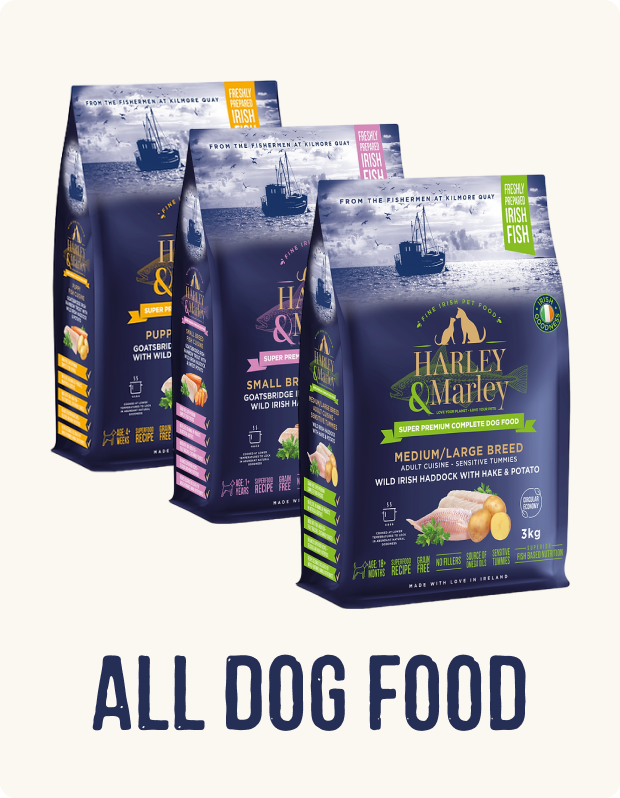
Harley & Marley’s Medium/Large Breed Complete Food is an option for owners choosing a regular diet for medium and large dogs. It is fish-based, and any new food should still be introduced gradually, with your dog’s stools, appetite and flatulence monitored during the transition. Changing food alone may not resolve gas caused by fast eating, overfeeding or a health problem, so keep those factors in view too.
Choose food according to your dog’s life stage and breed size: Harley & Marley also offers Puppy Complete Food, Small Breed Complete Food and Senior Dog Complete Food. If your dog has persistent digestive symptoms or gas alongside vomiting, diarrhoea, loss of appetite or lethargy, seek veterinary advice rather than relying on a food change.
Visit Harley & Marley to explore its complete foods.
Choose a thoughtful next step for your dog
So, can changing dog food reduce gas? It may help when a particular diet is contributing to digestive discomfort, but the best next step is to choose carefully and observe your dog’s response. Keep a simple record of meals and symptoms, and seek veterinary advice if gas comes with signs of illness. This helps distinguish a food-related pattern from a concern that needs medical attention.
For food suited to your dog’s life stage and size, Harley & Marley offers Medium/Large Breed Complete Food, Puppy Complete Food and Small Breed Complete Food. Choosing an appropriate complete food gives you a clear starting point for a gradual transition, rather than changing several parts of the diet at once.
Take the next step at your dog’s pace. Contact Harley & Marley for help exploring food options, and keep your dog’s comfort at the centre of each decision.
Harley & Marley offers food options for dogs
Harley & Marley offers complete food for puppies, small breeds, medium and large breeds, and senior dogs, as well as grain-free dog food. If you’re considering a food change to help address your dog’s gas, explore the range and choose an option suited to your dog.
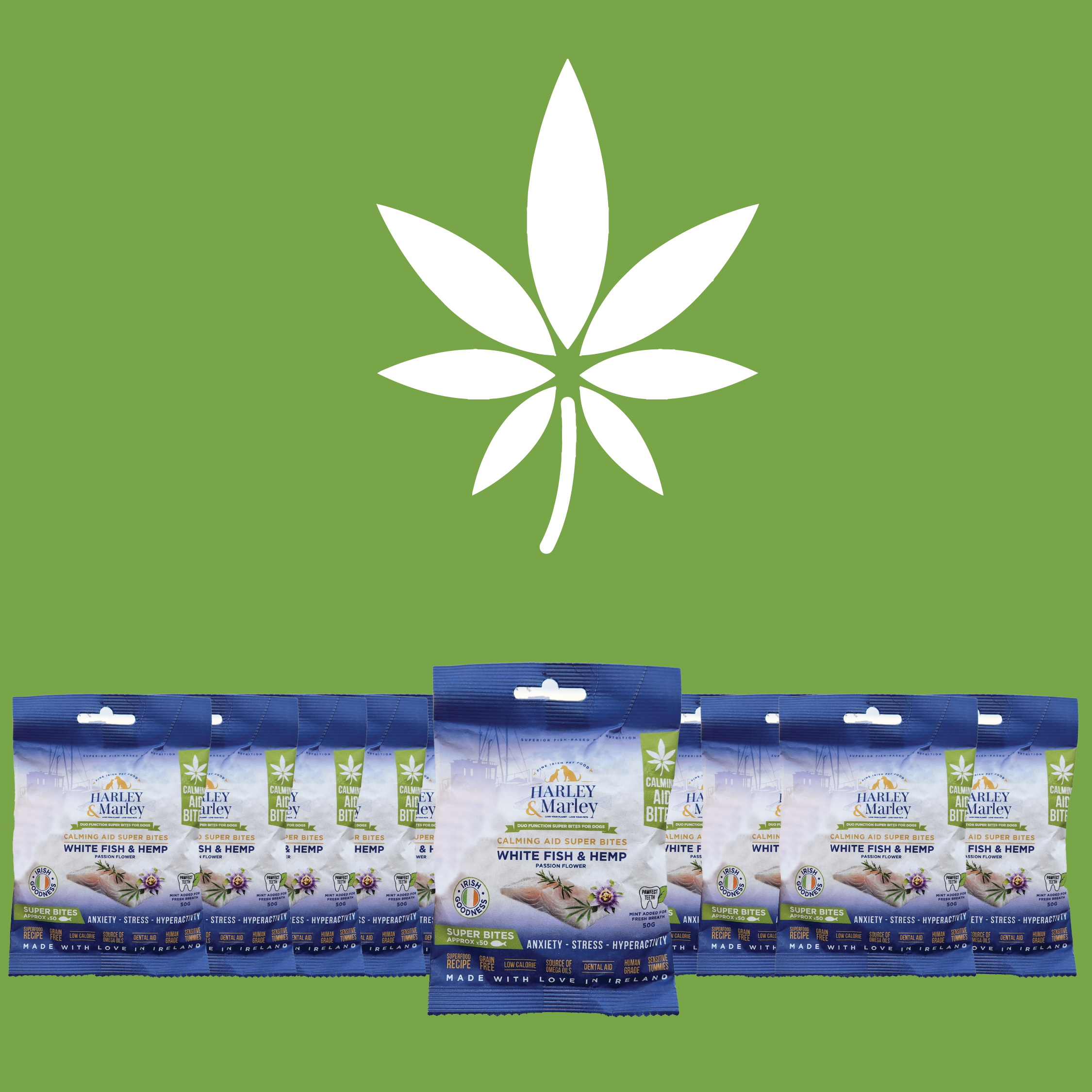
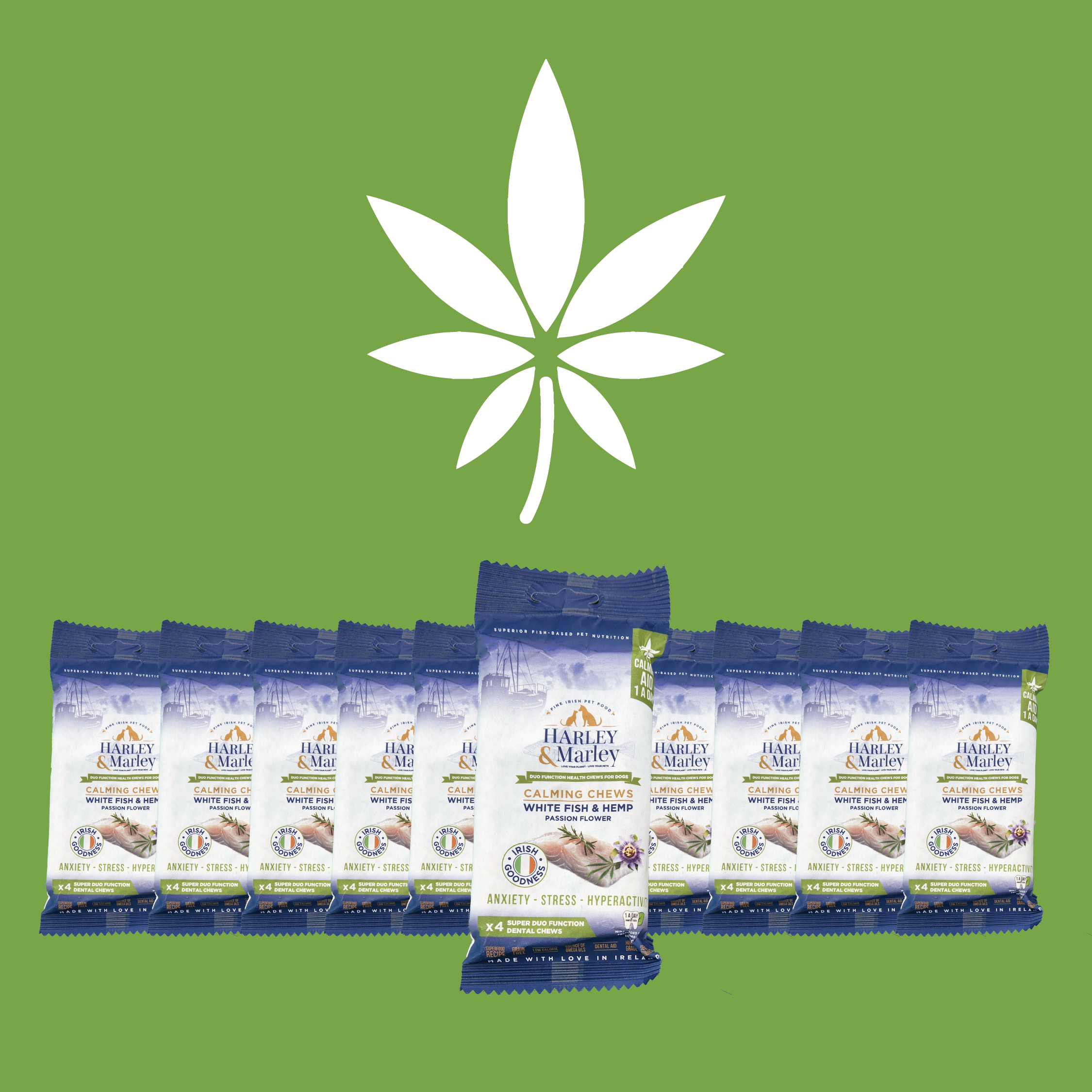
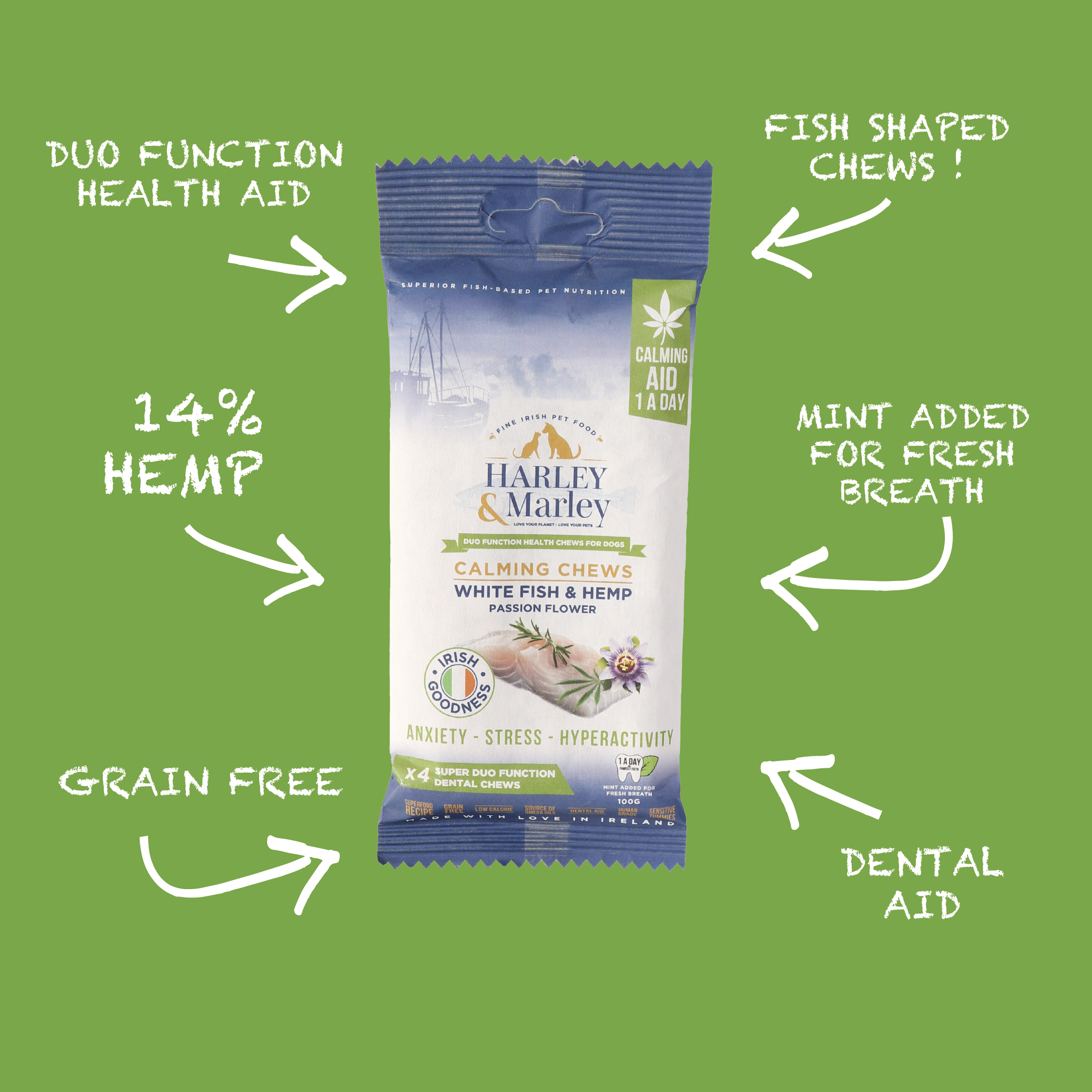
The range also includes chews and bites, fish oil, towels and toys, bundles for dogs, and a monthly food box.
Frequently Asked Questions
Can dog food cause gas?
Yes, changing dog food can reduce gas if the current ingredients are contributing to digestive upset. Some dogs react to particular ingredients, while high-fat foods and dairy can also be associated with flatulence. The effect of a food depends on the individual dog, so note what your dog eats, including treats and scraps, and whether gas or stool changes follow. That record helps identify patterns without removing several foods at once.
Is it okay to switch food quickly in an emergency?
A quick switch isn’t ideal because sudden dietary changes can trigger digestive upset. If a vet has directed an immediate change for a health reason, follow their instructions for the food and feeding routine. If your usual food has run out, avoid adding new treats or scraps as substitutes, and seek veterinary guidance on a suitable short-term plan. Keep notes of any digestive symptoms after the change.
What causes flatulence in dogs?
Flatulence can result from swallowed air, food fermenting in the large intestine, overeating or a sudden diet change. Eating too quickly is one way a dog may swallow extra air; beans or spoiled food can also contribute to digestive gas. Occasional gas is normal. A sudden increase, or gas alongside changes in appetite or stools, is useful information to record for your vet.
Why do dog farts smell so bad?
A strong, rotten-egg smell can occur when colonic bacteria ferment undigested carbohydrates and produce hydrogen sulphide. Grains, beans and legumes are examples of ingredients involved in this process. Smell alone can’t identify a specific food sensitivity or diagnose a health problem. Note whether the odour follows a particular meal, treat or table scrap, and whether it comes with other digestive changes.
How do dog farts work?
Gas builds up in a dog’s digestive tract and leaves the body as flatulence. It can form as gut bacteria ferment food that hasn’t been fully digested, or when a dog swallows air while eating quickly. For example, gas after a gulped meal may have a different trigger from gas that appears after a new ingredient. Recording meal timing and eating pace can help distinguish these patterns.
My dog had loose stools during the transition. Should I start over?
Don’t automatically restart the transition from the beginning. Hold off on increasing the new food and observe your dog’s stools and appetite; a slower change can give digestion more time to adjust. If stools are liquid or watery for more than 2 days, contact a vet. Seek prompt advice sooner if loose stools occur with vomiting, lethargy or loss of appetite.
When should you see a vet for dog gas?
Arrange veterinary attention if excessive gas occurs with vomiting, diarrhoea, lack of appetite or lethargy. Foul-smelling gas or noticeable stomach gurgling several times a week also warrants an examination. A sudden increase in flatulence can sometimes accompany an underlying health condition, so note when it began, what your dog ate and any other changes. These details help the vet assess the whole pattern.
When should you transition more slowly?
Allow 14-21 days for a dog with a sensitive stomach. Puppies are recommended a 10-14-day transition, while senior dogs need a very slow 14-day change. If your dog has previously reacted badly to a food switch, extending the transition to 14 days is recommended. Keep the feeding routine steady and track stools and appetite as the proportions change, so you can spot a response early.