



Can I give my dog fish oil every day, or could a well-meant supplement be too much? Daily use may suit some dogs, but it isn’t right for every dog. Their diet, health, medicines and the amount of omega-3 in the product all matter.
If online advice has left you unsure how much to give or whether different labels can be compared, look beyond the words “fish oil”. Check the EPA and DHA content, introduce any supplement cautiously and watch for unwanted effects. General information can help, but it can’t replace advice tailored to your dog.
This guide explains what to consider before daily use, what to look for on a label and how to introduce a supplement carefully. It also covers when to speak with your veterinary surgeon first, particularly if your dog has a health condition or takes medication. The aim is to help you make a considered decision, not choose an automatic daily dose.
Key Takeaways
- Whether you can give your dog fish oil every day depends on their diet, life stage, health and the supplement itself.
- Compare products by their EPA and DHA information, ingredients and directions, not just the total amount of fish oil.
- Daily use can have downsides. Know which side effects and health circumstances call for veterinary advice.
- Introduce fish oil cautiously and monitor your dog for changes.
- Harley & Marley fish oil is one option to consider as part of your dog’s overall diet, alongside the product label and veterinary guidance.
Can I give my dog fish oil every day? Start with the individual dog
Daily fish oil may suit some dogs, but it isn’t automatically right for every dog. The answer to “can I give my dog fish oil every day” depends on more than your dog’s weight. Their existing diet, life stage, health and the specific supplement all matter.
Fish oil is a supplement, not a substitute for a complete, balanced diet or veterinary care. Before adding it to your dog’s routine, consider what they already eat and why you’re thinking of using it. Check the product’s serving directions and nutrient content too. Oils aren’t interchangeable simply because they share the same name.
What does daily fish oil actually add to a dog’s diet?
Fish oil provides omega-3 fatty acids, including EPA and DHA. These are distinct types of Omega-3 fatty acids found in marine sources. The amount can vary between supplements, so the words “fish oil” alone don’t tell you how much EPA or DHA a serving supplies.
Fish oil is different from fish-based complete food, which is formulated to contribute to a dog’s overall diet. If your dog already eats complete food containing fish, check its nutritional information before adding a separate oil. Consider the whole diet rather than assuming a supplement is needed or that more is always better.
Which dogs need more individual consideration?
Some dogs need a tailored plan before a supplement is added. Speak with your veterinary surgeon first if your dog is a puppy, pregnant or nursing, or has a diagnosed health condition. Do the same if they take medication, have known sensitivities or follow dietary restrictions. These circumstances can affect whether a supplement is appropriate and how it fits with their existing care.
Don’t use fish oil to diagnose or treat a health problem, or delay veterinary advice while waiting to see whether a supplement helps. If you’re considering it for a specific concern, your vet can assess your dog’s circumstances and advise whether it belongs in their overall care plan.
In brief: Daily use may be suitable for some dogs, but a personalised recommendation depends on the individual dog, their diet and the particular product.
How EPA and DHA in fish oil work, and what benefits can be claimed
Fish oil is often discussed in relation to skin, coat and joint health, but a possible role isn’t a promise of results. EPA and DHA are long-chain omega-3 fatty acids that contribute to normal processes in the body, including the regulation of inflammatory responses. Research into their use in dogs is relevant, but outcomes depend on the dog, the amount supplied and the reason for supplementation.
EPA and DHA: the omega-3s to look for
EPA and DHA are not the same as the total amount of fish oil in a bottle or serving. A label may list them separately, together or without a clear breakdown. Check the nutritional information rather than assuming that a larger volume of oil means more of these fatty acids. Tufts University’s veterinary nutrition team explains why supplement decisions need to account for a pet’s individual diet and needs; if you’re unsure, consult with your veterinarian.
Label details help you understand what a supplement adds. They don’t establish, by themselves, that a particular product or amount is right for your dog.
Coat, skin and joints: evidence without overpromising
EPA and DHA are commonly considered for their potential role in supporting skin and coat condition and as part of nutritional approaches to joint concerns. Evidence and expected effects can differ depending on the condition. A supplement isn’t a guaranteed fix, and any visible changes will vary between dogs. Don’t rely on fish oil to diagnose or treat illness. Persistent or concerning changes call for veterinary advice.
Consider the whole diet, not the supplement in isolation. Fish-based complete food contributes to overall nutrition, while a separate fish oil product adds a supplement whose content should be clear from its label. Harley & Marley’s fish-based dog food nutrition guide offers more context on the role of food. If a separate oil seems worth considering after reviewing your dog’s diet and needs, explore Harley & Marley fish oil and read its current label as part of your decision.
Daily fish oil safety: side effects, interactions and common misconceptions
Fish oil is widely used, but daily use isn’t risk-free. The right approach depends on the amount given, the product’s formulation, what else is in your dog’s diet and their individual health. A serving that causes no obvious problem for one dog may not be appropriate for another.
Veterinary literature discusses potential uses of fish oil in specific health contexts, including the therapeutic benefits of fish oil. That research doesn’t mean a supplement suits every dog or can replace diagnosis, prescribed treatment or veterinary monitoring.
What side effects should owners watch for?
Digestive changes, including vomiting or diarrhoea, are possible. Other reported concerns include an oily coat, slower wound healing and a greater tendency to bleed, particularly when intake is high. These effects aren’t inevitable, but don’t dismiss them as harmless if they appear after starting a supplement.
Introduce fish oil only in line with appropriate guidance, and watch for changes in your dog’s appetite, stools and general behaviour. If symptoms persist or worsen, pause the supplement and contact your veterinary surgeon. Seek prompt advice if you notice unusual bleeding or another worrying reaction.
When should a veterinary surgeon guide daily use?
Speak with your veterinary surgeon before adding fish oil if your dog has a diagnosed condition or takes medication. This is especially important if they use blood-thinning medicines or are prone to pancreatitis. A vet can consider your dog’s full diet, health history and other treatments, rather than assessing the supplement in isolation.
Don’t assume a product made for people is suitable for dogs. Human supplements may contain ingredients that aren’t appropriate for canine use, and their serving directions aren’t designed around your dog’s needs. Choose a product intended for dogs and follow its label. If health or medication factors are involved, label directions don’t replace tailored veterinary advice.
If you’re asking, “can I give my dog fish oil every day?”, treat the answer as individual rather than automatic. Stop and seek advice if your dog reacts badly, and don’t alter prescribed care or use fish oil as a treatment without veterinary guidance.
How to choose and introduce fish oil for daily use
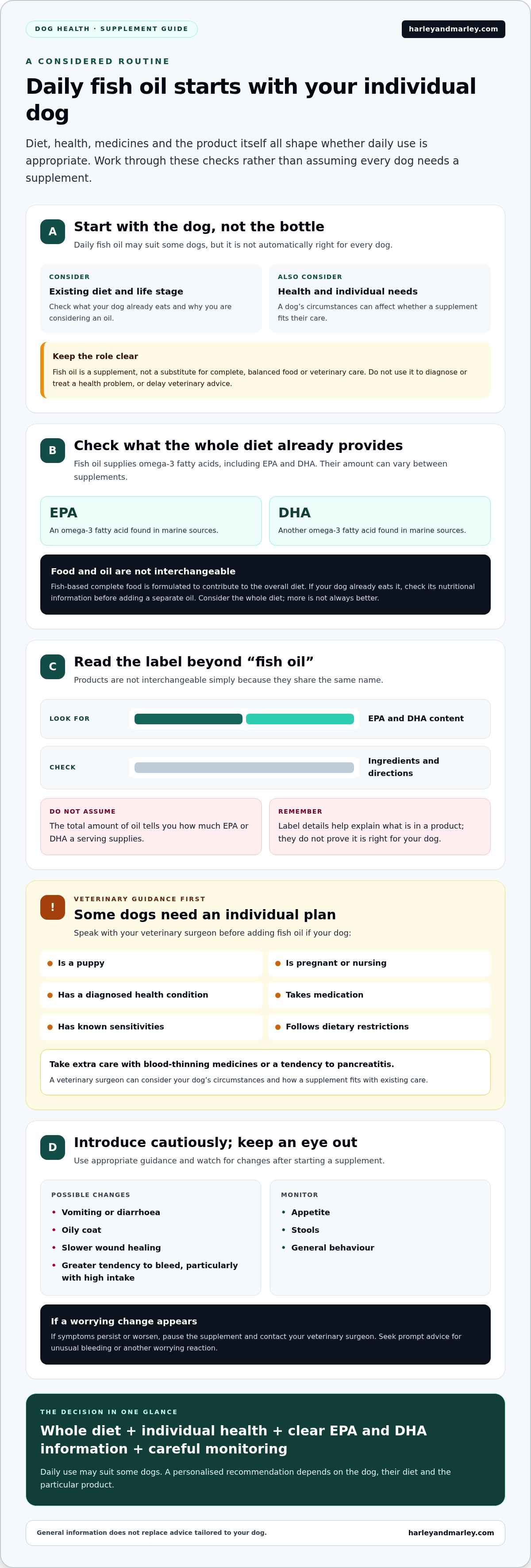
A careful routine starts with the whole diet, not the bottle’s front label. If you’re considering daily fish oil, use this checklist to make an informed choice and monitor your dog’s response. Don’t calculate a universal dose from general online advice: follow the product directions and your veterinary surgeon’s guidance.
- Review your dog’s diet. Note their complete food, treats and other supplements. This helps you understand what they already receive and consider the overall diet before adding anything.
- Compare the label details. Look for EPA and DHA amounts, serving directions, ingredients and storage information. Total oil alone doesn’t show how much of these omega-3 fatty acids a serving provides.
- Get tailored advice where needed. Speak with your veterinary surgeon if your dog has a health condition, takes medication, or has dietary restrictions or sensitivities.
- Introduce it cautiously. Follow the label and veterinary advice. Introduce it gradually only if the product directions and your vet support doing so. Don’t increase the amount simply because your dog seems to tolerate it.
- Monitor and review. Watch your dog’s appetite, stools, skin and coat, and note any other changes. Pause use and seek advice if you notice a concerning reaction.
How should I read a fish oil label?
Check whether EPA and DHA are listed separately, and note the amount per serving if stated. Then read the full ingredient list, feeding directions, storage instructions and expiry information. Label checklist: check EPA and DHA per serving, all ingredients, feeding directions, storage guidance and the expiry date before choosing an oil.
Marketing language alone can’t establish an oil’s purity, freshness or sourcing. Use the information on the label, and don’t assume two products are equivalent because both are described as fish oil.
How can I introduce fish oil and monitor my dog?
Measure the serving as directed rather than estimating, and store the product as instructed. Make a note of when you start and any changes you observe. This gives you a clearer basis for discussing the supplement with your veterinary surgeon if your dog reacts or you’re unsure whether to continue.
There’s no guaranteed result or timeline. The aim is to make a considered choice and notice how your individual dog responds. To review the fish oil option and its current label, explore Harley & Marley fish oil.
Choosing Harley & Marley fish oil as part of a considered routine
Harley & Marley fish oil is an option for owners considering a fish-based supplement for their dog. Start with your dog, not the product: consider their current food, other supplements, health circumstances and whether adding oil fits their nutritional needs. Daily use may suit some dogs, but it isn’t automatically appropriate for every dog.
How fish oil fits alongside complete food
Look at your dog’s whole diet before adding a supplement. Complete food contributes to daily nutrition, so consider its ingredients and feeding guidance alongside treats and other supplements. Harley & Marley’s guide to fish-based dog food provides broader context for thinking about food as part of an overall nutrition routine.
If your dog’s stools change after an adjustment to their diet or the introduction of a supplement, note what changed and when. Loose stools can have different causes, so don’t assume that changing food or adding fish oil will resolve them. Read the dog food guidance for loose stools for further context, and speak with your veterinary surgeon if the change persists or concerns you.
Before choosing an oil, read its current label. Check the ingredients, serving directions and storage information, and look for clear EPA and DHA details where provided. Follow the product directions, and don’t estimate an amount from the total oil alone. If you’re unsure how a supplement fits your dog’s food or health needs, seek tailored veterinary guidance.
A confident next step for dog owners
So, can I give my dog fish oil every day? Daily use may be appropriate for some dogs, but the answer depends on the individual dog, their total diet and the specific supplement. A label can help you understand the product, but it can’t determine whether supplementation is right for every health circumstance.
If your dog has a diagnosed condition, takes medication or has a dietary restriction, discuss fish oil with your veterinary surgeon before starting. Harley & Marley fish oil is one option within a considered nutrition routine, guided by your dog’s needs and the product label. Explore Harley & Marley fish oil, and use veterinary advice for questions about suitability or daily use.
Make a considered choice for your dog
So, can I give my dog fish oil every day? Daily use may suit some dogs, but the right decision depends on your dog’s overall diet, health and the supplement you choose. Check the label for clear serving directions and EPA and DHA information, and introduce fish oil cautiously rather than assuming every product or serving is the same.
If your dog has a health condition, takes medication or develops a concerning reaction, speak with your veterinary surgeon. Fish oil is a supplement, not a replacement for complete food or professional care.
Harley & Marley offers fish oil for dogs as part of a range focused on fish-based canine nutrition. If it fits your dog’s needs and veterinary guidance, explore Harley & Marley fish oil and review its current label as you plan a considered routine.
A thoughtful choice starts with your individual dog. With the right information, you can make the next step with confidence.
Frequently Asked Questions
Can I give my dog fish oil every day?
Some dogs may be able to take fish oil daily, but it isn’t right for every dog. The decision depends on your dog’s complete diet, life stage, health and the supplement’s directions and contents. If your dog has a diagnosed condition, takes medication or has dietary restrictions, speak with your veterinary surgeon before starting. Fish oil is a supplement, not a replacement for complete food or prescribed care.
How much fish oil can I give my dog daily?
There isn’t one daily amount that’s suitable for every dog. Serving decisions depend on your dog’s needs and the specific product, including how much EPA and DHA it provides per serving. Follow the label and your veterinary surgeon’s advice rather than calculating a dose from total oil or a generic online guide. Ask your vet for a tailored amount, especially if you’re considering the supplement for a health concern.
Can fish oil cause side effects in dogs?
Yes. Fish oil can cause digestive upset, including vomiting or diarrhoea. Other reported concerns include an oily coat, delayed wound healing and increased bleeding risk, particularly with higher intake. Monitor your dog after introducing it. If digestive changes persist, pause use and seek veterinary advice; contact your veterinary surgeon promptly if you notice unusual bleeding or another worrying reaction. Don’t assume a new symptom is harmless because it began after starting a supplement.
Should I give my dog fish oil with food?
Check the product’s feeding directions first and follow them. If those directions allow, adding the measured serving to your dog’s meal can be a practical way to give it as part of their routine. Don’t exceed the stated serving or use food to disguise a supplement if your dog refuses it or seems unwell. If you’re unsure how to give the product, ask your veterinary surgeon for guidance.
Can I give my dog fish oil if they already eat fish-based food?
Possibly, but review the full diet before adding a separate supplement. Fish-based complete food contributes to your dog’s overall nutrition, and the amount and type of nutrients can vary between foods and oils. Read the food and supplement labels, and don’t assume that fish in the diet means an oil is either needed or unsuitable. Your veterinary surgeon can help assess whether an additional supplement fits your dog’s needs.
How long does it take for fish oil to make a difference in dogs?
There’s no guaranteed timeframe, and some dogs may show no obvious change. Research guidance suggests that possible skin or coat changes may take around 4 to 8 weeks, whilst effects related to joints may take up to 12 weeks. These are broad estimates, not promises. The reason for supplementation, the product and your dog’s individual response all matter. Follow your veterinary surgeon’s advice about whether and when to review its use.
Should I ask my veterinary surgeon before giving my dog fish oil?
Yes, seek advice before starting if your dog has a diagnosed condition, takes medication, is prone to pancreatitis, or is a puppy, pregnant or nursing. A veterinary surgeon can consider your dog’s health history and complete diet, and help assess the product and serving directions. If your dog develops a persistent or concerning reaction after starting fish oil, stop giving it and contact your vet for individual guidance.