


Grain-free isn’t automatically the answer for a dog with a sensitive stomach. The best dog food for a sensitive stomach in Ireland is generally a complete, easily digestible recipe with a clearly identified protein and ingredients your dog tolerates. Puppies need food formulated for growth. The right choice depends on your dog’s age, symptoms and response to food.
Digestive upsets can be worrying, and changing food too quickly may make discomfort worse. Discuss persistent diarrhoea with a vet before changing your dog’s diet. Vomiting, blood in the stool, weight loss or lethargy also warrant veterinary attention.
This guide explains which food formats and ingredients may suit sensitive dogs, why grain-free isn’t necessary for every pet, and how to move onto a new food gradually over 7-10 days. You’ll also find practical guidance on puppy-specific nutrition, so you can make a more considered choice and know when food changes are not the only step to consider.
Key Takeaways
- Choose a complete food that suits your dog’s age and digestion; wet, dry and grain-free options each have different considerations.
- Compare ingredient lists for clearly identified proteins and simple recipes, and remember that grain-free food isn’t necessary for every dog.
- Introduce a new food gradually over 7-10 days, adjusting the pace if your dog’s digestion becomes unsettled.
- Learn how digestive sensitivity differs from food intolerance and allergy, so you can better recognise patterns in your dog’s symptoms.
- For puppies, select food formulated for growth and keep their changing nutritional needs in mind as they mature.
What is the best dog food for sensitive stomachs in Ireland?
The best dog food for a sensitive stomach in Ireland is a complete recipe your dog tolerates, with a clear protein source and suitable food format. Irish pet shops and online pet-food retailers sell sensitive-digestion options; delivery depends on the retailer or brand, so choose an Irish seller that delivers to your address.
Food formats for sensitive stomachs
Dry food is convenient to portion and store, while wet food has a soft texture and can support hydration. A dog with sensitive digestion may find one format easier to eat, but texture alone doesn’t show whether a recipe will suit. Compare the protein and other ingredients, then keep meals consistent as you observe your dog’s response.
Semi-moist food may be easier to chew and digest, making it an option for a picky eater or a dog that struggles with firmer pieces. Look at the complete ingredient list, not just the texture or front-of-pack claims. A named protein such as salmon can make the main animal ingredient easier to identify.
Fresh food is another format to consider, but its ingredients, storage needs and feeding instructions matter. Raw food also requires adequate fridge and freezer space. Whichever format you choose, avoid abrupt changes and keep treats or table scraps from obscuring how the main food suits your dog.
Grain-free and rice-based choices
Grain-free recipes remove common grains, often replacing them with ingredients such as sweet potato or peas. That doesn’t make them automatically gentler: not every dog needs a grain-free diet, and some tolerate grains such as rice or oats well. Compare the full recipe with your dog’s known sensitivities rather than treating “grain-free” as a guarantee.
Rice-based food can be a practical option if your dog tolerates rice and the complete recipe suits their needs. Check for a clearly named protein, such as salmon, and review the other ingredients, including any prebiotic fibres. One ingredient doesn’t determine whether a whole food is suitable, so assess the recipe as a whole.
Also distinguish grain-free from hypoallergenic food. Grain-free describes the grains left out; hypoallergenic diets use hydrolysed proteins and avoid common allergens. If symptoms persist or occur alongside itchy skin or ear trouble, ask your vet whether a specialised diet is appropriate. Choose a complete food for your dog’s life stage and introduce it gradually.
❓ What causes sensitive stomachs in dogs?
Sudden diet changes, food allergies, fillers, stress and underlying illness can all contribute to digestive upset. Persistent diarrhoea should be discussed with a vet before changing food; frequent vomiting, blood in the stool, weight loss, lethargy or sudden appetite loss also need veterinary assessment.
Causes of digestive sensitivity
Digestive issues don’t always start with a dog’s main food. A sudden switch, overfeeding, stress, unsuitable scraps, a parasite or an infection can cause gas, vomiting and soft stools. Pancreatitis and other underlying conditions can produce similar signs, so changing food alone may not address the cause.
Keep a simple record of meals, treats and symptoms. For example, note whether loose stools follow a new food, extra chews or a stressful change in routine. This can help reveal a recurring pattern without assuming that a particular ingredient is responsible.
Digestible ingredients and protein choices
Stomach and intestine diets use highly digestible proteins, which may be easier for a dog to process. A limited-ingredient recipe can also make the food’s components clearer. Look for a named protein near the top of the ingredient list, rather than a vague description. Change one main food at a time to make your observations more useful.
Veterinary hydrolysed-protein diets differ from ordinary over-the-counter sensitive-stomach foods: the proteins are broken down, and the diets avoid common allergens. Over-the-counter recipes may use a named or novel protein, but they aren’t the same as a veterinary elimination diet. Persistent symptoms call for veterinary guidance on which approach fits.
Sensitive digestion, intolerance and allergies
Sensitive digestion describes a pattern of symptoms, such as vomiting, gas or diarrhoea, but doesn’t identify a specific cause. Food intolerance means difficulty tolerating an ingredient; a food allergy involves an adverse reaction to a food protein. Digestive signs alone don’t establish which explanation applies.
Look for symptoms that recur alongside other changes. Itchy skin, ear trouble or repeated flare-ups alongside digestive issues are worth discussing with a vet. A careful food history matters: note the protein sources, treats and supplements your dog eats, since extras can complicate the picture.
Grain-free diets and digestion
Grain-free food removes common grains, often replacing them with ingredients such as peas or sweet potato. It isn’t automatically easier to digest, and many dogs tolerate suitable grains such as rice or oats. Choose according to your dog’s observed tolerance rather than treating grain-free as a general solution.
Grain-free and hypoallergenic aren’t interchangeable terms. The first describes the grains excluded; the second refers to diets using hydrolysed proteins and avoiding common allergens. If grain-free is appropriate for your dog’s needs, explore grain-free food options as one format to consider, not as a diagnosis or treatment.
Gradually transitioning dog food
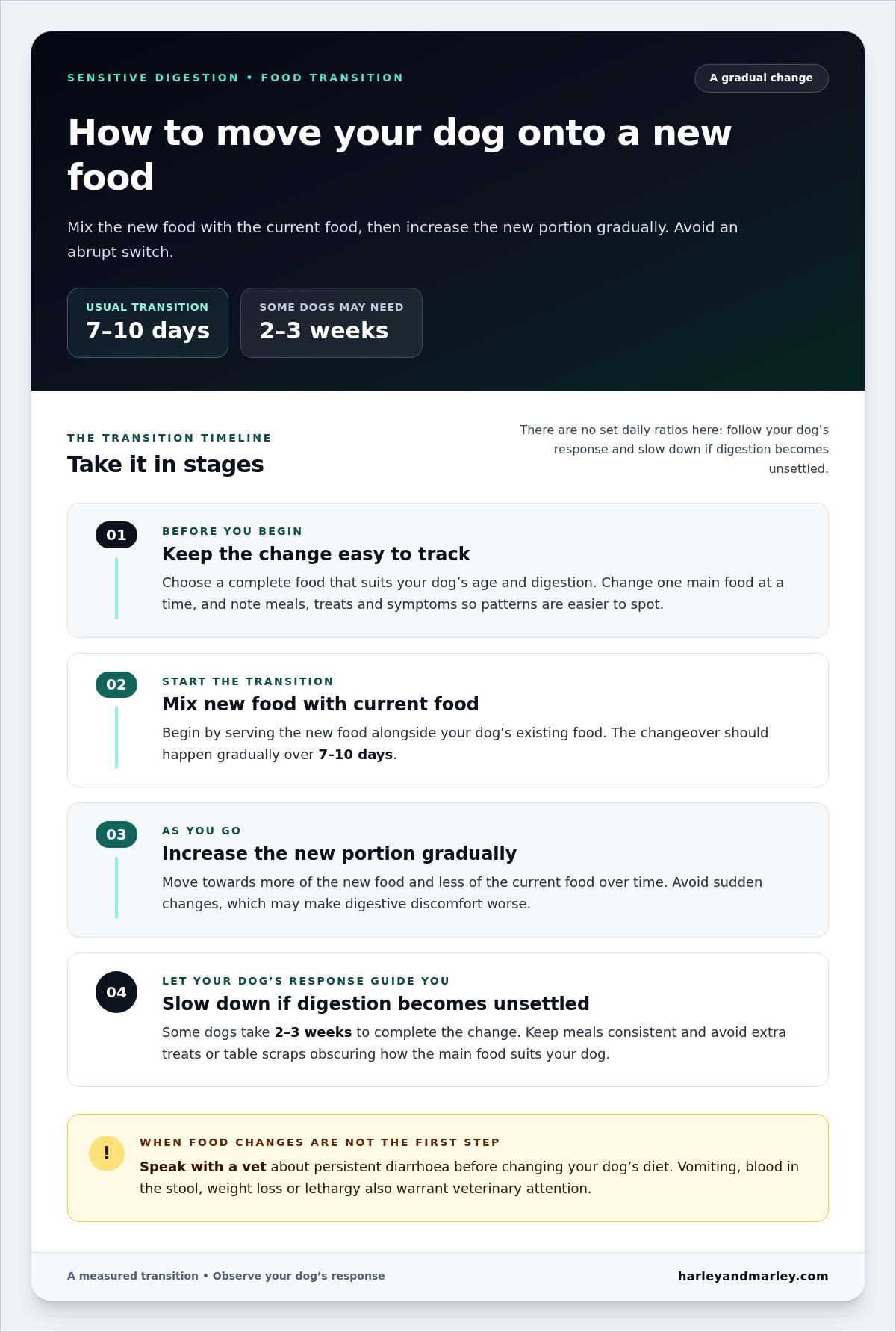
Mix the new food with your dog’s current food over 7-10 days, increasing the new portion gradually. Some dogs take 2-3 weeks to complete the change, so slow the progression if digestive upset appears.
A staged transition makes it easier to notice how your dog responds to a new recipe. Use the same measured daily amount, divided between meals, and keep feeding times consistent. For a typical transition, adjust the proportions as follows:
- Days 1-2: Mix 75% current food with 25% new food.
- Days 3-4: Offer equal portions of current and new food.
- Days 5-6: Mix 25% current food with 75% new food.
- Days 7-10: Complete the switch, provided your dog is coping well.
These stages are a guide, not a reason to hurry. If your dog develops loose stools, vomiting or reduced appetite, pause at the current mix rather than increasing the new food. Discuss persistent diarrhoea with a vet before changing your dog’s diet. Frequent vomiting, blood in the stool, lethargy or sudden appetite loss also need veterinary assessment.
Keep the rest of your dog’s diet steady during the change. Adding chicken, turkey, new chews or table scraps at the same time makes it harder to identify what caused a reaction. If allergies are suspected, changing one protein source at a time helps keep the food record clear. Include treats and flavoured supplements, too.
Once the new food is fully introduced, keep portions and mealtimes consistent. Overfeeding can cause soft stools and may look like food intolerance, so follow the feeding guidance for your dog’s weight and life stage. Keep fresh water available, especially if your dog mainly eats dry food.
Don’t judge the result after just a few meals. Allow 4-6 weeks on the new food before deciding whether it is helping your dog’s sensitive stomach. During that period, note stool quality, appetite, vomiting and any changes in energy or coat condition. Avoid introducing another food during the assessment, unless a vet advises a different plan.
How long should a safe food transition take? Plan for 7-10 days, using the staged proportions above; some dogs need 2-3 weeks. If digestive symptoms persist or worsen, veterinary assessment matters more than continuing a food trial.
Ingredients to look for in sensitive-stomach food
Start with the ingredient list, not claims on the front of the pack. A named protein, straightforward recipe and suitable fibre sources make comparisons more useful.
Limited-ingredient recipe choices
A limited-ingredient recipe can make it easier to identify what your dog eats. Look for a clearly named protein near the top of the list, then compare every other ingredient with your dog’s known sensitivities. For example, a recipe built around salmon may be easier to assess than one listing several animal proteins without clear detail.
A novel protein is one your dog hasn’t commonly eaten, such as duck or salmon for a dog usually fed chicken. Novel doesn’t automatically mean suitable: your dog’s feeding history matters. Keep the chosen recipe consistent, since adding chews, scraps or flavoured supplements introduces other ingredients and makes reactions harder to interpret.
Ingredient labels and foods to avoid
Read the complete label and note named proteins, grains, starches, oils and added fibres. Potato or sweet potato may replace grains in some recipes, but grain-free food isn’t inherently better. Avoid recipes containing an ingredient your dog has reacted to, and don’t assume artificial additives alone explain digestive symptoms.
Check whether the food is complete and suitable for your dog’s life stage. Then compare ingredients across foods, treats and supplements. A carefully chosen main meal can be undermined by a chew containing a protein your dog is avoiding.
Some ingredients can support digestive balance. Prebiotic fibres such as FOS, MOS and psyllium can contribute to balanced digestion; omega-3 fatty acids are another ingredient group to notice. These features don’t make every recipe suitable, so weigh them alongside the protein source and your dog’s individual tolerance.
Crude protein and fat figures can help compare labels, but they aren’t a diagnosis or a universal prescription. Crude protein and fat figures are only one part of comparing foods for sensitive digestion. Consider these figures with the full recipe, feeding directions and your dog’s needs, rather than choosing food from one number alone.
Can an elimination diet identify food allergies? A veterinarian can guide a controlled diet trial and assess whether symptoms change when potential allergens are removed. Keep other foods and treats consistent during the trial, because extra protein sources can make the result difficult to interpret.
If digestive symptoms persist alongside itchy skin, ear trouble or repeated flare-ups, veterinary guidance can help determine whether a hypoallergenic diet is appropriate. Veterinary hydrolysed-protein diets differ from ordinary sensitive-stomach foods, so don’t treat a limited-ingredient recipe as an equivalent substitute.
What is the difference between sensitive digestion, food intolerance, and food allergy in dogs?
These terms describe different clues, not interchangeable diagnoses. A dog with digestive symptoms may need a food review, but vomiting, diarrhoea or gas can also have causes unrelated to diet.
Sensitive digestion is a broad description of recurring digestive upset, such as soft stools, flatulence or vomiting. It doesn’t identify the cause. A sudden food change, stress, overfeeding or an underlying health condition may produce similar signs, so the pattern and timing matter.
Food intolerance describes difficulty tolerating a particular food or ingredient. Digestive signs may recur after eating it, but one unsettled meal doesn’t establish intolerance. Record the food, treats and symptoms, including whether the same ingredients appear in more than one item.
Food allergy is an adverse response to an ingredient, often a protein. Digestive symptoms can occur, and persistent digestive trouble alongside itchy skin, ear problems or repeated flare-ups is worth discussing with a vet. Symptoms alone cannot identify the responsible ingredient.
Grain-free and hypoallergenic foods are not the same. Grain-free recipes remove common grains, often replacing them with ingredients such as peas or sweet potato. Hypoallergenic diets use hydrolysed proteins and avoid common allergens. A grain-free label therefore doesn’t mean a food is suitable for a dog with an allergy.
Over-the-counter sensitive-stomach food may have a limited ingredient list or a clearly named protein. A veterinary hydrolysed-protein diet uses proteins broken down into smaller components. It’s a different approach, used with veterinary guidance when symptoms persist. Don’t treat an ordinary sensitive-digestion recipe as a substitute for a supervised diet trial.
To assess food patterns, write down what your dog eats and when symptoms appear. Include chews, table scraps and flavoured supplements, not just the main meal. Changing several foods at once makes it harder to link a reaction to a particular ingredient. Keep feeding consistent while noting stool quality, appetite, vomiting and skin or ear changes.
Discuss persistent diarrhoea with a vet before changing your dog’s diet. Seek veterinary assessment for frequent vomiting, blood in the stool, weight loss, ongoing diarrhoea, lethargy or sudden appetite loss. These signs need more than trial-and-error food changes.
If grain-free food is one option you’re considering, explore grain-free dog food as a dietary choice, not proof of an allergy or treatment for its cause.
Harley & Marley: Medium/Large Breed Complete Food
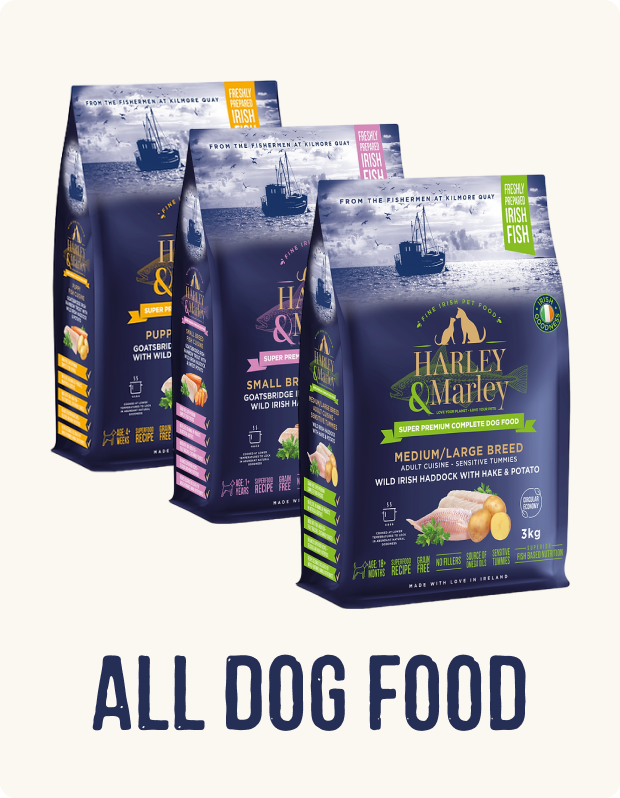
Harley & Marley’s Medium/Large Breed Complete Food is one complete food option for owners comparing recipes for larger dogs. The fish-based range includes separate complete foods for puppies, small breeds, medium and large breeds, and senior dogs. Choosing food for your dog’s life stage and size helps narrow the options, but it doesn’t diagnose or treat persistent digestive symptoms.
Compare the ingredient information with your dog’s feeding history, then introduce any new food gradually. If your dog has ongoing diarrhoea, frequent vomiting, blood in the stool or weight loss, seek veterinary assessment before relying on a food change.
Explore Harley & Marley’s complete food options at harleyandmarley.com.
Make your dog’s next food choice with confidence
Turn your observations into a clear feeding decision. Note what your dog eats, how their digestion responds, and which ingredients appear in the food and treats. That record can help you compare recipes thoughtfully and have a more focused conversation about your dog’s needs.
Choosing the best dog food for a sensitive stomach in Ireland also means matching food to life stage and size, rather than relying on a label alone. Harley & Marley offers Medium/Large Breed Complete Food, Puppy Complete Food and Small Breed Complete Food, with options to explore for different dogs.
If you’re considering one of these foods, contact Harley & Marley for help with your next step. Keep your dog’s individual symptoms in view, and seek veterinary advice for persistent or concerning signs. A considered choice, made at your dog’s pace, is a positive way forward.
Frequently Asked Questions
How long does it take for a new dog food to settle?
Allow 7-10 days for the food change itself, though some dogs take 2-3 weeks to adjust. To judge whether the recipe is helping, give it 4-6 weeks once the transition is complete, unless symptoms worsen. Keep meals and extras consistent during this period, and record stool quality, appetite and vomiting. Persistent diarrhoea or other concerning signs needs veterinary attention rather than a longer food trial.
Dry, wet or hypoallergenic: which is best?
Choose based on your dog’s eating habits, hydration and symptoms, not the format alone. Wet food has a soft texture and can support fluid intake; dry food is easy to portion, but keep fresh water available. Hypoallergenic diets use hydrolysed proteins and avoid common allergens, making them different from ordinary sensitive-digestion recipes. Persistent symptoms, especially alongside skin or ear problems, call for veterinary guidance.
How else can I help my dog with a sensitive stomach?
Keep feeding predictable: offer smaller meals two or three times a day instead of one large serving, and use consistent mealtimes. Keep fresh water available, particularly if your dog mainly eats dry food. Avoid table scraps, and account for chews, treats and flavoured supplements. Introducing several new extras together can make it difficult to tell what is linked to digestive changes.
Is grain-free or rice-based better for a sensitive stomach?
Neither is automatically better; choose according to your dog’s tolerance and the whole recipe. Grain-free foods often replace grains with ingredients such as peas or sweet potato, while many dogs tolerate rice or oats. Check the protein and other ingredients as well as the grain source. A grain-free label alone doesn’t show that a food will suit your dog’s digestion.
My dog has a sensitive stomach and itchy skin. Are they related?
Itchy skin and digestive upset can occur together, but they don’t prove that food is the cause. Repeated digestive symptoms alongside itching, ear trouble or recurring flare-ups are useful details to record and discuss with a vet. Note meals, treats and supplements, including protein sources such as chicken or turkey. Veterinary guidance can help assess whether allergy is a concern and whether a specialised diet is appropriate.
Should I add a probiotic alongside sensitive dog food?
Don’t add a probiotic automatically: prebiotics and probiotics can support digestive balance, but supplements also add ingredients to the diet. Check what the complete food already contains and consider whether a supplement could make a food trial harder to interpret. If your dog has ongoing symptoms or a suspected allergy, discuss supplements with your vet before introducing one, and keep the rest of the feeding routine consistent.
What ingredients can I feed my dog with a sensitive stomach?
Look for a complete recipe with a clearly named protein and ingredients your dog has tolerated. Salmon, turkey or duck may be considered novel proteins if they’re unfamiliar to your dog, but novelty alone doesn’t make a food suitable. Prebiotic fibres such as FOS, MOS or psyllium can support balanced digestion. Introduce one recipe at a time and keep treats consistent so you can track responses.
What’s the difference between grain-free and hypoallergenic dog food?
Grain-free describes a recipe that excludes common grains, often using alternatives such as peas or sweet potato. Hypoallergenic food uses hydrolysed proteins and avoids common allergens. The terms aren’t interchangeable: grain-free doesn’t necessarily avoid the protein causing a reaction. If symptoms persist, particularly with itchy skin or ear trouble, veterinary guidance can help determine whether a specialised diet is suitable.