


What if the medicated shampoo you're scrubbing into your dog's coat is actually masking a much deeper nutritional deficiency? It’s incredibly disheartening to spend €40 on a chemical-heavy topical treatment, only to see those persistent white flakes return to your dog's fur just days later. You want your companion to feel comfortable and look their best, yet the cycle of scratching and shedding never seems to end. We understand that frustration, especially when you're worried that these skin issues signal a more significant health concern.
In this 2026 guide, you'll learn how to accurately identify dog dandruff causes and solutions by looking beneath the surface. We’ll demonstrate why a high-potency, fish-based nutritional strategy is the most effective way to repair the skin barrier permanently. By the end of this article, you’ll have a clear, sustainable feeding routine designed to transform a dull, itchy coat into a glossy, flake-free sign of vitality. We are moving beyond temporary fixes to explore how fresh Irish fish and essential Omega-3s provide the biological foundation for lasting skin health, whilst ensuring your dog feels their absolute best.
Key Takeaways
- Learn to distinguish between dry and oily seborrhoea to ensure you are applying the correct corrective measures for your dog's specific skin type.
- Identify the primary dog dandruff causes and solutions, ranging from environmental triggers like central heating to the "grooming gap" often seen in senior dogs.
- Understand why traditional land-meat proteins can act as inflammatory triggers and how transitioning to fish-based "novel" proteins supports a calm immune system.
- Discover the "6-week rule" for skin cell regeneration and why marine-sourced EPA and DHA are scientifically superior for repairing the skin barrier from the inside out.
- Establish a sustainable, low-stress grooming and nutritional routine that replaces temporary topical fixes with long-term biological health.
What is Dog Dandruff? Identifying Flakes and Seborrhoea
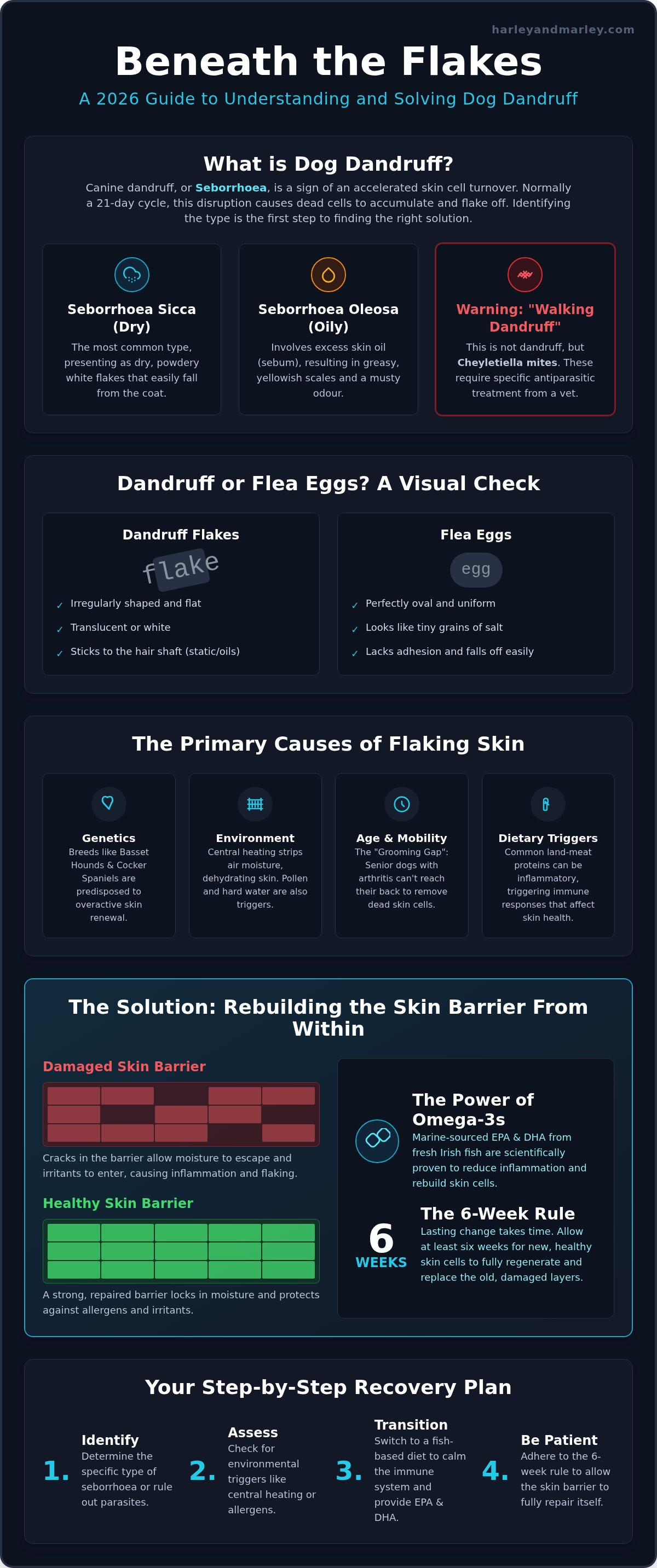
Dandruff is the visible result of an accelerated skin cell turnover. Normally, canine skin cells mature and shed over a cycle of approximately 21 days, but when this biological rhythm is disrupted, dead cells accumulate and flake off in large, noticeable clumps. This condition is clinically referred to as seborrhoea, a common manifestation found amongst various common dog skin disorders. Understanding dog dandruff causes and solutions begins with identifying which specific type of seborrhoea is affecting your companion, as the treatment paths differ significantly.
Seborrhoea Sicca is the most frequent variety, presenting as dry, powdery white flakes that often fall away when your dog shakes. In contrast, Seborrhoea Oleosa involves an overproduction of sebum, the skin's natural oil. This results in greasy, yellow-ish scales that cling to the hair shaft and often emit a distinct, musty odour. You should also be aware of "Walking Dandruff," which is actually a misnomer. These moving flakes are actually Cheyletiella mites, tiny parasites that live on the skin surface and require specific antiparasitic treatment rather than a purely nutritional approach.
The skin barrier function is the biological "seal" that locks in essential moisture whilst shielding the body from environmental irritants, and its failure is the primary reason why skin becomes dehydrated and begins to flake.
Dandruff vs. Flea Eggs: How to Tell
It’s easy to mistake flakes for flea eggs, but a quick visual audit reveals the truth. Dandruff is irregularly shaped, flat, and translucent, whilst flea eggs are perfectly oval, uniform specks that resemble tiny grains of salt. If you're unsure, perform the "Adhesion Test." Dandruff tends to stick to the hair shaft due to static or natural oils, whereas flea eggs lack any adhesive coating and will easily fall off onto your furniture or bedding. You should also check for "flea dirt," which are tiny black specks of digested blood that turn red when placed on a damp paper towel.
When Should You Worry About Flakes?
Occasional flaking during a cold Irish winter is often just "winter skin" caused by low humidity and the drying effects of central heating. However, chronic dandruff warrants a more thorough investigation into dog dandruff causes and solutions. Red flag symptoms include significant hair loss, a foul odour, or intense scratching that leads to secondary infections. Persistent flaking can sometimes be a secondary symptom of underlying hormonal issues, such as hypothyroidism, where the body's metabolism slows down and directly impacts the health and vitality of the skin and coat.
The Root Causes: Why Your Dog’s Skin is Flaking
While we've identified what flakes look like, understanding the underlying dog dandruff causes and solutions requires looking at your dog's lifestyle and biology. Genetics play a massive role. Breeds like Basset Hounds and Cocker Spaniels are biologically predisposed to primary seborrhoea, where the skin's renewal process is naturally overactive. Additionally, sudden stress or anxiety can trigger a "telogen effluvium" response. This leads to rapid shedding and a temporary increase in visible flakes as the body redirects energy away from non-essential functions like coat maintenance.
Environmental and Seasonal Factors
Modern Irish homes often exacerbate skin issues. Forced-air central heating strips moisture from the air, which in turn dehydrates your dog's epidermis. This lack of humidity causes the skin barrier to crack and flake. External factors like hard water or frequent dips in chlorinated pools further deplete natural oils. Even summer brings challenges; pollen allergens often cause inflammation on the belly and paws, leading to dry, flaky patches that are frequently mistaken for simple dandruff. Identifying these environmental dog dandruff causes and solutions is the first step toward restoring your dog's comfort.
Mobility, Age, and Hygiene
There is a significant "Grooming Gap" that many owners overlook. As dogs age, arthritis and reduced flexibility often prevent them from reaching the base of their tail or their back to groom away dead cells. When self-cleaning stops, these cells accumulate. This is why choosing the right senior dog food Ireland becomes vital. If they can't groom the flakes away, we must support the skin's health from within to reduce the rate of cell turnover.
Overweight dogs face similar hurdles. Skin folds and hard-to-reach areas become breeding grounds for greasy Seborrhoea Oleosa. Holistic hygiene is essential, including senior dog dental health Ireland, as oral bacteria can worsen skin infections if a dog licks an itchy spot. To maintain a consistent, skin-supportive diet for your aging companion, consider how a fish-based monthly food box can simplify their care routine. This ensures they receive the high-potency fish oils required to maintain a supple, comfortable coat regardless of their mobility levels.
The Diet-Dandruff Connection: Why Land-Meats May Be the Culprit
Many owners diligently scrub their dogs with medicated shampoos, yet the flakes persist because the internal inflammatory trigger remains untouched. While environmental factors are significant, the most overlooked dog dandruff causes and solutions often lie within the dog's bowl. Land-meat proteins, specifically chicken and beef, are amongst the most common allergens in the canine world. When a dog’s immune system misidentifies these proteins as threats, it triggers a systemic inflammatory response that manifests as red, itchy, and flaking skin. Switching to a poultry free dog food Ireland removes these frequent triggers, allowing the skin to begin its natural repair process without constant irritation.
Fish protein serves as a superior "novel" protein source because it is biologically distinct from the land-based meats most dogs have been overexposed to. This "Clean Label" approach to nutrition focuses on purity and minimal intervention, eliminating the artificial additives and fillers that often exacerbate skin sensitivities. By providing a hypoallergenic protein base, you reduce the immunological stress on your dog's body, which is a fundamental step in resolving chronic seborrhoea.
Fish vs. Land-Meat: A Skin Health Comparison
The biological difference between marine and terrestrial proteins is profound. When evaluating dog dandruff causes and solutions, consider these functional advantages of a fish-based diet:
- Digestibility: Fish protein is significantly easier for the canine gut to break down compared to dense land-meats, ensuring that essential amino acids are actually absorbed rather than wasted.
- Inflammatory Markers: Land-meats are often high in Omega-6 fatty acids, which can be pro-inflammatory if not balanced. Fish is naturally rich in Omega-3, which actively suppresses inflammation.
- Providence and Purity: Utilising fresh Irish fish ensures a level of freshness and nutrient density that mass-produced meat by-products simply cannot match.
The Grain-Free Advantage for Flaky Skin
Grains can be another hidden culprit behind persistent skin issues. Some dogs react to grain fillers with "yeasty" dandruff, a condition where the skin feels greasy and emits a pungent odour. This happens because high-carb fillers can disrupt the gut microbiome, leading to an overgrowth of yeast on the skin’s surface. Transitioning to a complete grain free dog food helps stabilise the gut and starves the yeast. When you make this switch, you’ll typically notice a change in coat texture within the first 14 days as the internal inflammation subsides and the skin barrier begins to strengthen.
How to Stop Dog Dandruff: A Step-by-Step Recovery Plan
Resolving chronic flaking requires a methodical approach that combines immediate topical relief with long-term internal support. Once you understand the primary dog dandruff causes and solutions, you can implement a recovery plan that restores the skin barrier. This process isn't about quick fixes; it's about creating a biological environment where healthy skin can thrive.
- Step 1: Perform a "Skin Audit." Before changing anything, examine the skin for redness, sores, or moving parasites to rule out secondary bacterial infections or mites that require veterinary intervention.
- Step 2: Implement a "Low-Stress" grooming schedule. Use a soft bristle brush or a rubber mitt to gently stimulate oil production without scratching the epidermis. This helps distribute natural sebum across the coat.
- Step 3: Introduce a high-potency fish oil supplement. Adding pure marine lipids to their daily meal helps reinforce the intercellular "glue" that keeps skin cells flat and hydrated.
- Step 4: Transition to a fish based dog food. This provides the essential amino acids and fatty acids required to grow a resilient new coat from the inside out.
To start your dog's journey toward a flake-free life, you can order our high-potency Fish Oil and Grain-Free Complete Food bundles for direct delivery to your door.
The Correct Way to Bathe an Itchy Dog
Competitors often suggest weekly baths to remove flakes, but over-washing is a common mistake that strips the sebum and worsens dryness. When you do bathe your companion, ensure the water temperature is tepid. Hot water increases blood flow to the skin's surface and intensifies itching. Always choose soap-free, hypoallergenic shampoos that respect the canine pH balance. After the bath, use a "Pat-Dry" technique with a soft towel. Vigorous rubbing creates friction that damages fragile skin cells and can lead to further inflammation. For those looking for expert advice on professional coat care, you can visit PetPatio to see how specialist grooming supports healthy skin.
Your home's atmosphere directly impacts your dog's recovery. During the Irish winter, use humidifiers to counteract the drying effects of central heating. Aim for a humidity level between 40% and 60% to keep the epidermis supple. Hygiene is equally vital for managing dog dandruff causes and solutions. Wash bedding at 60 degrees using a non-biological detergent to eliminate dust mites and lingering dander. Regular vacuuming with HEPA filters further reduces the allergen load, ensuring the environment supports your dog's skin health.
Long-Term Success with Fish-Based Nutrition
Achieving a flake-free coat is not a sprint; it is a biological process that requires patience and unwavering consistency. When addressing dog dandruff causes and solutions, you must respect the "6-Week Rule." This is the approximate timeframe required for a dog’s skin cells to fully regenerate from the deepest layers of the dermis to the surface. Whilst you might see a reduction in itching within days, the structural repair of the skin barrier takes over a month of consistent, high-quality nutrition to become visible to the naked eye. This timeline is particularly relevant for those using large breed dog food Ireland, as bigger dogs have a larger skin surface area and often require more time for systemic nutritional changes to manifest outwardly.
To prevent relapses, maintaining a steady supply of these essential nutrients is paramount. Fluctuating between different protein sources or lower-quality fillers can re-trigger inflammation almost immediately. Many owners find that utilizing a dog food subscription Ireland is the most effective way to ensure their companion never misses a day of skin-supportive meals. This reliable routine eliminates the temptation to "panic buy" unsuitable alternatives from the local supermarket when supplies run low.
Marine Omega-3s: The Skin’s Secret Weapon
There is a significant biological distinction between plant-based Omega-3s and those sourced from the ocean. Many generic guides suggest flaxseed or rapeseed oil, but these contain Alpha-Linolenic Acid (ALA), which dogs are notoriously inefficient at converting into the functional forms their skin actually needs. Marine-sourced Eicosapentaenoic acid (EPA) and Docosahexaenoic acid (DHA) are immediately bioavailable, meaning the body can use them for cellular repair without any complex internal conversion. High-potency fish oil effectively plumps the individual skin cells with lipids, creating a flexible, hydrated barrier that prevents the dehydration and cracking that lead to flaking. This superior bioavailability makes fresh Irish fish the gold standard for resolving chronic dog dandruff causes and solutions.
Measuring Progress: The Scratch and Flake Diary
Objectively tracking your dog's recovery helps you stay motivated during the 6-week transition. We recommend keeping a simple "Scratch and Flake Diary" to note improvements that might otherwise be missed. You are looking for the "Glow Up" phase, where the dull, brittle undercoat is replaced by soft, supple fur and the topcoat develops a natural, glossy sheen. This transformation is a clear indicator that the internal inflammation has subsided. At Harley & Marley, our commitment to using sustainable, human-grade Irish fish isn't a temporary marketing trend; it is a lifestyle choice rooted in the belief that every dog deserves the vitality that comes from pure, functional nutrition. For those who extend this passion for quality ingredients to their own kitchens, you can read more about premium oils in the context of gourmet gifting and wellness.
Empowering Your Dog’s Skin Health Journey
Resolving persistent flaking requires a shift in perspective, moving away from temporary topical treatments toward a functional, internal strategy. By understanding the complexity of dog dandruff causes and solutions, you've taken the first step in repairing the skin barrier from the inside out. We've explored how environmental triggers and mobility issues play a role, but the foundation of a flake-free life remains high-quality, bioavailable nutrition that addresses inflammation at its source.
You can start this transformation today with our award-winning Irish fish-only nutrition. Our formulas provide maximum skin barrier support through high Omega-3 levels, whilst remaining 100% poultry-free and grain-free to eliminate common inflammatory triggers. This "clean label" approach ensures your dog receives only the purest ingredients for optimal health.
Discover Harley & Marley’s fish-based solutions for flaky skin
Your companion doesn't have to live with the discomfort of itchy, irritated skin. With consistency and the right marine-based building blocks, a glossy, comfortable coat is well within reach. We're here to support you and your dog every step of the way toward lasting vitality and a flake-free future.
Frequently Asked Questions
Why does my dog have dandruff but no fleas?
Flaking often stems from environmental factors or internal imbalances rather than parasites. Common non-parasitic triggers include low humidity from central heating, which dehydrates the epidermis, or nutritional deficiencies in essential fatty acids. If you've ruled out fleas, it’s likely that the skin barrier is struggling to retain moisture. This leads to the rapid shedding of dead cells that we recognise as dandruff.
Is it okay to use human anti-dandruff shampoo on my dog?
No, you should never use human shampoos on your dog because the pH balance of canine skin is significantly different from ours. Human skin is more acidic, whilst a dog’s skin is closer to neutral. Using products designed for people can strip away their protective acid mantle, causing further irritation, dryness, and potential secondary infections. Always choose a soap-free, hypoallergenic formula specifically balanced for canine physiology.
Can a change in diet really stop dog dandruff?
Yes, nutrition is often the most effective way to address the root dog dandruff causes and solutions by repairing the skin from within. Providing a diet rich in bioavailable Omega-3 fatty acids and novel proteins helps reduce systemic inflammation. When the body receives the correct building blocks, it can produce healthy, supple skin cells that don't flake prematurely, leading to a visible improvement in coat quality.
How long does it take for fish oil to help with a dog’s dry skin?
You should expect to see a noticeable difference in skin hydration and coat shine after approximately four to six weeks of consistent supplementation. This timeframe aligns with the natural skin cell regeneration cycle. Whilst some dogs show early signs of reduced itching within the first fortnight, the structural repair of the lipid layer requires a full cycle of cell maturation to produce a flake-free appearance.
Is chicken a common cause of skin flakes in dogs?
Chicken is actually one of the most frequent dietary allergens for dogs and can certainly trigger inflammatory skin conditions. Many pets develop a sensitivity to common land-meats, which manifests as redness, itching, and excessive flaking. Removing poultry and transitioning to a clean, fish-based protein source often eliminates these internal triggers, allowing the skin to heal and the dandruff to subside naturally without the need for harsh chemicals.
Does grain-free dog food help with dandruff?
Grain-free options are highly beneficial for dogs suffering from yeast-related skin issues or sensitivities to traditional fillers. High-carbohydrate grains can sometimes fuel yeast overgrowth on the skin, leading to a greasy, odorous type of dandruff. By choosing a grain-free, fish-based diet, you support a healthier gut microbiome and reduce the likelihood of the inflammatory responses that cause the skin to flake and become uncomfortable.
What is the best home remedy for dog dandruff?
The most effective at-home strategy is a combination of environmental humidity control and high-potency nutritional support. Ensure your home stays hydrated with a humidifier during winter and add a pure fish oil supplement to your dog's daily meals. Regularly brushing your dog with a soft-bristled brush also helps by distributing natural oils across the coat, though these topical efforts must be supported by internal nutrition for lasting results.
How often should I bathe a dog with flaky skin?
You should generally limit bathing to once every four to six weeks unless otherwise directed by a professional. Over-bathing is a frequent mistake that strips away essential sebum, leaving the skin even more vulnerable to dehydration and flaking. When a bath is necessary, use tepid water and a gentle, soap-free cleanser to ensure you aren't aggravating the skin barrier whilst you remove existing flakes from the hair.