



Weight gives you a starting point, not a complete fish oil dose. A fish oil dosage for dogs by weight chart can help estimate a daily amount, but the target should be based on combined EPA and DHA, your dog’s full diet and individual needs. For general wellness, a commonly used range is 50 to 75 mg of EPA and DHA per kg of body weight per day.
It’s easy to mistake the total milligrams of fish oil for the amount of omega-3s your dog will actually receive. The label’s EPA and DHA figures are the useful ones, and the amount in each serving varies between products.
This guide explains how weight-based charts use pounds and kilograms, how to read a fish oil label, and how to calculate the oil volume from an EPA and DHA target. A chart is a starting point, not a one-size-fits-all prescription: your dog’s food, health and medicines can all affect the right amount.
Key Takeaways
- Learn why the EPA and DHA amounts, rather than total oil alone, are key to estimating a serving.
- Use the weight chart in pounds and kilograms as a starting point, then account for your dog’s food and individual needs.
- Understand the potential connection between omega-3s and heart health, and why therapeutic amounts need care.
- See how Harley & Marley Fish Oil can fit into your dog’s feeding routine.
Calculating oil servings from EPA and DHA per millilitre
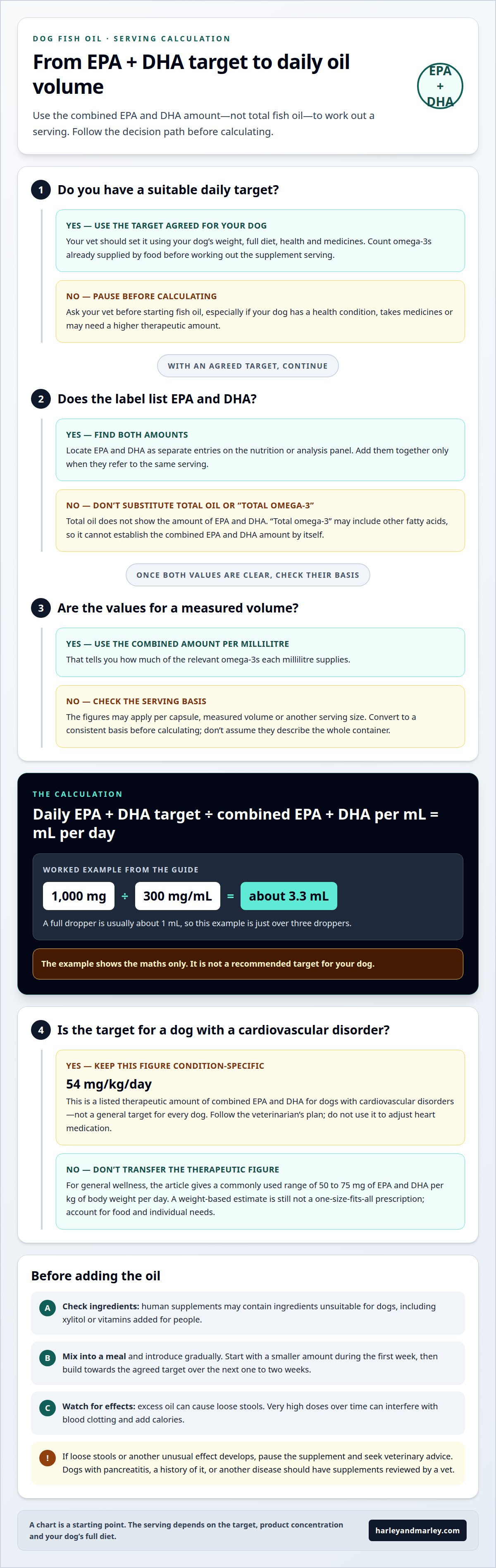
Calculate a serving from the combined EPA and DHA, not the total fish oil. Those figures show how much of the relevant omega-3s each millilitre supplies. A label’s total oil amount alone cannot give you that serving.
Use this calculation: daily EPA and DHA target in milligrams ÷ combined EPA and DHA per millilitre = millilitres per day. For example, a 1,000 mg target divided by 300 mg per millilitre gives about 3.3 mL. A full dropper is usually about 1 mL, so this example is just over three droppers.
A fish oil dosage calculator follows the same logic, but it needs a suitable daily target and the product’s EPA and DHA concentration. Your vet should set the target using your dog’s weight, full diet, health and medicines. Count omega-3s already supplied by food before calculating the supplement serving. This helps estimate the dog’s total daily dose rather than treating the bottle as the whole nutrition plan.
- Arthritis, allergies or skin problems: The appropriate amount depends on the condition and the dog. Fish oil may help reduce itching associated with allergies, but therapeutic dosing should be guided by a vet.
- Side effects and risks: Excess oil can cause loose stools; very high doses over time can interfere with blood clotting and add calories. Dogs with pancreatitis, a history of it, or another disease should have supplements reviewed by a vet.
- Introducing and adjusting: Mix the oil thoroughly into a meal and introduce it gradually. Start with a smaller amount during the first week, then build towards the agreed target over the next one to two weeks.
Ask your vet before starting fish oil, especially if your dog has a health condition, takes medicines or may need a higher therapeutic amount. If loose stools or another unusual effect develops, pause the supplement and seek veterinary advice.
How to identify EPA and DHA amounts on supplement labels
Start with the product’s nutrition or analysis panel, then locate EPA and DHA as separate entries. These are the omega-3 amounts that help calculate a canine serving. A total fish oil figure describes the oil itself, not the amount of these specific fatty acids.
Check what each figure measures. It may refer to a capsule, a volume or another serving size. Add EPA and DHA figures only when they apply to the same serving. If the label lists them separately, add them to find the combined amount per serving.
- Find the serving basis: Note whether quantities apply per capsule or measured volume, rather than assuming they describe the whole container.
- Read both fatty acid amounts: Record EPA and DHA separately, then combine them for the serving.
- Check the directions: Follow the product’s stated serving guidance, while using your veterinarian’s target to calculate the amount suited to your dog’s body weight and full diet.
Don’t use a headline such as “total omega-3” as a substitute for EPA and DHA values. That figure may include other omega-3 fatty acids, so it cannot show the combined EPA and DHA amount by itself. Likewise, a large total-oil figure doesn’t automatically mean a product supplies more EPA and DHA per serving.
Read the ingredient list as well as the panel. Human supplements may contain ingredients unsuitable for dogs, including xylitol or vitamins added for people. For a canine supplement, look for clear EPA and DHA quantities and packaging directions for storage. Some omega-3 products undergo third-party testing and provide a certificate of analysis; this can offer further information about product contents.
If a label gives quantities only for a serving that differs from your veterinarian’s intended amount, convert the figures to a consistent basis before calculating. This keeps the label reading precise and helps prevent confusion between the oil quantity and the active fatty acids.
Potential benefits for heart health
EPA and DHA are omega-3 fatty acids found in fish oil. For dogs with cardiovascular disorders, a listed therapeutic amount is 54 mg/kg/day of EPA and DHA. This is a condition-specific figure, not a general daily target for every animal. It also describes the combined fatty acids, not the total weight of oil in a serving.
Heart health is only one part of a dog’s clinical picture. A veterinarian considers the diagnosed condition, body weight, existing food and medicines when setting dosing. The dog’s complete diet matters because food may already supply omega-3s. Adding a supplement without accounting for that intake can make the total amount different from the intended plan.
- Routine nutrition: A weight-based estimate is not a prescription for a dog with heart disease. The veterinarian’s target and the product’s EPA and DHA quantities determine the serving.
- Therapeutic use: The 54 mg/kg/day figure applies to dogs with cardiovascular disorders. It should not be transferred to a healthy dog or used to adjust heart medication.
- Monitoring: Track the supplement amount alongside meals and medicines. Loose stools can indicate a side effect; very high fish-oil doses over time can interfere with blood clotting.
Human dosing does not automatically apply to dogs. Body weight, food intake and health all differ, so a human supplement label cannot establish a suitable amount for your dog. Check the ingredients too: some human fish oil products may contain xylitol or vitamins added for people.
Fish oil may form part of a veterinary nutrition plan for a dog with a cardiovascular diagnosis, but it does not replace prescribed treatment. The right amount depends on the therapeutic target, product concentration and existing diet. Follow the agreed plan, and report unusual effects to your vet rather than increasing the amount yourself.
Fish oil dosage chart in pounds and kilograms
This chart shows example daily oil volumes, not a universal prescription. Product strengths vary, so use the millilitre figures only if the product matches the chart’s assumptions. Your dog’s EPA and DHA target, current food and health needs determine the appropriate amount.
| Weight | Approximate equivalent | Example fish oil per day |
|---|---|---|
| 3 lb | 0.5 mL | |
| 5 lb | 0.8 mL | |
| 10 lb | 4.5 kg | 1.5 mL |
| 15 lb | 2.3 mL | |
| 20 lb | 9.1 kg | 3.0 mL |
| 25 lb | 3.8 mL | |
| 30 lb | 4.6 mL | |
| 35 lb | 5.3 mL | |
| 40 lb | 6.0 mL | |
| 50 lb | 22.7 kg | |
| 75 lb | 34 kg |
Conversions make a chart in pounds and kilograms easier to use, particularly when a label gives metric measurements. But oil volume is not interchangeable with milligrams of EPA and DHA: concentrations vary between products. Calculate using the product’s own EPA and DHA quantities rather than assuming the same volume suits every bottle.
Maximum safe daily amount: The National Research Council’s safe upper limit for omega-3 in dogs is 370 mg/kg0.75. This is an upper limit for omega-3, not a routine EPA-and-DHA target; higher therapeutic dosing needs veterinary oversight.
Can dogs take human fish oil capsules? A capsule’s amount per dog cannot be set by body weight alone. Human products may contain xylitol or added vitamins unsuitable for dogs, so review ingredients and EPA and DHA content with a veterinarian. Salmon-derived fish oil contains omega-3 fatty acids, including DHA, which has been studied for effects on puppy learning and cognitive skills.
Harley & Marley: Fish Oil
Harley & Marley can help you consider your dog’s food routine alongside the fish oil serving you’ve calculated. A complete diet matters because existing omega-3 intake should be included when working out a supplement amount.
Harley & Marley offers Puppy Complete Food and Medium/Large Breed Complete Food, as well as Bundles for Dogs, to help organise your dog’s meals. If health needs or medicines affect dosing, your vet can set an appropriate EPA and DHA target. Keep the product label and your dog’s usual feeding routine in view when discussing the amount.
If you’re considering how supplements fit alongside your dog’s meals, explore Harley & Marley’s food options.
Make your dog’s nutrition plan work as a whole
A supplement is best considered as part of your dog’s overall feeding routine. Age, daily food and changing health needs can all shape that routine, so review it when circumstances change. Use the fish oil dosage for dogs by weight chart as a reference point, and ask your vet how supplements fit your dog’s individual nutrition plan.
Harley & Marley offers complete food for puppies, small breeds, and medium and large breeds. When choosing food alongside a supplement, consider your dog’s life stage and nutritional needs.
Discuss your dog’s feeding options with Harley & Marley, and take the next step towards a thoughtful routine for your dog.
Harley & Marley for your dog’s fish oil routine
After reviewing a dosage chart, explore Harley & Marley’s Fish Oil for Dogs & Cats as an option for your dog’s routine. Check the product information and discuss the appropriate amount with your vet.
Harley & Marley also offers complete food for puppies, small breeds, medium and large breeds, and senior dogs, alongside Chews & Bites and Bundles for Dogs.
Frequently Asked Questions
How Much Omega 3s Does My Dog Need Daily?
A fish oil dosage for dogs by weight chart can provide an estimate: for general wellness, a commonly used daily range is 50 to 75 mg of combined EPA and DHA per kg of body weight. Your dog’s food also contributes omega-3s, so the supplement amount depends on total intake, health and medicines. Ask your veterinarian to set an individual target. Always see a vet if a problem persists.
What Is Fish Oil?
Fish oil is an oil from fish that provides omega-3 fatty acids, including EPA and DHA. Cold-water fish such as salmon are a source. These fatty acids are different from the total weight of oil in a product, so the two figures aren’t interchangeable. For dogs, choose a product intended for pets and follow its storage directions.
What is the best way to supplement Omega 3s?
Choose a supplement with clear EPA and DHA quantities, and use an amount suited to your dog’s diet and needs. Mix it thoroughly into a regular meal and follow the package directions for storage. Watch your dog’s appetite and stools as you introduce it. If an unusual effect occurs, pause the supplement and speak with your vet. Always see a vet if a problem persists.
How do I convert my vet's EPA and DHA target into millilitres of salmon oil?
Divide the vet-set daily target in milligrams by the product’s combined EPA and DHA per millilitre. For example, a 1,000 mg target divided by 300 mg per mL gives about 3.3 mL. Use the salmon oil label’s per-millilitre figures, not total oil weight. If its quantities are listed per capsule or serving, convert them to a consistent basis first.
What is the recommended dose of Omega 3’s?
There isn’t one target for every dog. For general wellness, the listed range is 50 to 75 mg of combined EPA and DHA per kg daily; therapeutic needs vary by condition. The National Research Council’s recommended allowance for omega-3 in dogs is 30 mg/kg0.75, while its safe upper limit is 370 mg/kg0.75. These figures use different units and aren’t interchangeable.
What is the recommended fish oil dose for dogs by weight in mg of EPA and DHA?
A fish oil dosage for dogs by weight chart can help estimate a starting amount. For general wellness, use 50 to 75 mg of combined EPA and DHA per kg of body weight daily as an estimate, not a universal prescription. For a 10 lb dog, the weight conversion is 4.5 kg; the product’s EPA and DHA concentration determines how much oil supplies the target. A veterinarian should account for food, medicines and health conditions.