


The standard approach to canine nutrition often fails the smallest members of our families by overlooking the specific metabolic demands of a tiny frame. You've likely experienced the frustration of managing your dog's itchy skin or lacklustre coat, only to find that many commercial diets still lead to sensitive stomachs and loose stools. It's a common struggle to find a grain free small breed dog food that balances high-density nutrition with a kibble size appropriate for miniature jaws. Many owners feel trapped in a cycle of trying new brands that promise health but deliver inconsistent results.
We understand that your dog's well-being is paramount, and you deserve a nutritional solution that prioritises purity and functional benefits over cheap fillers. This guide demonstrates why switching to grain-free, fish-based nutrition is the superior choice for your pet's unique metabolism and digestive sensitivity. You'll learn how to achieve a radiant coat and consistent energy levels whilst avoiding the digestive upsets common with traditional grains. We will compare current 2026 nutritional benchmarks and explain how marine-sourced proteins provide the essential building blocks for a thriving, healthy animal.
Key Takeaways
- Understand why the rapid metabolism of smaller dogs necessitates a higher concentration of nutrients in every bite to maintain long-term vitality.
- Discover the anti-inflammatory benefits of Omega-3 fatty acids found in fish-based recipes for soothing itchy skin and restoring a lustrous coat.
- Compare how grain free small breed dog food utilises low-glycaemic carbohydrates to provide stable energy levels whilst being gentle on sensitive stomachs.
- Learn to identify the hallmarks of high-quality nutrition on ingredient labels, including the critical distinction between complete and complementary foods.
- Explore the advantages of novel fish proteins in reducing common dietary sensitivities often triggered by standard meat-based kibble.
Understanding the Nutritional Requirements of Small Breed Dogs
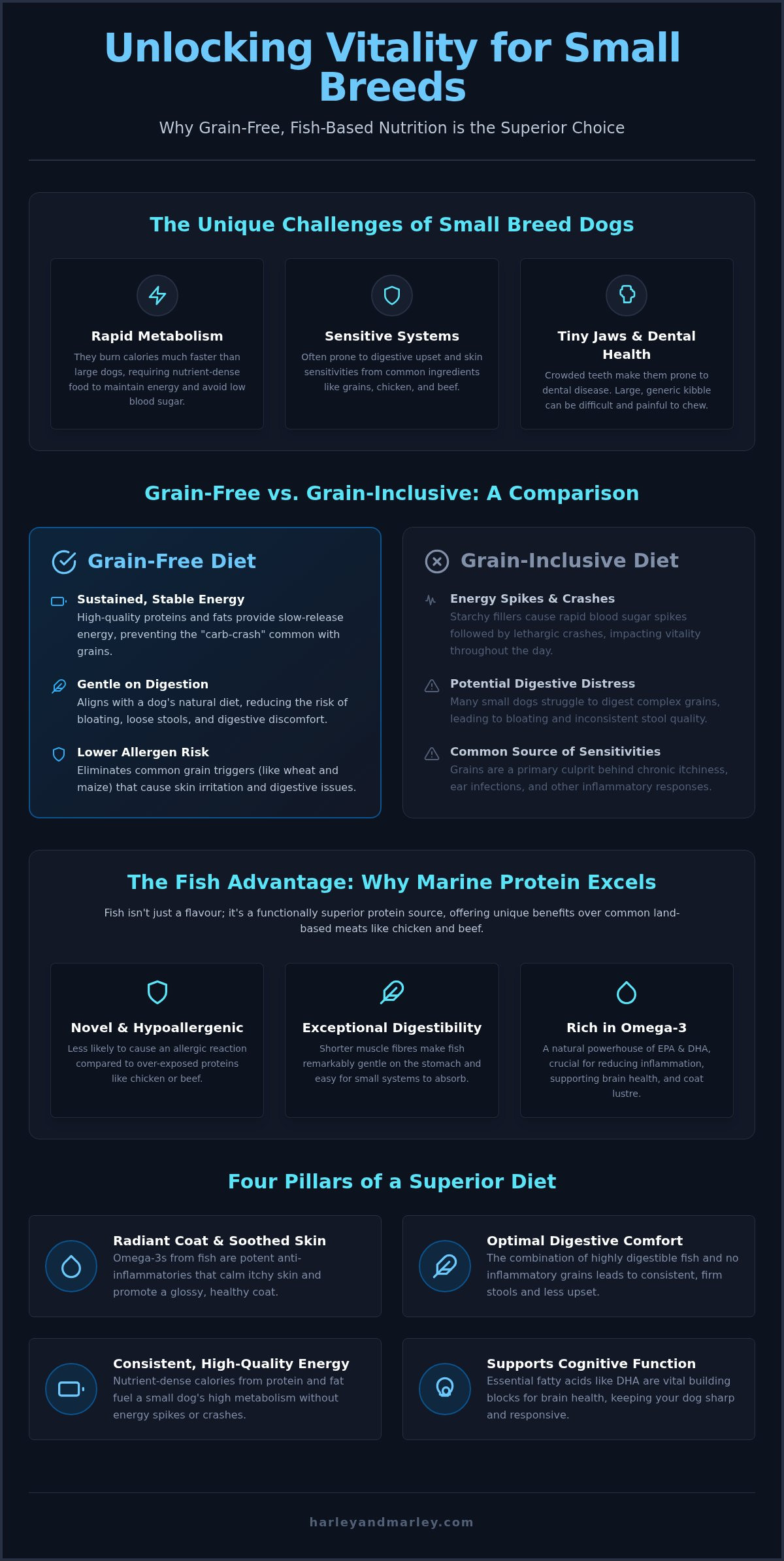
Small breeds are biological marvels. Whilst they may share 99% of their DNA with larger canines, their metabolic profiles are vastly different. A five-kilogram terrier requires significantly more calories per pound of body weight than a fifty-kilogram Mastiff. This discrepancy is due to their higher surface-area-to-mass ratio, which causes them to lose body heat more rapidly. Consequently, every gram of kibble must be packed with functional nutrients. Choosing a high-quality grain free small breed dog food ensures that these calories come from bioavailable proteins rather than starchy fillers that offer little more than temporary satiety.
In the context of evolutionary biology, dogs are facultative carnivores. Their digestive systems are optimised for the breakdown of proteins and fats rather than complex cereal grains like wheat or maize. For many smaller dogs, these grains are a primary source of digestive distress, often manifesting as bloating, loose stools, or lethargy. By removing grains, we align their diet with their biological needs, prioritising ingredients that support a stable gut microbiome and overall vitality.
Metabolism and Energy Density
The intense metabolic rate of small breeds makes them susceptible to hypoglycaemia, or low blood sugar, especially if they go too long between meals. Energy-dense food is a necessity, not a luxury. Traditional kibble often relies on "filler" grains to provide bulk. These ingredients create a "carb-crash" effect, where energy levels spike and then plummet. A grain-free approach replaces these empty calories with high-quality fats and proteins. These provide a slow-release energy source, keeping your dog's vitality consistent throughout the day without the inflammatory risks associated with grain-heavy diets.
Small Jaws and Kibble Size
Nutrition isn't solely about what's inside the food; it's also about the physical delivery. Small dogs have crowded dental structures, making them more prone to periodontal disease. Large, generic kibble can be a genuine physical challenge for tiny jaws, often leading to "shovelling" or refusal to eat. Specialised small breed formulas feature smaller, uniquely shaped kibble designed to encourage chewing. This mechanical action helps scrape away plaque from the tooth surface. Transitioning from an "all-breed" food to a dedicated small breed recipe ensures your dog can actually manage their meal comfortably whilst supporting their long-term oral health.
Why Fish-Based Grain-Free Recipes Excel for Small Breeds
Fish is often relegated to a mere flavour choice in the pet food industry, yet for the discerning owner, it represents a superior functional protein. Small dogs frequently suffer from sensitivities to common land-based proteins like beef or chicken, which can lead to chronic inflammation and digestive distress. By contrast, white fish and salmon are considered "novel" proteins. They are less likely to trigger the immune system's overreaction. Choosing a high-quality grain free small breed dog food centred on marine life provides a bioavailable source of amino acids that is significantly easier for a compact digestive system to process and absorb.
The structural difference between fish and red meat is vital for small breed health. Fish muscle fibres are shorter and contain less connective tissue, making them remarkably gentle on the stomach. This high digestibility ensures that your dog's limited stomach capacity is used efficiently, extracting maximum nutrition without the heavy metabolic load associated with denser meats. Transitioning to a fish-based complete food can offer an immediate improvement in both digestive comfort and external vitality.
The Omega-3 Advantage
Small, active breeds like Jack Russells or Toy Poodles possess high cognitive demands and intense energy levels. Fish is naturally rich in Omega-3 fatty acids, specifically EPA and DHA, which are essential for maintaining brain health and sharp cognitive function. These healthy fats also act as a potent natural anti-inflammatory. This is particularly beneficial for breeds prone to skin issues, such as West Highland White Terriers or Bichon Frises, where environmental allergens often cause redness and irritation. Omega-3 fatty acids serve as the primary driver for exceptional coat lustre and long-term joint suppleness in small dogs.
Hypoallergenic Properties of Fish
Many small dogs experience "itchy ear" syndrome or paw-licking, often misdiagnosed as purely environmental allergies. In reality, these are frequently symptoms of "leaky gut" or food intolerances exacerbated by wheat gluten and corn. A grain-free fish recipe eliminates these common triggers entirely. By avoiding the starchy binders found in traditional kibble, we reduce the risk of yeast overgrowth and systemic inflammation. This clean-label approach ensures that your pet's immune system isn't constantly fighting their diet, allowing their energy to be directed toward play and healthy growth instead of managing internal irritation.
Grain-Free vs Grain-Inclusive: A Comparison for Sensitive Small Dogs
Choosing between grain-inclusive and grain-free diets involves more than just following a trend. It requires a clinical look at how different carbohydrate sources affect your dog's internal chemistry. Whilst grains like wheat and maize are common in standard kibble, they often serve as inexpensive fillers that can compromise the health of a sensitive animal. High-quality grain free small breed dog food replaces these simple starches with complex alternatives that respect the canine's shorter digestive tract and specific enzyme production.
Identifying Grain Intolerance
Recognising the subtle signs of dietary intolerance is the first step toward restoring your pet's vitality. For many small breeds, a sensitivity to grain doesn't always manifest as immediate sickness. Instead, it presents as chronic, low-level inflammation. You should monitor your dog for the following indicators:
- Excessive paw licking: Often a sign of yeast overgrowth fuelled by grain-based sugars.
- Chronic ear infections: Recurrent redness or discharge can stem from dietary triggers.
- Flatulence and bloating: A clear sign that the gut is struggling to ferment complex grain fibres.
- Inconsistent stool quality: Frequent bouts of loose stools or straining.
If these symptoms persist, an "Elimination Diet" is often the most effective path forward. By stripping back the diet to a clean, grain-free fish protein, you remove the most common allergens and allow the digestive system to reset. This methodical approach provides clarity on whether grains were the primary irritant.
Carbohydrate Quality Matters
The primary criticism of some grain-free options is that they simply swap one starch for another. However, there's a significant biological difference between the rapid glucose spike caused by wheat and the slow-burning energy provided by sweet potato or peas. Small dogs are particularly prone to blood sugar fluctuations due to their high metabolic rates. Harley & Marley prioritises complex carbohydrates because they have a lower glycaemic index, which is essential for maintaining a calm, focused temperament in high-strung breeds.
Steady energy release is vital for preventing the "carb-crash" that leads to lethargy and irritability. Beyond energy, these ingredients provide essential prebiotic fibres. These fibres feed the beneficial bacteria in the gut, leading to smaller, firmer stools and better nutrient absorption. To find the right balance for your pet, consult our Fish-Based Dog Food for Small Breeds: 2026 Buying Guide for a deeper look at ingredient transparency.
Choosing the Right Grain-Free Food: Kibble Size and Digestibility
Selecting a grain free small breed dog food requires a sharp eye for detail that goes beyond the marketing claims on the front of the bag. The most transparent way to evaluate quality is the "first three ingredients" rule. Because ingredients are listed by weight before cooking, the top three items should represent high-quality proteins like fresh or dehydrated fish. If the list starts with starches or generic "animal derivatives", the recipe likely lacks the nutrient density your small dog requires for sustained vitality.
You must also distinguish between "complete" and "complementary" foods. A complete food is scientifically formulated to provide every vitamin, mineral, and amino acid your dog needs in a single serving. Complementary foods, often sold as toppers or mixers, lack this balance. For small dogs with intense metabolic needs, relying on incomplete nutrition can lead to deficiencies over time. Ensuring your choice is a "complete" recipe is non-negotiable for holistic health.
Decoding the Ingredient List
Purity is the hallmark of premium nutrition. Look for "Fresh Fish" or "Dehydrated Fish" rather than generic "Fish Meal", which can often be a highly processed byproduct of inconsistent quality. A clean label should be free from artificial colours, flavours, and chemical preservatives like BHA or BHT. Instead, high-quality recipes utilise natural antioxidants such as rosemary extract to maintain freshness. This level of minimal intervention ensures the biological integrity of the food remains intact from the bag to the bowl.
The Transition Process
Small dogs possess sensitive digestive systems that don't react well to abrupt changes. To avoid gastric upset, you should organise a gradual 7-day transition programme. Start by mixing 25% of the new food with 75% of the old, slowly increasing the ratio over the week. This allows the gut microbiome to adapt to the new protein source without causing loose stools or refusal to eat. For a deeper dive into specific requirements, consult our Dog Food for Small Dogs: 2026 Nutritional Guide.
The true results of a dietary shift become visible after approximately 28 days, which is the typical timeframe for skin cell renewal. By the end of the first month, you should observe brighter eyes, a more lustrous coat, and smaller, firmer stools. Consistent energy levels, free from the "carb-crash" behaviour often seen with grain-heavy diets, will confirm the transition is a success. If you are ready to see these tangible benefits in your own pet, you can explore our small breed complete food range today.
Harley & Marley: Super Premium Fish-Based Nutrition for Small Breeds
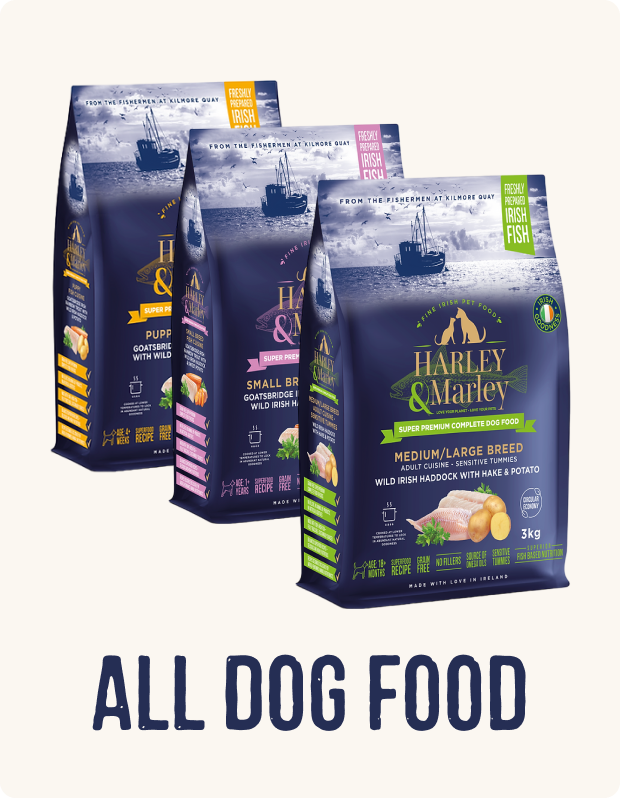
Harley & Marley represents a shift toward a more conscious and biologically appropriate way of feeding our companions. As an Irish-owned business, we've built our reputation on a foundation of transparency, purity, and scientific rigour. Our approach is unique amongst Irish pet food providers; we focus exclusively on 100% fish-based, grain-free nutrition. We don't believe in the inclusion of land-based meats or complex cereal fillers. Instead, we utilise the natural bounty of our coastal waters to create a grain free small breed dog food that supports every facet of your pet's health, from their cognitive function to their digestive stability.
Our commitment extends beyond the bowl. We operate within a circular economy framework, ensuring that our sourcing is as ethical as it is nutritious. By utilising high-quality fish that might otherwise be overlooked, we reduce waste whilst providing your dog with a premium, bioavailable protein source. This dedication to sustainability and regional craftsmanship ensures that when you choose our recipes, you're supporting a local business that prioritises the long-term vitality of the animals we serve and the environment we share.
Tailored for Small Breeds
Our Small Breed Complete Food is specifically engineered to meet the intense metabolic demands discussed throughout this guide. We have carefully calibrated the nutrient density to ensure that even the smallest portions are packed with essential vitamins and minerals. The kibble size is purposefully reduced, making it easy for little mouths to manage whilst providing the mechanical action necessary for dental hygiene. Owners of pickier breeds, such as Chihuahuas or Shih Tzus, frequently report that our fish-only recipes succeed where meat-based alternatives have failed. The natural aroma and high palatability of fresh fish make it an irresistible choice for even the most discerning eaters.
Convenience and Sustainability
Modern pet ownership requires solutions that fit into a busy lifestyle without compromising on quality. Our monthly food box subscription is designed to take the guesswork out of your routine. By selecting a recurring delivery, you ensure that your dog never misses a meal of their favourite specialised nutrition. This service offers peace of mind, knowing that a steady supply of Irish-made, super premium food is always on hand. Choosing Harley & Marley means choosing a partner dedicated to the holistic health of your small dog. If you're ready to see the difference that high-quality, sustainable nutrition can make, explore our Small Breed Complete Food range today.
Elevating Your Small Dog's Nutritional Standard
Providing the correct nutrition for a small breed requires a departure from generic, filler-heavy diets. We've explored how a high-density, fish-only approach directly addresses the intense metabolic needs and sensitive digestive systems unique to smaller canines. By prioritising bioavailable proteins and essential Omega-3 fatty acids, you can actively resolve issues like itchy skin and inconsistent energy levels. Transitioning your pet to a high-quality grain free small breed dog food is a transformative step toward long-term vitality and a more lustrous coat.
Harley & Marley remains dedicated to this expert-led standard of purity. Our super premium, Irish-made recipes are sustainably sourced and specifically tailored for little mouths and big personalities. With the added convenience of our monthly food box, maintaining this superior level of care is both simple and reliable. We invite you to Shop our Premium Grain-Free Small Breed Fish Food today and begin the journey toward a thriving, healthier pet. Your dog's future health starts with the quality of their bowl.
Frequently Asked Questions
Is grain-free dog food safe for small breeds?
Yes, grain-free food is safe and often beneficial, provided it is a "complete" recipe formulated with high-quality proteins and complex carbohydrates. Whilst the FDA investigation into DCM continues as of August 2026, it focuses on diets excessively reliant on legumes as primary ingredients. Our grain free small breed dog food balances fish protein with carefully selected ingredients to ensure cardiac health and metabolic stability without the inflammatory risks of cereal grains.
Why is fish protein better than chicken for small dogs with allergies?
Fish protein is considered a "novel" protein source, meaning it is less likely to trigger the immune response associated with common land-based meats like chicken. Chicken is a frequent allergen that can lead to chronic ear infections and skin redness. Fish is naturally rich in Omega-3 fatty acids, which actively soothe existing inflammation whilst providing a highly digestible amino acid profile that is significantly gentler on a small dog's sensitive stomach.
How do I know if my small breed dog has a grain intolerance?
You may notice subtle indicators such as persistent paw licking, flatulence, or a dull, brittle coat. Unlike acute allergies, grain intolerance often manifests as chronic, low-level discomfort or inconsistent stool quality. If your dog frequently experiences bloating or displays "itchy skin" despite no visible parasites, they may be struggling to process the complex cereal starches found in standard kibble. A transition to grain-free nutrition often resolves these symptoms within a few weeks.
What is the difference between small breed and regular grain-free dog food?
The primary differences lie in nutrient density and physical kibble size. Small breeds have faster metabolic rates and require more calories per kilogram of body weight than larger dogs. Regular grain-free food may not be energy-dense enough, leading to potential hypoglycaemia in tiny breeds. Additionally, small breed formulas feature a reduced kibble size specifically designed for miniature jaws, ensuring the food is easy to chew and aids in mechanical plaque removal.
Can I switch my senior small dog to a grain-free fish diet?
Absolutely, and it is often highly recommended for ageing pets. Senior dogs frequently develop joint stiffness and slower digestion, both of which benefit from the anti-inflammatory properties of fish-based nutrition. The high Omega-3 content supports cognitive function and coat health, whilst the grain-free aspect reduces the metabolic load on their organs. Always ensure a slow transition over seven days to allow their older digestive system to adapt comfortably to the new protein source.
Is Harley & Marley's small breed food suitable for puppies?
Puppies have unique requirements, so we recommend our dedicated Puppy Complete Food rather than the adult small breed version. Young dogs need specific ratios of calcium and phosphorus to support rapid skeletal development, alongside increased protein for muscle growth. Whilst our fish-based, grain-free philosophy remains consistent, using the puppy-specific formula ensures your dog receives the precise nutritional building blocks required during their first year of life before moving to adult recipes.
How much should I feed my small dog on a grain-free diet?
Feeding amounts vary based on your dog's weight, age, and activity level. Because a high-quality grain free small breed dog food is more nutrient-dense than traditional kibble, the required portion size is often smaller than you might expect. Always consult the feeding guide on our packaging as a starting point. Monitor your dog's weight closely; a healthy small breed should have a defined waist and ribs that are easily felt but not visible.
Why is kibble size so important for small breed dogs?
Kibble size is a matter of both safety and preventative dental health. Large pieces can pose a choking hazard or cause "shovelling," where the dog swallows without chewing, leading to digestive upset. Smaller kibble is specifically shaped to fit miniature dental structures, encouraging the chewing action that helps scrape away plaque. This is vital for small breeds, who are biologically more prone to periodontal disease due to their crowded tooth alignment and smaller jawbones.