



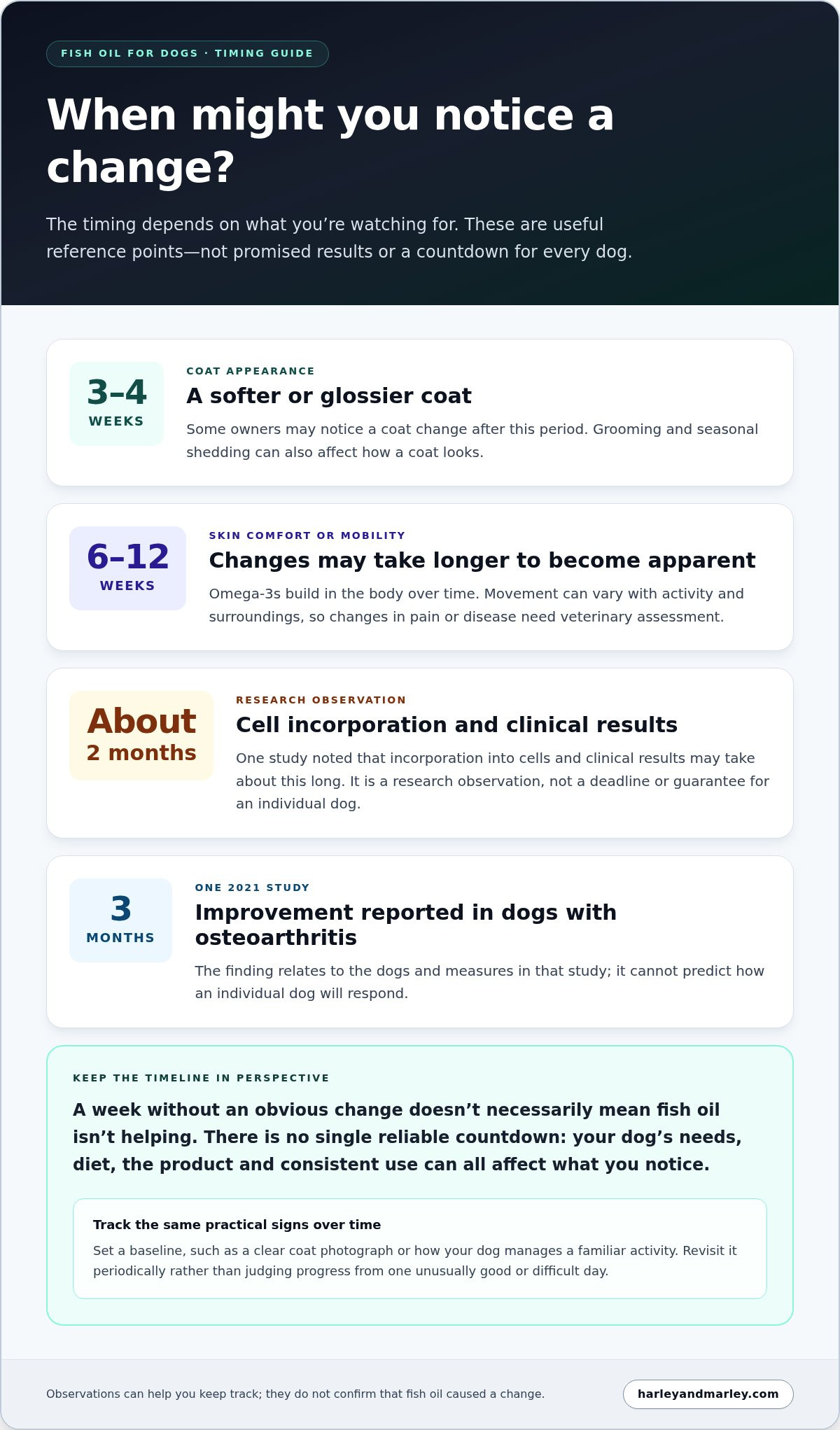
If you’re wondering how long does it take for fish oil to work for dogs, the realistic answer is usually several weeks, and sometimes months. A glossier, softer coat may be noticeable after 3 to 4 weeks, while changes in skin comfort or joint mobility can take 6 to 12 weeks as omega-3s build in the body. A week without an obvious change doesn’t necessarily mean fish oil isn’t helping.
It’s understandable to watch closely and still feel unsure. Normal day-to-day variation can make gradual progress hard to spot. Timing also depends on your dog’s needs, the supplement and how consistently it’s given, so there’s no guaranteed response date.
This guide explains what fish oil may support, how to track changes without relying on guesswork, and what signs of intolerance to watch for. You’ll also find practical guidance on using a supplement and when to speak with your vet, so you can assess whether fish oil is suitable for your dog’s routine.
Key Takeaways
- How long does it take for fish oil to work for dogs? It depends partly on what you’re hoping to observe, so choose a clear, relevant measure of progress.
- Fish oil commonly supplies omega-3 fatty acids EPA and DHA. These support normal processes in the body, but are not a guaranteed cure.
- Track practical signs, such as coat appearance or ease of movement. Some changes can only be assessed by a veterinary professional.
- For a safer routine, discuss suitability with your vet, follow the product’s feeding instructions and keep brief notes on changes and tolerance.
- If your dog’s original concern persists or worsens, or they have an illness, take medication, are pregnant or have a planned procedure, seek veterinary guidance.
How long does fish oil take to work for dogs? A realistic starting point
There isn’t one reliable countdown for every dog. The time it takes to notice a difference can vary with your dog’s health concern, diet, the product’s composition and how consistently it’s given. Fish oil is a nutritional supplement, not an instant treatment or a guaranteed cure. A lack of obvious change in the first few days doesn’t necessarily tell you whether it’s suitable.
In short, how long does it take for fish oil to work for dogs? It may take several weeks or longer, depending on the dog and the change you’re looking for. Research offers useful context, not a promise. A 2021 study of dogs with osteoarthritis reported improvements after three months of supplementation. That finding applies to the dogs and measures in that study. It can’t predict the response of an individual pet.
Why there is no single fish oil timeline for every dog
The reason for adding fish oil shapes what you can reasonably monitor. Coat appearance is visible at home, while changes in mobility can be harder to judge. Activity, flooring, weather and ordinary fluctuations may all affect how a dog moves. A veterinary assessment may be needed to evaluate pain or disease-related changes. General wellbeing is harder to measure, and changes in energy or behaviour can have many possible causes.
Your dog’s health, overall diet, the supplement’s composition and regular use can all influence what happens. Fish oils vary in their EPA and DHA content, so products aren’t automatically equivalent. For a general overview of fish oil and its components, see What is Fish Oil?
What owners may notice first
Some owners look for a softer-looking or glossier coat, or changes in their dog’s apparent comfort during familiar activities. These are observations, not proof that a supplement caused the change. Grooming or seasonal shedding can affect a coat’s appearance, while a dog’s willingness to walk or climb may vary for reasons unrelated to fish oil.
Set a simple baseline before starting. Note the concern you’re tracking, take a clear coat photograph if relevant, or record how your dog manages a regular activity. Revisit the same observations periodically instead of judging progress from one unusually good or difficult day. Leave diagnosis and clinical measures to your veterinary surgeon. Seek their advice if the original concern worsens or you’re unsure how to interpret a change.
How omega-3 fish oil works in a dog’s body
Fish oil is a source of omega-3 fatty acids, a family of fats involved in normal functions throughout the body. It commonly supplies two long-chain omega-3s, EPA and DHA, but the amount and balance can vary between products. Fish oils aren’t interchangeable simply because they belong to the same broad category.
EPA and DHA are two distinct omega-3 fats that help support cell structure and the body’s normal signalling processes. They become part of cell membranes and are involved in producing signalling molecules that influence inflammatory responses. This is one reason omega-3s are studied in relation to concerns such as skin comfort and joint health. It doesn’t mean fish oil cures an underlying condition or has the same effect in every dog.
What EPA and DHA do
EPA and DHA both contribute to normal physiological processes, but they aren’t identical nutrients. Their levels differ between fish oil products, and a product’s overall composition affects how much of each fatty acid a dog receives. Changing the amount of fish oil doesn’t automatically lead to a predictable change in the body. Follow the specific product’s feeding instructions and discuss suitability with your veterinary surgeon.
Why biological changes may not look immediate
There’s a difference between a nutrient being absorbed and a visible change appearing. Omega-3s need to be incorporated into the body’s cells. Only then might changes related to the concern being monitored become apparent. One study noted that incorporation into cells and clinical results may take about two months. Treat this as a research observation, not a deadline or guarantee for an individual dog.
Even if the body is responding biologically, you might not see a clear difference straight away. Coat condition can also be influenced by grooming, seasonal shedding, diet and general health. Mobility can vary with activity and the environment. Changes in pain or disease need veterinary assessment rather than guesswork at home.
This helps explain why the question how long does it take for fish oil to work for dogs has no universal countdown. Consistent use gives you a fairer basis for observation, but your dog’s health, diet and the product’s EPA and DHA content all matter. If you’re considering adding a supplement, explore fish oil for dogs as one possible part of a routine, guided by your veterinary surgeon and the product label.
Why fish oil results differ between dogs and health concerns
The signs you’re watching for depend on why fish oil is being considered. A coat change may be visible at home, but it doesn’t show what’s happening beneath the skin. Mobility is harder to interpret because it can fluctuate with activity, stiffness, age and other health factors. General nutritional support may not produce an obvious outward change at all.
No quick visible change doesn’t prove fish oil has failed. Equally, an apparent improvement doesn’t confirm the supplement caused it. Dogs differ in their starting health, daily diet and routine, and fish oil products can differ in composition. That makes comparisons between individual dogs unreliable, even when their concerns seem similar.
| Concern | Possible observation | Why interpretation may vary |
|---|---|---|
| Skin or coat | Coat looks softer or glossier; your dog appears less bothered by their skin. | Grooming, diet and other skin conditions can affect appearance or comfort. These signs don’t identify the cause. |
| Mobility | Your dog seems more willing to rise, walk or join a familiar activity. | Movement can vary with exercise, environment and underlying health. An owner’s observation can’t diagnose pain or joint disease. |
| General nutritional support | There may be no distinct change you can see day to day. | Overall diet, health and the supplement’s composition all influence what can be observed. |
Skin and coat changes: what can and cannot be judged
You can note visible features such as coat texture, shine, redness or how often your dog scratches, but these are observations, not diagnostic measures. Allergies, parasites, infection and other causes may need veterinary assessment. Don’t assume a change, whether better or worse, is due to fish oil alone, particularly if other aspects of your dog’s diet or care have changed.
Joint comfort and other less visible outcomes
Mobility changes may be gradual, and a dog’s willingness to move can vary for reasons beyond joint comfort. Instead of relying on a general impression, note specific behaviours, such as how readily your dog rises after resting or whether they’re willing to take their usual walk. These notes can help you describe a pattern to your veterinary surgeon, but they can’t replace a clinical assessment.
If your dog shows pain, develops lameness or has declining mobility, seek veterinary advice rather than waiting to see whether a supplement helps. The question of how long does it take for fish oil to work for dogs should never delay assessment of a worsening or concerning symptom.
How to give fish oil consistently and monitor your dog safely
A steady routine and a simple record make it easier to notice patterns without guessing. Before starting, speak with your veterinary surgeon about whether fish oil suits your dog, particularly if they have a health condition or take medication. Then follow these steps:
- Agree a plan. Discuss your dog’s needs and the supplement with your vet, including whether it fits alongside their current diet and any treatment.
- Follow the product label. Use the feeding instructions for that specific product. Don’t copy another dog’s amount or assume all fish oils have the same composition.
- Keep the routine consistent. Give it as directed and avoid changing the amount without veterinary guidance. More isn’t automatically better; excess supplementation may be unsuitable.
- Record what you observe. Note the start date, routine and a few signs relevant to your reason for using fish oil. Include changes to food, medication or other supplements so you can interpret your notes in context.
A simple progress log for fish oil
Choose two or three observations rather than trying to track everything. For example, note coat appearance and scratching if skin or coat is your focus, or willingness to rise and take a familiar walk if you’re monitoring mobility. Use brief, dated notes, and take photographs in similar lighting when they may help you compare coat changes. Review the same signs regularly, not just on an unusually good or difficult day.
Keep diet changes in your notes too. A new food or a change in feeding routine may affect what you observe, so avoid attributing every difference to the supplement. For wider context on how food choices fit into a dog’s routine, see this fish-based dog food guide.
Dose, consistency and possible side effects
Don’t increase the amount to try to speed up results. Product instructions and veterinary advice are a safer guide than another dog’s dose, as needs and products vary. Watch for vomiting, diarrhoea, appetite changes or any other concern after introducing a supplement. These signs can have many causes, so don’t assume fish oil is responsible. Contact your vet for advice, especially if symptoms persist or worsen. You may also find a guide to loose stools in dogs helpful for broader digestive context.
A log won’t tell you how long does it take for fish oil to work for dogs with certainty, but it can give you and your vet a clearer picture of consistency, changes and tolerance. If you’re considering adding fish oil to your dog’s routine, explore fish oil for dogs and use its label alongside veterinary guidance.
When to review fish oil with your vet and choose a suitable supplement
Fish oil should sit alongside good veterinary care, not take the place of a diagnosis or prescribed treatment. Arrange a review if the concern you started monitoring persists, worsens or changes, or if you’re unsure whether your dog is tolerating the supplement. Notes on symptoms, routine and any changes can help your veterinary surgeon decide what to do next.
Ask for veterinary advice before introducing fish oil if your dog is unwell, takes medication, is pregnant or has a planned procedure. Your dog’s health and circumstances can affect whether a supplement is appropriate. Don’t stop or alter prescribed care on the assumption that fish oil can replace it.
When waiting is not the right response
Seek timely veterinary advice if symptoms are getting worse, your dog seems significantly uncomfortable, or you notice a sudden change in their health or behaviour. Persistent skin problems or mobility difficulties also deserve assessment rather than an extended supplement trial. Fish oil may be considered as part of a wider plan, but it shouldn’t delay investigating what is causing the concern.
Choosing fish oil with clear expectations
Read the product information before use. Check the ingredients and feeding directions, and look for the stated amounts of EPA and DHA where these are provided. Products can differ, so don’t assume that the same quantity of two different fish oils supplies the same nutrients. Suitability depends on your individual dog, their existing diet and the reason you’re considering supplementation. Follow the label and your veterinary surgeon’s guidance rather than estimating an amount or increasing it to try to speed up results.
There’s no universal answer to how long does it take for fish oil to work for dogs, and a lack of visible change isn’t a reason to ignore a persistent or worsening problem. Review progress with your vet in the context of your dog’s health and the signs you’ve been recording.
Once you’ve discussed suitability and know what to look for on the label, you can Explore Harley & Marley fish oil as one option to consider for your dog’s routine.
Build a thoughtful routine for your dog
So, how long does it take for fish oil to work for dogs? There’s no single timeline. A response may depend on your dog, their health concern, the supplement and consistent use. Changes may be gradual or difficult to judge. Fish oil supplies omega-3s that support normal processes in the body, but it isn’t an instant treatment or a guaranteed cure.
Set a clear baseline, follow the product’s feeding directions and keep brief notes on relevant changes. If your dog’s concern persists or worsens, or they have an illness, take medication, are pregnant or have a planned procedure, speak with your veterinary surgeon. Their guidance can help you consider whether fish oil is suitable and how to assess progress safely.
Harley & Marley specialises in fish-based canine nutrition, with fish oil supplements as part of its range. To explore a fish oil supplement for your dog’s routine, visit Harley & Marley and discuss any new supplement with your veterinary surgeon.
Frequently Asked Questions
How long does it take for fish oil to work for dogs?
How long does it take for fish oil to work for dogs? It depends on the dog and the concern being monitored. A glossier coat may be noticed after 3 to 4 weeks, while changes in skin comfort or mobility may take 6 to 12 weeks. These are possible timeframes, not guarantees. A dog’s health, diet, supplement and consistency of use can all affect whether and when a change becomes apparent.
Can fish oil help a dog’s itchy skin or dry coat?
Fish oil may support skin and coat health, but it won’t address every cause of itching or dryness. A coat that looks softer or glossier, or a change in scratching, is an observation rather than a diagnosis or proof that fish oil is responsible. Allergies, parasites, infection and other issues can cause skin signs. If itching persists, worsens or causes discomfort, seek veterinary advice rather than relying on a supplement alone.
How much fish oil should I give my dog?
Use the feeding instructions on the specific product and ask your veterinary surgeon what is suitable for your dog. There isn’t one universal amount for every fish oil, as products can differ in composition and concentration. Your dog’s size, diet, health and reason for supplementation also matter. Don’t copy another dog’s amount or increase it to try to see results sooner.
What happens if my dog has side effects from fish oil?
Digestive upset, such as vomiting or diarrhoea, appetite changes or a fishy odour can occur. If you notice a concerning change after starting fish oil, contact your veterinary surgeon for advice and share the product details and amount given. Seek prompt help if signs are severe or worsening. Don’t assume the supplement is the cause, as similar symptoms can have other explanations, and don’t adjust prescribed care without veterinary guidance.
Is fish oil suitable for every dog?
No. Whether fish oil is appropriate depends on the individual dog, their existing diet and the reason for considering it. Speak with your veterinary surgeon before use if your dog has an illness, takes medication, is pregnant or has a planned procedure. This helps identify possible suitability concerns and avoids adding a supplement without considering the whole routine. Fish oil should complement veterinary care, not replace diagnosis or prescribed treatment.
What should I do if I see no improvement after giving fish oil?
No visible change doesn’t automatically mean fish oil has failed, since some responses may be gradual or difficult to judge at home. Check that you’ve followed the product’s feeding directions consistently, and compare your notes or dated photographs with your starting observations. If the original concern persists or worsens, arrange a review with your veterinary surgeon. Don’t prolong a supplement trial instead of seeking assessment for ongoing skin or mobility problems.