


Yes, warm, not boiling, water can soften kibble and release its aroma. A little wet food can also add moisture and variety. If you’re looking for how to make dry dog food more appealing, try one simple addition first and see how your dog responds.
It can be frustrating when your dog leaves a meal they once enjoyed. A little extra moisture or flavour may make it more inviting, but introduce changes gradually and keep complete food at the centre of the meal. This guide covers ways to soften kibble, mix in wet food and try suitable additions, so you can identify your dog’s preferences and find a routine that works.
Key Takeaways
- Try warm, not boiling, water to soften kibble and bring out its aroma.
- Explore how a small amount of wet food or another suitable topper can add moisture and variety.
- Adjust the amount of dry food when adding extras, so the meal stays balanced.
- Notice which flavours and textures your dog prefers by making one change at a time.
- Use a consistent feeding routine and keep fresh water available alongside meals.
Freeze-dried raw food as a kibble topper
Yes, warm water can be added to kibble, and a small amount of a suitable topper can introduce a different aroma or texture. In Ireland, focus on dog-safe ingredients, follow the feeding directions on packaged foods, and seek veterinary advice if appetite changes suddenly.
- Use a suitable topper sparingly at first. Choose a product labelled for dogs and follow its preparation and feeding directions. Crumble a little over the usual kibble rather than changing the whole meal at once. This helps you see whether your dog likes the aroma and texture. Keep the base food familiar while testing this single addition.
- Make one change at a time. Try one addition at a meal, then test warm water or another option at a different meal. Combining several new ingredients makes it harder to tell which flavour your dog prefers. Note whether your dog eats the kibble, leaves the topper or avoids the changed texture.
- Keep fresh whole foods as additions, not an abrupt replacement. Some advice suggests replacing 50% of kibble with fresh whole foods, but that is a substantial change to a complete meal. Don’t make a large switch suddenly. If changing the main food, mix old and new foods gradually, progressively reducing the old food as your dog adjusts.
- Try a familiar cooked protein or egg. A small amount of cooked meat can add flavour; scrambled or chopped, hard-boiled egg is another option. Avoid seasoning and human gravy, which may contain onion or garlic, ingredients that are unsafe for dogs. Keep the trial simple, such as mixing a little chopped egg through the kibble, and observe your dog’s response.
- Add dog-safe bone broth, not ordinary gravy. A small splash can soften kibble and add a savoury aroma. Use broth intended for dogs rather than assuming human soup or gravy is suitable. Human gravy may contain onion or garlic, which are unsafe for dogs. If you’re unsure whether an ingredient is suitable, leave it out.
- Use warm water for the simplest texture change. Pour warm, not boiling, water over the kibble and let it soften before serving. Start with enough to moisten the pieces, then adjust the texture to your dog’s preference. This adds moisture without introducing a new flavour, making it easier to gauge whether your dog prefers softer food.
Can you add water to dry dog food?
Yes, warm water can soften kibble, while wet food and suitable toppers add moisture, flavour or texture. When considering how to make dry dog food more appealing, try one change at a time and adjust the main portion to account for additions.
Mix in warm water or broth
Add warm, not boiling, water to the bowl and stir it through the kibble. If using broth, choose a dog-safe, low-sodium option and check its ingredients. Avoid human gravy or stock that may contain onion or garlic, which are unsafe for dogs.
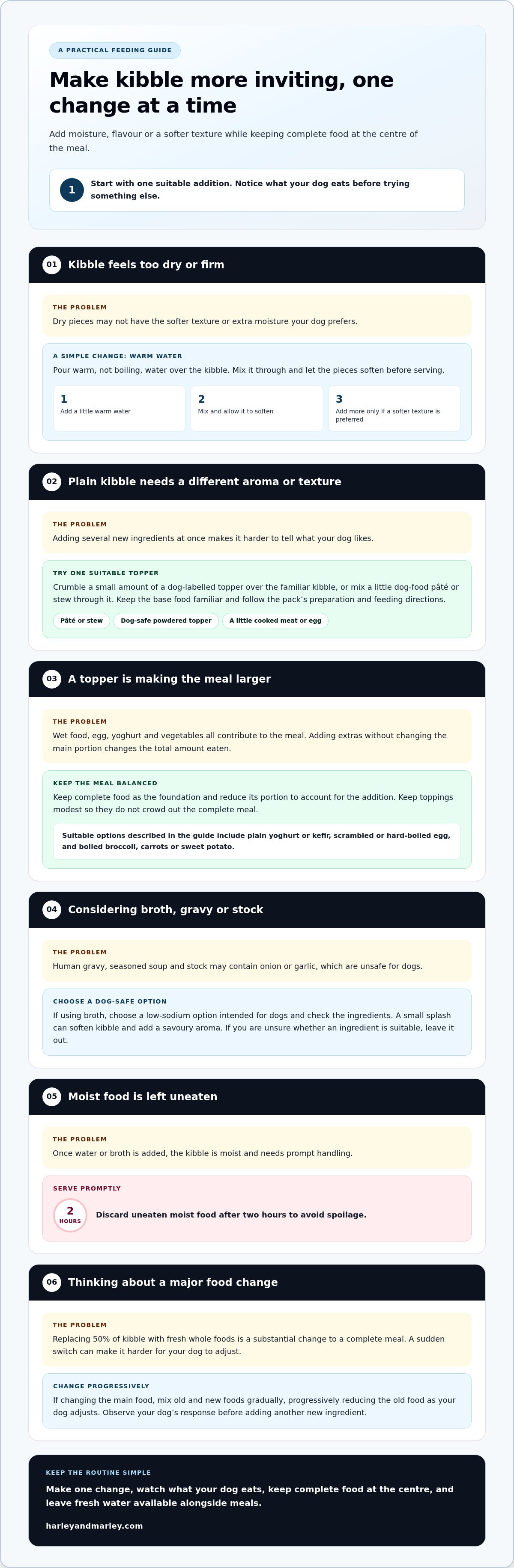
- Moisten the kibble gradually. Add a little warm water, mix, then let the pieces soften before serving. Add more only if your dog prefers a softer consistency. This lets you adjust the texture without introducing a new flavour.
- Choose broth carefully. Use low-sodium broth intended for dogs, and read the ingredients before adding it. Avoid seasoned soup, gravy and stock cubes, which may contain ingredients unsuitable for dogs.
- Serve the moist meal promptly. Once water or broth is added, the kibble is moist. Discard uneaten moist food after two hours to avoid spoilage.
Consider nutritional risks
Keep complete food as the meal’s foundation and reduce its portion to allow for toppers. A practical way to make dry dog food more appealing is to improve its flavour without letting extras crowd out the food that provides balanced nutrition.
- Account for every addition. Wet food, egg, yoghurt and vegetables all contribute to the meal. Adding them without adjusting the main portion changes the overall amount your dog eats.
- Introduce one new ingredient at a time. For example, stir a little plain yoghurt into a meal before trying egg or vegetables. A gradual introduction helps your dog adjust and makes their response easier to assess.
- Choose plain, suitable toppings. Scrambled or chopped, hard-boiled egg can be mixed through kibble. Plain yoghurt or kefir, and boiled broccoli, carrots or sweet potato, are other options.
- Keep the addition modest. Mash cooked vegetables or finely chop egg so they mix through the kibble. Reduce the original food to account for the topping, rather than allowing extras to replace the complete meal.
- Make food changes progressively. If changing the main food as well as adding a topper, mix old and new foods, then gradually reduce the old food. Introduce changes carefully and observe your dog’s response before adding another new ingredient.
Pâté, stews and shredded meat toppers
Choose a topper that changes the meal in one clear way, such as adding moisture or a softer texture. Introduce it gradually, keep complete food as the base and observe what your dog actually eats.
-
Use wet toppers for added moisture
Mix a little dog-food pâté or stew through the kibble instead of leaving it in a separate mound. Its soft texture coats the dry pieces and adds a different aroma. Reduce the dry-food portion to account for the wet food, so the topper doesn’t simply add extra food to the meal.
Serve only what your dog will eat at that meal. Discard uneaten moist food after two hours to avoid spoilage. Follow the storage directions for leftovers from an opened pack or tin, and use a clean, covered container if the label recommends one.
-
Try powdered toppers for picky eaters
Sprinkle a light coating of dog-safe powdered topper over the kibble, then mix it through so the flavour reaches more pieces. Follow the pack’s feeding directions and check the ingredients before serving. A strong aroma may interest a dog that ignores plain kibble, but too much powder can mask the food rather than reveal a preference.
To encourage a picky dog without creating a routine of escalating extras, offer meals at consistent times and avoid changing several ingredients at once. Note whether your dog eats more readily with the powder, then keep the amount consistent instead of adding a new topping whenever a bowl is left unfinished.
-
Mix in dog-safe or gently cooked toppers
Add a little plain, cooked ingredient, such as chopped egg or unseasoned meat, and mix it evenly through the kibble. Boiled carrots, broccoli or sweet potato are vegetable options. Avoid onion, garlic and seasoned gravy, as these can make human sauces unsafe for dogs.
For pâté, stew or shredded meat, read the ingredients and choose food made for dogs. Puppies need food formulated for growth, with higher protein, fat and calorie content than adult dog food, so don’t replace their main meal with an improvised mixture. Keep any topper secondary to complete food and reduce the base portion accordingly.
- Keep changes simple and track the response. Try one flavour or texture at a time, such as mixing pâté through kibble at one meal. Record whether your dog eats the whole meal, selects the topper or leaves both. This helps you identify preferences without turning every meal into a different recipe.
Mixing dry and wet food
Combining dry and wet food adds moisture and variety while keeping kibble in the meal. Follow these steps to adjust portions and help your dog adapt.
- Choose wet food that suits the meal. Start with dog food intended for your dog’s life stage, then read its feeding directions. Wet food can give kibble a softer texture and stronger aroma. Keep dry food as part of the meal rather than treating wet food as an unmeasured extra.
- Begin with a modest addition. There’s no single wet-to-dry ratio that suits every dog or food. Use the product’s feeding guidance and consider the portion your dog already eats. Mix the wet food through the kibble so each mouthful has a similar texture, rather than leaving a separate mound your dog can pick around.
- Adjust the dry-food portion. Wet food contributes to the overall meal, so reduce the kibble when adding it rather than simply increasing the bowl’s contents. Use both foods’ feeding directions as a guide. The right amount depends on the specific foods and your dog’s usual meal, so don’t copy another dog’s proportions.
- Keep the mixture consistent at first. Serve the same combination at mealtimes and observe whether your dog eats the kibble and wet food together. A familiar mixture makes changes in appetite or preference easier to notice. Avoid switching flavours and textures repeatedly, as this makes it harder to identify which combination your dog accepts.
- Transition gradually if changing the balance. If your aim is for your dog to eat less wet food, reduce its amount at each mealtime and adjust the kibble portion accordingly. A transition from wet to dry food is recommended over 7 to 14 days to help a dog adjust without digestive upset. Take a gradual approach rather than removing wet food suddenly.
- Serve and store the meal with care. Mix only what you plan to serve, and discard uneaten moist food after two hours to avoid spoilage. Store remaining wet food according to its directions. If your dog eats the mixture comfortably, note the portions and ingredients so you can prepare it consistently.
- Track your dog’s response. Notice whether your dog finishes the meal, leaves the kibble or selects only the wet food. A simple note of the food combination and eating behaviour helps you assess preferences. If you change the mixture, alter one element at a time, such as the wet food’s flavour or the balance of kibble.
Observing a dog's taste and texture preferences
Keep a simple mealtime record to distinguish a flavour preference from a reaction to texture or a change in appetite. Test one variable at a time and keep the main food consistent while you observe.
- Record what goes into each bowl. Note the food, any topper, whether you added water and how much your dog ate. For example, record “plain kibble, softened with warm water” separately from “kibble with wet food”. These details help you spot patterns instead of relying on memory.
- Change just one feature. Keep the same kibble and try a different texture, such as softened pieces instead of dry ones. At another meal, keep the texture constant and change the flavour. If you alter both together, you won’t know whether the protein, aroma or softness influenced your dog’s choice.
- Notice how your dog eats, not only whether the bowl is empty. Watch for your dog selecting wet pieces and leaving kibble, eating more readily when food is softened, or stopping after a few mouthfuls. Record these behaviours alongside the meal details. An empty bowl alone doesn’t show which part your dog preferred.
- Keep mealtimes predictable. Offer food at consistent times and remove uneaten food after a set period. Keep clean, cool water available, and note whether your dog eats differently after activity, such as a brisk walk. A steady routine makes comparisons between meals clearer.
- Check freshness before changing the recipe. Dry food can lose freshness after opening; an opened bag can start to spoil after 2 to 3 weeks. Record when you opened it, close it securely and store it according to its packaging. If your dog stops eating a familiar food, consider freshness as well as flavour and texture.
- Take sudden changes seriously. If a dog suddenly prefers wet food and paws at its mouth, or avoids chewing on one side, see a vet about possible dental trouble. Note when the behaviour started and which textures your dog still accepts. A preference log can make the change easier to describe.
- Use the pattern to guide your next meal. If your notes show your dog prefers a softer texture, adjust the preparation rather than adding several new ingredients. If a particular flavour or protein consistently goes untouched, stop testing it and return to the familiar meal. For a complete-food base suited to your dog’s life stage, explore complete dog food options.
Harley & Marley: Medium/Large Breed Complete Food
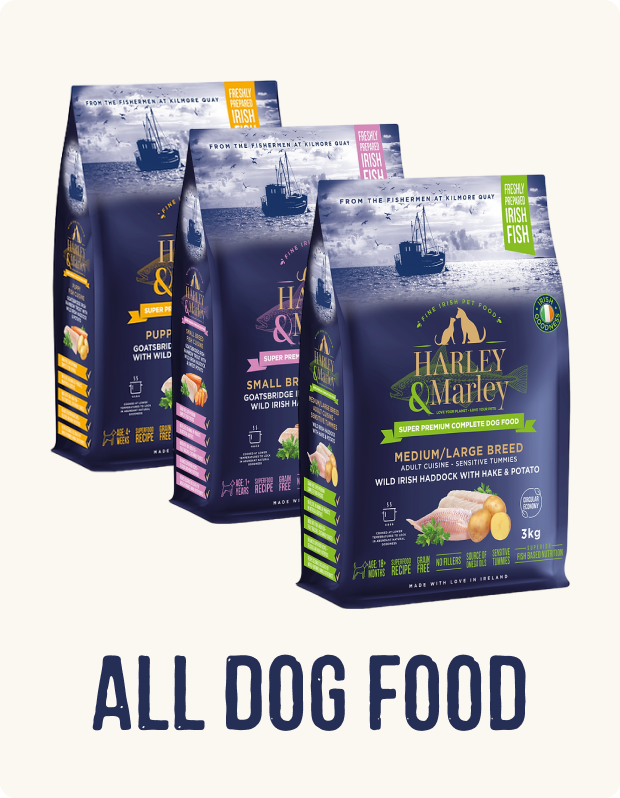
Harley & Marley’s Medium/Large Breed Complete Food is a complete-food option for owners choosing a suitable base for their dog’s meals. It’s fish-based and can be served as directed, with additions accounted for in the overall portion. Using the same complete food also makes it easier to observe your dog’s response to changes in texture or toppers.
Choose according to your dog’s life stage and size: Puppy Complete Food is for puppies, while Small Breed Complete Food and Senior Dog Complete Food provide other options. If your dog’s appetite changes suddenly or eating seems uncomfortable, seek veterinary advice rather than relying on toppers to address the cause.
For a complete-food option that suits your dog, contact Harley & Marley.
Make your dog’s mealtime routine your next step
Your observations can turn the question of how to make dry dog food more appealing into a considered routine. Keep a simple record of what your dog accepts, then use those preferences to choose a complete-food base suited to their life stage and size. A reliable foundation makes future meal adjustments easier to approach thoughtfully.
Harley & Marley offers Medium/Large Breed Complete Food, Puppy Complete Food and Small Breed Complete Food. These options give you a starting point when choosing food for your dog, rather than relying on a succession of extra toppings to make every meal different.
If you’re ready to explore a suitable complete-food option, contact Harley & Marley for help. A thoughtful routine begins with noticing what your dog enjoys, and you can build on that knowledge one meal at a time.
Frequently Asked Questions
Can I mix wet food and dry dog food together?
Yes, wet and dry food can be served together in the same meal. Use the feeding directions for both foods to work out the combined portion, rather than serving a full portion of each. If your dog sorts through the bowl, mix the foods evenly so the wet food coats the kibble. Notice which parts your dog leaves, as this can reveal a preference.
What can I add to my dog’s kibble every day?
A small, consistent addition can be part of a daily meal, but it shouldn’t displace the complete food that supplies your dog’s nutrition. Choose one suitable topper and account for it in the overall portion. Avoid rotating several extras each day, as this makes it difficult to tell what your dog tolerates or prefers. If your dog needs a special diet, keep additions compatible with it.
Why has my dog stopped eating dry food?
A sudden change may reflect freshness, a new food preference or discomfort when chewing. Check when you opened the bag and whether the kibble smells or looks different. If your dog now accepts softer food but paws at their mouth or avoids chewing on one side, seek veterinary attention for possible dental trouble. Note when the change began and what your dog still eats, so you can describe the pattern clearly.
What safe foods can I add to dry dog food to make it more appealing?
Examples include a little plain, cooked egg, dog-safe wet food, or boiled carrot, broccoli or sweet potato. Keep additions unseasoned and avoid human gravy containing onion or garlic, which are unsafe for dogs. Introduce one ingredient at a time and reduce the main food to account for the extra. If your dog has a prescribed diet or known food sensitivity, avoid ingredients that conflict with it.
How can I soften dry dog food with warm water or broth?
Add warm, not boiling, water to the kibble, stir and let it soften before serving. Begin with a small splash, then add more only if your dog prefers a softer consistency. Dog-safe, low-sodium broth can add aroma; avoid stock or gravy with onion, garlic or heavy seasoning. Moist food can spoil, so discard any uneaten portion after two hours rather than leaving it in the bowl.
Can I add plain cooked chicken, eggs, pumpkin or vegetables to dog food?
Plain cooked chicken, scrambled or chopped hard-boiled egg, and boiled vegetables such as carrots can be added in modest amounts. Plain cooked pumpkin can also be offered without seasoning. Avoid bones, sauces, salt and spices, and introduce only one new food at a time. Treat these ingredients as toppers, not replacements for complete food, and adjust the main portion to allow for them.