


Fish alone isn’t a complete diet for dogs. Whether a fish-only diet is healthy for dogs depends on whether it is carefully formulated to provide all the nutrients they need. A home-cooked fish diet should be planned with a veterinary nutritionist. Fish can still be a valuable protein choice, especially when a dog needs an alternative to common proteins such as chicken.
It makes sense to look to fish for its protein and omega-3 fatty acids, but not every fish or preparation is suitable. This guide explains which fish dogs can eat, which to avoid because of mercury or other risks, and how to serve fish safely. You’ll also learn how fish can fit into a balanced diet, whether as an occasional treat or a carefully chosen complete food.
From plain, cooked fish to bones and seasonings best kept away from your dog, the details matter. Read on for a practical guide to making fish a safe part of your dog’s meals.
Key Takeaways
- Salmon, ocean white fish, herring, Arctic char, cod and flounder can be suitable choices; fish may also offer an alternative protein for dogs sensitive to common foods.
- Consider mercury and parasite risks when choosing fish, and avoid serving it raw or undercooked.
- Fish provides protein and omega-3 fatty acids, but it should complement a nutritionally complete diet rather than replace one without careful formulation.
- Keep fish plain and thoroughly cooked, remove every bone, and avoid fried portions, seasonings and oily additions.
- Choose a fish-based complete food suited to your dog’s life stage and size for a convenient way to make fish part of their everyday diet.
Which Types of Fish Can Dogs Eat?
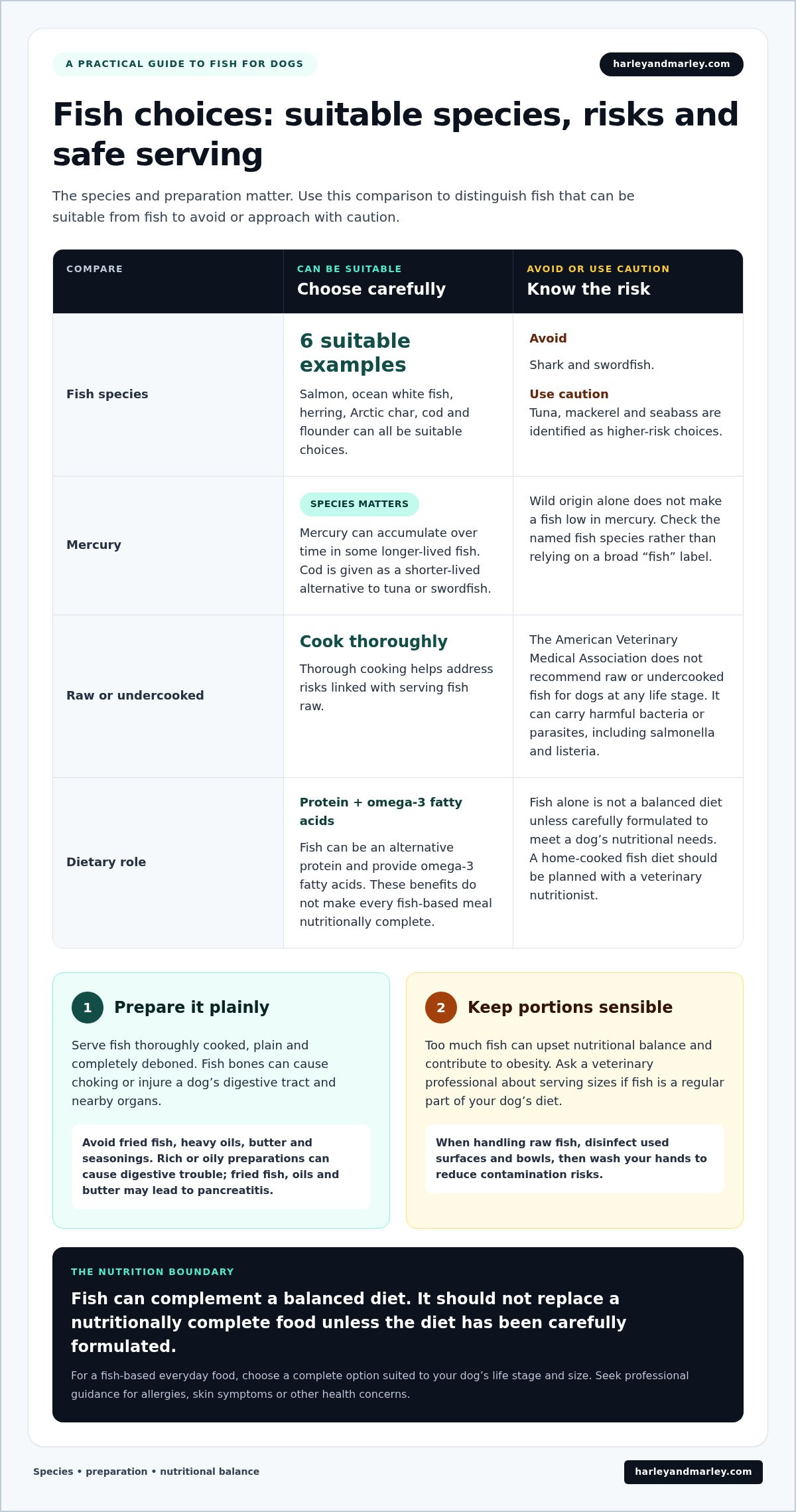
Salmon, ocean white fish, herring, Arctic char, cod and flounder can all be suitable for dogs. Whether a fish-only diet is healthy for dogs depends on its nutritional completeness, not simply the species of fish.
Fish as an alternative protein
Fish is an alternative protein: it supplies protein in place of a more familiar source, such as chicken. That distinction can matter for dogs with food allergies, particularly when a vet is helping identify a suitable diet. Some estimates suggest up to 20% of dogs develop an allergy during their lifetime, so a different protein may be relevant for some households.
Salmon, cod and herring are examples of fish that can provide protein. Fish may also be used daily when a novel protein is needed to help manage allergies, arthritis or inflammatory bowel disease. However, not every fish-based food suits every dog. Dogs with allergies, skin conditions or other health problems need individual food choices guided by professional advice.
Food allergy or intolerance can show up as skin irritation or gastrointestinal upset. When introducing a particular fish, offer a small portion first and watch for symptoms before giving more. If itching or digestive upset follows, stop offering that fish and seek professional advice, especially if your dog already has a diagnosed condition.
Fish allergies, bones and suitability
Fish itself can trigger an allergic reaction, while fish bones can cause choking or injure a dog’s digestive tract and nearby organs. A fish protein isn’t automatically safe just because it differs from chicken. Introduce one fish at a time, starting with a small portion, and make sure it is completely deboned.
For dog owners in Ireland, the key point is that fish alone isn’t a balanced diet unless the recipe is formulated to meet the dog’s nutritional needs. A home-cooked diet should be planned with a veterinary nutritionist to include appropriate nutrients, vitamins and minerals. Puppies and pregnant dogs can have properly cleaned, deboned and thoroughly cooked fish in small amounts as a treat or part of a balanced diet, rather than relying on fish alone.
Fish may also suit dogs prone to skin conditions, and its omega-3 fatty acids may help decrease inflammation. Those nutrients can support a dog’s diet, but they don’t make an unbalanced menu complete. Use an appropriate complete food as the nutritional foundation; treat cooked fish as an addition, and discuss regular feeding with a professional when allergies, skin symptoms or arthritis are involved.
Fish to avoid because of mercury or parasite risks
Fish choice and preparation affect safety: shark, swordfish and raw fish carry distinct risks. Too much fish can also upset a dog’s nutritional balance and contribute to obesity.
Mercury in longer-lived and wild fish
Mercury can accumulate in fish over time, making some longer-lived species less suitable for dogs. Avoid shark and swordfish, and take care with tuna, mackerel and seabass, which are also identified as higher-risk choices. Wild origin alone doesn’t make a fish low in mercury; the species and its lifespan matter.
Mercury exposure can build up in a dog’s body and cause heavy metal toxicity. Choosing a shorter-lived fish, such as cod, instead of tuna or swordfish reduces reliance on species associated with greater accumulation. Check the named fish ingredient on food packaging rather than assuming all fish-based dog food uses the same species.
Species matter more than a broad label such as “fish”. Shark and swordfish are specifically discouraged, while tuna and mackerel warrant caution because longer-lived fish can accumulate mercury. Seabass is another fish to avoid in the guidance provided. Don’t assume wild-caught fish is automatically safe; the mercury concern relates to fish that may accumulate it.
Risks of feeding raw fish
Raw fish is uncooked fish that may carry harmful bacteria or parasites. The American Veterinary Medical Association doesn’t recommend raw or undercooked fish for dogs at any life stage, including puppies and pregnant dogs. Raw fish can carry salmonella and listeria, which may make dogs and people ill.
Cooking fish thoroughly helps address the risks associated with serving it raw. Handling raw fish can also expose household surfaces, bowls and hands to contamination. If you have handled raw fish, disinfect the surfaces and bowls used, then wash your hands. This matters even when the fish looks fresh or is intended as a small portion.
Too much fish can contribute to obesity, while rich or oily preparation can cause digestive trouble. Keep portions moderate, and ask a veterinary professional about serving sizes if fish is a regular part of your dog’s diet. Fried fish, heavy oils and butter can upset a dog’s stomach and may lead to pancreatitis, so avoid these preparations.
For a safer choice, select a suitable fish species, cook it thoroughly and serve it plain. Avoid raw portions, shark, swordfish and heavily seasoned or fried fish. If fish is a frequent ingredient in your dog’s meals, consider both its mercury risk and its role in a balanced diet.
Fish as a source of protein and omega-3 fatty acids
Fish supplies protein and omega-3 fatty acids, giving it two distinct roles in a dog’s diet. As a protein source, it can replace chicken or beef in some foods. Its fatty acids may also help decrease inflammation, which makes fish relevant when considering joint ailments or inflammatory bowel disease. These benefits don’t make every fish-based meal nutritionally complete.
Protein provides the building blocks dogs need from food, while fatty acids are dietary fats with separate nutritional functions. Omega-3s are the fats most often associated with fish. Salmon, herring and cod are examples of fish used in canine nutrition, but the amount of omega-3 can vary by fish and product. The ingredient list alone doesn’t show how much a meal supplies.
Omega-3 fatty acids may be useful for dogs with joint ailments or inflammatory bowel disease because they can help decrease inflammation. Fish-based dog food may also be considered for dogs prone to skin conditions. A change in food isn’t an instant treatment, though: observe your dog’s skin, coat and digestion over time, and note any changes after introducing a new food.
Skin and coat condition depend on the overall diet, not simply on adding fish. A complete food provides a formulated base, while fish oil can increase omega oil intake when added to meals. Dogs eating complete and balanced food don’t need extra nutrition unless a veterinarian recommends it. Adding supplements without considering the existing diet may therefore be unnecessary.
For a dog with dry, irritated skin, a fish-based food may offer a different protein and a source of omega-3s in one diet. For a dog with joint concerns, the same fatty acids may be relevant, but fish alone doesn’t establish the cause of discomfort. Track practical signs such as coat condition, scratching, appetite and stool consistency when food changes.
Choose based on your dog’s needs and the food’s nutritional role. A complete fish-based food is designed to provide a balanced meal; plain fish is an ingredient or treat, not automatically a substitute. Fish oil is another way to add omega oils, but it shouldn’t replace protein or a complete diet. For dogs with diagnosed conditions, make food changes as part of a considered plan.
Fish as a treat or part of a balanced diet
Fish can be a meal ingredient, an occasional treat or a supplement. Its role matters: plain fish alone isn’t automatically a complete diet.
Complete fish-based foods and homemade diets
A complete fish-based food is formulated as a full diet, while a homemade fish-only meal may not supply every nutrient a dog needs. That distinction helps answer which is healthier: a complete food is a more reliable everyday choice than an unplanned homemade recipe. A home-cooked diet should be planned with a veterinary nutritionist to include appropriate nutrients, vitamins and minerals.
For example, cooked salmon can be an occasional addition, but it doesn’t turn a homemade menu into a complete diet. Dogs eating complete and balanced food don’t need additional nutrition unless a veterinarian recommends it. Keep the main meal as the nutritional foundation rather than replacing it with fish or adding supplements without a clear reason.
Nutritional needs and possible gaps
A fish-only diet can meet a dog’s needs only if it’s properly formulated to provide the appropriate balance. Plain fish by itself may leave gaps in vitamins and minerals; which nutrients are lacking depends on the recipe and its other ingredients. Fish contains minerals such as calcium, zinc, magnesium, selenium, iodine, iron and phosphorus, but that doesn’t guarantee suitable amounts overall.
For a homemade recipe, a veterinary nutritionist can account for the dog’s needs and the full ingredient list. Puppies and senior dogs, for instance, have different life-stage requirements, so a fish-only menu shouldn’t be assumed to suit them simply because they eat fish readily.
Fish treats can add variety, but they still count towards the day’s food. Treats, including fish, should make up no more than 10% of a dog’s daily diet. Keep portions moderate, since too much fish can contribute to obesity, and ask a veterinary professional about suitable serving sizes if fish becomes a regular part of meals.
Preparation matters. Serve fish plain, cooked and free from bones, added oil and seasoning; avoid fried fish, butter, garlic and onion. Fish sticks aren’t a good substitute because breading adds salt, oils and excess calories. A small piece of simply cooked fish is a more suitable treat than a heavily processed option.
Fish-based treats provide protein, while fish oil supplements, including salmon oil, can increase omega oil intake. They serve different purposes: a treat is an extra, and oil is a supplement, not a complete meal. Add either thoughtfully, and don’t assume that combining them with a fish-only menu supplies every nutrient your dog needs.
Fish skin, bones and choking hazards
Fish can be a useful ingredient, but bones and preparation affect safety. Remove bones carefully, and keep fish plain and thoroughly cooked.
Fish bones and choking hazards
Fish bones are small, sharp hazards that can cause choking or injure a dog’s digestive tract and nearby organs. Even a cooked fillet that looks boneless may contain a stray pin bone. Check the flesh carefully before serving, then break it into manageable pieces so you can inspect each portion.
Don’t assume a particular species is bone-free. Cod, salmon and other fish can contain bones, so inspect every serving rather than relying on the fish’s name or appearance. If a dog starts choking or shows distress after eating a bone, seek urgent veterinary help; don’t try to push a lodged bone further down.
Preparing fish safely for dogs
Safe preparation means cooking fish thoroughly, removing all bones and serving it plain. Steam, grill or cook the fish without added oil, butter, garlic, onion or other seasonings. Let it cool, separate the flesh from the skin if needed, and check the whole portion with your fingers before offering it.
Avoid raw or undercooked fish, and don’t serve fried fish or fish sticks. Heavy oils and butter can upset a dog’s stomach and may lead to pancreatitis, while breading adds salt and excess calories. Keep preparation simple: plain cooked flesh, no bones and no seasoning.
Fish skin can be offered as a dried, jerky-type treat when scales are removed and no oil or seasoning is used. Inspect the skin for bones before serving, and keep the portion modest. It’s a treat, not a replacement for food that provides complete nutrition.
Species choice still matters. Swordfish is among the fish to avoid because of mercury concerns, and safe preparation doesn’t remove mercury from fish. Choose an appropriate fish, cook it plainly and remove bones; each step addresses a different risk.
For a practical fish-based option, explore fish-based dog food as part of your dog’s balanced diet.
Dry fish food is recommended for dogs with allergies and pets prone to skin conditions. When considering this option, your dog’s particular health circumstances still matter in choosing a food. A fish-based food shouldn’t be treated as a substitute for considering those circumstances, especially when allergies or skin conditions are involved.
Owners of dogs with allergies, underlying health problems or skin conditions should seek professional advice when choosing food. That advice can help guide the choice for an individual dog. Fish should be plain and cooked, steamed or grilled, without bones, added oils or seasonings. Simple preparation matters whether fish is served as an ingredient or included in a food product.
Harley & Marley: Medium/Large Breed Complete Food
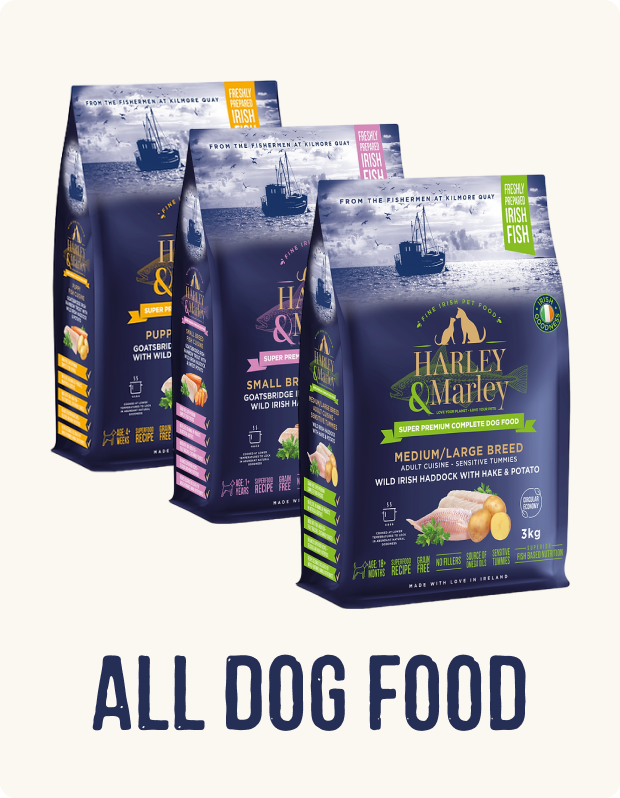
Harley & Marley’s Medium & Large Adult Dogs Complete Dry Food offers a fish-based complete meal for medium and large adult dogs. Choosing a complete food provides an everyday alternative to feeding plain fish alone, which may not supply balanced nutrition unless carefully formulated.
The range also includes Puppy, Small Breed and Senior/Weight Management Complete Dry Food. These options help you choose fish-based complete food according to your dog’s life stage and size, rather than relying on homemade fish-only meals as their sole diet.
If a fish-based complete food suits your dog’s needs, explore Harley & Marley’s available options at harleyandmarley.com.
Make your dog’s next meal a considered choice
Your dog’s food should suit their age, health and individual response to ingredients. If you’re weighing up whether a fish-only diet is healthy for dogs, focus on the complete nutritional plan rather than the appeal of a single ingredient. That gives you a clearer basis for choosing everyday food and deciding whether extras belong in the bowl.
Keep a simple note of what your dog eats and any changes you observe in their appetite, skin, coat or digestion. This can make conversations about food more useful, particularly if you’re managing sensitivities or considering a change. For a dog with a diagnosed condition, involve your veterinary professional in decisions about their diet.
When you’re ready to explore fish-based complete food options for your dog, contact Harley & Marley. A thoughtful food choice is a practical way to support your dog’s wellbeing, one meal at a time.
Frequently Asked Questions
Can Dogs Eat Sardines?
Dogs can have sardines as an occasional treat if they’re plain, thoroughly cooked and completely deboned. Avoid sardines packed or prepared with added oil, butter, garlic, onion or seasoning. Start with a small portion and watch for digestive upset or signs of an allergic reaction before offering more. Sardines should remain a treat, not replace a complete meal, and fish treats should stay within the daily treat allowance.
Can Dogs Eat Tilapia?
Plain, thoroughly cooked, boneless tilapia can be offered in a small amount, but it isn’t suitable for every dog. Tilapia’s phosphorus content may adversely affect dogs with kidney problems, so avoid giving it to a dog with kidney disease unless their veterinary professional advises it. Don’t fry the fish or add butter, oil or seasoning. For a first taste, offer a small portion and monitor your dog afterwards.
Which fish are safe for dogs to eat regularly?
Salmon, ocean white fish, herring, Arctic char, cod and flounder are suitable fish choices for dog nutrition. Regular feeding still depends on the form of the food: fish can be part of a complete diet, but plain fish alone doesn’t provide a balanced meal. If fish is a regular ingredient because your dog needs a novel protein, choose portions and food that suit their overall needs.
How much fish can a dog eat based on its weight?
For healthy dogs, one guide measures cooked fish in 1-inch by ¼-inch squares: extra-small dogs weighing 2-20 pounds can have one; small dogs weighing 21-30 pounds, two to three; medium dogs weighing 31-50 pounds, three to five; large dogs weighing 51-90 pounds, five to nine; and extra-large dogs weighing 91+ pounds, nine to ten. Treats should make up no more than 10% of daily food.