


The most expensive bag on the shelf isn’t automatically the best choice for your dog. So, is expensive dog food worth the money? It depends less on premium branding and more on whether the food provides appropriate nutrition, suits your dog’s life stage and gives you clear information about its formulation.
It’s understandable to feel unsure. Bag prices can be difficult to compare when pack sizes, feeding amounts and food formats differ. A higher price alone doesn’t tell you whether a food is a better fit for your dog’s everyday needs.
This guide explains how to judge value beyond the shelf price. You’ll learn how to compare feeding costs and calorie information, assess label clarity and check that a food is intended for your dog’s age and needs. We’ll also look at how to compare complete fish-based foods, including Harley & Marley options for puppies, small breeds, medium and large breeds, and senior dogs. The aim is to help you pay more when the formulation and fit justify it, not simply because the packaging suggests a premium choice.
Key Takeaways
- Is expensive dog food worth the money? Judge nutrition, suitability and label clarity, not the price or premium branding alone.
- Check that the food is labelled complete and intended for your dog’s life stage.
- Use the feeding guidance to estimate a like-for-like daily cost.
- Consider a higher-priced food when its formulation is a better fit for your dog and the label gives you clear information.
- Compare Harley & Marley’s fish-based complete foods by life stage and breed size, using the same checks you’d apply to any food.
Is expensive dog food worth the money, or does price only signal premium branding?
A higher price can be worthwhile, but it proves neither quality nor suitability on its own. To decide whether is expensive dog food worth the money, consider nutritional adequacy, suitability for your dog, clarity of product information and the practical cost of feeding it. A premium price may reflect differences in formulation or production, but it doesn’t show whether those differences matter to your dog.
Separate price category from nutritional fit. A food positioned as premium may not suit your dog’s life stage or circumstances. A lower-priced food may be appropriate if it is complete for the intended dog and clearly labelled. The word “complete” matters: it indicates that the food is intended to provide the nutrients a dog needs when fed as directed. Compare the full label and feeding guidance, not just the price or front-of-pack claims.
Dog foods come in different types and formulations, with varied ingredients and nutritional approaches. For useful background, Dog food composition and history outlines how these foods and their ingredients differ. This comparison is educational, not a promise that any particular food will prevent illness or produce a specific health outcome.
What can make one dog food cost more than another?
Ingredients are one possible factor, alongside the work involved in developing and producing a formulation. Manufacturing methods, packaging and distribution can also influence retail costs. These differences may matter, but a higher price doesn’t reveal which factor is responsible. Clear product information helps you distinguish a specific formulation difference from premium wording, polished packaging or broad claims such as “natural”.
A prominent ingredient doesn’t settle the comparison either. Ingredient lists provide useful information, but an ingredient’s position by weight doesn’t show the nutritional contribution of the whole food or prove that it is superior overall. Consider the formulation as a whole and check whether it is described as complete for your dog’s life stage.
Does a higher price automatically mean better nutrition?
No. Price and marketing language don’t establish nutritional adequacy. Your dog’s age and life stage are central to a fair comparison, so don’t treat foods intended for different stages as interchangeable. Individual circumstances matter too: a food that suits one dog may not suit another, regardless of price.
Check the label for the food’s intended use and feeding guidance, then consider whether the information is clear enough to support an informed choice. A food designed for puppies, for example, shouldn’t be judged as though it were intended for a senior dog. Life-stage suitability is part of value, not an optional extra.
If your dog has a health concern, or a veterinary professional has recommended a prescribed diet, seek their advice before changing foods. A higher-priced general food isn’t a substitute for individual veterinary guidance. The practical question is whether the documented formulation suits your dog and whether its cost makes sense for the way it needs to be fed.
Which nutrition and label checks matter more than the price tag?
Start with what the food is designed to provide, not the claims that make it sound premium. FEDIAF’s concise definition is: “Complete pet food means pet food which, by reason of its composition, is sufficient for a daily ration.” In practical terms, check that the packaging describes the food as complete and identifies its intended life stage. A complementary food, such as a treat or topper, isn’t intended to provide the whole daily ration on its own.
This is a more useful starting point than a single ingredient highlighted on the front of the pack. It won’t tell you everything about how a food suits your dog, but it helps you compare products on a meaningful basis. It also keeps the question “is expensive dog food worth the money” focused on nutrition and suitability, rather than packaging or price positioning.
How should owners read a dog food label?
Read the label in context. First, find the product type and intended life stage. Then review the feeding guidance and analytical information to understand the food’s stated composition. Compare the instructions for foods intended for similar dogs, rather than judging a puppy food against a senior formula as if they were directly comparable.
Ingredient names are useful, but they don’t independently establish the nutritional quality of the whole recipe. Their names or order can’t, by themselves, tell you how digestible the finished food is or prove a particular health effect. Consider ingredient information alongside the complete formulation, intended use and feeding directions. Look beyond a headline ingredient and ask what the food is designed to provide as a whole.
For context, the FDA’s pet food information explains aspects of the United States’ regulatory framework. It relates to US requirements, so it shouldn’t be mistaken for guidance on Irish or EU labelling rules.
When should a dog’s needs shape the choice?
Choosing food for your dog’s life stage is a routine part of feeding; selecting a therapeutic diet is a different decision. Match puppy, adult or senior wording to your dog’s actual stage of life, and use the pack’s intended-use information to compare like with like. Breed size may help narrow the options, but it doesn’t replace checking the product’s stated purpose and feeding guidance.
Persistent symptoms, suspected allergies or a decision about a diet for a diagnosed condition call for advice from a veterinary professional. Don’t treat a premium claim, a particular ingredient or a general food as a substitute for that guidance.
For a practical example of comparing foods by formulation and intended life stage, explore Harley & Marley’s complete fish-based dog food. The range includes options for puppies, small breeds, medium and large breeds, and senior dogs, giving you a starting point for checking suitability alongside the label.
How can you compare dog food value beyond the bag price?
A larger pack can look like better value, but only if you account for how much your dog needs and how long the food lasts. Compare suitability and feeding cost together, rather than treating the shelf price as the whole story.
Cost per day is more informative than bag price alone because it reflects how much food your dog actually eats and how long each pack lasts. Use the label’s daily feeding guidance as a starting point, then consider your dog’s actual portion needs. Dogs don’t all eat the same amount, even if they weigh the same.
How do you compare the cost of feeding two foods?
Estimate how many days a pack will last, then divide its price by that number. For dry food, estimate days fed by dividing the pack weight by the recommended daily amount, using the same units for both. The formula is:
Pack price ÷ estimated days fed = estimated cost per day
For example, imagine a hypothetical 10 kg pack priced at €60, with label guidance of 250 g per day. The pack contains 10,000 g, so it would last an estimated 40 days at that amount. €60 divided by 40 gives an estimated cost of €1.50 per day. These figures are illustrative only, not Harley & Marley prices. Repeat the calculation for the other food using its own pack size, price and suitable daily guidance.
Actual use can differ from the estimate. Activity, body condition and individual feeding needs may mean your dog needs a different portion. Use the product guidance as a starting point, and make adjustments with appropriate professional advice if you’re unsure. For different formats, such as dry and wet food, don’t compare pack weights directly. Use each format’s feeding instructions to estimate the cost of the daily ration.
Which differences are meaningful, and which may be marketing?
Use this simple comparison grid to keep the essentials side by side. Compare foods intended for similar dogs and feeding situations:
Complete status: Is it described as complete food, rather than a complementary product?
Life stage: Is it intended for your dog’s current stage of life?
Feeding amount: What daily amount does the label guide you to use?
Formulation transparency: Can you understand the declared ingredients and product information?
Format: Are you comparing like with like, or accounting for different feeding instructions?
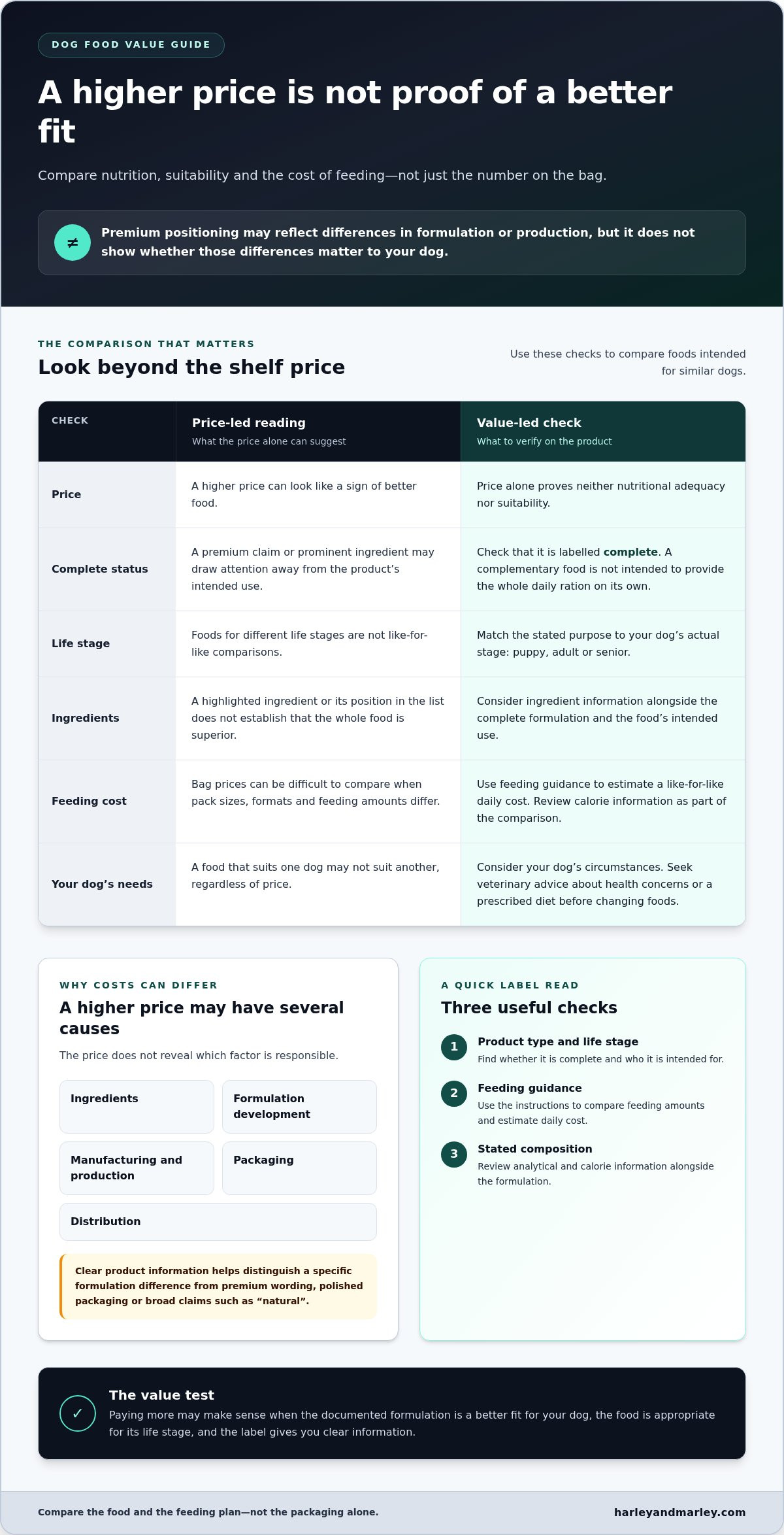
Once those points are clear, consider the formulation and any premium claims. Words such as “natural” or “premium” and attractive ingredient imagery are prompts to inspect the details, not proof of added nutritional value. Grain-free, fish-based or single-protein food isn’t automatically better for every dog. Ask whether the declared formulation and intended use suit your dog, and whether the everyday feeding cost feels worthwhile for that fit.
When is spending more on dog food worthwhile for your dog?
Paying more can make sense when the extra spend gives you a clearer, more suitable choice for your dog, not simply a more prestigious label. This practical decision tree helps separate a genuine reason to switch from the assumption that the most expensive option must be best.
- Is the food complete? If not, it shouldn’t be treated as your dog’s sole daily food. Look for a complete option suited to regular feeding.
- Does it match your dog’s life stage? If the intended stage doesn’t fit, compare foods formulated for the right stage before weighing up price.
- Does your dog have a specific need? For a health concern or a prescribed diet, discuss food choices with your veterinary professional rather than relying on premium claims.
- Can you understand what you’re buying? Check that the label gives useful information about intended use, formulation and feeding guidance.
- Does the everyday cost fit? Estimate the cost of feeding your dog using the pack price and an appropriate daily amount, rather than comparing pack prices alone.
If one option costs more but offers a clearer formulation or a better fit for your dog’s life stage and feeding routine, the additional cost may be worthwhile. That’s a reason to consider it, not a promise of improved health or lower veterinary costs. Judge suitability over time, paying attention to your dog’s wellbeing and any veterinary advice relevant to their circumstances.
If you’re weighing up a complete fish-based food, explore Harley & Marley’s complete fish-based options and compare the life-stage choices against the checks above. The range includes food for puppies, small breeds, medium and large breeds, and senior dogs. A bundle or monthly food box may change how you purchase, but the format alone doesn’t establish nutritional value or prove a saving.
When might a higher-priced food earn its place?
A higher price may be justified if the label is more informative, the formulation suits your dog’s life stage, or the feeding guidance makes the everyday cost worthwhile for your circumstances. These are practical reasons to pay more, provided the food remains suitable for your dog. Keep an eye on how your dog is doing, and seek veterinary advice if you have concerns.
When might paying more not be necessary?
If your dog is doing well on a familiar food that’s complete and appropriate for their life stage, there’s no need to replace it for status. Premium wording can’t compensate for poor suitability or an unclear label. Revisit the choice if your dog’s life stage, needs or household circumstances change, and compare options afresh rather than assuming a higher price is the answer.
How can Harley & Marley help you choose a fish-based complete dog food?
Harley & Marley is an Irish business offering complete fish-based dog food for puppies, small breeds, medium and large breeds, and senior dogs. This range gives you a starting point for comparing foods intended for similar dogs, rather than judging value by price category or protein source alone.
Use the same practical checks you would with any food: is it described as complete, does its intended life stage suit your dog, and can you follow the feeding guidance to estimate everyday use? These checks keep the decision focused on suitability. A fish-based formulation is a food choice, not a promise of a particular health outcome or the right option for every dog.
How does a fish-based food fit into the value comparison?
Compare the declared formulation and intended use, rather than assuming fish is automatically better. Check that the food is complete and appropriate for your dog’s life stage, then use the pack’s feeding guidance as part of your cost comparison. Harley & Marley’s guide Fish-Based Dog Food: The Ultimate Guide to Functional Canine Nutrition in 2026 explores this type of food in more detail.
A puppy and a senior dog, for example, call for different life-stage comparisons. Look at the option intended for your dog, then assess its label and feeding instructions as carefully as you would with any other formulation. The question “is expensive dog food worth the money” still comes down to whether the food’s information, intended use and practical feeding cost make sense for your dog.
Which buying format suits your routine?
Harley & Marley food is available as individual purchases, bundles or a monthly food box. These are different ways to shop, not evidence that one format offers better nutrition or savings. Choose based on how you prefer to purchase, while keeping the food itself and its suitability the priority. The guide Choosing the Best Dog Food Subscription in Ireland: A 2026 Buying Guide can help you consider subscription formats; Dog Food Bundle Deals: The 2026 Guide to Premium Value and Nutrition covers bundled purchasing.
Before choosing a format, compare the food’s intended life stage, complete status and feeding guidance. If you select a bundle or food box, consider whether the food included fits your dog and your routine, rather than treating the format as proof of value. The same checks apply whether you buy one pack at a time or choose a regular purchasing option.
- Match the life stage: Compare puppy, small-breed, medium/large-breed or senior options according to your dog.
- Review the food: Use the label and feeding guidance to assess suitability and estimate how it fits your everyday routine.
- Choose the format: Decide between individual purchases, bundles and the monthly food box based on your shopping preference.
Explore Harley & Marley’s complete fish-based range and compare the options using the same label and feeding checks you’d use for any dog food. A confident choice is grounded in your dog’s needs, clear product information and a format that works for your household.
Make your next food choice with confidence
The question “is expensive dog food worth the money” has no single answer for every dog. What matters is whether the choice makes sense for your circumstances, not whether it carries the highest price tag. Keep the label details and estimated feeding cost to hand, then revisit them if your dog’s needs or routine change.
If you’re considering a fish-based option, take the same measured approach. Explore the range, look at the food intended for your dog and use its product information to decide whether it fits your priorities. There’s no need to choose for status. Choose with care and confidence.
Explore Harley & Marley’s complete fish-based dog food and take your next step towards a choice that feels right for you and your dog.
Frequently Asked Questions
Is expensive dog food worth it for every dog?
No. Whether expensive dog food is worth the money depends on whether it suits your dog, not its price category. If your dog is thriving on a complete food that’s appropriate for their life stage, switching to a costlier option may offer no clear advantage. Reassess if their needs change, but don’t feel that a higher price is a requirement for responsible feeding.
Can expensive dog food prevent health problems or vet bills?
No food price can guarantee that a dog will avoid illness or veterinary costs. A suitable, complete diet can contribute to meeting nutritional needs, but health is affected by many factors, including genetics, environment and routine care. Treat claims that a food prevents disease or eliminates vet bills with caution. If you’re concerned about your dog’s health, discuss their diet with a veterinary professional.
How much should I feed my dog when comparing two foods?
Start with the feeding guidance on each food’s packaging, using your dog’s current weight and the relevant life-stage instructions. Weigh portions with kitchen scales rather than relying on a scoop, as kibble size and density can differ. Keep an eye on your dog’s body condition and adjust with veterinary guidance if needed. Don’t assume equal pack weights or equal-looking portions provide the same daily ration.
Can I mix two different dog foods together?
Often, foods can be combined, but make sure the overall ration suits your dog and avoid mixing a prescribed diet with another food without veterinary advice. If you’re introducing a new food, change over gradually rather than making an abrupt switch, and measure both foods so you don’t unintentionally increase the total amount. Watch your dog’s appetite and digestion during the change, and seek advice if you’re concerned.
What happens if my dog refuses a new food?
Don’t force the change or leave your dog without food to make them accept it. Check that the food is fresh and offer it calmly, using a gradual transition if your dog is accustomed to another diet. A sudden loss of appetite can have causes beyond preference, so contact your veterinary practice if refusal persists, your dog seems unwell or other symptoms appear.
Is grain-free dog food always more expensive?
No. Grain-free food isn’t automatically more expensive, and the label alone doesn’t tell you whether a food offers better value. Compare the complete formulation, intended life stage, feeding guidance and cost of the daily ration. Grain-free also isn’t automatically the right choice for every dog. If you suspect an allergy or food sensitivity, seek veterinary advice rather than relying on a label claim to identify the cause.
Can I feed puppy food to an adult dog?
It’s generally better to choose food intended for your adult dog’s life stage, rather than feeding puppy food as their regular diet. Puppy foods are formulated for growth, so their feeding guidance and nutritional profile may not suit an adult dog’s needs. Check the intended-use information on the pack. If your adult dog has a particular nutritional requirement, ask a veterinary professional before choosing a food designed for puppies.