


Fish can be a good protein for dogs: it’s complete, highly digestible and relatively low in saturated fat. Thoroughly cooked, plain and carefully deboned fish provides nourishing protein without the richness of some alternatives. For dogs with food sensitivities, it can also offer a different protein to consider.
If you’re weighing up a change to your dog’s diet, consider both the potential benefits and how the fish is prepared. This guide covers which fish dogs can eat, why fish may suit some dogs with sensitive digestion or food sensitivities, and what to look for in a complete fish-based food. You’ll have a clearer idea of how fish can fit into a balanced diet.
Key Takeaways
- Salmon, cod, hake and sardines can be suitable choices when prepared safely; learn what to remove and which fish to avoid.
- Fish provides digestible protein and omega-3 fatty acids, which can support your dog’s skin, coat and overall wellbeing.
- A different protein source may be worth considering if your dog has food sensitivities, but the right diet depends on their needs.
- Find out how complete fish-based food can make it easier to choose an option suited to your dog’s breed size and life stage.
Which Types of Fish Can Dogs Eat?
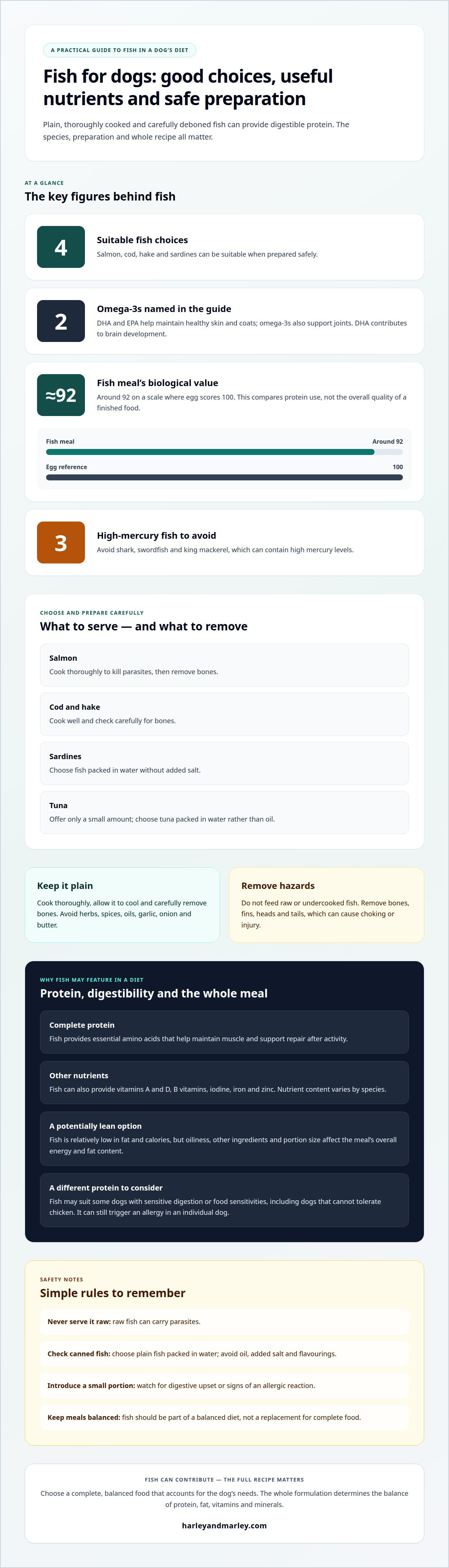
Dogs can eat salmon, cod, hake and sardines when the fish is prepared safely. These options contain protein and omega-3 fatty acids, including DHA and EPA. Omega-3s help maintain healthy skin and coats, support joints and contribute to brain development. Their anti-inflammatory effects may also help support joint comfort. Fish oiliness varies, so the type and amount matter alongside your dog’s weight and overall diet.
Choose plain fish, cook it thoroughly, let it cool and carefully remove any bones. Salmon needs thorough cooking to kill parasites; cook cod and hake well, too, and check them for bones. Sardines packed in water without added salt are another option. Keep preparation simple: avoid herbs, spices, oils, garlic, onion and butter. Offer fish skin as a dried treat only if it has no scales, seasoning or added oil.
- Salmon: cook thoroughly and remove bones.
- Cod and hake: cook well and check carefully for bones.
- Sardines: choose water-packed fish without added salt.
- Tuna: offer only a small amount, choosing tuna packed in water rather than oil.
Don’t feed raw or undercooked fish. Bones, fins, heads and tails can cause choking or injury, so remove them before serving. Canned fish can be suitable when plain and packed in water; avoid oil, added salt and flavourings.
Risks include parasites in raw fish and mercury in certain species. Avoid shark, swordfish and king mackerel, which can contain high mercury levels. Fish can also trigger an allergy in an individual dog, even if it suits some dogs sensitive to other proteins.
For dog owners in Ireland, the practical advice is to serve fish thoroughly cooked, plain and deboned, never raw. Introduce a small portion and watch for digestive upset or signs of an allergic reaction. Fish should be part of a balanced diet, not a replacement for complete food.
Fish as a digestible, lower-fat protein option
Fish can provide dogs with highly digestible, complete protein, while marine protein is relatively low in fat and calories. These qualities may matter for dogs needing an easier-to-digest option or careful weight management.
Protein quality and digestibility
Fish protein supplies essential amino acids dogs need, and its digestibility helps the body use those nutrients. This can make fish a useful ingredient when comparing protein sources for everyday feeding. Fish also contains vitamins A, D and B vitamins, as well as minerals such as iron and zinc. Nutrient content varies by species, so the food’s full formulation matters as much as its main protein.
Fish as a lower-fat option
Fish’s relatively low fat and calorie content may suit dogs that are overweight or at risk of obesity. The benefit depends on the whole meal, not simply whether it contains fish: other ingredients and portion size also affect total energy intake. A lean fish recipe may fit a weight-conscious feeding plan, while oily fish or a larger portion can increase the meal’s overall fat content.
Fish for sensitive digestion
Fish is generally easy to digest, which may suit dogs with sensitive stomachs. A simple fish-based meal can help owners assess how a particular protein suits their dog, although easier digestion doesn’t rule out allergies. If symptoms persist, note changes in appetite, stools or comfort alongside dietary changes. Always see a vet if a problem persists.
Choose a complete, balanced food rather than relying on fish alone to supply every nutrient. This is especially relevant if you’re adjusting meals for weight or digestion, since the full recipe determines the balance of protein, fat, vitamins and minerals. To explore fish-based nutrition for dogs, consider how a complete formula fits your dog’s needs and usual feeding routine.
Fish as a source of protein for dogs
Fish supplies complete protein, meaning it provides the essential amino acids dogs need from their diet. These amino acids help maintain muscle and support repair after activity. Fish can therefore be a main protein ingredient in complete dog food, rather than just an occasional treat. Salmon, cod and hake are examples of fish used as protein sources.
One way to compare protein quality is biological value, which reflects how efficiently the body can use a protein. Fish meal has a biological value of around 92 on a scale where egg scores 100. This comparison indicates that fish provides high-quality protein, though it doesn’t describe the overall quality of a finished food. The recipe’s other ingredients and nutritional balance matter too.
Fish also contributes nutrients beyond protein. It contains omega-3 fatty acids, including DHA, which supports brain and cognitive development. Fish can provide vitamins A and D, B vitamins, iodine, iron and zinc. These nutrients have different roles, so a balanced diet depends on the complete formulation rather than one ingredient alone.
Consider the source. Fish and shellfish can contain mercury or other contaminants, so reliable sourcing matters. Species and origin are important: avoid shark, swordfish and king mackerel because they can contain high mercury levels. Salmon shows why identifying the species matters, but the name alone doesn’t tell you how responsibly it was sourced.
Sustainable sourcing also means considering where fish comes from and how it was caught or farmed. These details help you assess whether a product’s supply may place greater pressure on marine resources. When comparing foods, look for clear information about the fish species and origin. The ingredient list should identify the fish, helping you assess whether that protein suits your dog.
Fish can make a valuable contribution, but it isn’t the only measure of a food’s suitability. A complete, balanced recipe provides the wider combination of nutrients dogs need, with fish as a high-quality protein source within that formulation.
Fish as a potential alternative for dogs with food sensitivities
Fish can offer a different animal protein for dogs that cannot tolerate chicken. Food sensitivities involve reactions to ingredients, including proteins, so changing the protein source may help identify what suits your dog. A fish recipe isn’t automatically suitable for every sensitive dog, though. A dog that reacts to fish may still show signs such as itchy skin or digestive upset.
“Fish” can refer to several species, including salmon, cod and hake. When comparing foods, read the ingredient list to identify the fish species and any other protein sources. A recipe containing fish alongside chicken, for example, doesn’t remove chicken from the diet. A clearly identified protein source makes it easier to understand what your dog is eating.
Fish-based food can provide protein alongside nutrients such as omega-3 fatty acids, vitamins and minerals. These nutritional benefits don’t establish that a food will resolve an allergy. Suitability depends on the individual dog’s sensitivities and the ingredients in the whole recipe. Keep meals consistent while assessing a dietary change, rather than introducing several new foods or treats at once.
Recurring digestive trouble or skin irritation can have different causes, so don’t assume fish is the answer based on one symptom. Note the foods, treats and ingredients your dog eats, then look for patterns over time. Check whether a fish product contains other animal proteins, too. Changing one ingredient at a time is easier to assess than making several changes at once.
- Identify the fish species and every other protein in the ingredients.
- Keep treats and meals consistent when assessing a new food.
- Record changes in digestion or skin comfort alongside the foods eaten.
For dogs that need a fish-based complete food, explore fish-based feeding options and compare the listed ingredients with your dog’s needs.
Harley & Marley: Medium/Large Breed Complete Food
Harley & Marley’s Medium/Large Breed Complete Food offers a fish-based complete meal for medium and large dogs. It’s a practical option if you want fish in your dog’s regular, balanced diet rather than adding occasional fish separately. Complete food also provides the wider range of nutrients a dog needs, beyond protein alone.
Choose a food suited to your dog’s life stage and size. Harley & Marley also offers Puppy Complete Food, Small Breed Complete Food and Senior Dog Complete Food. If you’re considering fish because of suspected food sensitivities, compare ingredients carefully: a fish-based food doesn’t guarantee symptoms will resolve.
Visit harleyandmarley.com to explore the complete food options.
Choose a food that fits your dog’s next stage
Deciding whether fish is a good protein for dogs is only one part of feeding well. Next, match a complete food to your dog’s size, life stage and individual needs. Keep ingredient choices consistent if you’re monitoring sensitivities. This gives you a clearer basis for a considered change, rather than switching foods based on one ingredient alone.
Harley & Marley offers Medium/Large Breed Complete Food, Puppy Complete Food and Small Breed Complete Food, so you can explore options suited to different dogs. Read the product details and consider how each choice fits your dog’s usual diet and routine. If you’d like to explore the range, contact Harley & Marley today. A thoughtful food choice is a positive next step towards supporting your dog’s everyday wellbeing.
Frequently Asked Questions
Can Dogs Eat Sardines?
Yes, dogs can eat sardines packed in water without added salt. Choose plain sardines rather than varieties packed in oil, brine or sauce, and remove any sharp bones you can see. Offer a modest amount alongside your dog’s usual complete food, not as a replacement for a balanced meal. If sardines are new to your dog, introduce them separately from other new foods.
Can Dogs Eat Tilapia?
Dogs can eat tilapia when it’s thoroughly cooked, plain and carefully deboned. Don’t serve it raw, fried or dressed with butter, garlic, onion or seasoning. Start with a small piece and see how your dog responds before offering more. Keep tilapia as an addition to complete food, rather than relying on one fish to provide every nutrient your dog needs.
Fish or Chicken: Which Protein Is Better for Your Dog?
Neither protein is automatically better; the right choice depends on your dog’s diet and how they tolerate each ingredient. Chicken provides B vitamins, including niacin and pyridoxine, while fish supplies omega-3 fatty acids. If chicken causes a suspected sensitivity, a fish-based recipe can provide a different protein to consider. Compare the whole food’s ingredients and nutritional balance, not just its headline protein.
How do I give my dog fish?
Serve fish as a small, plain addition to your dog’s usual complete food. Cook it thoroughly, let it cool, then check carefully for bones before serving. Introduce fish on its own, not alongside a new treat or food, so you can notice any change in digestion or comfort. Keep portions modest, since too much fish can upset digestion or add excess calories.
Which fish is safe?
Salmon, cod, hake and sardines are suitable choices when prepared appropriately for dogs. Cook salmon thoroughly, and check cod or hake carefully for bones before serving. Avoid shark, swordfish and king mackerel because they can contain high mercury levels. For tinned sardines, choose plain fish packed in water without added salt, not oil-packed or seasoned varieties.
Is fish a healthy source of protein for dogs?
Yes, fish is a good protein for dogs when included in a complete, balanced diet. Its protein supports muscle development and recovery, while fish also provides nutrients such as DHA, vitamins and minerals. A fish ingredient alone doesn’t make a food complete, so consider the whole formulation. Dogs with kidney disease need careful dietary management, including attention to phosphorus in fish.