


A birthday alone isn’t a reason to change your dog’s food. The signs your senior dog needs a diet change are more likely to appear as a pattern, such as a steady shift in weight, appetite or stools, rather than one small change from day to day. It can be difficult to tell what’s part of ageing and what deserves attention.
It’s sensible to pause before switching foods. A change may not address the reason behind a new symptom, and an abrupt switch can upset digestion. Some changes call for veterinary advice before you adjust your dog’s diet, particularly if they’re sudden, persistent or accompanied by other signs of illness.
This practical checklist will help you track meaningful changes, distinguish them from ordinary variation and decide what to discuss with your vet. You’ll also learn how to compare foods with your dog’s individual needs in mind, rather than relying on age labels or broad claims about senior nutrition. The aim is a considered next step, not a change for the sake of changing.
Key Takeaways
- Look for persistent shifts in weight, body condition, appetite or stools rather than treating age alone as a reason to switch food.
- The signs your senior dog needs a diet change can overlap with dental discomfort, medication effects or health conditions, so food may not be the underlying answer.
- Keep a simple record of meals, treats, weight, activity and changes in appetite or stools to give your vet a clearer picture.
- Compare foods by complete-food status, life-stage suitability and feeding guidance, then consider whether each fits your dog’s observed needs.
- Consider a senior-labelled food as one option, not an automatic fix, and seek veterinary advice before changing diets when symptoms are concerning.
Signs Your Senior Dog Needs a Diet Change: What to Notice First
Start with what has changed, not with a new food. The signs your senior dog needs a diet change are easier to assess when you look for a lasting shift from your dog’s usual pattern. A single unusual meal or soft stool may have an everyday explanation; repeated changes deserve closer attention and context.
A useful signal for reviewing your dog’s diet is a persistent change from their normal pattern that you can observe, record and discuss with your vet. Note changes such as:
- Gradual weight gain or loss, or a change in body shape or condition.
- A stronger appetite, reduced interest in meals or apparent difficulty eating.
- Stools that are repeatedly softer, harder or otherwise different from normal.
- Changes in thirst, chewing, energy or coat condition.
- Recurring vomiting or a change in willingness to move or play.
These observations can help you spot a pattern, but they don’t prove that food is the cause. Ageing, activity, dental comfort, medication and health conditions can all affect what you see. Nutritional needs also vary between dogs; general background on senior dog food nutritional needs is a starting point, not a substitute for considering your dog’s circumstances.
Changes in weight, appetite and body condition
Weigh your dog consistently, using the same scales where possible, and record the date and result. If regular weighing isn’t practical, note visible or tactile changes in body shape and how their usual collar or harness fits. A gradual trend is more informative than one measurement. Appetite needs context, too: eating more is different from approaching the bowl but struggling to chew, or turning away from food they usually enjoy.
Record meal portions, treats, activity and appetite alongside weight. This can reveal whether routines have shifted and gives your vet a clearer picture than memory alone.
Digestive, mobility and coat changes to record
Write down recurring stool changes and vomiting, including when they happen and whether they follow a particular meal or treat. Don’t assume these are food-related or respond by switching diets without considering other causes. A sudden or concerning change, or one that continues, warrants veterinary advice. For more on the separate question of food choices when a senior dog has a sensitive stomach, see food for senior dogs with sensitive stomachs.
Reduced energy or mobility and changes in coat condition are worth recording, but they aren’t proof of a dietary problem. Note when each change began, whether it’s becoming more noticeable and what else has changed in your dog’s routine. A simple timeline helps distinguish an isolated variation from a pattern worth discussing before you alter their food.
Why Senior-Dog Changes May Signal More Than a Food Problem
A change in appetite, weight or energy can be a clue, but it doesn’t tell you what’s behind it. Ageing can bring changes in activity, while sore teeth may make chewing uncomfortable. Medication can affect appetite or digestion, and health conditions can influence thirst, eating habits and body condition. These possibilities can overlap, so even several signs your senior dog needs a diet change don’t confirm that food is the cause.
For example, a dog eating less might have lost interest in a meal, or might want to eat but find chewing difficult. A dog that seems hungrier or thirstier than usual may also have a change that needs veterinary assessment. Texas A&M’s College of Veterinary Medicine discusses how appetite and thirst changes can relate to health concerns in its guidance on health concerns and diet in senior dogs. Changing food can’t identify or treat an underlying cause.
Pay particular attention to changes that are sudden, pronounced or persistent. Contact your veterinary practice for advice before changing food if your dog has:
- A sudden loss of appetite or difficulty eating.
- Repeated vomiting, especially alongside other changes.
- A marked increase or decrease in thirst.
- Rapid weight loss or gain without an obvious explanation.
A mild, gradual change may be less urgent, but it still deserves attention if it continues or worsens. Keep a record of when it started and what else you’ve noticed. If your dog seems acutely unwell, seek veterinary advice promptly rather than waiting to see whether a different food helps.
When a symptom needs veterinary attention
Consider the pace, severity and combination of changes. One slightly smaller meal is different from repeatedly refusing food; a brief stool variation is different from ongoing vomiting. When symptoms are severe, sudden or persistent, veterinary assessment should come before diet experimentation. A diet adjustment isn’t a substitute for finding out what’s wrong or following a treatment plan.
Why age alone does not decide the diet
A dog’s age alone cannot determine the right food. Senior-labelled foods can differ in formulation, and the label doesn’t tell you by itself whether a particular food suits your dog. Consider body condition, daily activity, current health and feeding guidance together. Older dogs don’t automatically need fewer calories or less protein; needs depend on the individual, not simply the number of birthdays.
Once health concerns have been discussed and you’re ready to compare suitable foods, Harley & Marley’s complete fish-based senior dog food is one option to assess against your dog’s individual needs. It isn’t an automatic solution to unexplained symptoms.
How to Compare Senior-Dog Food Options for Your Dog
Once you’ve considered any health concerns, compare foods against the need you’re trying to address. A senior label can be a useful starting point, but it doesn’t prove a food is right for every older dog. There isn’t one universally defined nutrient profile for senior dogs, so formulas and nutrient levels can vary. The declared information and feeding guidance are more useful than front-of-pack claims alone.
| Option | Life-stage suitability | What to check | How to assess fit |
|---|---|---|---|
| Current food | Check the life stage stated on the label. | Confirm whether it is a complete food and review its feeding guidance and declared nutritional information. | Consider whether your dog’s weight trend, body condition and routine remain compatible with the food and portions. |
| Senior-labelled complete food | Designed and labelled for senior dogs; compare the stated suitability. | Check complete-food status, feeding guidance and nutrient declarations, rather than relying on the word “senior”. | Consider it if it appears to suit an observed need, then monitor your dog’s response with veterinary guidance where appropriate. |
| Condition-specific veterinary diet | Intended for a particular health context, not simply older age. | Follow the veterinary recommendation and the product’s specific feeding instructions. | Use veterinary guidance to decide whether it’s appropriate for a diagnosed condition. |
What to check on a senior-food label
Look for the stated life stage, whether the food is labelled complete, and the feeding guide. Compare declared nutritional information between options, taking care to compare figures on a like-for-like basis where possible. The ingredient list tells you what’s included, but it can’t, by itself, establish whether a food meets your dog’s individual needs. If a health condition affects nutrient choices, discuss the label with your vet.
Keep your dog’s actual portions in view. Feeding guidance is a reference point, not a substitute for monitoring body condition and weight over time. Treats and extras also contribute to what your dog eats, so include them in the overall picture. For a broader look at ingredients and canine nutrition, explore this fish-based dog food guide.
When a senior formula may be worth considering
A senior-labelled complete food may be worth comparing if your dog’s sustained weight or body-condition trend suggests their current portions or food may no longer suit them. It’s an option, not a requirement based on age alone. If you’re tracking signs your senior dog needs a diet change, use those observations to frame the comparison, not to assume a particular ingredient or formula will resolve symptoms.
For a diagnosed condition, or if a veterinary diet has been recommended, don’t substitute a general senior food without veterinary advice. Compare options only after you understand the health context and the purpose of the food. That keeps the decision centred on your dog, rather than on a label that makes broad promises.
A Practical Checklist Before Changing Your Senior Dog’s Diet
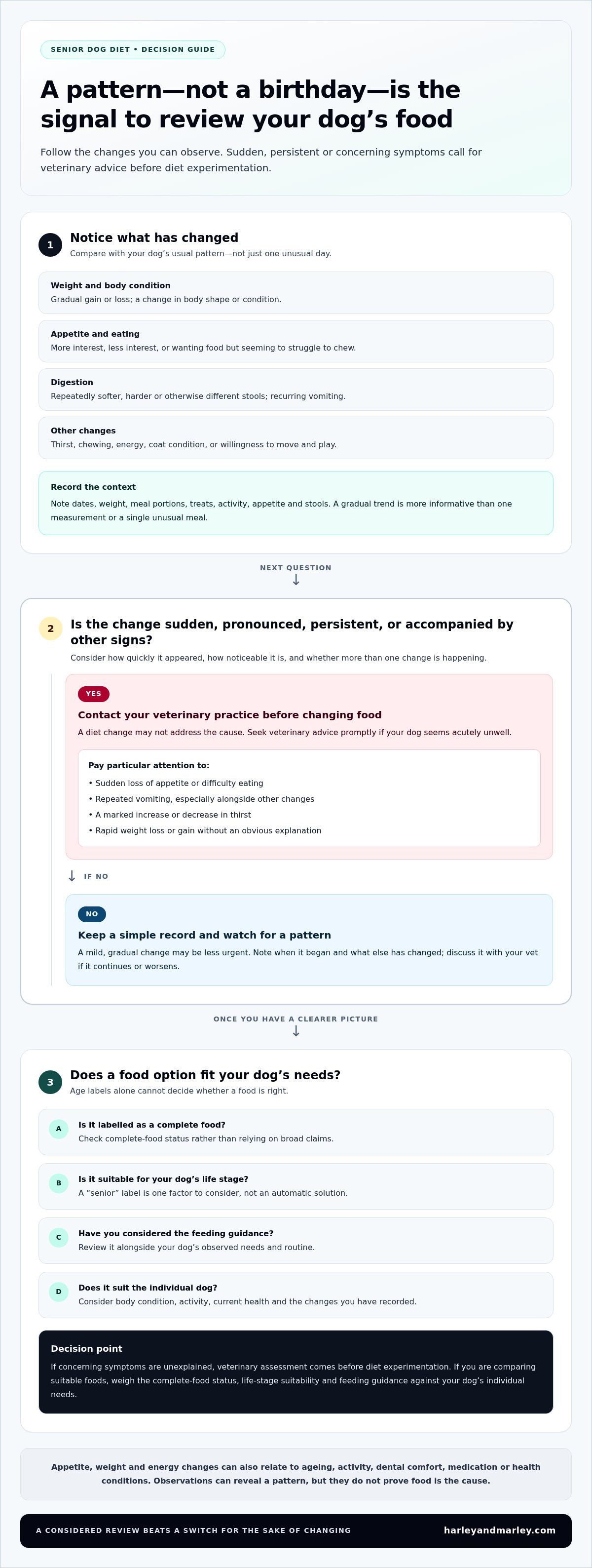
A considered change starts with good information. Before choosing another food, work through these steps to separate a routine adjustment from a concern that needs veterinary attention. The signs your senior dog needs a diet change are more useful when you can describe what has changed, when it began and whether it is continuing.
- Record the signs. Note dates and changes in appetite, stools, thirst, activity and weight. Describe what you observe rather than guessing at the cause.
- Review the feeding routine. Write down meal portions, feeding times, treats and any extras. Note changes to the routine, such as a different portion or a new treat.
- Assess urgency. Consider whether changes are mild and gradual, or sudden, pronounced, persistent or worsening. If your dog seems unwell or has concerning symptoms, seek veterinary advice before changing food.
- Discuss your observations. Share the timeline and current feeding routine with your vet, especially if your dog has a diagnosed condition, takes medication or has symptoms that could have more than one cause.
- Compare suitable foods. Once you’ve considered health needs, compare the current food with alternatives by life-stage suitability, complete-food status, feeding guidance and declared nutritional information.
A useful pre-change checklist: know what changed, when it started, what your dog eats, whether symptoms are worsening, and what your vet advises before you choose a new food.
What to track before the conversation
Use one notebook or phone note so details stay together. Record meal portions, treats, appetite, stool changes, activity and weight trends, along with the date each change began. Add whether it is improving, recurring or getting worse. Bring the current food packaging, or its nutritional information, to your veterinary discussion. This makes it easier to consider the existing diet alongside your dog’s health and routine.
How to make a food change carefully
If you and your vet decide a different food is appropriate, follow the product’s transition guidance. A gradual change is a general approach, but the right plan can depend on your dog and the reason for switching. Avoid introducing several new foods or extras at once, as that can make it harder to tell what is affecting appetite or digestion. Keep observing and recording changes as you transition.
If symptoms worsen or persist during a change, pause and seek veterinary advice rather than repeatedly switching foods. You can also compare complete senior dog food from Harley & Marley against your dog’s individual needs.
Choosing a Senior Dog Food: A Thoughtful Next Step
A food change makes sense when it follows evidence, not simply a birthday. Look for sustained changes, consider health and medication context, and choose according to your dog’s individual needs. If symptoms are sudden, persistent or worrying, speak with your vet before switching. A new food can be part of a considered feeding decision, but it can’t explain the cause of a symptom or replace veterinary care.
Use the notes and comparison from your checklist to keep the decision practical. Ask yourself:
- What ongoing change am I trying to respond to?
- Has a health concern or veterinary recommendation affected what food is suitable?
- Does the food’s life-stage guidance and complete-food status fit my dog?
- Can I follow its feeding guidance and monitor my dog’s response?
Together, these questions turn the signs your senior dog needs a diet change into a starting point for an informed review, rather than a reason to make an immediate switch. If your dog is otherwise well and you’ve discussed any persistent concerns, compare foods with their actual needs in mind, not just reassuring words on the packaging.
Does a fish-based senior food fit your comparison?
Protein source is one factor to consider alongside whether a food is complete, its stated life-stage suitability and its feeding guidance. A fish-based option may be worth comparing if it fits your dog’s preferences and needs, but the ingredient alone can’t establish suitability or promise a particular result. If chewing comfort is part of your observations, dental issues may also affect eating; the senior dog dental-health guide covers that separate consideration.
Explore a complete food made for senior dogs
Harley & Marley offers complete fish-based food specifically for senior dogs. Compare it with your current food after considering your dog’s body condition, activity and health context. Review the food’s own label and feeding guidance, and follow veterinary advice if a condition affects what your dog should eat. No senior-labelled food is an automatic answer for every older dog.
Choose a change only when the evidence and your dog’s individual circumstances support it. To compare this option, explore senior dog food from Harley & Marley. Keep monitoring your dog’s appetite, digestion and weight, and revisit the decision with your vet if concerns continue.
Make Your Dog’s Next Food Decision with Confidence
Use your observations to start a focused conversation about what would best support your dog now. The signs your senior dog needs a diet change can help guide that discussion, but the choice should reflect your dog’s individual health and circumstances, not a birthday or a broad promise on a food label. If a food change is appropriate, treat it as a considered next step and keep paying attention to how your dog responds.
Harley & Marley is an Irish-owned business specialising in fish-based canine nutrition, with complete food for senior dogs. Consider it alongside your vet’s guidance and your dog’s needs, rather than expecting any one food to resolve unexplained changes.
Explore complete food for senior dogs and compare it with your dog’s current diet. With careful attention and a thoughtful choice, you can keep supporting their wellbeing through every stage of their senior years.
Frequently Asked Questions
At what age is a dog considered a senior?
There’s no single age that applies to every dog. Size, breed and individual health all influence when a dog may be considered senior, so a birthday alone shouldn’t trigger a food change. The signs your senior dog needs a diet change are more useful when considered alongside their life stage and health. Discuss age-related needs with your vet at routine reviews, especially as your dog’s activity or body condition changes.
Can dental problems make a senior dog seem fussy about food?
Yes, discomfort when chewing can affect how readily a dog eats, but fussiness doesn’t reveal the cause by itself. Notice whether your dog avoids harder food, drops pieces, chews differently or takes longer to finish a meal. If this behaviour is new or persistent, arrange veterinary advice rather than assuming a softer food will solve it. A food change can’t address an underlying dental problem.
Could medication affect an older dog’s appetite?
Appetite or digestion changes can occur alongside a health condition or its treatment, but you shouldn’t assume medication is responsible. Note when the change began, what your dog eats and the treats they receive, as well as the medicines they take. Share this information with your vet before altering the diet. Don’t stop prescribed medication or change its dose unless your vet advises you to do so.
How often should I weigh my senior dog?
The right interval depends on your dog’s health and any monitoring plan from your vet. Follow that advice, and use the same scales under similar conditions each time, as different scales or weighing routines can make readings harder to compare. Record each result with the date and note relevant changes, such as a new feeding routine. Share a continuing or unexpected trend with your veterinary team.
Should senior dogs always eat less protein?
No. There isn’t a blanket rule that every older dog should eat less protein. Needs depend on the individual dog, their body condition, health and overall diet. Avoid reducing protein solely because your dog is older or a food is labelled for seniors. If your dog has a diagnosed condition that may affect food choices, ask your vet which complete diet is appropriate before changing what you feed.
Can I add fish oil when changing my senior dog’s food?
Not automatically. A food change doesn’t mean your dog needs a supplement, and fish oil shouldn’t be used to treat a symptom or replace a complete food. Before adding it, make a note of any supplements your dog already receives and bring their packaging or details to your vet. This is especially useful if your dog has a health condition or takes medication, as your vet can advise whether supplementation is suitable.