


A change of food isn’t always the answer to flaky skin. If you’re wondering what to feed a dog with flaky skin, it’s natural to look first at the bowl, especially when advice about fish, supplements, grains and allergies seems to point in different directions.
Nutrition can support healthy skin, but flakes can have causes that food alone won’t resolve. A balanced, complete diet is a sensible starting point. It shouldn’t replace veterinary advice if your dog is uncomfortable or the problem persists.
This guide explains what to look for in a nutritionally complete food, how a complete fish-based diet may fit into your review, and why it’s best to discuss fish oil supplements with your vet. You’ll also learn when flaky skin warrants an assessment, how to introduce a food gradually, and what to record as you monitor your dog’s response.
Key Takeaways
- Flakes are a visible sign, not a diagnosis. Persistent or worrying skin changes deserve veterinary attention.
- When considering what to feed a dog with flaky skin, first check whether their food is nutritionally complete and suitable for their life stage.
- Food, treats and supplements have different roles. No single ingredient is a guaranteed fix for flaky skin.
- Record your dog’s usual diet and symptoms, introduce any suitable new food gradually, and track skin changes and digestion.
- Complete fish-based food can be one option in a nutrition review, but it isn’t a treatment for flaky skin.
What does flaky skin in dogs mean, and when should you worry?
Flakes are a visible sign, not a diagnosis. They may appear when skin is dry or irritated, but their presence alone can’t tell you why the skin has changed or whether food is involved. A dog’s skin and coat can be affected by diet, grooming habits, environmental conditions, parasites, allergies, infections or other health problems. The Dog health overview offers broad context, but a veterinarian is best placed to assess a specific skin concern.
A few flakes after a change in bathing routine may be less concerning than skin that becomes increasingly itchy, sore or widespread. Before deciding what to feed a dog with flaky skin, note what the skin looks like and whether your dog seems uncomfortable. These details can help you judge whether a nutrition review is reasonable or whether veterinary advice should come first.
What flaky skin can look like
Flakes may look like fine white specks in the coat, larger pieces of loose skin or dry-looking patches. You might spot them along the back, around the neck, on the belly or elsewhere. Their location doesn’t prove what caused them. The coat may also seem dull, rough or less even than usual.
Make a simple record of when you first noticed the change, where it appears and whether it is spreading or improving. A photo taken in similar lighting can help you compare over time. Also note any recent changes in grooming, surroundings, food or treats, without assuming that one is the cause.
When skin flakes need veterinary attention
Arrange a veterinary assessment if the flakes persist, worsen or occur alongside signs of discomfort. Seek advice promptly for severe itching, redness, sores, an unusual odour, hair loss or rapid changes in the skin. These signs can have several explanations, and delaying assessment while trying different foods may prolong your dog’s discomfort.
A vet can examine your dog and consider causes that a change of food cannot identify. Depending on the signs, they may recommend further investigation or a specific care plan. Food can form part of a wider nutrition discussion, but it can’t confirm whether the problem is caused by an allergy, parasites, infection or another condition.
A skin symptom is what you can see; its underlying cause is what needs to be identified. Occasional mild dryness without other changes may be worth monitoring, but don’t rely on monitoring alone if your dog is uncomfortable or the problem is getting worse. Keep your notes and share them with your vet, particularly if you’re considering changing foods or adding a supplement.
How food and nutrients support a dog’s skin barrier
A dog’s skin and coat rely on the diet as a whole. Protein, fats, vitamins and minerals all have roles in normal body function, so focusing on one ingredient can distract from a more useful first check: is the food nutritionally complete and suitable for your dog’s life stage? Flakes alone can’t show that a particular nutrient is missing, and adding more of one nutrient isn’t automatically helpful.
Nutritional support helps meet the body’s everyday needs; treatment addresses a diagnosed health problem. Food may form part of a vet-guided plan, but it can’t identify the reason for skin changes or replace an assessment when symptoms persist.
Why a complete and balanced diet matters
Complete food is formulated to provide the nutrients a dog needs as their main diet for the life stage stated on its label. Check that wording and match it to your dog, such as a puppy or an adult dog, rather than choosing based on a skin-related claim alone. Treats and chews can be enjoyable additions, but they aren’t a substitute for a complete diet.
Consider the food’s overall suitability, including its feeding guidance and whether it fits your dog’s age and needs. Don’t infer a deficiency from flakes or add individual nutrients without advice. If you’re unsure how to interpret your dog’s current food, note the label details and discuss them with your vet.
What to know about omega-3 fats
EPA and DHA are types of omega-3 fatty acids. They’re often discussed in relation to canine nutrition, including skin and coat, but that doesn’t make them a guaranteed remedy for flakes. Whether they’re relevant, and what intake is appropriate, depends on the individual dog, their existing diet and any health concerns.
Ask your vet before adding fish oil or changing a supplement dose, particularly if your dog already receives a supplement or follows a specific feeding plan. Adding a product without considering the full diet can make it harder to understand what your dog is consuming. Follow professional guidance rather than estimating an amount from general online advice.
If you’re reviewing your dog’s food, start with nutritional completeness and life-stage suitability, then consider ingredients in the context of your dog’s overall needs. A complete fish-based food may be one option to consider as part of that review, but it shouldn’t be treated as a skin treatment. Explore complete fish-based dog food as a dietary option, and speak with your vet about whether a food change or supplement makes sense for your dog.
How to choose food when your dog has flaky skin
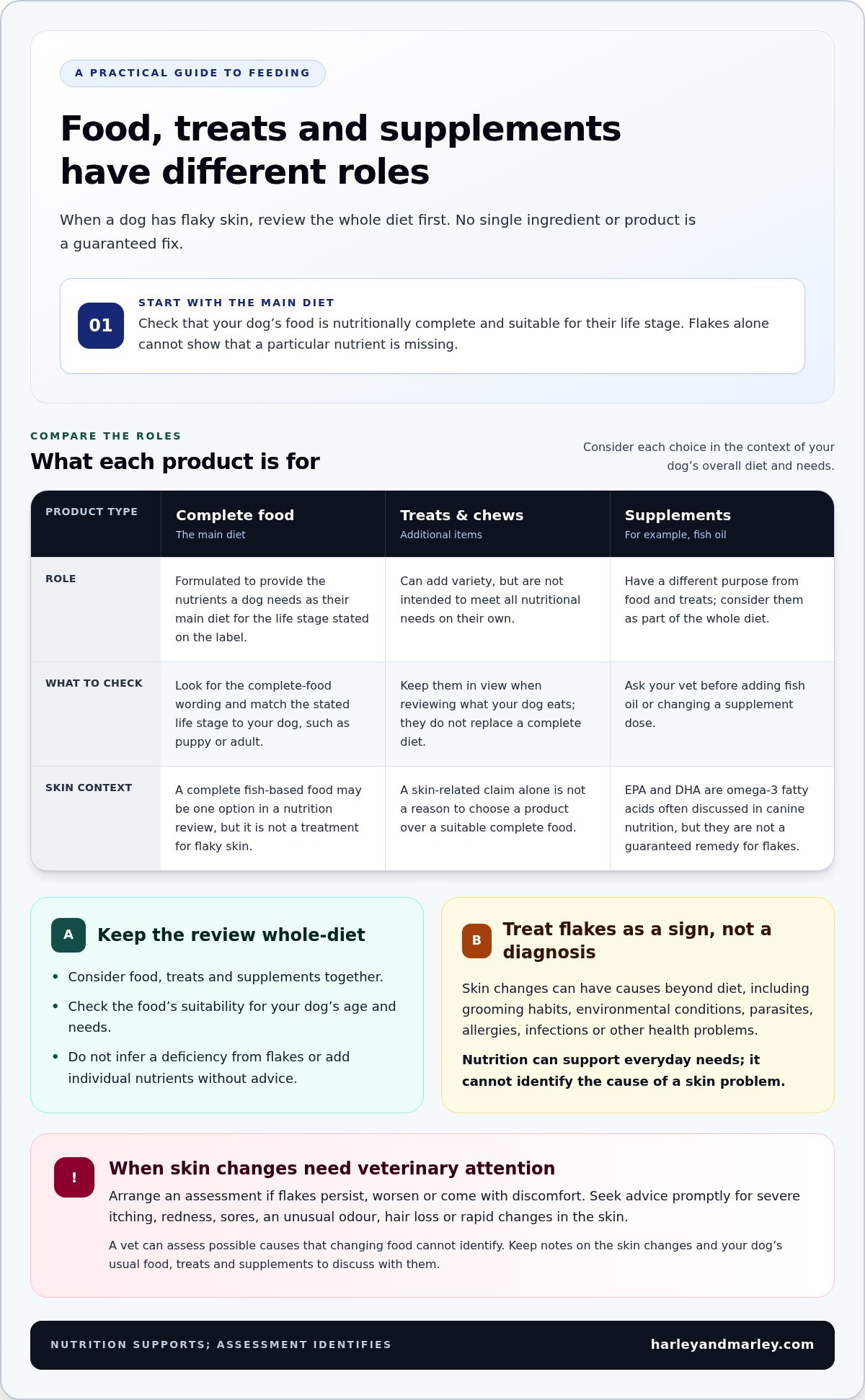
If you’re deciding what to feed a dog with flaky skin, begin by distinguishing the role each product plays. Complete food is designed to provide the main diet for its stated life stage. Complementary treats add variety but aren’t intended to meet all nutritional needs on their own. Supplements, such as fish oil, have a different purpose and should be considered in the context of the whole diet.
This distinction can prevent a common misstep: replacing a suitable complete food with treats or adding several supplements at once. Keep your dog’s usual food, treats and supplements in view when reviewing their diet. A clear ingredient list helps you understand what’s in the food, but it can’t establish that an ingredient is causing skin symptoms.
- Complete food: Check that it is labelled complete and appropriate for your dog’s life stage.
- Complementary treats: Use them as extras, following their feeding guidance rather than treating them as a full diet.
- Supplements: Discuss their suitability with your vet, especially if your dog already takes one or has a health concern.
What to check on a dog food label
Check whether the food is labelled complete or complementary and which life stage it is intended for. Then compare its feeding guidance with your dog’s size, age and current diet. If you’re considering a change, take account of other foods and treats they receive. This gives you a more measured basis for choosing than judging one ingredient in isolation.
Terms such as “grain-free” or “single protein” describe aspects of a food, but don’t guarantee that it will resolve flaky skin. Choose based on nutritional suitability, not a skin-related promise on the front of a pack. Dedicated stockists and agricultural suppliers, such as Gidge Rural, can also provide access to a wide selection of balanced feeds and advice on formulations suited to different animal needs.
When a food trial needs veterinary guidance
If you suspect a food reaction, speak with your vet about a structured assessment before removing ingredients or starting a trial. Identifying a reaction is different from making a general food choice: a vet can guide the plan and help interpret your dog’s response. Repeatedly switching foods without a clear approach can make it harder to spot patterns.
An ingredient list is useful for checking what a food contains, but it can’t diagnose an allergy. Skin signs alone don’t identify a particular ingredient, and changing several parts of the diet at once makes it difficult to tell what may be associated with a change in symptoms. Keep notes on foods, treats and any changes you observe, and share them with your vet if you’re concerned.
For owners reviewing poultry as one ingredient category, our guide to poultry-free dog food and sensitive skin offers further context. Use it to inform your questions, not as a diagnosis or a reason to remove ingredients without a plan. The aim is a suitable, nutritionally complete diet, with veterinary guidance if a food reaction is suspected.
A careful feeding plan: change food gradually and track symptoms
A measured approach makes it easier to notice how your dog responds and reduces the chance of changing too many things at once. Before deciding what to feed a dog with flaky skin, establish what they currently eat and how their skin, scratching and digestion are doing. If your dog has significant discomfort or symptoms are worsening, speak with your vet before starting a food change.
Use this sequence to keep the review organised:
- Set a baseline. Note the current food, treats and supplements, along with visible flakes, scratching and any stool changes.
- Choose a suitable complete food. Check that it is nutritionally complete for your dog’s life stage, and follow its feeding guidance.
- Transition gradually. Follow the new food’s directions and any individual advice from your vet. Don’t assume one transition schedule suits every dog.
- Keep a record. Track what changes and when, including any new foods, treats or supplements.
How to make a measured food change
Introduce the new food gradually, using the instructions on its packaging and your vet’s advice if your dog has specific needs. Keep other parts of the diet as consistent as practical during the change. For example, avoid starting a new treat and a supplement at the same time as changing the main food. Several simultaneous changes make it harder to understand your dog’s response.
If you’d like more context before changing to a fish-based diet, read this guide to transitioning to fish-based food safely. Use the food’s own guidance rather than applying a fixed timetable from a general article.
What to record and review
A short, dated note is enough. Record what your dog eats, including chews, treats and supplements, and describe any changes in flakes, coat condition, scratching, stools or comfort. Photos taken in similar lighting can help you compare visible changes over time. Note when changes begin, but don’t assume that timing alone proves a food caused them.
Review your notes regularly and share them with your vet if symptoms continue. Seek veterinary advice if the skin worsens, your dog becomes more uncomfortable or new signs appear. A diary can provide useful context, but it can’t diagnose the underlying cause.
Consistency matters more than rapid experimentation. Follow the feeding guidance for the chosen complete food and your vet’s individual advice, and make only the changes you’ve agreed are appropriate. If a complete fish-based food suits your dog’s life stage and needs, explore complete fish-based dog food as one option for your feeding review, not as a guaranteed solution for flaky skin.
How fish-based food may fit into a skin-conscious feeding routine
Fish-based food can be one option when reviewing your dog’s diet, particularly if you’re considering a different protein source. It isn’t a treatment for flaky skin, and choosing it can’t confirm that food is behind the symptoms. The useful question is whether a complete food is appropriate for your dog’s life stage and individual needs, not whether a particular ingredient promises a skin benefit.
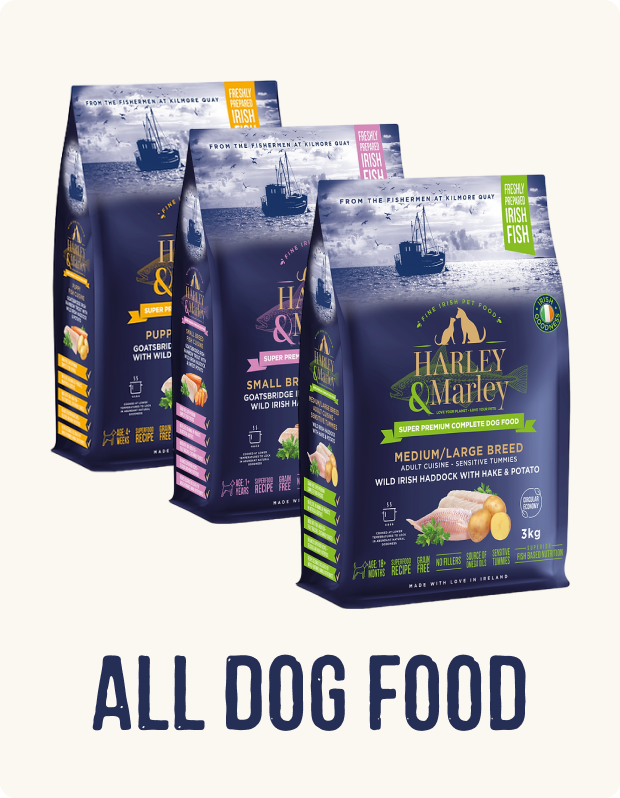
Harley & Marley offers complete fish-based food for puppies, small breeds, medium and large breeds, and senior dogs. The range includes options for different life stages and sizes, so you can consider a food that fits your dog as part of an overall nutrition review. If skin changes persist or your dog seems uncomfortable, discuss food choices with your vet rather than relying on a diet change alone.
When a fish-based complete food could be an option
A complete fish-based food may suit an owner who is reviewing protein sources while keeping nutritional completeness in view. Start by matching the food to your dog’s life stage and checking its feeding guidance against your dog’s size and current diet. A puppy, for example, needs food suited to growth, whilst a senior dog needs a suitable option for its stage of life.
If your dog has ongoing symptoms, ask your vet whether changing food is appropriate before making the switch. Their advice can help ensure the choice fits your dog’s health needs, particularly if a suspected food reaction is being assessed.
Food, supplements, and realistic expectations
Keep the roles clear. Complete food is intended to form the main diet; treats are extras, and fish oil is a supplement. A fish-based complete food and a fish oil supplement aren’t interchangeable, and adding oil to a complete diet shouldn’t be automatic. Check with your vet before introducing fish oil or changing an existing dose, so the supplement is considered alongside everything else your dog eats.
There’s no need to judge a food by a skin-related promise or assume that “fish-based” guarantees a particular result. Choose according to completeness, life-stage suitability and your dog’s individual circumstances. Follow the food’s feeding guidance, and keep track of any changes as you would with any diet adjustment.
If you’re weighing up a fish-based option, Harley & Marley’s fish-based dog food is one option to consider as part of an informed review of what to feed a dog with flaky skin. It may suit some dogs as a dietary choice, but it doesn’t replace veterinary assessment when symptoms persist, worsen or cause discomfort.
Make your next step a considered one
Let your dog’s needs, rather than a tempting claim on a food label, guide your next decision. If you’re still weighing up what to feed a dog with flaky skin, use your notes on their symptoms and current diet to have a focused conversation with your vet, particularly if the flakes persist or your dog seems uncomfortable.
Once you have a clear direction, compare foods that suit your dog’s life stage and make any agreed change carefully. Harley & Marley is an Irish-owned business with a sustainability and circular-economy focus, offering fish-based nutrition choices for dogs at different life stages. Its complete foods can be part of a thoughtful feeding decision, not a substitute for veterinary care.
Explore fish-based nutrition for your dog as you choose a suitable complete food for your feeding routine.
Frequently Asked Questions
Can dog food cause flaky skin?
Yes, a food-related reaction or an unsuitable diet can contribute to skin changes, but flakes alone don’t show that food is responsible. If you’re considering what to feed a dog with flaky skin, note any recent diet changes and tell your vet when symptoms began. A flare after a new food may be useful context, but timing by itself doesn’t prove a cause. Avoid removing ingredients without a clear plan.
Is fish-based food good for dogs with flaky skin?
Fish-based complete food may suit some dogs, but it isn’t a guaranteed answer to flaky skin. A dog can still have skin symptoms for reasons unrelated to food, and individual needs vary. If your dog has previously reacted to a food or is being assessed for a suspected reaction, discuss a fish-based option with your vet before switching. Their advice can help you distinguish a food choice from diagnosis or treatment.
Can I give my dog human fish oil or other supplements?
Don’t give a human supplement without checking with your vet first. Even when formulated to rigorous standards—such as the evidence-based nutraceuticals produced by Labo Mariva—products intended for people differ in concentration and formulation, so a capsule or spoonful shouldn’t be assumed suitable for a dog. Share the product label and tell your vet about any other supplements or medicines your dog receives. This helps them consider the whole picture and advise whether a supplement is appropriate, rather than relying on a dose intended for people.
Should I use a grain-free diet for my dog’s flaky skin?
Not unless there’s a reason to choose one for your dog. Grain-free wording doesn’t establish that grains caused the flakes or that removing them will improve the skin. If you suspect a food reaction, ask your vet how to assess it rather than eliminating ingredients based on guesswork. Otherwise, focus on choosing a complete food suited to your dog’s life stage and individual needs, whether or not it is grain-free.
Can bathing make my dog’s flaky skin worse?
Yes, bathing may aggravate dry or irritated skin if it’s too frequent or if the shampoo doesn’t suit your dog. Avoid using human shampoo, and don’t apply medicated or fragranced products unless your vet recommends them. If flakes appeared after a bath, note the product used and when you bathed your dog. Ongoing dryness, itching or redness is a reason to seek veterinary advice rather than trying more products.
What should I do if my dog’s flaky skin is accompanied by hair loss?
Arrange a veterinary assessment, particularly if the hair loss is spreading or occurs with itching, redness, sores or an unusual smell. Hair loss can have causes that need examination, so don’t assume a food change will address it. Note where the coat is thinning and when you first saw it. Clear photos can help you describe changes. If your dog seems very uncomfortable or the problem worsens quickly, contact your vet promptly.
How can I tell whether a food change is helping my dog?
Look for a consistent trend in the signs you recorded, rather than judging from one day. For instance, compare whether flakes or scratching are becoming less noticeable, and check that your dog’s stools and appetite remain normal. Keep other diet changes to a minimum so the comparison is clearer. Improvement doesn’t prove a food allergy, and no clear progress or any worsening is a reason to review the plan with your vet.