


For dogs, whitefish is the leaner choice, while salmon provides more omega-3 fatty acids. Which is better between whitefish and salmon for dogs depends on whether you’re prioritising a lower-fat protein or the extra omega-3s that support skin, coat and joint health.
It’s understandable to wonder whether fish might cause itchy skin or an upset stomach. Fish can be an alternative protein for dogs sensitive to common proteins such as chicken or beef, but dogs can also develop fish allergies, with signs that may include itchy skin or digestive upset.
This guide compares cooked salmon and lean whitefish, including their protein and fat content, potential benefits and key safety risks. You’ll also learn why raw salmon should be avoided and how plain, thoroughly cooked, boneless fish fits into a balanced diet.
Key Takeaways
- Compare the protein and fat profiles of salmon and whitefish to see which better matches your dog’s dietary needs.
- Find out which nutrients salmon provides and how omega-3s may support more than skin and coat health.
- Learn the key risks of raw salmon and the precautions that make fish safer to serve.
- Understand how fish fits alongside complete food, and where a fish oil supplement may have a role.
Cooked salmon’s omega-3 fatty acids and other nutrients
Cooked salmon supplies omega-3 fatty acids alongside protein, vitamins A, B and D, magnesium and zinc. These nutrients make it a more substantial fish choice than a simple protein addition.
A complete, balanced salmon-based food can be fed daily, but plain fish should not be a dog’s only daily protein. For fish added to meals, a moderate portion around 2-3 times a week helps keep the overall diet balanced; portion size depends on your dog’s size and the rest of its food.
Omega-3 support for skin, coat and joints
Omega-3 fatty acids are fats that support dogs’ skin, coat and joints. In salmon, they may help soothe dry or itchy skin, support a healthy coat and have an anti-inflammatory effect that may aid joint discomfort, including arthritis. These benefits can make salmon worth considering when coat condition or mobility is part of your nutrition priorities, but it isn’t a treatment for disease or food allergies.
Omega-3 and salmon’s fat content
Salmon is an oily fish and is generally higher in fat than leaner whitefish. That distinction matters when choosing a serving for a dog whose food intake or body condition needs careful attention. Fish oil also provides omega-3 fatty acids, but it is a supplement rather than a substitute for a balanced diet; consider all food and additions together.
Salmon’s nutrients contribute to normal body functions, while its fatty acids are associated with skin, coat and joint support. Fish may suit some dogs with sensitivities to common proteins, but it can also trigger food allergies. Watch for itchy skin or paws, irritation, digestive upset, gas or bloating after introducing a new food. Stop serving it if symptoms appear. A modest portion of plain, cooked salmon is a more controlled addition than seasoned scraps, and should accompany complete food rather than replace it.
Benefits of salmon as a protein source for dogs
Salmon supplies 20-22% protein, which dogs use to maintain and repair body tissues. As a fish protein, it can add variety when chicken or beef doesn’t suit a dog’s diet. Fish is a less common cause of food reactions than chicken, beef or dairy, although salmon can still trigger an allergy.
For dogs sensitive to familiar proteins, salmon may provide a different protein source to consider as part of a balanced diet. It still needs to suit the individual dog: itchy paws, irritated skin, digestive upset, gas or bloating after eating may signal a food reaction. Those signs alone don’t prove a salmon allergy.
Salmon provides protein alongside vitamins and minerals, so it contributes more than a single nutrient. Its protein makes it a useful ingredient in complete food, where the overall nutrition is formulated to meet a dog’s needs. Plain cooked salmon can be an occasional addition, but fish alone doesn’t provide the balance required for a complete daily diet.
After weaning, small amounts of plain cooked fish can add protein to a puppy’s diet. It must not replace complete puppy food, which is designed to provide balanced nutrition for growth. Keep salmon plain and thoroughly cooked, remove every bone, and serve it alongside the puppy’s usual meals rather than as a substitute.
Salmon’s suitability is not determined by whether it is wild-caught or farmed alone. The key considerations are how it is prepared, whether it is served boneless and plain, and how it fits with the rest of the dog’s food. Smoked or seasoned salmon is not an equivalent protein choice for dogs. If you’re considering a fish-based complete diet, explore fish-based dog food as a way to include fish within balanced daily nutrition.
Risks of raw salmon and salmon poisoning disease
Raw salmon can carry a parasite that causes salmon poisoning disease in dogs. Raw fish may also contain parasites such as tapeworms and roundworms, while thiaminase in raw fish breaks down vitamin B1. Cooking salmon thoroughly eliminates the salmon-poisoning risk.
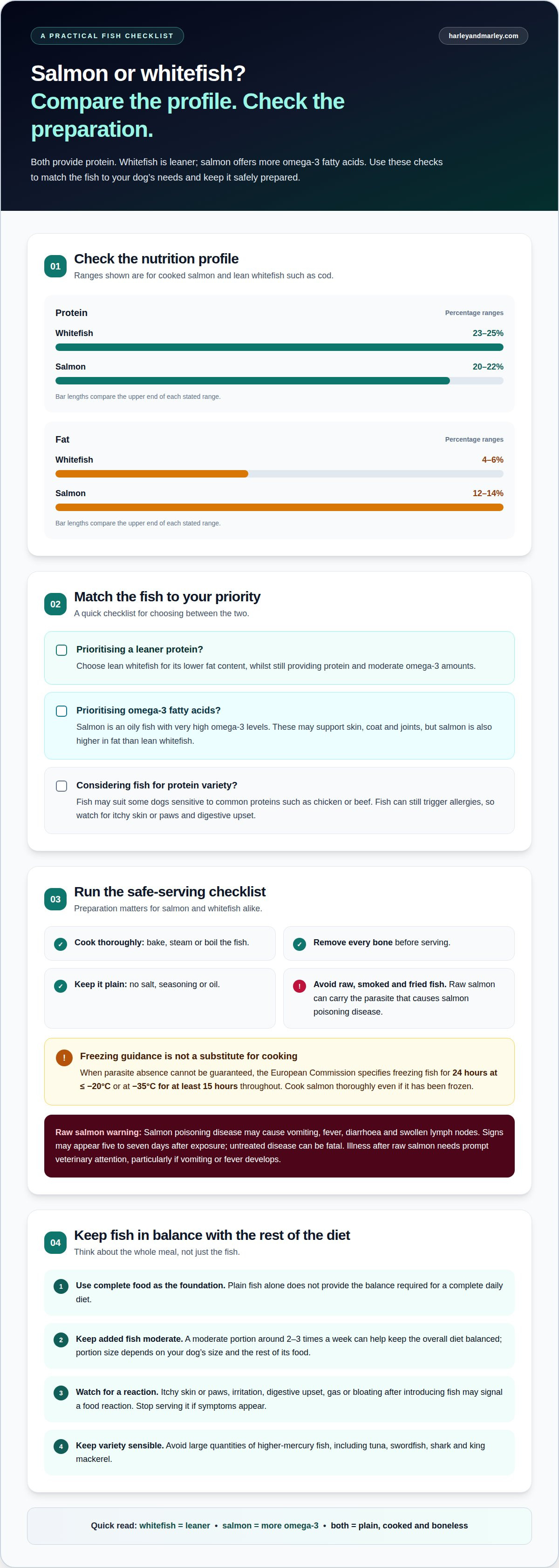
Salmon poisoning disease can cause vomiting, fever, diarrhoea and swollen lymph nodes. Signs may appear five to seven days after exposure, and untreated disease can be fatal. Don’t assume a dog is safe because the salmon looks fresh: raw fish can carry parasites even when it appears suitable to eat.
Prepare salmon and whitefish by baking, steaming or boiling them until thoroughly cooked. Remove all bones, then serve the fish plain, without salt, seasoning or oil. Avoid smoked and fried fish. When parasite absence cannot be guaranteed, the European Commission specifies freezing fish for 24 hours at ≤ -20°C or at -35°C for at least 15 hours throughout.
Freezing is not a substitute for thoroughly cooking salmon. Smoked salmon is unsuitable because it is high in salt, and smoking may not kill every harmful parasite or bacterium. If serving canned fish, choose fish packed in water and check the label for added salt. These preparation details matter even for fish that seems easy to digest.
Keep fish portions moderate and serve them as part of a balanced diet, not as your dog’s sole daily protein. Avoid large quantities of higher-mercury fish, including tuna, swordfish, shark and king mackerel. Fish protein can cause allergies; itchy paws, irritated skin or digestive upset after eating fish may indicate a food reaction. Illness after eating raw salmon needs prompt veterinary attention, particularly if vomiting or fever develops.
Cooked salmon compared with lean whitefish
Salmon and whitefish both provide protein, but their fat and omega-3 profiles differ. The best fit depends on your dog’s needs and the rest of its diet.
Omega-3 benefits in each fish
Salmon is an oily fish with very high omega-3 levels, while whitefish provides moderate amounts. Those fatty acids support skin, coat and joint health, so salmon may suit owners prioritising omega-3 intake. Whitefish still contributes omega-3s, alongside a leaner protein profile. Either fish should be plain, cooked and served as part of balanced meals, rather than replacing complete dog food.
Fish choices for different dogs
Lean whitefish, such as cod, contains 4-6% fat and 23-25% protein; salmon contains 12-14% fat and 20-22% protein. That makes whitefish a lower-fat option for weight management, though portions and the full diet matter too. Puppies can have small amounts of plain, cooked fish after weaning, but it must not replace complete puppy food. For senior dogs, salmon’s omega-3s may support cognitive function.
Canned fish can be suitable when packed in water, but check the ingredients for added salt, oil or spices. Avoid seasoned products; canned sardines in water are another option. Keep any addition modest and account for it in your dog’s overall feeding plan.
In Ireland, salmon and whitefish prices and availability vary by species, product format and whether you’re choosing fresh fish, canned fish or complete dog food. Compare like with like: a tin of fish and a complete formula serve different purposes.
For a senior dog needing balanced daily nutrition, explore Senior Dog Complete Food as a complete-food option.
Harley & Marley: Fish Oil
Harley & Marley offers fish-based complete food, a practical choice when you want fish to form part of your dog’s balanced daily nutrition. Fish oil and complete food serve different roles: a supplement does not replace a complete meal.
Choose food suited to your dog’s life stage and size. Options include Puppy Complete Food, Small Breed Complete Food, Medium/Large Breed Complete Food and Senior Dog Complete Food. For example, Senior Dog Complete Food is a complete-food option for an older dog, while Puppy Complete Food is intended for puppies.
If you’re weighing fish-based complete food against adding a supplement, consider your dog’s overall diet and what you’re hoping to provide. Explore Harley & Marley’s complete food range to find an option suited to your dog.
Make your dog’s next food choice with confidence
Let your dog’s overall feeding plan guide your next step. Consider what matters most for your companion, such as keeping meals consistent or choosing ingredients that fit their needs. Keeping a simple note of what you offer and how your dog responds can help you make considered food decisions, rather than changing several things at once.
The question of whether whitefish or salmon is better for dogs has no single answer for every household. Focus on the food’s role in your dog’s routine and choose an approach you can maintain as part of balanced everyday care. If you’re still weighing up the right fish-based option, Harley & Marley can help you explore its complete-food range. Contact Harley & Marley to discuss your dog’s food and take the next step with clarity.
Frequently Asked Questions
Common myths debunked: Does fish cause skin issues or diarrhoea?
Fish doesn’t cause problems for every dog, but an individual dog may react or develop loose stools. If symptoms begin after a food change, note the timing and any other changes, such as new treats or table scraps. This record can help identify a food-related pattern or point to another cause. Always see a vet if a problem persists.
Are there any potential allergies associated with feeding salmon dry dog food?
Yes. A dog can react to salmon protein in dry food, even though fish is a less common food-allergy trigger than some familiar proteins. Read the ingredient list to identify the food’s protein sources, especially if salmon is new to your dog’s diet. The ingredient list alone cannot diagnose a reaction. Always see a vet if a problem persists.
Is salmon good for dogs?
Salmon can be a suitable ingredient in dog food, but the word “salmon” on a label doesn’t show whether the whole diet is appropriate. Check whether the food is labelled complete or complementary: complementary food is intended to accompany other food, rather than provide the entire diet. Choose according to how the product fits your dog’s usual feeding routine.
What actually counts as white fish?
Whitefish is a general food-category term, not the name of one species. Cod, haddock, pollock and flounder are examples. The term distinguishes these fish from oily varieties, but doesn’t identify every ingredient in a prepared dog food. Check the product label for the named fish species if you need to know exactly what it contains.
What are the nutritional differences between whitefish and salmon for dogs?
The main difference is their overall nutrient profile, rather than one fish being universally better. For a useful comparison, consider the named fish, its preparation and whether you’re looking at fresh fish or formulated dog food. These forms aren’t directly interchangeable. With complete food, the recipe as a whole matters, so don’t judge its nutritional suitability by the fish ingredient alone.
Which is higher in protein, calories and fat: whitefish or salmon for dogs?
Whitefish is generally higher in protein, while salmon is higher in fat and usually provides more calories. Preparation also affects the comparison: added oil or frying changes a portion’s energy content. For dog food, compare products on the same basis, such as their feeding instructions and declared nutritional information, rather than comparing a cooked fillet with a dry-food ingredient.