


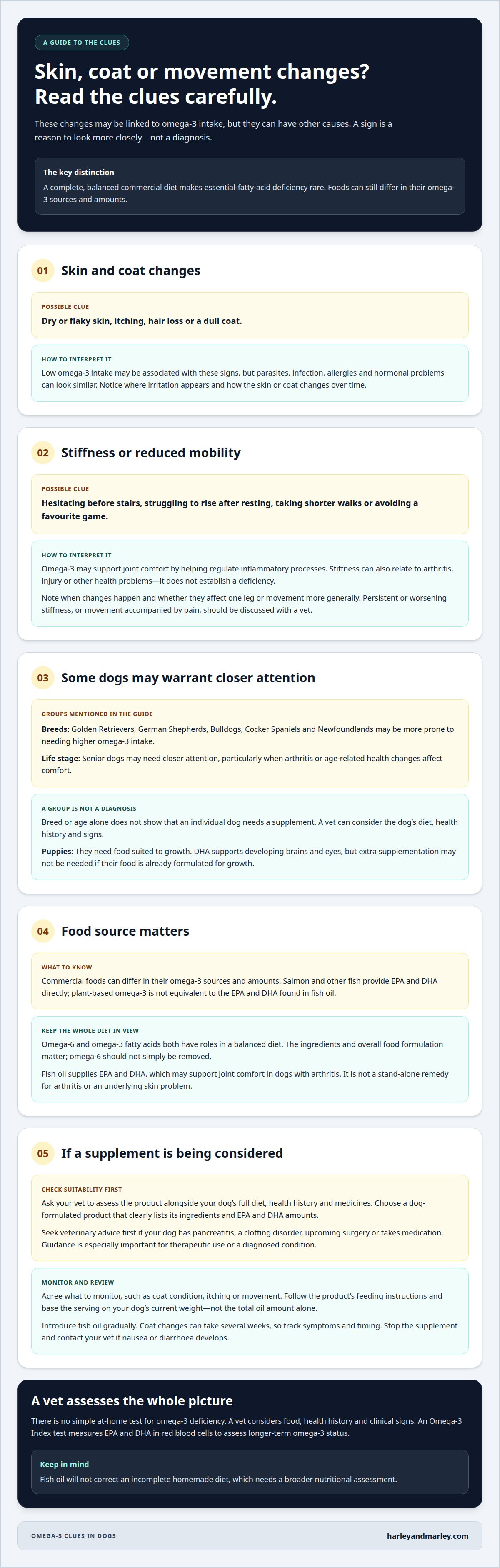
A dull, dry coat or new stiffness can be among the signs that your dog needs more omega-3, but neither symptom proves a deficiency. Omega-3 intake from commercial food matters too: a complete, balanced diet makes essential-fatty-acid deficiency rare, while the amount and type of omega-3 can vary between foods.
It’s understandable to connect itchy skin, a lacklustre coat or slower movement with nutrition. These signs can have other causes, so they’re clues to consider rather than a diagnosis. Omega-3 fatty acids may help regulate inflammation, which is one reason they can be relevant to stiff, aching joints.
This guide explains the possible skin, coat and mobility signs, which dogs may benefit from extra omega-3, and how to think about the fatty acids in commercial food. You’ll also learn why plant-based omega-3 isn’t equivalent to the EPA and DHA found in fish oil, and why any supplement should suit your dog’s overall diet and health.
Key Takeaways
- A dry coat, itching or hair loss may point to a fatty-acid issue, but these signs can have other causes too.
- Omega-3 may support joint comfort by helping regulate inflammation, though stiffness can have causes beyond diet.
- Senior dogs and some breeds may benefit from closer attention to omega-3 intake; a vet can help assess whether a supplement is suitable.
- Commercial foods can differ in their omega-3 sources and amounts, so understanding the role of EPA and DHA can help you make sense of your dog’s diet.
Dogs that may benefit from supplementation
Golden Retrievers, German Shepherds, Bulldogs, Cocker Spaniels and Newfoundlands may be more prone to needing higher omega-3 intake. Senior dogs are another group where needs may warrant attention, particularly when arthritis or age-related health changes affect comfort. However, a properly preserved, complete and balanced diet makes essential-fatty-acid deficiency rare. A breed or age category alone doesn’t show that an individual dog needs supplements.
Puppies need food suited to growth. DHA supports developing brains and eyes, but extra supplementation may not be needed if their food is already formulated for growth. Senior dogs with cognitive dysfunction may show improved recognition of family members and other dogs when given fish oil. Discuss this with your vet rather than trying to treat the condition yourself. Salmon and other fish provide EPA and DHA directly.
In Ireland, choose a dog-formulated supplement that clearly lists its ingredients and EPA and DHA amounts. Before starting, ask your vet to assess the product alongside your dog’s full diet, health history and medicines. These factors help determine whether supplementation is suitable and what amount is appropriate. Veterinary guidance is especially important for therapeutic use or a diagnosed condition. Seek advice first if your dog has pancreatitis, a clotting disorder, upcoming surgery or takes medication.
Before trying a supplement, agree with your vet what changes to monitor, such as coat condition, itching or movement. Follow the product’s feeding instructions and base the serving on your dog’s current weight. Don’t estimate a dose from the total oil amount alone. Introduce fish oil gradually, as a sudden dietary addition may upset digestion. Coat changes can take several weeks, so track symptoms and timing. Stop the supplement and contact your vet if nausea or diarrhoea develops. Fish oil won’t correct an incomplete homemade diet, which needs a broader nutritional assessment.
Joint stiffness and reduced mobility
Omega-3 fatty acids help regulate inflammatory processes, which can affect joint comfort. Inadequate intake may reduce this nutritional support, but stiffness alone doesn’t establish a deficiency. Arthritis, injury and other health problems can also make movement uncomfortable. Older dogs with degenerative conditions may be more affected, particularly when inflammation contributes to aching joints.
Can omega-3 deficiency cause joint stiffness or inflammation in dogs? Low intake can be one factor in reduced support for a healthy inflammatory response, and omega-3 may help arthritic dogs feel more comfortable and agile. It doesn’t prove that a stiff dog has a deficiency or that supplementation will resolve the cause.
Watch how your dog moves during familiar activities. Hesitating before stairs, struggling to rise after resting, taking shorter walks or avoiding a favourite game can signal reduced mobility. Note when the changes happen and whether they affect one leg or movement more generally. This record can help your vet assess whether the problem is new or part of a gradual change.
The balance of fatty acids also matters. Omega-6 fatty acids can promote inflammatory activity, while substances produced from omega-3 fatty acids help reduce it. This doesn’t mean omega-6 should be removed: both fatty-acid types have roles in a balanced diet. The ingredients and overall formulation matter, rather than treating one nutrient as a stand-alone arthritis remedy.
Fish oil supplies EPA and DHA, omega-3s that may support joint comfort in dogs with arthritis. Puppies need food formulated for growth, while older dogs may have different nutritional and health considerations. If stiffness is persistent, worsening or accompanied by pain, discuss it with a vet before adding supplements or changing food. In complex cases, veterinary practices often rely on advanced diagnostic imaging platforms from providers such as Animage to pinpoint underlying joint or bone damage, allowing professionals to evaluate mobility symptoms alongside health history, current diet and medicines before deciding whether omega-3 is appropriate.
What Are The Symptoms Of Low Omega-3 In Dogs?
Dry, itchy skin and a dull coat can be signs to watch for, but they don’t identify the cause. Consider skin changes alongside your dog’s diet and any other symptoms.
Skin and Coat Changes
Low omega-3 intake may be associated with dry or flaky skin, itching, hair loss and a dull coat. Can dry, itchy skin or a dull coat indicate low omega-3 in dogs? Yes, they can be possible signs, but parasites, infection, allergies and hormonal problems can produce similar changes. Notice where the irritation appears and whether your dog’s coat or skin condition changes over time. This gives your vet useful detail. Once their coat is restored to full health, many owners love capturing and displaying their companion’s glossy appearance; services such as WoodSnap create custom prints from pet photos directly onto wood.
Chronic Skin Conditions and Inflammation
Ongoing skin problems, including allergy-related itching and dermatitis, may involve inflammation. Fish oil contains eicosapentaenoic acid (EPA), an omega-3 fatty acid that may help reduce inflammatory activity and allergy-related itching. Omega-3 supports skin and coat health, but it doesn’t replace assessment of an underlying allergy or infection. Persistent scratching, scaling, bruising or poor wound healing deserves veterinary attention, particularly if several symptoms appear together.
How can a vet diagnose omega-3 deficiency in a dog? There’s no simple at-home test; a vet considers the dog’s food, health history and clinical signs. An Omega-3 Index test measures EPA and DHA in red blood cells to assess longer-term omega-3 status.
Skin changes alone can’t establish a deficiency. Fatty-acid problems may also involve poor growth, reproductive problems or nervous-system abnormalities; obesity, eye problems and muscle weakness are other possible signs. These symptoms can have different causes, so note when they started and how they’ve changed. For example, new coat changes in a senior dog need to be assessed in the context of age, diet and overall health.
Review your dog food’s nutritional information with your vet, especially if the diet has changed or includes homemade meals. Essential-fatty-acid deficiency is rare when a dog eats complete, balanced food, but your vet can assess whether the food and any supplements suit your dog’s needs. Don’t start fish oil or make a major feeding change just because your dog is itchy.
Omega-3 intake from commercial dog food
Commercial dog food can provide omega-3, but the source and form affect how useful it is. Dogs convert plant-based alpha-linolenic acid (ALA), found in flaxseed, into EPA and DHA inefficiently. Fish ingredients provide these long-chain fatty acids directly, including eicosapentaenoic acid (EPA) and docosahexaenoic acid (DHA).
A label’s total omega-3 figure doesn’t necessarily show how much EPA and DHA the food contains. For example, a product might list 1000mg of total omega-3s while providing only 150mg of combined EPA and DHA. These amounts describe different measures, so the total alone may not tell you how much of those specific fatty acids your dog receives.
Fish-based foods and dog-formulated fish oil can provide EPA and DHA directly. Other food sources include sardines in springwater, salmon, anchovies, fish skins and green-lipped mussels.
EPA and DHA support more than one body system. DHA has a role in cognitive function, while omega-3 fatty acids help regulate inflammation that can affect skin, the skin barrier and joints. Those functions may matter for dogs with inflammatory disease, but a food’s suitability depends on its full nutritional formulation, not one ingredient alone. Complete and balanced dog food should account for the balance between omega-3 and omega-6 fatty acids.
Storage matters too: heat, light and air can oxidise omega-3 oils, affecting their quality. Keep food and supplements stored according to their packaging instructions. Before adding fish oil, consider what the current food already supplies and discuss the dog’s diet, health and medicines with a vet. This is particularly relevant for dogs with a diagnosed condition or a history of pancreatitis.
For a fish-based option to consider alongside your dog’s nutritional needs, explore dog nutrition options.
Harley & Marley
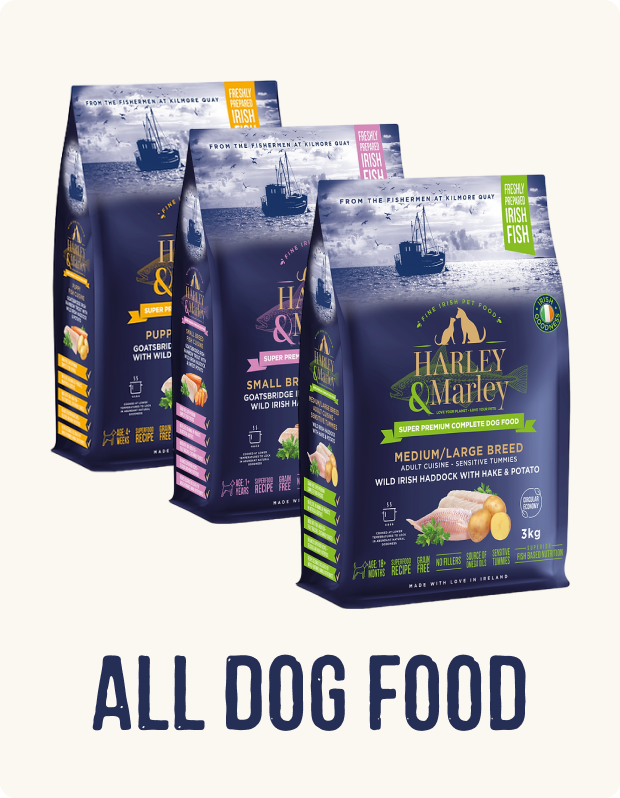
Harley & Marley offers complete foods for puppies, small breeds, medium and large breeds, and senior dogs. If you’re reviewing your dog’s everyday nutrition after noticing possible omega-3-related changes, choosing food suited to their life stage and size is a practical place to start. A complete food contributes to the overall diet, but skin problems or stiffness still need proper assessment; food alone can’t diagnose a deficiency or replace veterinary advice.
Harley & Marley offers Puppy Complete Food, Small Breed Complete Food, Medium/Large Breed Complete Food and Senior Dog Complete Food. Consider your dog’s life stage and size when choosing a daily food, and discuss supplements or persistent symptoms with your vet.
Contact Harley & Marley to discuss which complete food may suit your dog.
Make your dog’s next nutrition choice with care
If you’re concerned by signs that your dog needs more omega-3, use them as a prompt to review their overall diet rather than adding oil automatically. Keep a brief note of what your dog eats, when symptoms began and how they change. This gives your vet useful context when discussing whether a dietary adjustment or supplement is appropriate.
For persistent itching, coat changes or stiffness, put a veterinary assessment first. The cause may not be nutritional, and a supplement’s suitability depends on your dog’s health, current food and medicines. If you’re choosing everyday food, look for a complete option suited to your dog’s life stage and size.
Harley & Marley’s range includes complete foods for different dogs. Contact Harley & Marley about suitable food options as you consider your dog’s next step. Thoughtful nutrition decisions can start with careful observation and a conversation with your vet.
Frequently Asked Questions
What Are The Benefits Of Providing Your Dog With Enough Omega-3?
A suitable omega-3 intake supports normal skin and coat condition, joint comfort and other body functions. Fatty acids also help dogs store energy, absorb certain vitamins and regulate hormones. EPA and DHA may support dogs with inflammatory conditions, but the appropriate amount depends on the whole diet and health history. For example, a dog recovering from an injury needs individual nutritional advice, not an assumed supplement dose.
Are Certain Dog Breeds More Prone To Omega-3 Deficiency?
Golden Retrievers, German Shepherds, Bulldogs, Cocker Spaniels and Newfoundlands may be more prone to needing higher omega-3 intake. Senior dogs may also warrant closer attention to their nutritional needs. Breed and age aren’t diagnoses, though: a dog eating complete, balanced food may already receive suitable essential fatty acids. Consider the individual dog’s diet and health rather than adding a supplement based on breed alone.
Is fish oil better than flaxseed oil for dogs?
For providing EPA and DHA directly, fish oil is generally the more efficient source. Flaxseed oil supplies ALA, which dogs convert into EPA and DHA poorly. This distinction matters if you’re choosing an omega-3 source for a specific nutritional purpose. Sardines in springwater, salmon, anchovies and green-lipped mussels also provide EPA and DHA. Ask your vet which option suits your dog’s diet and health.
Are there any side effects?
Yes. Too much omega-3 can cause digestive upset, add calories that contribute to weight gain, and sometimes interfere with normal blood clotting. High therapeutic amounts can also affect platelet function and immune response. A dog with a clotting disorder, scheduled surgery or medicines needs veterinary advice before supplementation. Use the product’s feeding directions, and contact your vet if unexpected symptoms appear.
Can fish oil help with dog allergies?
Fish oil may help reduce allergy-related itching by influencing inflammatory activity, but it doesn’t remove the allergen or treat every cause of itchy skin. A dull coat or persistent itching can be signs your dog needs more omega-3, although parasites and infections can cause similar problems. Treat signs your dog needs more omega-3 as a prompt to discuss persistent symptoms with your vet before changing food or adding oil. Always see a vet if a problem persists.
Can fish oil upset a dog’s stomach?
Yes. Fish oil may cause nausea, loose stools, vomiting or reduced appetite, particularly if your dog doesn’t tolerate the supplement or receives too much. Introduce it gradually and follow the feeding instructions. Adding it to food may suit some dogs better than giving it on an empty stomach. Stop using it and contact your vet if nausea or diarrhoea develops. Always see a vet if a problem persists.